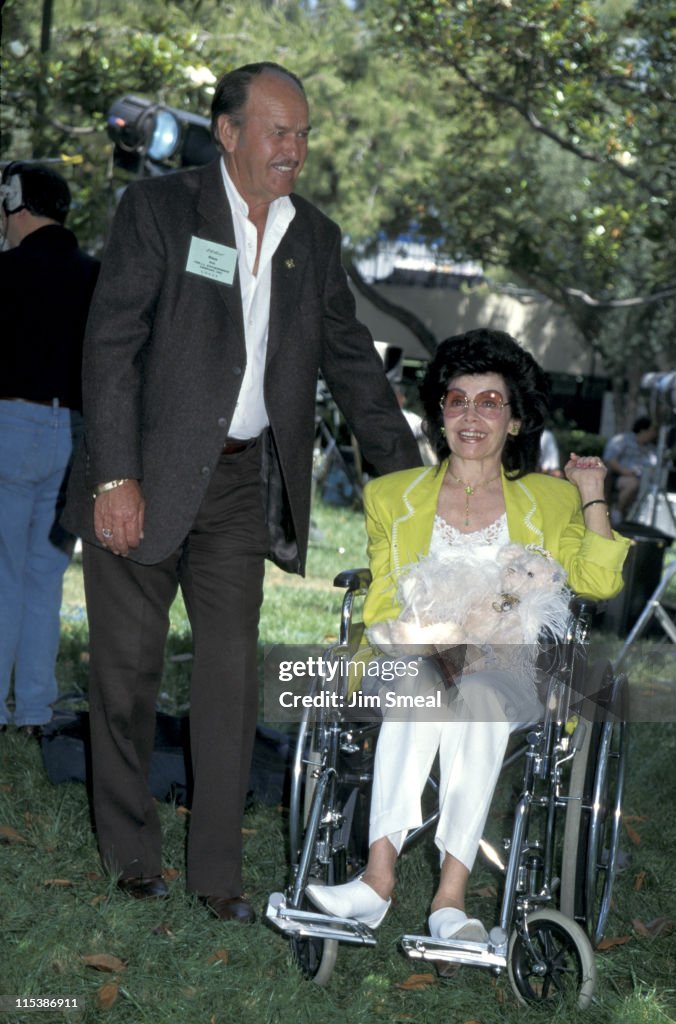
Annette Funicello began using a wheelchair as her Multiple Sclerosis (MS) advanced, following her public disclosure of the disease in 1992. After years of experiencing balance issues and mobility loss, her transition to using assistive devices challenged long-standing Hollywood stigmas regarding disability, prompting major public awareness and funding for neurological research.
Early Career and the Disney Golden Era
Annette Funicello rose to national prominence in the mid-1950s as one of the most popular original Mouseketeers on Walt Disney’s The Mickey Mouse Club. Cast at the age of twelve after being discovered by Walt Disney himself at a dance recital, Funicello quickly became the break-out star of the program. Her warmth, stage presence, and musical talent resonated strongly with a post-war American audience, earning her a unique position in entertainment history.
As she transitioned into young adulthood, Funicello continued her partnership with Disney before expanding into feature films. In the 1960s, she co-starred alongside Frankie Avalon in a string of successful "Beach Party" movies produced by American International Pictures. Titles such as Beach Party (1963), Bikini Beach (1964), and Beach Blanket Bingo (1965) cemented her image as a vibrant, wholesome pop icon.
Throughout this period, Funicello’s public persona was intrinsically linked to physical energy, dance, and youthful vitality. She recorded hit singles, appeared in numerous television specials, and served as a commercial spokesperson for major consumer brands. Because her public image was built around movement and energetic performances, the subsequent onset of a debilitating neurological condition represented a profound shift in both her personal life and her public profile.
The Onset of Multiple Sclerosis and Private Struggles (1987–1992)
Multiple Sclerosis is a chronic, often progressive autoimmune disease of the central nervous system. In MS, the body's immune system mistakenly attacks the myelin sheath—the protective covering surrounding nerve fibers in the brain and spinal cord. This disruption in nerve signaling causes a wide spectrum of neurological symptoms, including muscle weakness, loss of coordination, severe fatigue, acute balance issues (known as ataxia), and cognitive changes.
Funicello first began noticing subtle neurological symptoms in 1987 while filming the nostalgic reunion movie Back to the Beach with Frankie Avalon. During production, particularly while walking across sandy terrain or executing choreographed sequences, she experienced unexpected dizziness, loss of balance, and unexplained muscle fatigue.
Initial medical consultations confirmed a diagnosis of relapsing-remitting multiple sclerosis. In the early stages of the condition, patients typically experience periods of symptom flare-ups followed by partial or complete recovery phases.
- Immune System Attack
- Myelin Sheath Damage
- Disrupted Nerve Signals
- Gait Ataxia & Motor Decline
Determined to maintain her career and protect her young family from public scrutiny, Funicello kept her diagnosis private for five years. She managed her care discreetly while continuing her commercial endorsements and public appearances. However, as the disease progressed, keeping the condition concealed became increasingly difficult.
The 1992 Public Announcement and Refuting Media Misinformation
By the early 1990s, the physical progression of Funicello's MS began to visibly affect her gait and stability. She frequently lost her balance while walking in public and required support to remain steady.
Because Multiple Sclerosis was widely misunderstood by the general public at the time, her unsteady gait and slurred articulation—symptoms of motor control breakdown—led to sensationalized coverage in tabloid media outlets. Speculation mounted that her physical impairment was the result of severe chronic alcoholism.
To set the record straight and protect her personal integrity, Funicello chose to publicly disclose her diagnosis in 1992. She gave exclusive interviews to national news publications, including USA Today and People magazine, explaining the nature of Multiple Sclerosis and confirming that her unsteadiness was caused by neurological damage rather than substance abuse.
"My balance grew worse and worse," Funicello recalled when describing her decision to go public. "I was getting so shaky that people thought I was drunk. I realized I had to tell people the truth."
The public response to her announcement was overwhelmingly supportive. Her honesty shed light on a complex chronic illness that had long been kept out of mainstream discussions. By stepping forward, Funicello transformed what had been a private medical struggle into a public platform for awareness.
Progression of the Disease and Transition to Wheelchair Reliance
Multiple Sclerosis exhibits varying clinical pathways. While some patients maintain moderate mobility throughout their lives, Funicello's condition transitioned into a severe, progressive form characterized by steady neurological decline without significant recovery phases.
- Relapsing-Remitting MS (1987)
- Secondary Progressive MS
- Assistive Walking Aids
- Full-Time Wheelchair Use (Late 1990s)
As motor control in her lower extremities steadily degraded, Funicello moved from using walking canes and support walkers to requiring a manual wheelchair, and eventually a power wheelchair. The loss of independent mobility brought profound practical and emotional changes:
- Motor Impairment: Progressive loss of function in the legs and arms, leading eventually to quadriplegia.
- Speech and Swallowing Challenges: Severe dysarthria (difficulty articulating speech) and dysphagia (difficulty swallowing), necessitating speech therapy interventions and, eventually, a feeding tube.
- Environmental Modifications: The total adaptation of her residential spaces with ramps, widened doorways, specialized lift systems, and accessible bathrooms.
- Full-Time Caregiving: Dependence on her second husband, Glen Holt, along with dedicated healthcare workers for basic daily activities, including transfer, hygiene, and nutrition.
Despite the physical limitations imposed by her wheelchair, Funicello remained determined to appear publicly when possible. Her willingness to be photographed and interviewed in her wheelchair challenged long-standing entertainment industry norms, which historically pushed aging or disabled stars away from public view.
The Annette Funicello Research Fund and Medical Advocacy
Recognizing that medical research for neurological conditions lacked sufficient funding and public support, Funicello established the Annette Funicello Research Fund for Neurological Disorders in 1993.
The fund was designed to support basic and clinical research aimed at identifying the causes, treatment options, and potential cures for Multiple Sclerosis and other neurological diseases. Funding was raised through public donations, special events, and sales from her signature line of collectible teddy bears—the Annette Funicello Collectible Bear Company—which she launched to generate continuous philanthropic revenue.
- Teddy Bear Company Revenue & Public Donations
- Annette Funicello Research Fund
- Grants for MS & CCSVI Research
In her later years, Funicello and her husband became interested in emerging, controversial medical theories regarding MS treatment. In 2010, she underwent a procedure to treat Chronic Cerebrospinal Venous Insufficiency (CCSVI), a hypothesis popularized by Italian researcher Dr. Paolo Zamboni.
The hypothesis suggested that MS symptoms were caused or exacerbated by narrowed veins restricting blood flow from the brain. The procedure involved angioplasty to widen the jugular and azygos veins. While international clinical studies later yielded mixed results regarding the efficacy of CCSVI treatment, Funicello's participation highlighted the ongoing search for novel therapeutic options for severe, treatment-resistant MS.
Legacy and Impact on Public Perceptions of Disability
Annette Funicello passed away on April 8, 2013, at the age of 71, due to complications from severe Multiple Sclerosis. Her medical journey left a lasting mark on public health communication and disability visibility.
Before Funicello's open disclosure and subsequent reliance on a wheelchair, high-profile public figures rarely displayed advanced mobility impairments openly. By continuing to communicate with her fan base, appearing at public engagements, and founding a major research charity, Funicello helped reshape how society views physical disability.
Her advocacy helped accomplish several key shifts:
- Destigmatization of Mobility Aids: Demonstrating that reliance on a wheelchair or adaptive device does not diminish an individual's dignity, intellect, or personal value.
- Increased Research Funding: Directing millions of dollars to scientific research exploring the biological mechanisms of demyelination and neurodegeneration.
- Encouraging Other Public Figures: Paving the way for other public figures—such as Montel Williams, Christina Applegate, and Selma Blair—to share their own MS diagnoses and mobility challenges without fear of career abandonment.
Key Milestones in Annette Funicello’s MS Journey
The following table summarizes the key milestones in Annette Funicello's experience with Multiple Sclerosis, detailing her clinical progression, mobility status, and major advocacy actions over time:
| Year | Clinical & Mobility Stage | Public Event / Milestone | Primary Advocacy Impact |
|---|---|---|---|
| 1987 | Initial MS onset; mild balance issues (ataxia) | Diagnosed privately during Back to the Beach | Managed symptoms privately; continued working |
| 1992 | Increased balance degradation; unsteadiness | Public announcement in national news outlets | Refuted alcoholism rumors; raised national awareness |
| 1993 | Progressive gait decline; reliance on canes/walkers | Founded the Annette Funicello Research Fund | Created ongoing philanthropic stream for MS research |
| Late 1990s | Severe motor impairment; power wheelchair reliance | Transitioned away from routine public events | Normalized wheelchair visibility for high-profile figures |
| 2010 | Advanced stage (quadriplegia, loss of speech) | Underwent experimental CCSVI angioplasty | Brought attention to novel neurological treatment trials |
| 2013 | Complications from advanced MS (Deceased at 71) | Worldwide tributes from Disney and healthcare leaders | Established a legacy of disability research funding |
Frequently Asked Questions
Why did Annette Funicello start using a wheelchair?
Annette Funicello began using a wheelchair due to the progression of Multiple Sclerosis (MS), a neurological condition that damages the protective coating around nerve fibers. Over time, the disease disrupted nerve signaling between her brain and body, resulting in a severe loss of muscle control, balance (ataxia), and strength in her lower and upper extremities.
When was Annette Funicello diagnosed with Multiple Sclerosis?
She was diagnosed with MS in 1987 after experiencing dizziness and balance problems while filming the movie Back to the Beach. She kept the diagnosis private for five years before announcing it publicly in 1992.
What symptoms led to rumors about her health before her 1992 announcement?
As her MS progressed, Funicello experienced gait ataxia (unsteady, staggering walking) and mild speech articulation difficulties. Because the general public had limited understanding of MS at the time, tabloid media outlets falsely reported that her physical unsteadiness was caused by chronic alcoholism. This prompted her to publicly disclose her diagnosis.
What was the Annette Funicello Research Fund for Neurological Disorders?
Established in 1993, the fund is a non-profit foundation dedicated to financing scientific research into the causes, treatments, and cures for Multiple Sclerosis and other degenerative neurological conditions. Funicello raised money for the fund through personal donations and sales of her signature line of collectible teddy bears.
How did Annette Funicello’s story change public perceptions of MS?
By openly sharing her diagnosis and allowing the public to see her use mobility aids such as walkers and wheelchairs, Funicello helped destigmatize disability. Her openness educated millions of people about the physical reality of autoimmune neurological conditions and encouraged greater support for medical research.
Practical Resources and Guidance for Progressive Mobility Management
For individuals, family members, and caregivers navigating progressive neurological conditions like Multiple Sclerosis, early planning and adaptive strategies are essential for maintaining independence and safety.
1. Mobility Assessment and Device Selection
Work closely with a physical therapist or physiatrist to evaluate mobility requirements continuously. Mobility solutions typically progress through distinct phases:
- Early Stages: Ankle-foot orthoses (AFOs), trekking poles, or single-point canes for mild balance deficits.
- Intermediate Stages: Rollators or manual wheelchairs for long-distance travel and fatigue management.
- Advanced Stages: Custom-molded power wheelchairs with specialized tilt-in-space functions to manage posture, pressure relief, and autonomic dysreflexia risk.
2. Residential Home Adaptations
To accommodate mobility devices effectively, consider structural modifications recommended by an occupational therapist:
- Installing ramped entrances with a standard slope ratio of 1:12 (one inch of rise per foot of ramp run).
- Widening interior door frames to at least 32 to 36 inches.
- Installing roll-in showers with grab bars, handheld showerheads, and shower chairs.
3. Patient Advocacy and Support Networks
Connecting with established patient organizations provides access to peer support networks, medical directories, and equipment financial assistance programs:
- National Multiple Sclerosis Society: Offers comprehensive resources on MS treatments, clinical trials, and living with mobility limitations.
- Multiple Sclerosis Association of America (MSAA): Provides vital safety equipment, cooling products, and educational materials for individuals diagnosed with MS.