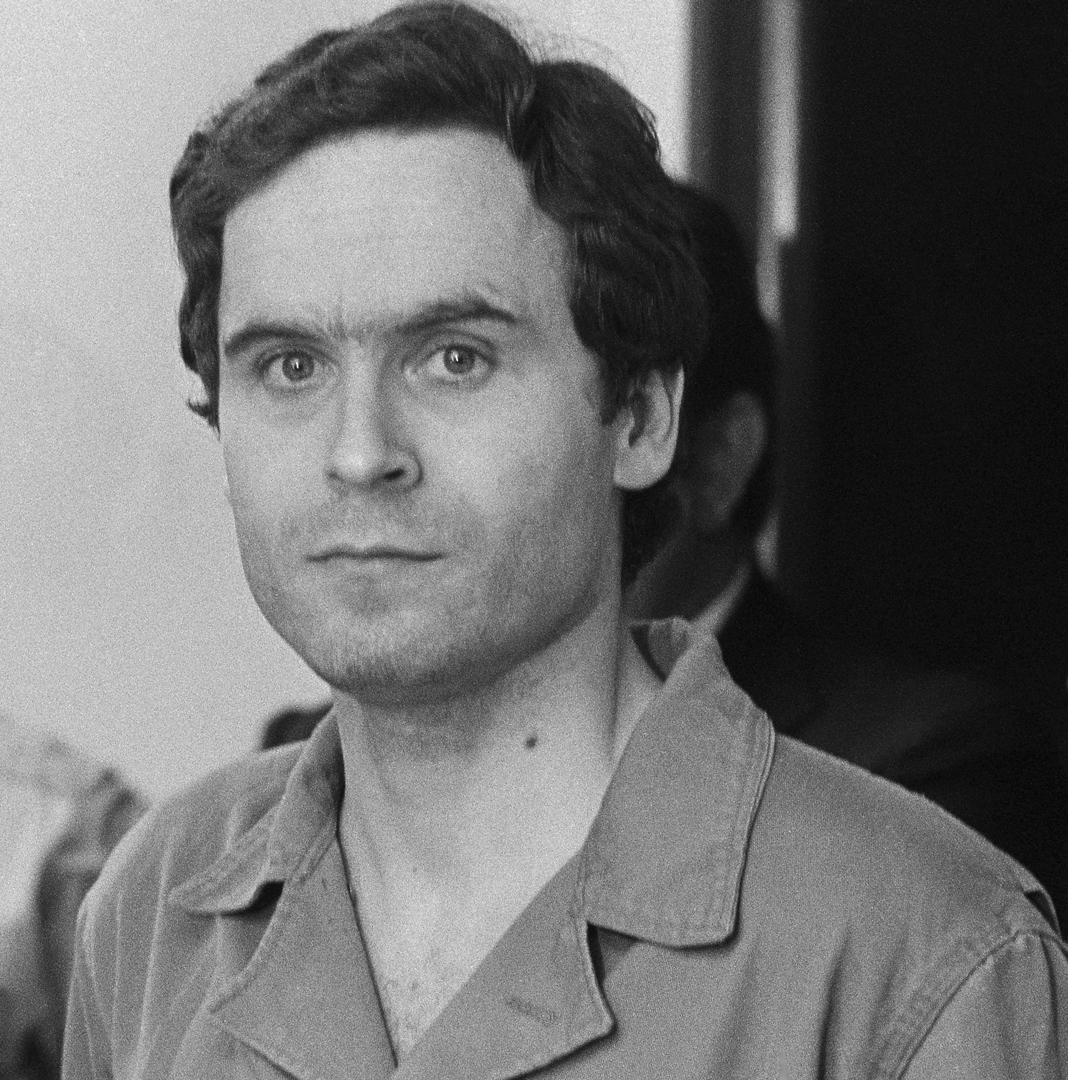
America’s most infamous serial killers include high-profile offenders such as Ted Bundy, Jeffrey Dahmer, John Wayne Gacy, Gary Ridgway, and Samuel Little. These cases stand out not only for their high casualty counts and shocking details, but also for how they fundamentally altered federal law enforcement strategies, criminal psychology, forensic science, and victim advocacy across the United States.
Defining the Phenomenon: How Criminology Classifies Serial Killers
To analyze serial murder objectively, criminologists and law enforcement agencies distinguish it from other forms of multi-victim violence, such as mass murder and spree killing. The Federal Bureau of Investigation (FBI) defines serial murder as the unlawful killing of two or more victims by the same offender or offenders, acting in separate events across distinct time intervals.
Unlike a mass murderer, who kills multiple people in a single event at one location, or a spree killer, who commits a sequence of murders at different locations with virtually no emotional cooling-off period between incidents, a serial killer operates across an extended timeline. The mandatory break between homicides—historically called the "cooling-off period"—allows the offender to return to an outwardly normal life before committing another offense.
| Classification | Characteristics |
|---|---|
| Mass Murder | Single event, single location, no break |
| Spree Killing | Sequential events, multiple spots, no break |
| Serial Murder | Distinct events, cooling-off breaks |
During the establishment of the FBI’s Behavioral Science Unit (BSU) in the 1970s, pioneer agents Robert Ressler and John Douglas categorized serial killers into two primary structural types based on crime scene characteristics:
- Organized Offenders: These individuals exhibit methodical planning, target specific victim profiles, maintain high levels of control at the crime scene, and frequently take deliberate measures to destroy evidence and hide bodies. They often possess average to above-average intelligence, maintain steady employment, and appear social or charismatic.
- Disorganized Offenders: These individuals act impulsively, often driven by acute psychosis or sudden rage. Their crime scenes appear chaotic, showing little evidence of pre-planning or body concealment. They typically leave substantial forensic evidence behind and frequently struggle with social integration or stable employment.
Subsequent behavioral research expanded these categories into motivational typologies, classifying offenders into four core drives: visionary (acting on delusions or auditory hallucinations), mission-oriented (targeting specific social groups), hedonistic (seeking sexual gratification, thrill, or financial gain), and power/control (deriving gratification from total domination over a victim).
Profiles of America’s Most Infamous Serial Killers
Understanding the history of American serial murder requires examining the offenders whose crimes redefined public awareness and forced major updates to investigative procedures.
Ted Bundy: The Illusion of Charm
Ted Bundy operated during the 1970s, committing homicides across multiple states, including Washington, Oregon, Idaho, Utah, Colorado, and Florida. Bundy capitalized on his conventional attractiveness, education, and social adaptability to manipulate victims. His primary operational method involved feigning physical disability—such as wearing a arm sling or using crutches—or posing as a law enforcement authority figure to ask young women for assistance near vehicles before overpowering them.
Bundy’s ability to cross state lines repeatedly exploited the decentralized nature of American policing in the 1970s. Local police departments lacked shared digital databases, enabling Bundy to escape custody twice in Colorado before continuing his assault in Florida. His eventual conviction relied on physical bite-mark evidence (odontology) and eyewitness testimony from his final attack at Florida State University. Executed in 1989, Bundy’s case remains a case study in how social charm and superficial normalcy can mask extreme antisocial personality disorder and violent sexual sadism.
John Wayne Gacy: The Dual Life of the "Killer Clown"
Active in Cook County, Illinois, throughout the 1970s, John Wayne Gacy murdered at least 33 young men and boys. Gacy maintained a prominent public identity as a local political precinct captain, small-business contractor, and community entertainer who performed at children’s hospitals as "Pogo the Clown."
Behind this public persona, Gacy lured young jobseekers and runaways to his home under false pretenses of employment or social gatherings. He immobilized victims using a police handcuff trick before asphyxiating or strangling them. Gacy buried 29 of his victims in the narrow crawl space beneath his suburban home, discarding others in the nearby Des Plaines River when space ran out. Gacy’s arrest in 1978 and execution in 1994 highlighted the grave danger of structural confirmation bias, wherein law enforcement initially overlooked complaints against a respected local businessman.
Jeffrey Dahmer: The Milwaukee Cannibal
Between 1978 and 1991, Jeffrey Dahmer murdered 17 young men and boys in Ohio and Wisconsin. Dahmer’s crimes involved extreme elements of necrophilia, dismemberment, and cannibalism. His operational methods relied on luring marginalized men—predominantly young men of color—from bus stops, bars, and malls to his apartment with promises of money or alcohol.
Dahmer’s case exposed serious systemic failures in urban policing. In May 1991, Milwaukee police officers responded to a call regarding a dazed, naked 14-year-old boy named Konerak Sinthasomphone who had escaped Dahmer's apartment. Officers returned the minor to Dahmer’s custody after accepting Dahmer's explanation that the situation was a private domestic argument. Dahmer murdered the youth shortly after police departed. Dahmer was apprehended two months later when another victim escaped and alerted officers. Sentenced to 16 consecutive life terms, Dahmer was killed by a fellow inmate at Columbia Correctional Institution in 1994.
Gary Ridgway: The Green River Killer and the Rise of DNA Forensics
Gary Ridgway terrorized King County, Washington, throughout the 1980s and 1990s. Ridgway targeted highly vulnerable populations, primarily female sex workers and runaways along the Pacific Highway South corridor near Seattle. For two decades, Ridgway evaded law enforcement, concealing bodies in remote wooded areas around the Green River.
Although Ridgway was questioned by police as early as 1982 and subjected to physical evidence collection in 1987, early forensic technology could not conclusively link him to the crimes. In 2001, advancements in short tandem repeat (STR) DNA profiling allowed forensic scientists to match saliva samples collected from Ridgway in 1987 with semen found on early victims. To avoid the death penalty, Ridgway agreed to a plea bargain, confessing to and identifying the locations of dozens of missing women. Convicted of 49 counts of aggravated first-degree murder (later increased to 50), Ridgway represents the most prolific confirmed male serial killer in U.S. legal history by court conviction.
Samuel Little: America's Most Prolific Confirmed Serial Killer
Samuel Little confessed to murdering 93 women across 19 states between 1970 and 2005. The FBI's Behavioral Analysis Unit has verified at least 60 of his confessions, making him the most prolific confirmed serial killer in American history. Little targeted vulnerable, marginalized individuals—predominantly women of color involved in addiction or sex work—whose disappearances often received minimal public attention or were misclassified as drug overdoses and accidental deaths.
A former competitive boxer, Little knocked his victims unconscious with high-impact punches before strangling them. Because strangulation leaves minimal outward physical trauma compared to gunshot or stab wounds, many of his victims' deaths were not initially registered as homicides. Little was serving a life sentence for three California homicides when Texas Ranger James Holland and FBI analysts matched his confessions to cold cases across the country. Little died in prison in December 2020.
The Unsolved Enigma: The Zodiac Killer
Operating in Northern California during the late 1960s and early 1970s, the unidentified offender known as the "Zodiac Killer" directly attacked seven known victims (five deaths) in Benicia, Vallejo, Lake Berryessa, and San Francisco. The Zodiac distinctively weaponized mass media, mailing complex cryptograms, pieces of victim clothing, and menacing letters to news outlets like the San Francisco Chronicle.
While the Zodiac's confirmed body count is lower than other infamous offenders, his case transformed the public's understanding of serial violence by demonstrating how an offender could manipulate public hysteria through written ciphers and direct communication with reporters and law enforcement. Despite decades of advanced forensic re-examinations, cryptographic analysis, and thousands of suspect leads, the Zodiac's identity remains unsolved.
Comparative Analysis of Major U.S. Serial Murder Cases
The following comparative table summarizes the operational scope, active periods, and key forensic milestones associated with America's most infamous serial offenders.
| Killer Name | Primary Active Years | Confirmed / Confessed Victims | Primary Geographic Region | Key Investigative Turning Point | Final Disposition |
|---|---|---|---|---|---|
| Samuel Little | 1970–2005 | 60+ Confirmed (93 Confessed) | Nationwide (19 States) | Cold-case DNA match in California; full confession series in 2018 | Died in prison (2020) |
| Gary Ridgway | 1982–1998 | 50 Confirmed (70+ Suspected) | Washington State | STR DNA matching from 1987 biological samples | Serving life without parole |
| Ted Bundy | 1974–1978 | 30 Confessed (35+ Suspected) | WA, OR, UT, CO, FL | Bite-mark dental matching (forensic odontology) | Executed (1989) |
| John Wayne Gacy | 1972–1978 | 33 Confirmed | Illinois | Search warrant execution on crawl space | Executed (1994) |
| Jeffrey Dahmer | 1978–1991 | 17 Confirmed | Ohio, Wisconsin | Escaped victim alerted beat officers | Murdered in prison (1994) |
| Dennis Rader (BTK) | 1974–1991 | 10 Confirmed | Kansas | Digital metadata recovery from a floppy disk sent to news outlet | Serving 10 consecutive life terms |
| Joseph DeAngelo (GSK) | 1975–1986 | 13 Confirmed | California | Investigative Genetic Genealogy (IGG) via GEDmatch database | Serving life without parole |
| Zodiac Killer | 1968–1974 | 5 Confirmed (37 Claimed) | Northern California | Ciphers and physical letters; case remains unsolved | Unidentified |
Law Enforcement Evolution: How Serial Killers Transformed Forensics
The challenges posed by multi-jurisdictional serial offenders exposed fundamental vulnerabilities in 20th-century American policing, directly driving modern advances in forensic science and inter-agency coordination.
- 1970s: Fragmented paper files & isolated jurisdictions
- 1980s: FBI Behavioral Science Unit & ViCAP creation
- 1990s: National DNA Index System (CODIS) rollout
- 2010s+: Investigative Genetic Genealogy (IGG) Integration
1. The Behavioral Analysis Unit (BAU) and ViCAP
During the 1970s and 1980s, the FBI formalized criminal investigative analysis by establishing the Behavioral Science Unit, later integrated into the National Center for the Analysis of Violent Crime (NCAVC). To solve the problem of "linkage blindness"—the inability of separate law enforcement agencies to connect crimes committed by the same individual in different jurisdictions—the FBI launched the Violent Criminal Apprehension Program (ViCAP) in 1985. ViCAP serves as a nationwide database that aggregates behavioral, spatial, and physical characteristics of unsolved homicides, missing persons cases, and unidentified remains to detect cross-jurisdictional pattern anomalies.
2. Forensic Odontology and Serology
Before high-resolution DNA technology existed, investigators relied on early forensic marker analyses. The Ted Bundy case served as a major legal test case for forensic odontology, the expert matching of unique dental impressions to soft-tissue bite marks left on a victim. Similarly, advanced serological testing of blood-group antigens in bodily fluids helped narrow suspect pools prior to nuclear DNA profiling.
3. Short Tandem Repeat (STR) DNA and CODIS
The nationwide deployment of the Combined DNA Index System (CODIS) by the FBI in the late 1990s transformed serial killer investigations. STR DNA testing allows crime laboratories to generate distinct genetic profiles from tiny trace samples of hair, blood, saliva, or semen. CODIS enables automated cross-matching of DNA profiles from unknown crime scenes against millions of profiles from convicted offenders and arrestees nationwide. This system directly led to the 2001 arrest of Gary Ridgway and solved hundreds of cold cases.
4. Investigative Genetic Genealogy (IGG)
The most significant breakthrough in cold-case resolution in recent decades is Investigative Genetic Genealogy (IGG). Popularized by the 2018 arrest of Joseph James DeAngelo (the Golden State Killer), IGG combines crime-scene DNA profiles with consumer genetic genealogy databases (such as GEDmatch and FamilyTreeDNA).
When a crime scene DNA profile does not match any offender entry within federal CODIS databases, forensic genetic genealogists upload the profile to public databases to identify second-, third-, and fourth-degree biological relatives. By constructing detailed family trees using public vital statistics, census records, and historical archives, law enforcement can narrow down a suspect list from hundreds of thousands of candidates to specific branches of a single family tree.
Psychological Drivers and Criminological Misconceptions
Public perception of serial killers is frequently shaped by fictional media portrayals, leading to widespread misconceptions regarding their intellectual capacities, behaviors, and motivations.
Myth 1: Serial Killers Are "Geniuses" or Masterminds
Popular culture often portrays serial murderers as highly intelligent individuals who outsmart law enforcement through brilliant planning. In reality, empirical research by criminologists demonstrates that the average IQ distribution of serial killers mirrors the general population, with a significant number falling into average or below-average intellectual ranges. The prolonged evasion of law enforcement by individuals like Gary Ridgway or Samuel Little was rarely due to extreme intellect; rather, it stemmed from:
- Systemic gaps in inter-departmental communication.
- The deliberate targeting of marginalized, under-reported victims.
- Deficits in early forensic technology.
Myth 2: Serial Killers Can Be Identified by a Single Profile
No single psychological profile accounts for all serial offenders. While many exhibit severe personality disorders—specifically Antisocial Personality Disorder characterized by lack of empathy, grandiosity, impulsivity, and remorse—others suffer from severe psychotic breaks or complex neurological deficits. The famous MacDonald Triad (a set of three behavioral traits in childhood: bedwetting past age five, cruelty to animals, and obsession with fire-setting) was once viewed as a reliable predictor of adult serial violence. Modern criminology, however, views the triad as a list of potential stress indicators rather than a predictive diagnostic tool.
Myth 3: Victims Are Selected Purely by Physical Coincidence
Serial killers rarely choose victims completely at random. Instead, selection is heavily influenced by victim vulnerability and spatial convenience. Criminologist Steven Egger highlighted the concept of the "less dead"—individuals in society who are socially marginalized, such as sex workers, unhoused individuals, drug users, and runaway youth. Serial offenders frequently exploit societal indifference toward these groups, recognizing that missing person reports for marginalized individuals may face delays or reduced investigative resources.
Frequently Asked Questions
Who is officially the most prolific serial killer in American history?
By verified body count, Samuel Little is officially the most prolific serial killer in U.S. history. He confessed to 93 murders committed between 1970 and 2005, and federal law enforcement agencies have corroborated at least 60 of those confessions. Before the verification of Little’s crimes, Gary Ridgway held the record with 50 confirmed murder convictions.
What is the main difference between a mass murderer, a spree killer, and a serial killer?
The primary distinctions lie in the location, timing, and emotional break between homicides:
- A mass murderer kills multiple victims in a single event, at one location, during a continuous timeframe.
- A spree killer kills across multiple locations in a short sequence without an emotional cooling-off period.
- A serial killer kills two or more victims in separate, distinct events separated by a cooling-off period that can last days, weeks, months, or years.
How did the Golden State Killer case change serial killer investigations?
The Golden State Killer case demonstrated the power of Investigative Genetic Genealogy (IGG). By taking crime-scene DNA that had no matches in federal law enforcement databases (CODIS) and uploading it to open consumer genetic databases, forensic scientists identified distant family relatives of the unknown killer. By building out extensive family trees, investigators successfully traced the DNA directly to Joseph James DeAngelo, establishing a new operational blueprint for solving decades-old cold cases.
Why do some famous serial killer cases remain unsolved?
Cases like the Zodiac Killer remain unsolved due to a combination of historical factors: crimes committed prior to modern digital record-keeping, degradation or improper handling of physical evidence from decades past, lack of recoverable nuclear DNA, and cross-jurisdictional communication failures during the original investigations.
What is "linkage blindness" in criminology?
Linkage blindness is a law enforcement concept describing the failure of separate police departments or jurisdictions to recognize that individual homicides committed in different areas were carried out by the same offender. This phenomenon led directly to the creation of the FBI's ViCAP system in 1985 to aggregate and cross-reference murder details nationwide.
Guidance for Studying Criminology and Cold Case Research
For students, researchers, and true crime analysts seeking to study serial murder from an analytical perspective, relying on accurate primary sources is essential:
- Access Primary Legal and Federal Documents: Utilize official resources such as the FBI Freedom of Information Act (FOIA) Vault, which contains digitized primary investigative files on historical cases including Ted Bundy, Jeffrey Dahmer, and the Zodiac Killer.
- Consult Verified Criminological Repositories: Study data provided by official law enforcement databases, such as the FBI Violent Criminal Apprehension Program (ViCAP), to review open missing-persons cases and unidentified human remains without relying on sensationalized media.
- Prioritize Victim-Centered and Methodological Frameworks: Focus on academic journals (such as the Journal of Interpersonal Violence or Homicide Studies) that analyze structural factors, investigative genealogy, and systemic vulnerabilities rather than glorifying the perpetrators.