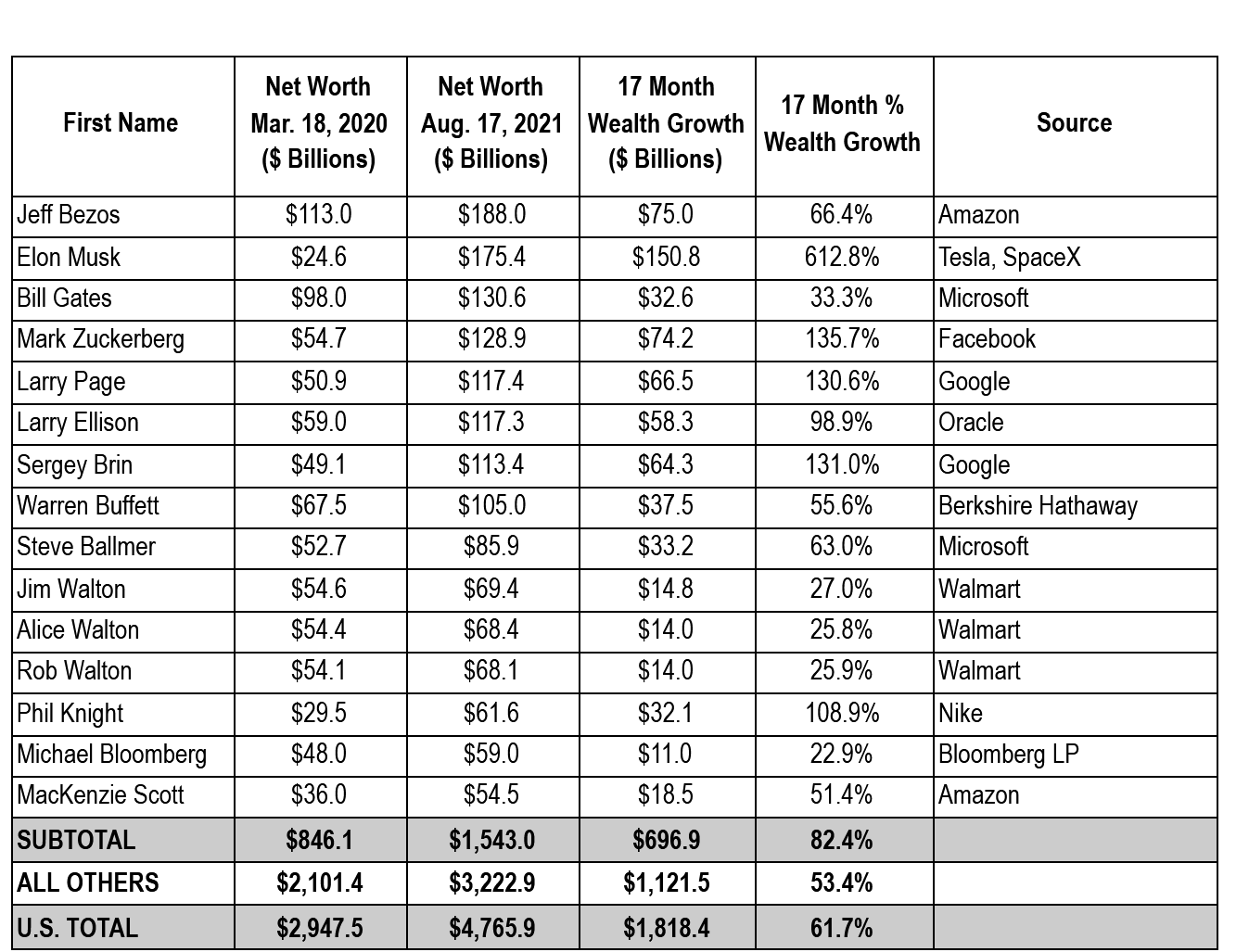
As of 2026, American billionaire wealth is characterized by unprecedented concentration in the technology and financial sectors, with the top 0.1% of households holding a record share of national assets. While the aggregate net worth of the billionaire class has surged, distribution patterns have shifted toward "new money" tech hubs and energy-transition industries, reflecting broader structural changes in the U.S. economy.
The State of American Billionaire Wealth in 2026
The landscape of extreme wealth in the United States has undergone a transformative decade. By 2026, the number of American billionaires has stabilized at approximately 800 individuals, a figure that has seen marginal fluctuations due to market volatility and the maturing of the artificial intelligence (AI) sector. However, the total aggregate wealth held by this group has reached historic highs, often exceeding $5.5 trillion. This concentration of capital remains one of the most scrutinized aspects of the American economy, influencing everything from political lobbying to the luxury real estate market.
Wealth distribution among this elite group is heavily skewed toward the top. The "centibillionaire" class—those with net worths exceeding $100 billion—has expanded, creating a massive gap even between the "average" billionaire and the ultra-wealthy elite. This divergence is driven primarily by the compounding nature of equity-based wealth and the dominant performance of a handful of multinational corporations that have successfully integrated AI into their core revenue models.
Primary Drivers of Wealth Accumulation and Distribution
The trends observed in 2026 are not accidental; they are the result of specific economic engines that have favored capital over labor for several cycles. Understanding these drivers is essential for analyzing how wealth moves within the upper echelons of society.
The Artificial Intelligence Supercycle
By 2026, the speculative phase of AI has transitioned into a period of realized gains. Billionaires who early-adopted or funded large language models (LLMs) and specialized hardware manufacturers have seen their net worths double or triple. Unlike previous tech booms, the AI cycle has created wealth not just for software founders, but for the owners of the physical infrastructure—data centers, semiconductor foundries, and energy providers—required to power the digital age.
The Green Energy Transition
The federal incentives established in the early 2020s, such as the Inflation Reduction Act, have reached full maturity by 2026. This has birthed a new segment of billionaires whose wealth is tied to lithium mining, battery technology, and renewable energy grids. As the U.S. pushes toward decarbonization, the "Green Billionaires" have become a significant sub-sector of the Forbes 400, often displacing traditional oil and gas magnates who failed to pivot.
Private Equity and Alternative Assets
While public markets remain a primary vehicle for wealth, the move toward private equity and "family offices" has accelerated. American billionaires in 2026 increasingly keep their companies private longer, allowing them to capture more value before an IPO. This trend has made wealth distribution less transparent, as private valuations are not subject to the same daily market fluctuations as the S&P 500.
Geographic Shifts: Beyond Silicon Valley and Wall Street
For decades, the distribution of billionaire wealth was anchored firmly in New York City and the San Francisco Bay Area. However, by 2026, a significant regional decentralization has occurred. While these hubs remain powerful, wealth is now more distributed across several "secondary" power centers.
- Austin and Dallas, Texas: Benefiting from a lack of state income tax and a massive influx of tech headquarters, Texas now hosts one of the largest concentrations of billionaire wealth in the country.
- Miami and West Palm Beach, Florida: This region has become the de facto capital for hedge fund and private equity billionaires, driven by favorable regulatory environments and lifestyle preferences.
- The Mountain West: States like Wyoming and Montana have seen a surge in "land wealth," where billionaires purchase vast tracts of agricultural and conservation land, shifting their portfolios from liquid assets to tangible real estate.
This geographic shift has profound implications for local economies, often driving up real estate prices and altering the political landscape of formerly "purple" or "red" states as wealthy donors relocate.
Wealth Distribution vs. The Median Household
To understand the scale of billionaire wealth distribution, it must be compared to the broader American populace. The Federal Reserve’s Distributional Financial Accounts provide a stark look at these disparities. In 2026, the wealthiest 1% of Americans hold more wealth than the entire middle class (defined as the 40th to 90th percentiles).
| Wealth Tier | 2020 Estimated Share | 2023 Estimated Share | 2026 Projected Share |
|---|---|---|---|
| Top 0.1% | 12.5% | 14.1% | 15.8% |
| Top 1% (Total) | 30.2% | 32.4% | 34.5% |
| Bottom 50% | 2.1% | 2.5% | 2.3% |
| Total Billionaire Wealth | $3.4 Trillion | $4.8 Trillion | $5.6 Trillion |
The data suggests that while the bottom 50% saw marginal gains during the post-pandemic recovery, those gains have largely stagnated by 2026 due to the rising costs of housing and healthcare, whereas the billionaire class has seen their assets continue to appreciate through equity markets and high-yield private investments.
Demographic Trends: Diversity in the Billionaire Class
The demographic profile of the American billionaire is changing, albeit slowly. In 2026, we see a younger cohort of billionaires emerging, often from the fintech and creator economy sectors. These individuals are more likely to be "self-made" rather than heirs to industrial fortunes, though the concentration of inherited wealth remains a significant factor in long-term distribution.
Gender and racial diversity within this group remain areas of significant disparity. While the number of female billionaires has increased—largely through entrepreneurship in the healthcare and retail sectors—women still represent less than 15% of the total billionaire population. Similarly, Black and Hispanic billionaires remain significantly underrepresented relative to their share of the total U.S. population, highlighting persistent barriers to high-level capital access.
Policy Impacts: Taxes and Regulation in 2026
The distribution of wealth in 2026 is heavily influenced by the legislative environment. After years of debate regarding a "Wealth Tax," the focus has shifted toward more targeted measures.
The "Billionaire Minimum Income Tax"
By 2026, discussions around taxing unrealized gains have evolved into specific proposals targeting the borrowing habits of the ultra-wealthy. Many billionaires use their stock portfolios as collateral for low-interest loans to fund their lifestyles without triggering capital gains taxes. New reporting requirements from the Internal Revenue Service (IRS) have begun to address these "buy-borrow-die" strategies, though their impact on overall wealth distribution remains to be seen.
Global Minimum Tax Agreements
The U.S. participation in international tax frameworks, spearheaded by the OECD, has limited the ability of billionaires to shift their corporate earnings to offshore tax havens. This has resulted in a higher "effective" tax rate for many tech-focused billionaires compared to the previous decade, though it hasn't significantly dented their total net worth.
Philanthropic Trends: From Charity to Impact
As the billionaire class grows, so does its influence on the non-profit sector. In 2026, the trend has moved away from traditional "name-on-a-building" philanthropy toward "Impact Investing" and "Systems Change."
The Giving Pledge, founded by Bill Gates and Warren Buffett, continues to gain signatories. However, a new trend in 2026 involves billionaires creating limited liability companies (LLCs) rather than traditional 501(c)(3) foundations. This allows them to engage in both charitable giving and political lobbying or for-profit investments that align with their social goals. This "hybrid" approach to wealth distribution gives billionaires unprecedented power over public policy and social services, leading to debates about the "privatization" of the public good.
Common Obstacles to Wealth Redistribution
Despite various policy efforts, the redistribution of billionaire wealth downward remains challenging for several structural reasons:
- Asset Liquidity: Most billionaire wealth is tied up in company stock. Selling large portions to pay taxes could tank the stock price, hurting millions of everyday 401(k) investors.
- Legal Complexity: The use of sophisticated trusts, such as Grantor Retained Annuity Trusts (GRATs), allows billionaires to pass wealth to heirs with minimal tax exposure.
- Global Mobility: Billionaires can easily relocate their legal residence or assets to jurisdictions with more favorable tax treatments, a phenomenon known as "capital flight."
Frequently Asked Questions
How many billionaires are in the United States in 2026?
There are approximately 800 to 850 billionaires in the U.S. in 2026. This number has grown from roughly 614 in 2020, though the rate of growth has slowed as the market reaches saturation in certain tech sectors and interest rates remain higher than the 2010s average.
What industry has created the most billionaires recently?
Artificial Intelligence and Green Technology are the leading sectors for new billionaire creation in 2026. While traditional finance and real estate still hold a large share, the most rapid wealth accumulation is occurring in companies providing the hardware and infrastructure for the "next-gen" internet.
Is billionaire wealth distribution becoming more equal?
No. Data from 2026 indicates that wealth is becoming more concentrated at the very top. While there are more billionaires than there were a decade ago, the "Top 10" individuals hold a significantly larger percentage of the total group's wealth than they did in the early 2000s.
How does the "Great Wealth Transfer" affect these trends?
The Great Wealth Transfer refers to the trillions of dollars being passed from Baby Boomers to their heirs. By 2026, this has resulted in a rise of "successor billionaires" who manage family offices. These heirs are often more focused on social impact and climate change than the founders of the wealth.
What is the average tax rate for a U.S. billionaire in 2026?
Due to the structure of their wealth (mostly capital gains and unrealized appreciation), the effective tax rate for many billionaires remains lower than that of high-earning professionals like doctors or lawyers. Estimates from the Congressional Budget Office (CBO) suggest an effective rate of 8% to 12% when accounting for total economic income.
Practical Recommendations for Monitoring Wealth Trends
For investors, policymakers, and researchers looking to track these movements accurately, relying on a single source is insufficient.
- Consult Official Data: Regularly check the Federal Reserve’s Z.1 Financial Accounts of the United States for the most accurate macroeconomic view of wealth distribution.
- Track Family Office Activity: As more billionaires move wealth into private family offices, monitor reports from firms like Campden Wealth or UBS, which provide insights into how this "shadow" capital is being deployed.
- Analyze Proxy Statements: For billionaires who are founders of public companies, the SEC's EDGAR database remains the best tool for seeing exactly how much stock is being sold or pledged as collateral.
- Observe Regional Real Estate: Watch the commercial and luxury residential markets in "emerging" hubs like Austin, Miami, and Salt Lake City to see where billionaire capital is physically settling.
The distribution of wealth among American billionaires in 2026 is a reflection of a high-tech, capital-intensive economy. While it has driven innovation and funded massive industrial shifts, the resulting concentration presents ongoing challenges for social mobility and economic stability.