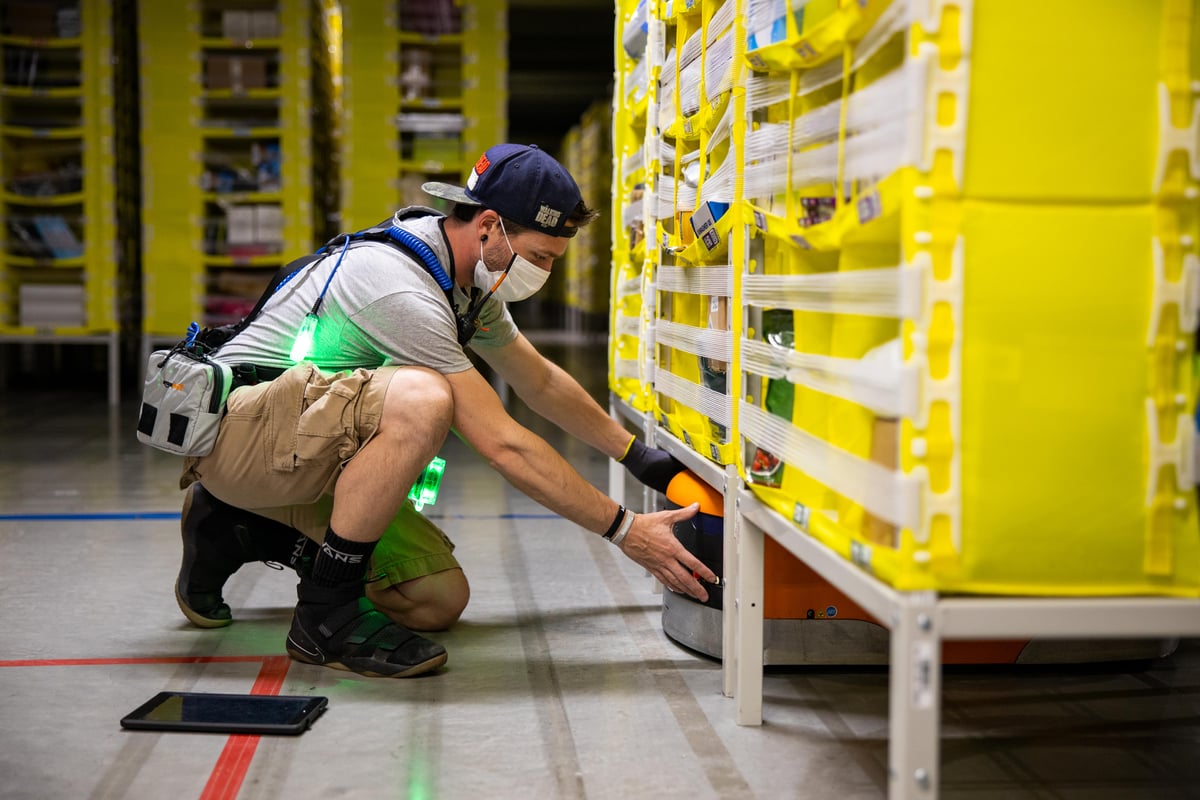
The cost of a workers' compensation premium hike for Amazon-related businesses—primarily Delivery Service Partners (DSPs) and third-party sellers with employees—typically ranges from 5% to 15% annually, depending on your Experience Modification Rate (EMR) and state-specific rate adjustments. For an average DSP, this can translate to an additional $2,000 to $10,000 per year per fleet.
Workers’ compensation insurance is a mandatory expense for any business operating within the Amazon ecosystem that employs staff. Whether you are a Delivery Service Partner (DSP) managing a fleet of branded vans or a high-volume warehouse operator, the "premium hike" is a recurring concern. In 2026, the landscape of workers' comp has become increasingly complex due to evolving safety regulations, the rising cost of medical care, and the specific risk profiles associated with "last-mile" delivery services.
To understand how much a premium hike will cost you, it is essential to distinguish between the various entities involved. If you are an individual warehouse associate or a driver, you do not pay insurance premiums; your employer does. If you are a business owner (DSP or Seller), your premium is a variable cost that fluctuates based on your payroll, your safety record, and the broader economic climate of the insurance industry.
Understanding the Components of Your Workers' Comp Premium
Before calculating the cost of a hike, you must understand the formula used by insurance carriers to determine your base cost. Workers’ compensation premiums are not arbitrary numbers; they are the result of a specific calculation used across the United States.
The basic formula is: (Total Payroll / 100) x Class Code Rate x Experience Modification Rate (EMR) = Base Premium
The Role of Payroll
Payroll is the primary exposure base. For every $100 of payroll you issue to your drivers or warehouse staff, you pay a specific rate. In 2026, as wages have adjusted for inflation, even if the "rate" stays the same, your total premium will rise simply because your payroll has increased. A 5% increase in driver wages automatically results in a 5% increase in your workers' comp premium, assuming all other factors remain constant.
Class Codes and Risk Profiles
Insurance companies categorize employees by the risk associated with their jobs. Amazon delivery drivers often fall under Class Code 7219 (Trucking: Local Hauling) or similar designations depending on the state. Warehouse workers may fall under Class Code 8018 (Wholesale Stores). Each code has a different rate. If NCCI (National Council on Compensation Insurance) or a state rating bureau decides that "last-mile delivery" has become more dangerous in 2026, they will increase the rate for that specific class code, leading to a premium hike across the board for all DSPs in that jurisdiction.
Why Premium Hikes Are Occurring in 2026
Several factors are driving the current upward trend in workers' compensation costs for those associated with Amazon.
Medical Inflation
The cost of treating workplace injuries—specifically musculoskeletal disorders common in lifting and repetitive motion tasks—has risen. In 2026, physical therapy, surgical procedures, and diagnostic imaging (MRIs) are significantly more expensive than they were five years ago. Because insurance companies must set aside "reserves" to pay for future medical costs of current claims, they raise premiums to ensure those reserves are adequate.
The "Experience Period" Lag
Your premium in 2026 is heavily influenced by your safety record from 2022, 2023, and 2024. This is known as the experience period. If your business had a spike in minor "fender benders" or back strains during the post-pandemic surge, those claims are just now hitting your Experience Modification Rate (EMR) with full force. A "hike" in 2026 is often the financial ghost of accidents that happened two or three years ago.
Increased Regulatory Oversight
State labor departments and OSHA have increased scrutiny on "high-pace" fulfillment environments. In some jurisdictions, new laws have been passed that create a "rebuttable presumption" that certain injuries (like carpal tunnel or lower back pain) are work-related for warehouse employees. This makes it harder for insurers to deny claims, leading to higher payouts and, subsequently, higher premiums for the employer.
Calculating the Actual Cost of a Hike
To estimate your specific cost increase, you must look at your previous year’s audit and your new quote. A "premium hike" usually refers to one of two things: an increase in the manual rate or an increase in your EMR.
Scenario A: The Manual Rate Increase
If the state rating bureau increases the rate for delivery drivers from $8.00 to $8.50 per $100 of payroll, that is a 6.25% hike.
- Old Cost: $500,000 payroll / 100 * $8.00 = $40,000
- New Cost: $500,000 payroll / 100 * $8.50 = $42,500
- Total Hike Cost: $2,500
Scenario B: The EMR Increase (The "Safety Tax")
If your safety record worsens and your EMR moves from 1.0 (average) to 1.2 (poor), you are effectively paying a 20% penalty on your base premium.
- Base Premium: $40,000
- New Premium with 1.2 EMR: $48,000
- Total Hike Cost: $8,000
When these two scenarios happen simultaneously—both the state rate goes up and your safety record goes down—the "compounding" effect can lead to devastating financial hits for a small business.
Estimated 2026 Premium Increases by Business Size
The following table provides an estimate of the additional costs a business might face in 2026 based on a moderate 10% premium hike. These figures assume standard delivery/warehouse class codes.
| Business Type | Estimated Annual Payroll | Base Premium (Estimated) | 10% Hike Cost (Annual) | 10% Hike Cost (Monthly) |
|---|---|---|---|---|
| Small Delivery Sub-contractor | $250,000 | $15,000 | $1,500 | $125 |
| Standard Amazon DSP (20-30 Vans) | $1,200,000 | $72,000 | $7,200 | $600 |
| Large DSP / Multi-Territory | $4,500,000 | $270,000 | $27,000 | $2,250 |
| Third-Party Seller (Warehouse) | $600,000 | $24,000 | $2,400 | $200 |
| Independent Flex Driver (Self-Employed) | N/A | $500 - $1,500* | $50 - $150 | $4 - $12 |
*Note: Many Flex drivers are covered by Amazon's occupational accident insurance, but those who opt for their own workers' comp policy will see smaller dollar-amount increases but similar percentage hikes.
State-Specific Variations: Where Hikes Hit Hardest
Workers' compensation is regulated at the state level, meaning a "hike" in California may not happen in Texas. In 2026, we see distinct trends based on geography.
- California and New York: These states continue to have some of the highest manual rates due to high litigation costs and comprehensive benefit structures. A 5% hike here is more expensive in absolute dollars than a 15% hike in a state like Indiana.
- Washington State: As a monopolistic state (where insurance is bought directly from the state fund), premium hikes are often announced annually in November and take effect in January. In 2026, Washington has focused heavily on the "delivery sector" risk, leading to targeted increases for DSPs.
- Florida and Georgia: These states have seen moderate increases driven primarily by medical inflation and "attorney representation" rates in claims.
Factors That Influence Your Specific Premium Increase
Not every Amazon-associated business will see the same hike. Your "controllable" costs are what separate you from your competitors.
- Claim Severity vs. Claim Frequency: Insurance companies hate frequency more than severity. Ten small $1,000 claims (trips and falls) are often more damaging to your EMR than one $10,000 claim (a broken leg). Frequency suggests a lack of management control and safety culture.
- Return-to-Work Programs: In 2026, the "Light Duty" protocol is the best tool for fighting hikes. If an injured driver can sit in the office and do dispatch work instead of staying home on "Total Temporary Disability" (TTD), the cost of the claim is drastically reduced, lowering your future premium.
- Telematics and Safety Tech: Many insurers now offer "Telematics Discounts." If your vans are equipped with advanced cameras and speed-monitoring software that you can prove you use for coaching, some carriers may waive a portion of a general rate hike.
Strategies to Mitigate the Cost of the Hike
If you receive a renewal notice in 2026 with a significant increase, you are not entirely powerless. There are several steps you can take to neutralize the impact.
1. Audit Your Payroll Classifications
Ensure your employees are categorized correctly. A common mistake is putting clerical staff (dispatchers/managers) under the "Driver" class code. Clerical rates are pennies on the dollar compared to driver rates. Misclassifying even two managers can cost you thousands in unnecessary premium hikes.
2. Implement a "Post-Accident Drug Testing" Policy
Where legal, a robust post-accident drug testing policy can sometimes limit your liability for a claim if the injury was caused by impairment. In 2026, ensure your policy is updated to comply with current state laws regarding off-duty legalized substances.
3. Review Your Open Claims Annually
Before your "valuation date" (usually six months before your policy renews), meet with your insurance broker to review open claims. If a claim has been resolved but the insurer still has $20,000 in "reserves" sitting on the books, that reserve is artificially inflating your EMR. Force the carrier to close or lower the reserve to reflect the actual payout.
4. Shop the "Non-Standard" Market
If you are an Amazon DSP, you may find that the "Standard" market (carriers like Travelers, Hartford, or Liberty Mutual) may have a low appetite for delivery risk. In 2026, specialized programs and "Captive" insurance models have become more popular for high-performing DSPs, allowing them to bypass general rate hikes by pooling risk with other safe operators.
Frequently Asked Questions
Does Amazon reimburse DSPs for workers' comp premium hikes? Generally, no. Amazon provides a fixed rate or a "reimbursement" based on a standard expectation of costs within the DSP contract. If your premiums skyrocket because of a poor safety record (a high EMR), that cost usually comes directly out of the business owner's profit margin. However, during major state-wide rate changes, Amazon sometimes adjusts its payment structures to reflect the new cost of doing business.
Why is my premium increasing if I haven't had any accidents? This is likely due to a "Manual Rate" increase. Even with a perfect safety record (EMR of 1.0 or lower), if the state determines that the trucking or warehouse industry as a whole is more expensive to cover, every business in that category pays more. Additionally, if your payroll increased because you hired more drivers or gave raises, your premium will rise proportionally.
How long does a "bad year" of accidents stay on my premium? A bad year stays on your Experience Modification Rate for three years. In the workers' comp world, this is a rolling window. For a 2026 policy, the insurer typically looks at your data from 2022, 2023, and 2024. Your 2025 data is "skipped" to allow for claims to develop. This means an accident today will haunt your premiums until 2029 or 2030.
Can I use Amazon’s "occupational accident insurance" instead of workers' comp? For employees, no. Workers' compensation is a legal requirement in almost every state. Occupational accident insurance is typically used for independent contractors (like some Flex drivers). Attempting to replace workers' comp with other products for employees can result in massive fines and the loss of your Amazon contract.
How much does a single injury usually increase a premium? There is no single answer, but a "Lost Time" injury (where the worker misses more than a few days) can easily increase a small DSP’s EMR by 0.1 to 0.2 points. On a $50,000 base premium, a 0.2 EMR increase results in an extra $10,000 per year for the next three years.
Practical Recommendation
To effectively manage the cost of a workers' comp premium hike in 2026, request an "Experience Rating Worksheet" from your broker immediately. This document shows exactly which claims are driving your EMR up. If your hike is due to state-wide rate increases, focus on payroll accuracy and class code audits. If the hike is due to a rising EMR, invest in a formal "Return to Work" program. Bringing an injured worker back to a desk job one week earlier can save thousands of dollars in "Indemnity" costs, which has a direct, downward impact on your 2027 and 2028 premiums.
Disclaimer: This article provides general information regarding workers' compensation insurance and does not constitute legal, financial, or insurance advice. Regulations vary significantly by jurisdiction. Always consult with a licensed insurance professional or legal counsel regarding your specific business requirements and policy terms.