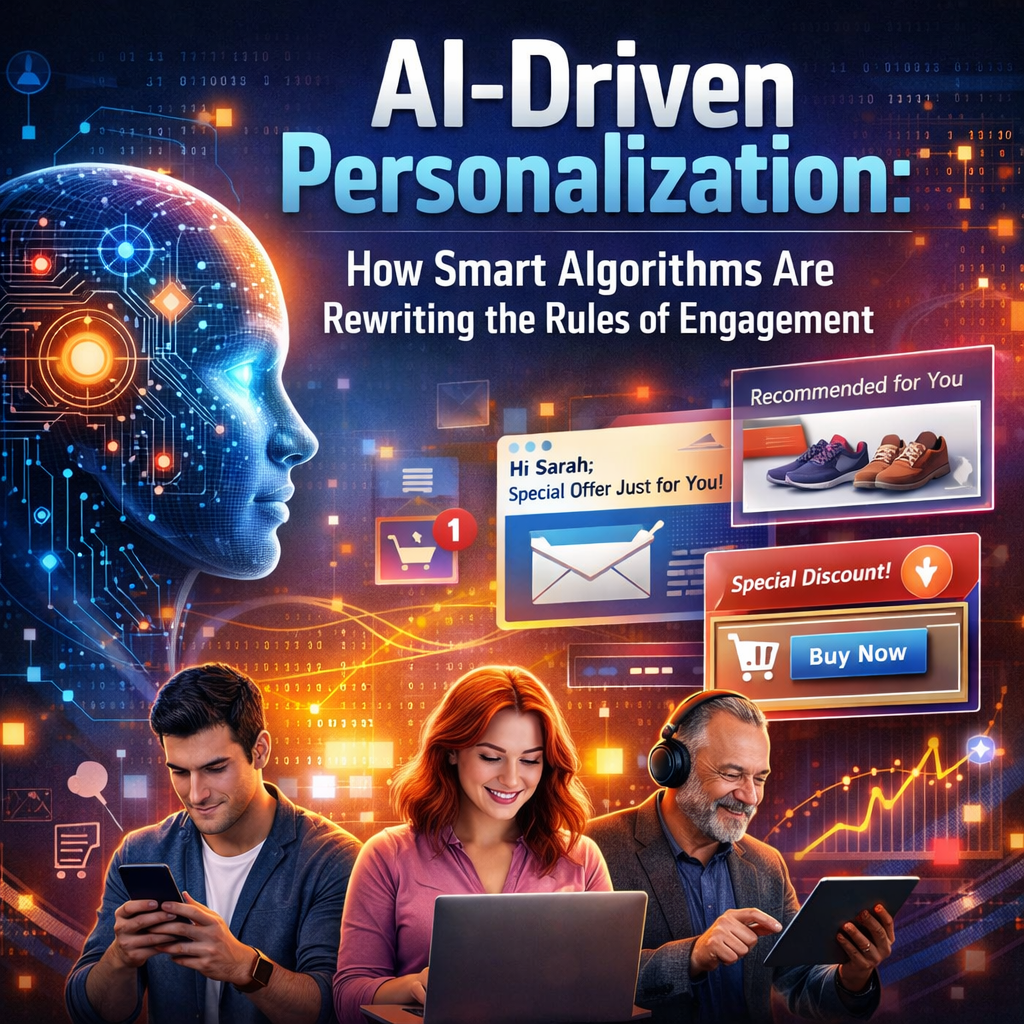
The rise of AI-driven personalization marks a paradigm shift in how digital experiences are curated, with professionals like Amanda Weiss instrumental in bridging the gap between raw algorithmic capability and human-centric user engagement. This transformation moves beyond static data collection into a dynamic, real-time ecosystem where individual user intent dictates the architecture of the interface, content delivery, and service recommendations.
The Evolution of Personalization Strategy
For over a decade, digital personalization remained largely binary, relying on basic segment grouping—such as geography, device type, or past purchase history. The "rise" of AI-driven personalization refers to the transition toward hyper-personalization, where machine learning models analyze behavioral patterns, sentiment, and predictive intent to craft unique pathways for every user.
Amanda Weiss’s work in this domain focuses on the synthesis of data science and consumer psychology. Rather than viewing personalization as a marketing tactic, she advocates for it as a structural necessity for modern platforms. This involves moving away from "rule-based" systems—which are rigid and often fail when a user deviates from a predicted path—toward "intent-based" systems that adapt to the user's current context rather than their historical labels.
Understanding AI-Driven Personalization
At its core, AI-driven personalization is the application of large-scale computational models to deliver content that feels bespoke. The technical infrastructure supporting this includes several critical layers:
- Data Ingestion and Normalization: The ability to collect diverse data points—including dwell time, interaction frequency, and implicit feedback—and store them in a unified customer profile.
- Machine Learning Inference: Utilizing predictive models, such as Collaborative Filtering or Reinforcement Learning, to determine the "next best action" for a specific user session.
- Real-Time Execution: Delivering the tailored experience within milliseconds, a requirement that necessitates high-performance cloud infrastructure and edge computing.
The transition to this model requires organizations to move away from siloed legacy databases. Instead, they must implement a "Single Source of Truth" architecture, often facilitated by Customer Data Platforms (CDPs), which allows AI models to query user behavior across mobile, web, and offline touchpoints simultaneously.
The Human-in-the-Loop Framework
One of the most persistent challenges in the deployment of AI-driven systems is the "Black Box" problem, where the rationale behind an algorithm’s decision is opaque. Amanda Weiss emphasizes the importance of "Human-in-the-Loop" (HITL) processes, where technical personalization strategies are validated by UX designers and qualitative researchers.
The danger of pure automation is the creation of feedback loops. If an algorithm only presents items similar to what a user has already clicked, the user becomes trapped in an echo chamber of their own past behavior. The strategy advocated by leaders in the field involves integrating "exploration" into the model—intentionally presenting novel content or options to gauge if user interests have evolved. This balance between exploitation (using known data) and exploration (testing new hypotheses) is the hallmark of sophisticated, AI-driven personalization.
Comparative Landscape of Personalization Technologies
| Technology Type | Mechanism | Best Use Case | Primary Limitation |
|---|---|---|---|
| Rule-Based | Manual "If-Then" logic | Simple marketing campaigns | High maintenance, non-scalable |
| Collaborative Filtering | Peer-to-peer behavior matching | E-commerce recommendations | "Cold start" problem for new users |
| Content-Based AI | Attribute matching (tags/meta) | Niche interest content | Poor at serendipity/discovery |
| Generative AI Personalization | LLM-based content adaptation | Copywriting and dynamic UI | High computational cost/latency |
Operationalizing Personalization: A Strategic Approach
For businesses looking to mature their personalization efforts, the implementation process must be iterative rather than a "big bang" release.
1. Data Hygiene and Consent: Before building an AI layer, one must ensure data quality. Under current 2026 data privacy regulations, obtaining explicit, transparent consent for data collection is not just a legal requirement but a prerequisite for trust. Personalization that feels invasive is often the result of poor data transparency.
2. Identifying Key Intent Signals: Identify the metrics that actually matter. In many industries, "clicks" are a vanity metric. Focus on "conversion velocity"—how quickly an AI-driven interaction leads to a desired goal, such as a subscription sign-up or a resolved support ticket.
3. Model Training and Feedback Loops: AI is not a "set and forget" tool. Models require constant re-training on new data to maintain relevance. A personalization strategy must include an evaluation phase where model predictions are compared against actual user outcomes to identify "drift"—the phenomenon where an AI model loses accuracy over time due to shifts in market behavior.
Addressing the Cold Start Problem
A perennial issue in personalization is the "cold start" problem—the difficulty of providing relevant content to new users with no historical data. Advanced strategies employed in the field often utilize Zero-Party Data collection. This is data that a user intentionally and proactively shares with a brand, such as through preference centers, onboarding quizzes, or interactive surveys. By asking the user about their goals or interests upfront, the AI system is given a "seed" of information, allowing it to provide relevant experiences from the very first session.
The Role of Generative AI in Personalization
As of 2026, the integration of Generative AI (GenAI) has taken personalization beyond selecting from a pre-defined list of items. It now involves the real-time creation of personalized messaging. For instance, an AI can now dynamically rewrite the introduction of a landing page to match the industry or pain point of an individual visitor. This level of customization was previously impossible due to the sheer volume of content production required. However, this creates a new technical debt: maintaining brand voice and consistency across an infinite variation of generated content.
Ethical Considerations and Mitigation
The rise of AI-driven personalization is not without controversy. There is a documented risk of algorithmic bias, where the system may prioritize segments that are more likely to convert, effectively alienating minority user groups. To mitigate this, organizations are adopting "Fairness-Aware Machine Learning." This involves auditing algorithms for protected characteristics and ensuring that the training datasets represent a diverse spectrum of the user base.
Furthermore, as systems become more predictive, the boundaries of user privacy tighten. The current regulatory environment emphasizes the "Right to Explanation"—a legal expectation that users can understand why a specific recommendation was made. Systems that utilize complex black-box deep learning models are finding it increasingly difficult to meet this standard, driving a surge in interest toward "Explainable AI" (XAI) frameworks that provide traceability for automated decisions.
FAQ: The Future of Personalization
How do I balance AI-driven automation with brand personality? Balance is achieved by setting "guardrails" for your AI models. While the AI may customize the messaging structure, the vocabulary, tone, and visual assets should be constrained by brand-defined style guides that the AI is instructed to follow at all times.
Does AI personalization always result in higher conversion? Not necessarily. If the personalization is too granular or intrusive, it can result in the "Uncanny Valley" effect, where the user feels watched rather than helped. Effective personalization focuses on utility and speed, not just demonstrating that the system "knows" the user.
What is the minimum data requirement for effective personalization? There is no fixed number, but it is better to have high-quality, zero-party data than a massive volume of noisy, third-party behavioral data. Start with declared interests from users; this provides a much higher signal-to-noise ratio than inferred behavior.
Is AI personalization too expensive for small teams? The barrier to entry has lowered significantly by 2026. While custom models require data science expertise, many off-the-shelf SaaS solutions now offer "Personalization-as-a-Service" that allows teams to plug into established models via API without needing to train models from scratch.
How often should personalization models be audited? In a stable market, quarterly audits are standard. However, if your business experiences a significant shift—such as a new product launch or a change in seasonal demand—models should be audited for performance drift immediately to ensure they are still aligning with user needs.
Moving Forward
The rise of AI-driven personalization is an ongoing journey that requires a shift from viewing users as demographics to viewing them as individuals with shifting, temporary intents. For organizations aiming to implement these technologies, the immediate next step is to audit current data collection practices. Ensure that the data you are collecting is actionable and that you have a mechanism to ask users directly about their preferences. By combining this direct input with predictive AI, companies can move beyond mere recommendations and build truly anticipatory user experiences.