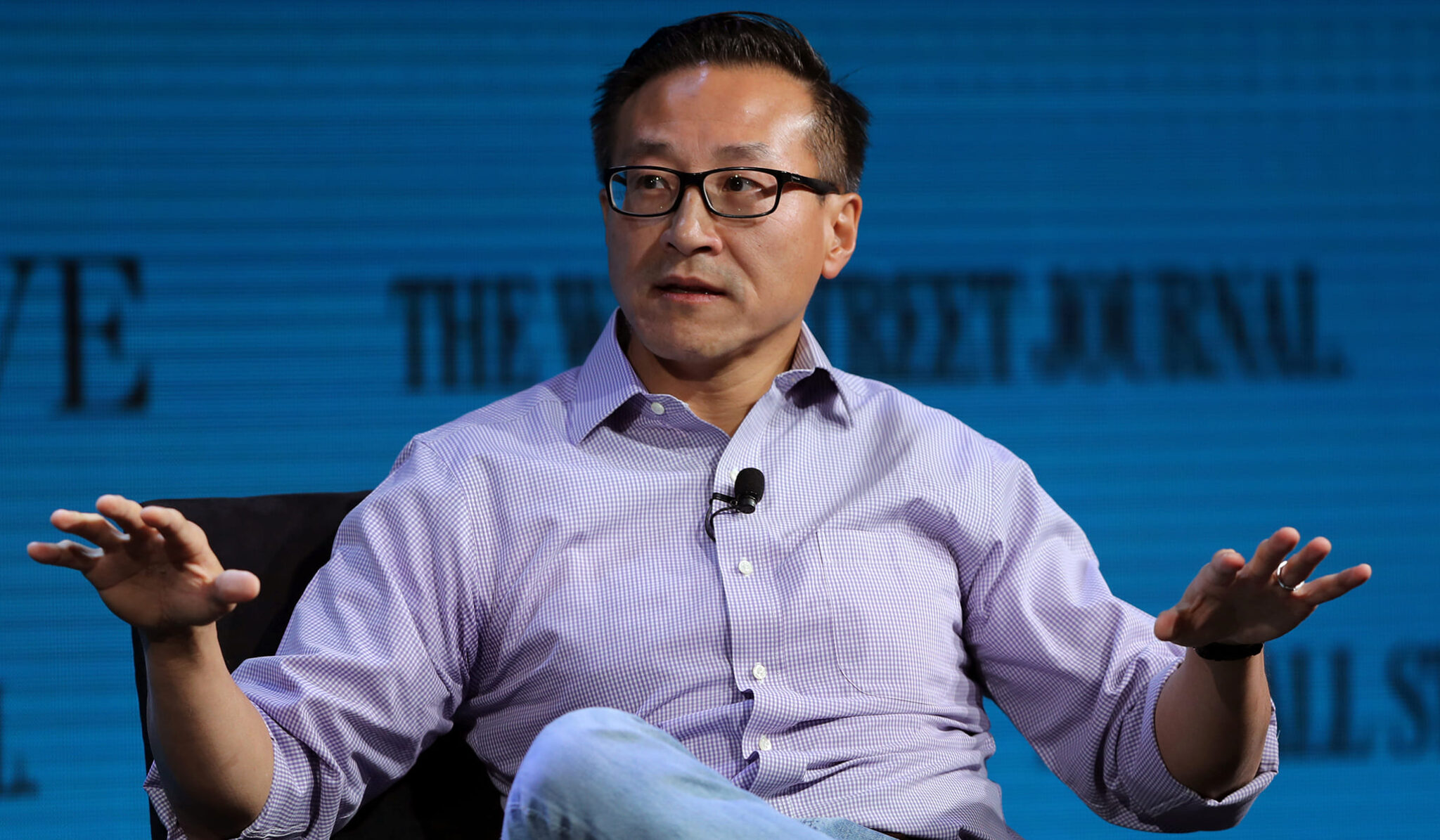
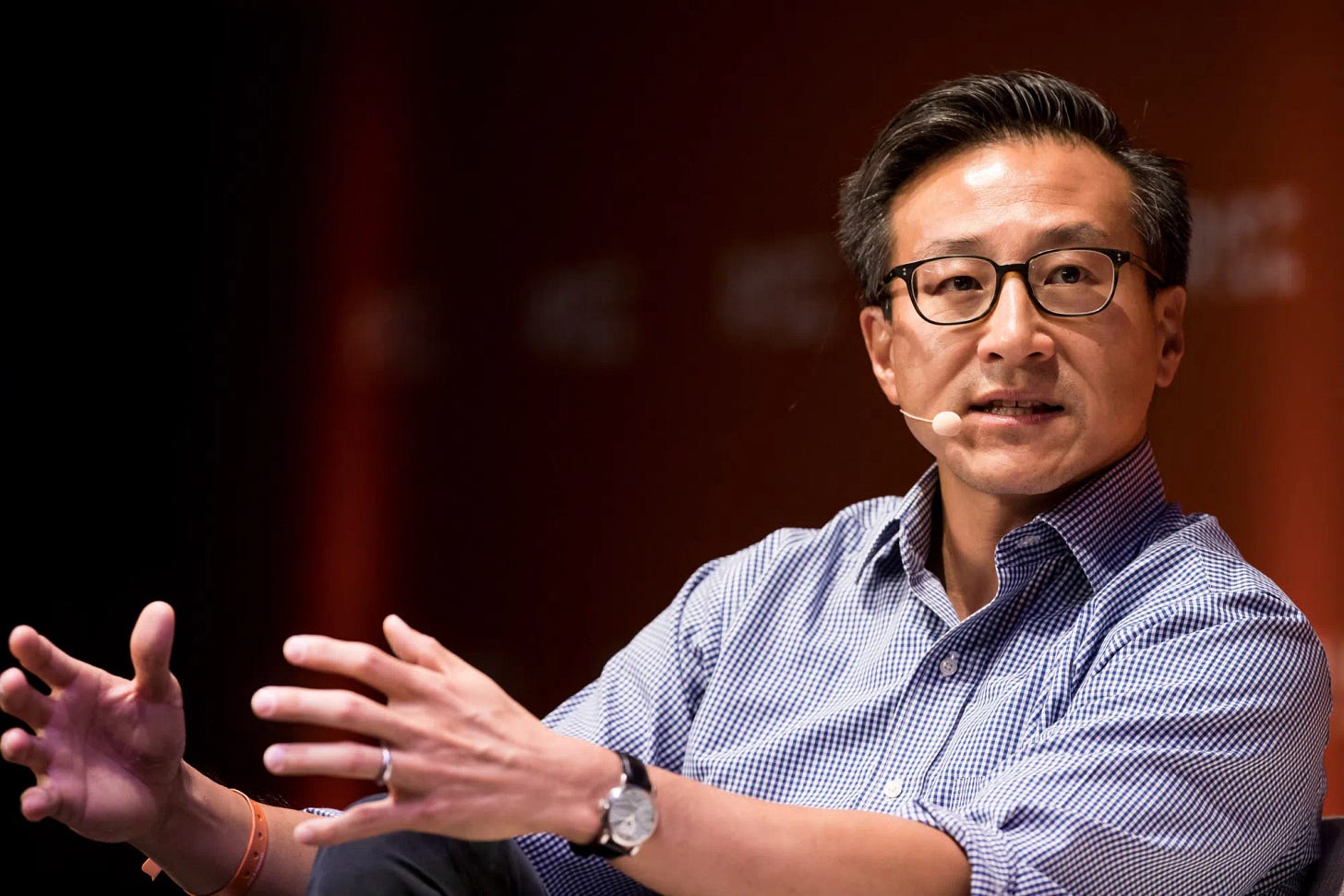
Under the leadership of Chairman Joe Tsai, Alibaba Group has undergone a fundamental transformation, shifting away from aggressive diversification to focus on its two core pillars: e-commerce and cloud computing. By prioritizing user experience, integrating artificial intelligence across its ecosystem, and streamlining its corporate structure, Tsai has stabilized the company amid intense competition.
The transition of leadership at Alibaba Group, which began in late 2023, marked one of the most significant turning points in the company’s quarter-century history. When Joe Tsai, a co-founder and long-time executive vice chairman, took the helm as Chairman alongside CEO Eddie Wu, the organization faced a confluence of challenges: stagnant domestic growth, a surging rival in PDD Holdings (Pinduoduo), and a regulatory landscape that had fundamentally shifted. As we look at the state of the company in 2026, the "Tsai era" is defined not by the sprawling expansionism of the past, but by a disciplined, "back-to-basics" approach that leverages Alibaba's massive data and infrastructure for a new age of AI-driven commerce.
The Leadership Transition: From Daniel Zhang to the Tsai-Wu Era
The leadership change was officially announced in June 2023 and completed in September of that year. Joe Tsai replaced Daniel Zhang, who had served as Chairman and CEO since 2019 and 2015, respectively. The transition was abrupt, especially when Zhang unexpectedly stepped down from his role leading the Cloud Intelligence Group just as it was slated for a spinoff. This vacancy allowed Eddie Wu to step in as CEO of both the group and the cloud division, while Tsai provided the strategic oversight and board-level governance.
Joe Tsai’s return to the center of operations brought a different temperament to the executive suite. Known as the "financial architect" of Alibaba and a close confidant of Jack Ma, Tsai possessed a unique combination of Wall Street savvy and deep institutional knowledge. His primary task was to restore investor confidence, which had been shaken by years of regulatory crackdowns and a perceived loss of "customer-centric" focus. Under Tsai, the company admitted that it had fallen behind in its core e-commerce mission, particularly in terms of price competitiveness and mobile user experience.
The initial months of Tsai’s chairmanship were spent conducting a rigorous internal audit of Alibaba’s massive portfolio. This led to a public acknowledgment that the company had "drifted" and needed to refocus. The leadership’s first major move was to pause or cancel planned IPOs for various business units, signaling that internal integration and operational health were now more important than quick financial exits or high-valuation spinoffs.
Redefining the "1+6+N" Model: Integration over Fragmentation
In early 2023, Alibaba announced a radical restructuring into a "1+6+N" model, where one holding company would oversee six distinct business groups (Cloud Intelligence, Taobao Tmall, Local Services, Cainiao, Global Digital Commerce, and Digital Media) and various other "N" ventures. The goal was to make each unit more agile and capable of going public independently. However, under Joe Tsai’s leadership, the execution of this model changed significantly.
While the administrative structure remained, the strategic autonomy was reined in to ensure that the core businesses—specifically Cloud and E-commerce—remained tightly integrated. Tsai and Wu realized that separating the Cloud Intelligence Group would create friction in an era where AI requires deep integration between the compute layer (Cloud) and the application layer (E-commerce). By November 2023, the plan to fully spin off the cloud business was scrapped, a decision that initially surprised the market but was eventually viewed as a necessary move to protect Alibaba’s long-term competitive advantage.
This shift represented a move toward "synergy-led growth." Instead of encouraging each unit to hunt for its own survival, Tsai’s leadership emphasized how Cainiao (logistics) could better serve AliExpress (international commerce), and how Alibaba Cloud’s proprietary large language models (LLMs) could optimize search and recommendation engines for Taobao. The result in 2026 is a more cohesive organization where the "N" businesses (non-core assets) are being systematically divested or reorganized to support the central mission.
The Two Pillars: E-commerce and Cloud AI
Joe Tsai’s strategy is built on the realization that Alibaba cannot be everything to everyone. To survive the onslaught of competitors like Douyin (ByteDance) and Pinduoduo, the company had to double down on its strengths.
Taobao and Tmall: Reclaiming the Consumer
For years, Alibaba’s domestic e-commerce dominance was taken for granted. However, the rise of "value-for-money" platforms forced a rethink. Under Tsai, Taobao and Tmall (TTG) shifted their priority from "GMV (Gross Merchandise Volume) at all costs" to "User First." This meant improving the price-to-value ratio for consumers and simplifying the merchant experience.
The company invested heavily in price-matching tools, subsidies for low-cost goods, and improving the "return and refund" policies to match the standards set by competitors. Furthermore, Tsai oversaw the integration of generative AI into the shopping experience. By 2026, Taobao’s AI personal assistants have moved from simple chatbots to sophisticated shopping companions that can handle complex queries, manage order disputes, and provide personalized styling advice. This focus on the "user" rather than just the "transaction" has been key to stabilizing Alibaba’s market share in a saturated Chinese market.
Alibaba Cloud: The Infrastructure for GenAI
The decision to keep the Cloud Intelligence Group within the Alibaba fold was a defining moment for Joe Tsai. He recognized that cloud computing is the "foundational infrastructure" for the future of the internet. Under his leadership, Alibaba Cloud pivoted from being a general-purpose provider to an AI-first cloud service.
The company’s Tongyi Qianwen LLM was integrated into every facet of the Alibaba ecosystem and offered as a service to external developers. Tsai’s leadership focused on reducing the cost of computing, making AI more accessible to small and medium-sized enterprises (SMEs). This "Model-as-a-Service" (MaaS) strategy allowed Alibaba Cloud to capture a significant portion of the burgeoning AI market in Asia, positioning it as the primary competitor to global giants like AWS and Azure in the region.
Financial Discipline and Asset Monetization
A hallmark of Joe Tsai’s tenure has been a rigorous approach to capital management. As a former investment banker, Tsai understood that Alibaba’s balance sheet was its greatest weapon. He moved away from the "empire-building" acquisitions of the previous decade and toward a more disciplined capital allocation framework.
In 2024 and 2025, Alibaba significantly increased its share buyback programs, returning billions of dollars to shareholders. This was a direct response to the company’s depressed valuation and a signal that the leadership believed the market was undervaluing Alibaba’s core assets. Simultaneously, the company began exploring exits from traditional retail assets that were capital-intensive and low-margin.
| Strategic Action | Objective | Status (as of 2026) |
|---|---|---|
| Share Buyback Program | Boost shareholder value and EPS. | Successfully expanded; multi-billion dollar annual execution. |
| Cloud Spinoff Cancellation | Maintain synergy between AI and E-commerce. | Fully integrated; Cloud is now the group's "growth engine." |
| Non-Core Divestment | Focus capital on "E-commerce + Cloud." | Divested stakes in several physical retail and media ventures. |
| Logistics Integration | Streamline international cross-border trade. | Cainiao remains majority-owned, focusing on 5-day global delivery. |
| AI Implementation | Reduce operational costs and improve UX. | AI agents integrated into DingTalk, Taobao, and AliExpress. |
Navigating Geopolitical and Regulatory Landscapes
Joe Tsai occupies a unique position in the global business community. As a Canadian citizen with deep ties to the United States (including ownership of the NBA's Brooklyn Nets) and a co-founder of China's largest tech firm, he acts as a bridge during a period of high geopolitical tension.
His leadership style regarding regulation has been one of "proactive compliance." Unlike the more confrontational or high-profile approach of Jack Ma in 2020, Tsai has kept a lower public profile, focusing on aligning Alibaba’s goals with the Chinese government’s focus on "high-quality growth" and "technological self-reliance." This has helped Alibaba emerge from the shadow of the multi-year regulatory "rectification" period.
On the international front, Tsai has navigated the complexities of U.S. export controls on high-end semiconductors. By focusing Alibaba Cloud’s efforts on optimizing existing hardware and developing proprietary networking and storage solutions, the company has managed to remain competitive in AI training and inference despite restricted access to certain Western chips.
International Expansion: Global Digital Commerce
While domestic growth reached a plateau, Joe Tsai identified international markets as the primary frontier for expansion. The International Digital Commerce (AIDC) group, which includes AliExpress, Lazada, Trendyol, and Daraz, became a major focus.
Tsai’s strategy for global growth relied on the "Choice" model—a fully managed service where Alibaba handles the logistics, marketing, and fulfillment for merchants. This allowed AliExpress to compete directly with platforms like Temu and Shein. By leveraging Cainiao’s global infrastructure, Alibaba was able to significantly reduce shipping times from China to Europe and the Americas, making cross-border e-commerce a viable daily option for millions of international consumers.
Comparative Analysis of Leadership Styles
To understand Alibaba under Joe Tsai, it is helpful to contrast his approach with his predecessors:
- Jack Ma (The Visionary): Focused on "making it easy to do business anywhere." Ma’s era was defined by rapid expansion, cultural charisma, and the creation of the "Alibaba Economy."
- Daniel Zhang (The Operator): A former CFO who scaled the company into a conglomerate. His era saw the birth of "New Retail" (integrating online/offline) and the complex "1+6+N" structure.
- Joe Tsai (The Strategic Refiner): Tsai has combined the financial rigor of a CFO with the long-term vision of a founder. His era is defined by "simplification" and "focus." He is willing to prune the tree to ensure the trunk stays healthy.
Frequently Asked Questions
Why did Joe Tsai cancel the Alibaba Cloud IPO?
The decision was primarily driven by two factors: market conditions and strategic synergy. By late 2023, U.S. export controls on advanced chips created uncertainty for a standalone cloud entity. More importantly, Tsai and Wu realized that Alibaba’s e-commerce future depends entirely on AI, which is powered by the cloud. Keeping the cloud division in-house allows for seamless integration of AI tools into Taobao and Tmall.
How has Alibaba’s stock performed under Tsai?
While the stock initially faced volatility due to the cancellation of the cloud spinoff and Cainiao IPO, it began to stabilize in 2025. Investors have responded positively to the massive share buybacks and the company’s improved focus on profit margins over raw revenue growth. By 2026, the market has begun to re-rate Alibaba as a value-generating AI company rather than a struggling legacy retailer.
What is the "User First" strategy?
"User First" is a shift in priority from serving merchants (who pay for advertising) to serving consumers (who drive traffic). This includes providing better price transparency, easier return processes, and using AI to reduce friction in the buying journey. The belief is that if users are loyal to the platform, merchants and advertising revenue will naturally follow.
Is Jack Ma still involved in Alibaba under Tsai?
Jack Ma remains a significant shareholder and a "spiritual founder," but he does not hold an executive role or a seat on the board. However, Joe Tsai’s appointment was widely seen as a return to the "Founder’s Mindset," and Ma has occasionally posted internal memos praising the company’s new direction under the Tsai-Wu leadership.
How does Alibaba compete with Pinduoduo and Douyin in 2026?
Alibaba competes by leveraging its superior logistics (Cainiao) and its comprehensive data ecosystem. While Pinduoduo focuses on price and Douyin on entertainment-led "social commerce," Alibaba under Tsai has focused on being the "infrastructure" of Chinese retail—offering the most reliable delivery, the best customer service, and the most advanced AI shopping tools.
Next Steps for Alibaba Group
For the remainder of 2026, the focus for Alibaba under Joe Tsai will remain on monetizing AI and globalizing the supply chain. Investors and observers should monitor the company's "Take Rate" (the commission it earns from merchants) on Taobao and Tmall, as this will indicate whether the "User First" strategy is successfully translating into sustainable revenue. Additionally, the continued divestment of non-core assets will be a key signal of Tsai’s commitment to a leaner, more focused Alibaba.