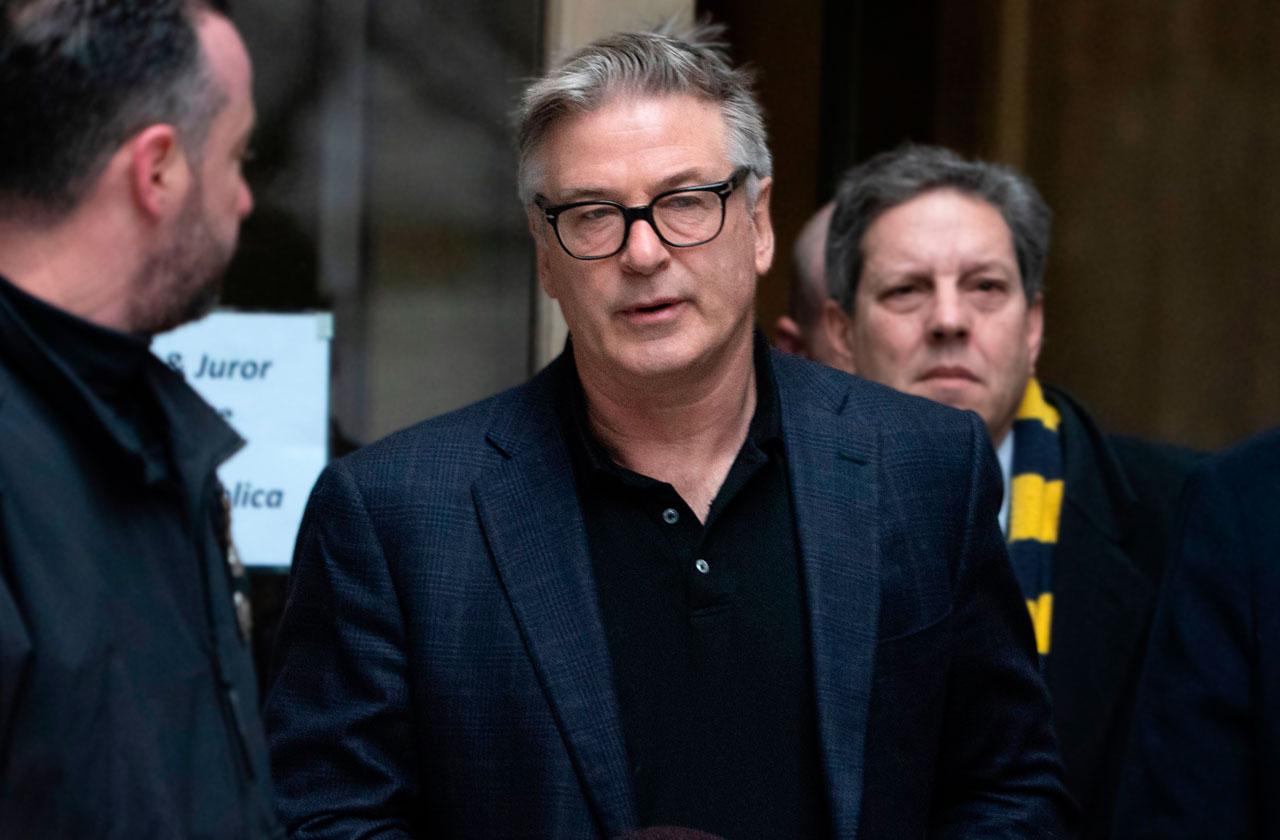
The Alec Baldwin parking incident refers to a November 2018 physical altercation in Manhattan between the actor and a driver, Wojciech Cieszkowski, over a contested parking space. The dispute led to Baldwin’s arrest, a guilty plea for harassment in the second degree, and a multi-year civil litigation process involving claims of assault and defamation.
The Anatomy of the 2018 Parking Confrontation
On November 2, 2018, the intersection of East 10th Street and University Place in Greenwich Village became the site of one of the most publicized celebrity disputes in recent New York City history. The incident began when a relative of Alec Baldwin was holding a parking space in front of the actor's apartment building. As the relative moved to allow Baldwin to pull in his black Cadillac Escalade, Wojciech Cieszkowski, driving a station wagon, pulled into the spot first.
The resulting confrontation escalated rapidly. Witnesses and police reports indicated that Baldwin and Cieszkowski engaged in a verbal argument that turned physical. While initial media reports suggested a significant "punch" was thrown, Baldwin later characterized the contact as a "shove." Regardless of the terminology, the physical nature of the dispute prompted bystanders to call 911, leading to Baldwin’s immediate arrest by the NYPD’s 6th Precinct.
The "alec baldwin parking" saga is often analyzed not just as a celebrity mishap, but as a quintessential New York City conflict. The scarcity of street parking in Manhattan, particularly in high-density areas like Greenwich Village, creates a high-stress environment where "spot saving" is a common but legally ambiguous practice.
Legal Proceedings and the Harassment Plea
Following the arrest, Baldwin was initially charged with misdemeanor third-degree assault and second-degree harassment. In the New York legal system, assault charges are significantly more serious than harassment violations, carrying the potential for a criminal record and jail time.
The Reduction of Charges
Through negotiations between Baldwin’s legal team and the Manhattan District Attorney's office, the charges were downgraded. In January 2019, Baldwin appeared in Manhattan Criminal Court and pleaded guilty to harassment in the second degree, which is classified as a violation rather than a crime under New York Penal Law Section 240.26.
This distinction is crucial from a legal standpoint. A violation does not result in a criminal record, though it remains a matter of public record. As part of his plea deal, Baldwin was required to:
- Pay a small fine (approximately $120 including surcharges).
- Complete a short-term anger management program.
- Avoid any further legal trouble for a specified period (an "Adjournment in Contemplation of Dismissal" or similar conditional discharge structures common in NYC).
Completion of Court Mandates
By the spring of 2019, Baldwin had completed his court-mandated anger management course. The actor’s legal representation emphasized that the completion of these requirements demonstrated Baldwin’s willingness to resolve the matter and move past the incident. However, while the criminal case was closed relatively quickly, the civil repercussions were only beginning.
The Civil Litigation: Cieszkowski v. Baldwin
While the criminal justice system resolved the state's interest in the altercation, Wojciech Cieszkowski filed a civil lawsuit against Alec Baldwin in 2019. The lawsuit sought damages for assault and battery, alleging that the physical contact caused lasting physical and emotional distress.
Defamation and Counter-Suits
The civil case became increasingly complex when Baldwin filed a countersuit for defamation. Baldwin’s legal team argued that Cieszkowski had misrepresented the severity of the incident to the media and the police, effectively "slandering" the actor by claiming he had been punched when the contact was, according to Baldwin, a minor shove.
The defamation claim centered on the idea that Cieszkowski was attempting to "shake down" a wealthy celebrity for a payout. In late 2019 and early 2020, various motions were filed in the New York Supreme Court. A judge eventually dismissed Baldwin's defamation counterclaim, ruling that Cieszkowski’s descriptions of the incident were either opinions or sufficiently grounded in his perception of the event to not qualify as legally actionable defamation.
Settlement and Resolution
By late 2021 and early 2022, court records indicated that the parties had reached a resolution. As is common in high-profile celebrity litigation, the specific financial terms of the settlement were kept confidential. The resolution of the civil suit finally ended the legal ties between the two men, nearly four years after the original parking spot dispute occurred.
Technical Analysis of New York Penal Law Section 240.26
To understand why the "alec baldwin parking" case resulted in the specific outcome it did, one must look at the technicalities of the New York State Penal Law regarding harassment.
| Legal Term | Classification | Definition | Application in Baldwin Case |
|---|---|---|---|
| Assault 3rd Degree | Class A Misdemeanor | Intentionally causing physical injury to another person. | Original charge; dropped due to lack of verified "substantial" injury. |
| Harassment 2nd Degree | Violation | Shoving, striking, or kicking a person with intent to alarm or annoy. | The final plea; acknowledged physical contact without serious injury. |
| Slander Per Se | Civil Tort | A false statement so damaging that it is presumed to cause harm. | Baldwin's failed counterclaim; court ruled the victim's claims weren't "per se" false. |
| Anger Management | Court Mandate | Psycho-educational program focusing on impulse control. | Completed by Baldwin in 2019 to satisfy the criminal court's requirements. |
The move from Assault to Harassment is a standard occurrence in NYC courts when the victim does not suffer "substantial pain" or a "physical impairment," which are the statutory requirements for an assault conviction under New York Penal Law Section 120.00.
NYC Parking Culture and the "Spot-Saving" Conflict
The Alec Baldwin incident highlights a persistent social friction in New York City: the etiquette of street parking. In many neighborhoods, residents use family members or physical objects (like orange cones) to "hold" spaces. While common, this practice is not officially recognized by the NYC Department of Transportation (DOT).
Legal experts note that once a vehicle leaves a spot, it is legally available to the next driver who can safely maneuver into it. When Baldwin’s relative attempted to "hold" the spot, they were acting outside of formal traffic regulations. However, the physical confrontation that followed moved the issue from a traffic disagreement to a criminal matter.
For residents of the city, the Baldwin case served as a cautionary tale regarding "parking rage." The incident was widely discussed on local news as an example of how even minor inconveniences in a high-density urban environment can lead to significant legal and professional consequences.
Historical Impact on Baldwin's Public Image
From the perspective of 2026, the parking incident is viewed as a precursor to a more difficult era for Alec Baldwin. While the 2018 event was largely seen as a display of a "short fuse," it contributed to a public narrative of volatility that would later complicate his defense in more serious matters, such as the 2021 Rust film set tragedy.
Public relations experts often cite Baldwin’s appearance on talk shows following the parking incident as a study in celebrity crisis management. Baldwin frequently used humor and self-deprecation to minimize the event, famously joking about it during his "Saturday Night Live" appearances. While this helped stabilize his brand in the short term, the underlying legal record of the harassment plea remained a permanent fixture in his biography.
Detailed Timeline of Key Events
- November 2, 2018: The altercation occurs on East 10th Street. Baldwin is arrested and charged.
- November 2018 - January 2019: Baldwin's legal team negotiates with the DA; Baldwin makes several public statements claiming he "didn't punch anyone."
- January 23, 2019: Baldwin pleads guilty to second-degree harassment in Manhattan Criminal Court.
- March 2019: Wojciech Cieszkowski files a civil lawsuit for assault and battery.
- January 2020: A New York judge dismisses Baldwin’s defamation countersuit against Cieszkowski.
- January 2022: Media outlets report that the civil lawsuit has been "resolved and discontinued" following a private settlement.
Frequently Asked Questions
Did Alec Baldwin actually punch the man over the parking spot?
According to the legal resolution, the contact was defined as harassment rather than assault. While the victim, Wojciech Cieszkowski, claimed he was punched, Baldwin maintained that it was a push or shove. The plea of "harassment in the second degree" acknowledges physical contact intended to "alarm or annoy" but does not technically classify as a punch causing physical injury under New York law.
What was the result of Alec Baldwin's anger management course?
Baldwin was ordered to complete a one-day anger management program. His legal team confirmed in early 2019 that he had successfully completed the course. The completion of this mandate was a requirement for the court to close the criminal case and ensure the harassment charge remained a violation without further penalties.
Can you legally save a parking spot in New York City?
No. Under NYC traffic rules, "saving" a spot by standing in it or placing objects in it is not legal. The street is public property, and spots are available on a first-come, first-served basis for vehicles. While "holding a spot" for someone is a common social practice in the city, it has no legal standing and cannot be used as a defense for blocking another driver from parking.
How did this incident affect Alec Baldwin's career?
Initially, the impact was minimal. Baldwin continued to host "Match Game" and appear on "Saturday Night Live." However, the incident solidified a "hot-headed" reputation in the media. By 2026, looking back at his career, the parking incident is often grouped with his other legal and behavioral controversies as part of a broader pattern of public and legal challenges.
Was the victim in the parking incident injured?
Wojciech Cieszkowski claimed in his civil lawsuit that he suffered "physical injuries" and "emotional distress." However, police reports at the time indicated that he was taken to a hospital for observation but did not have visible, serious injuries that would have sustained a felony or high-level misdemeanor assault charge.
Final Recommendation for Avoiding Similar Disputes
For individuals living in or visiting high-density urban areas like New York City, the Baldwin incident serves as a primary example of why de-escalation is the only viable strategy in parking disputes.
- Yield the Space: No parking spot is worth a legal record or a civil lawsuit. If a spot is contested, it is safer to find another garage or street block.
- Understand Local Law: Recognize that "holding spots" is not a legal right. Attempting to enforce a "held" spot can lead to civil liability.
- Use Technology: In 2026, the use of dashcams and mobile recording is ubiquitous. If a dispute occurs, record the interaction from a distance rather than engaging physically.
- Seek Professional Mediation: If an incident does turn physical, contact local law enforcement immediately and do not attempt to resolve the matter through personal confrontation, as this often leads to "mutual combat" legal complications.