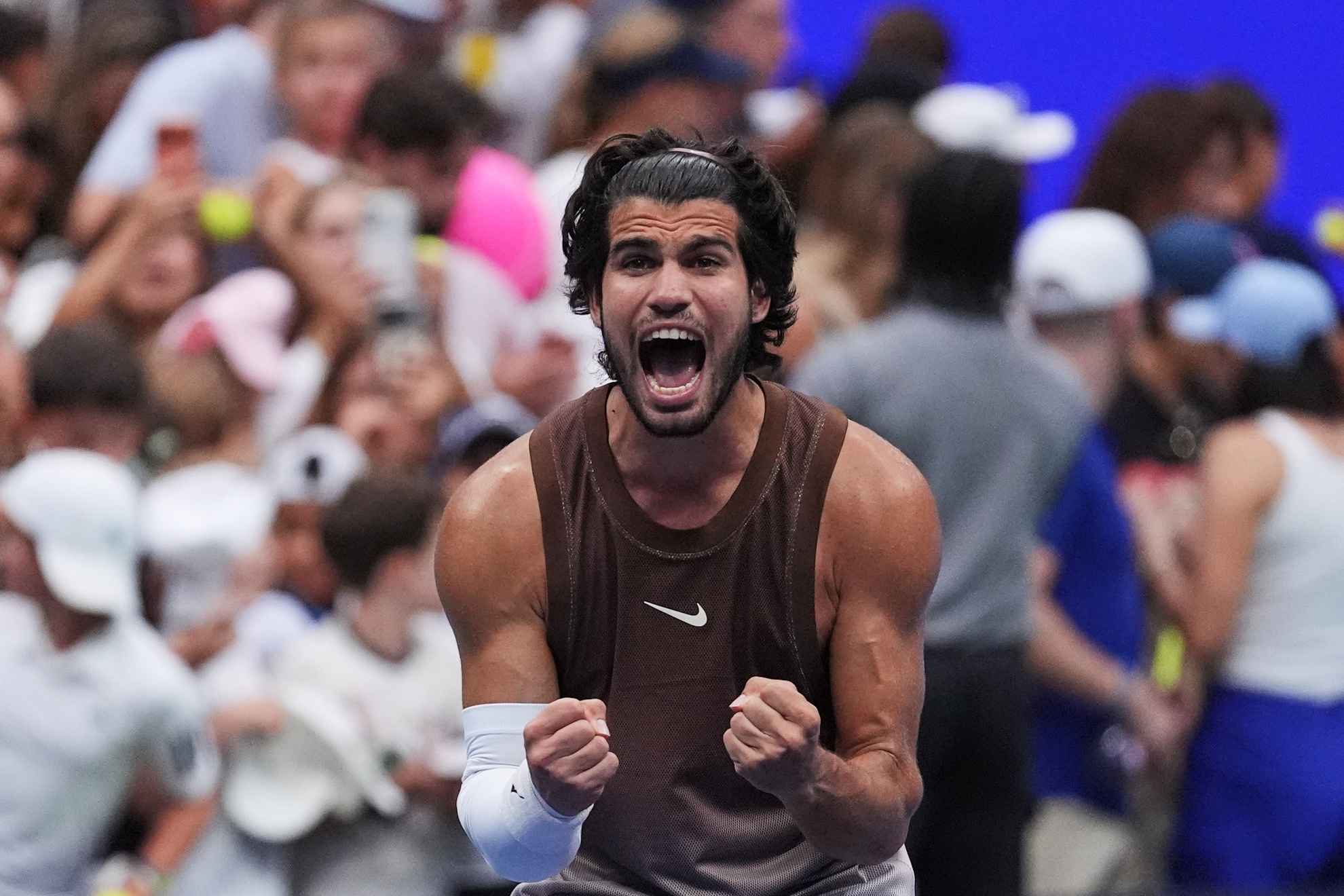
The "Alcaraz hair controversy" refers to the intense media and fan scrutiny surrounding Carlos Alcaraz’s grooming choices—most notably his 2023–2024 transition to a buzz cut—and the superstitious narrative that these changes negatively impacted his on-court performance. While seemingly superficial, the debate underscores the immense pressure and branding expectations placed on Gen Z tennis stars in the social media era.
The Genesis of the Alcaraz Hair Debate
In the high-stakes world of professional tennis, every detail of a top player's life is subject to analysis. For Carlos Alcaraz, the transition from a "teen prodigy" to a "global icon" brought an unexpected focus on his aesthetic choices. The controversy primarily stems from a period beginning in late 2023 and extending through mid-2024, when Alcaraz moved away from the natural, slightly unkempt look of his debut years toward a more structured, high-fade buzz cut.
The controversy was not rooted in a scandal or a violation of rules, but rather in a perceived correlation between his haircut and his "form." Fans on platforms like X (formerly Twitter) and Reddit began to track his win-loss record against his hair length. This phenomenon, while largely driven by the "tennis Twitter" subculture, eventually bled into mainstream sports journalism, where commentators questioned if the Spaniard was becoming too focused on his "brand" and off-court image at the expense of his tactical development.
The "Superstition" Factor in Tennis
Tennis is a sport notoriously governed by superstitions and rituals. From Rafael Nadal’s meticulous water bottle placement to players refusing to step on court lines, the psychological "anchor" of a routine is vital. When Alcaraz debuted a sharp, military-style buzz cut before a string of early exits in late 2023, the narrative was born: had he "cut away" his power?
This was not the first time a tennis player's hair became a national talking point. Andre Agassi famously admitted in his autobiography that his hairpiece was a source of immense anxiety during his early career. However, the Alcaraz situation was different; it was about the modern "influencer-athlete" archetype. Critics argued that the time spent in the barber’s chair for a high-maintenance fade was symbolic of a shift in priorities, even if such claims were factually baseless regarding his training schedule.
The 2023-2024 Performance Correlation
To understand why the controversy gained such traction, one must look at the timeline of Alcaraz's results alongside his stylistic changes. After his historic Wimbledon victory in 2023—where he sported a more natural, medium-length taper—Alcaraz entered a period that many considered a "slump" by his exceptionally high standards.
During the North American hard-court swing and the subsequent indoor season, Alcaraz adopted a much shorter, groomed look. When he failed to secure a title for several months following his Wimbledon triumph, the "hair controversy" became a convenient, if reductive, explanation for his struggles. This period highlighted the difficulty young athletes face when navigating the transition from being "the hunter" to "the hunted," where every slight dip in performance is attributed to external distractions.
Media Amplification and the "Victor the Barber" Era
The controversy was further fueled by Alcaraz’s public relationship with his personal barber, Victor, who frequently traveled to tournaments to maintain the player's look. The visibility of these grooming sessions on social media led to a divide in the fan base. One camp viewed it as a young man enjoying his success and maintaining a professional image for his sponsors (Nike, Rolex, BMW), while the other viewed it as an unnecessary distraction that separated him from the "gritty" roots of his early training at the Ferrero Academy.
By the time we reached the 2024 season, the discourse had evolved. Analysts began to use "the haircut" as a metaphor for Alcaraz’s search for identity. Was he the "New Federer" (composed and elegant) or the "New Nadal" (raw and relentless)? The hair controversy was, in many ways, a proxy for the larger debate about his evolution as a player.
Comparing Aesthetic Eras and Performance Metrics
The following table outlines the key "hair eras" of Carlos Alcaraz leading up to the current 2026 perspective, illustrating why fans became so obsessed with the correlation between his grooming and his trophies.
| Era | Primary Hairstyle | Key Tournament Outcomes | Media Narrative |
|---|---|---|---|
| The Breakthrough (2021-2022) | Natural, unstyled taper | US Open Winner, Madrid Champion | The "Raw Talent" who doesn't care about mirrors. |
| The Peak (Mid-2023) | Medium-length "Wimbledon" Taper | Wimbledon Winner, Queen's Champion | The perfect balance of athleticism and style. |
| The "Controversy" (Late 2023-Early 2024) | High-fade Buzz Cut | Semi-finalist/Early exits in key Masters | The "Brand Focus" era; questions about distraction. |
| The Resurgence (Late 2024-2025) | Controlled, short-back-and-sides | Multiple Grand Slam Titles | Professional maturity and image consistency. |
| The Current Era (2026) | Personalized "Signature" Look | Consistent World No. 1 Contention | The hair is now a recognized part of the global brand. |
The Role of Sponsors and the "Global Icon" Requirement
In 2026, we can look back and see that what was called a "controversy" was actually a standard phase of athlete branding. Major sponsors like Nike and Louis Vuitton require their lead athletes to maintain a specific, "clean" image for global marketing campaigns. Alcaraz was not just a tennis player; he was a billboard for luxury and athletic brands.
The hair controversy was a symptom of the friction between traditional tennis culture—which prizes a "messy, hard-working" aesthetic—and the modern commercial reality where an athlete’s face is as valuable as their forehand. The high-fade buzz cut that caused so much stir in 2024 was eventually integrated into his marketing materials, showing that what fans saw as a "distraction" was, in fact, a calculated component of his multi-million dollar endorsement deals.
Technical Grooming vs. Professional Focus
From a technical perspective, a shorter haircut actually offers minor functional benefits in a sport like tennis. Intense heat, such as that found at the Australian Open or the Miami Masters, makes sweat management a priority. Shorter hair dries faster and prevents "hair-flick" distractions during serves—a technicality that Alcaraz himself pointed out during a 2024 press conference.
Despite these practical explanations, the "controversy" persisted because sports fans prefer narrative over logic. The idea that a haircut could sap a player's strength (the "Samson effect") is far more compelling than the reality of minor tactical adjustments or the natural ebb and flow of an athlete's physical peak.
Psychological Impact of Social Media Scrutiny
The Alcaraz hair controversy serves as a case study in the psychological pressures of Gen Z athletes. Unlike the icons of the 1990s, Alcaraz receives instant, unfiltered feedback on his appearance every time he posts a photo or steps on court. For a young man in his early 20s, having thousands of people debate whether his haircut is "unlucky" can create a unique form of mental fatigue.
Psychologists specializing in sports performance often note that "image-related stress" can bleed into performance. If a player becomes self-conscious about their appearance due to relentless online commentary, it can lead to a decrease in "flow state" during matches. Alcaraz’s ability to eventually ignore the noise and return to the winner’s circle in late 2024 and 2025 was a testament to his mental fortitude and the work of his sports psychology team, rather than a change in his barber’s technique.
Addressing the "Samson Myth" in Modern Sports
The recurring theme of the Alcaraz controversy is the "Samson Myth"—the ancient belief that power is tied to hair. In tennis, this myth is resurrected every generation. When Björn Borg famously refused to shave his beard during Wimbledon, he was leaning into this superstition. When Alcaraz did the opposite—cutting his hair short during a period of struggle—he inadvertently triggered a deep-seated cultural trope.
To resolve the "controversy," we must look at the 2025-2026 statistics. Alcaraz has won major titles with both short and medium hair lengths. The data proves that his "power" lies in his movement, his drop shots, and his court coverage, not the length of his follicles. However, the controversy remains a significant moment in tennis history because it marked the point where Alcaraz moved from being a "player" to a "celebrity."
The "Victor the Barber" Legacy
By 2026, Carlos's barber has become a minor celebrity in his own right, often seen in the player's box at the French Open and US Open. This has paved the way for other players to be more open about their grooming routines. The "controversy" effectively normalized the idea that male tennis players can care about their appearance without it being seen as a lack of "grit." In this sense, Alcaraz was a pioneer, breaking the mold of the "traditionally rugged" clay-court specialist.
FAQ: Understanding the Alcaraz Hair Controversy
Why was Carlos Alcaraz's haircut considered a controversy?
It wasn't a controversy in the sense of a rule-breaking event, but rather a viral debate. Fans and some media outlets claimed that Alcaraz's move to a more groomed, "commercial" buzz cut coincided with a decline in his tournament performance, leading to superstitions that the haircut was "unlucky."
Who is Carlos Alcaraz's barber?
Alcaraz’s primary barber is Victor, a professional stylist who has become well-known among tennis fans. Victor often travels to major tournaments to ensure Alcaraz’s "fade" is maintained for both matches and high-profile sponsor commitments.
Did Alcaraz ever address the hair rumors?
Yes, in several press conferences during the 2024 season, Alcaraz laughed off the "Samson" comparisons. He stated that shorter hair was more comfortable for playing in hot conditions and that his results were a matter of tennis tactics and physical fitness, not his grooming choices.
How did sponsors react to the hair controversy?
Sponsors generally viewed the "controversy" as a positive, as it increased Alcaraz’s engagement metrics. Brands like Nike and Louis Vuitton utilized his sharper, more "modern" look for global campaigns, which helped solidify his image as a fashion-forward athlete.
Has any other tennis player faced a similar "hair controversy"?
Tennis has a long history of hair-related headlines. Andre Agassi’s wig, Rafael Nadal’s thinning hair, and even Roger Federer’s transition from a ponytail to a shorter cut were all major talking points in their respective eras. Alcaraz’s situation is unique due to the speed and intensity of social media feedback.
Does hair length actually affect tennis performance?
Technically, very little. Shorter hair can help with heat dissipation and sweat management, but the primary impact is psychological. If a player feels confident and comfortable in their appearance, it can contribute to a positive mental state, which is crucial for high-level performance.
Final Recommendation for Fans and Analysts
When evaluating the performance of elite athletes like Carlos Alcaraz, it is essential to separate aesthetic "noise" from technical data. While the hair controversy provided endless entertainment for social media, the true factors behind Alcaraz's success remain his elite-level footwork, his mental resilience, and his tactical versatility. For fans, the best approach is to enjoy the "brand" of Alcaraz as a sign of the sport's growth into the fashion and lifestyle sectors, while remaining focused on the incredible tennis he continues to produce regardless of his hairstyle.