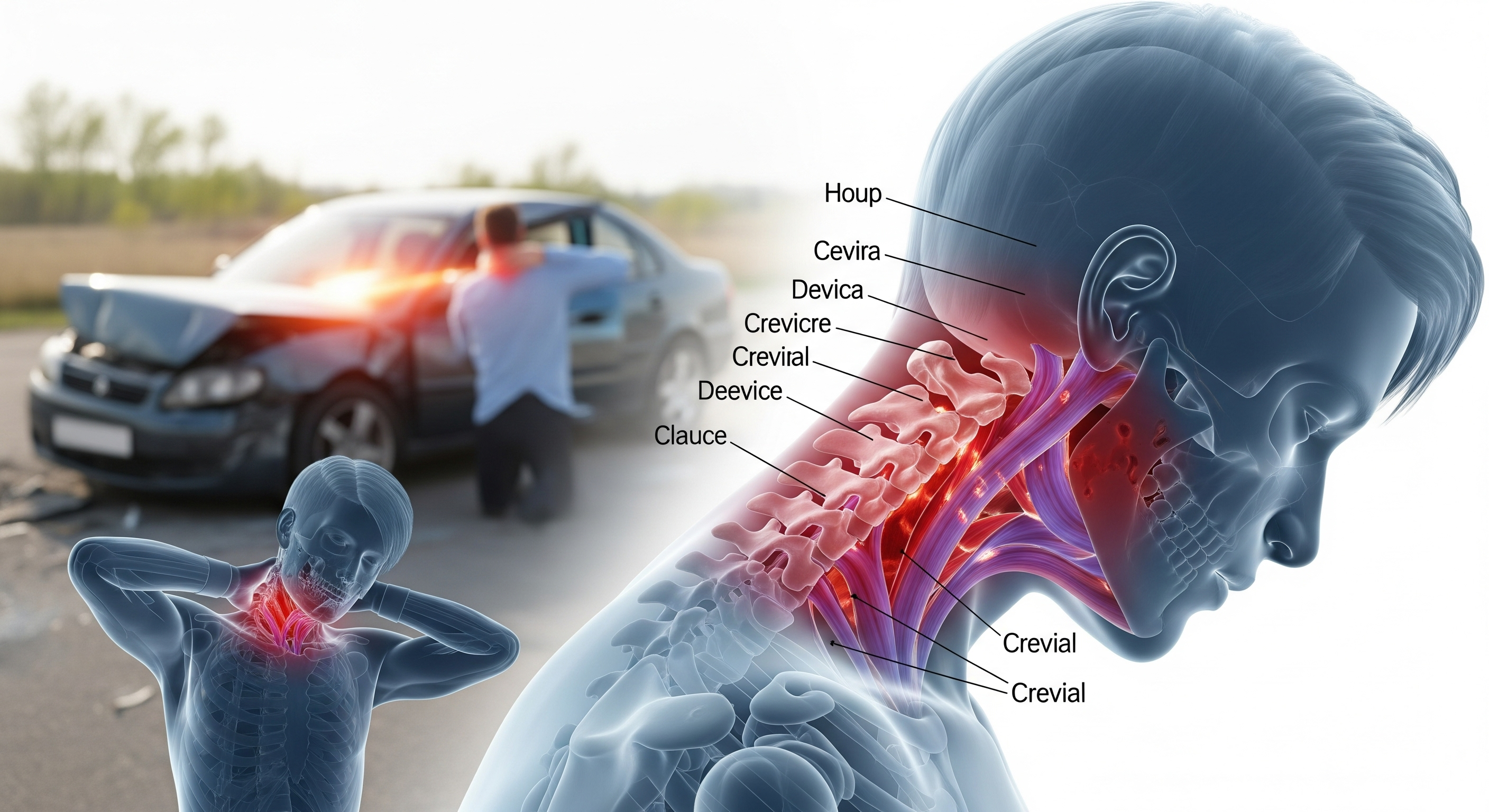
Neck pain following a car accident is typically caused by whiplash, which occurs when the head is suddenly jerked, damaging soft tissues, discs, or nerves. Managing this pain requires a combination of early medical diagnosis, physical therapy, and anti-inflammatory treatments to prevent chronic issues and ensure a full recovery of mobility.
The impact of a motor vehicle accident (MVA) is a traumatic event that forces the human body to absorb massive amounts of kinetic energy in milliseconds. Among the most frequent complaints reported by survivors is neck pain. While some individuals experience immediate discomfort, many others find that symptoms manifest hours or even days after the event. Understanding the underlying causes, identifying the full spectrum of symptoms, and implementing an effective management strategy are essential steps for both physical recovery and potential legal or insurance documentation.
The Biomechanics of Neck Injuries in Car Accidents
To understand why neck pain is so prevalent after a collision, one must look at the physics of the crash. When a vehicle is struck—particularly from behind—the occupant’s body is pushed forward by the seat, but the head remains momentarily stationary due to inertia. This creates a rapid, violent "S-curve" in the cervical spine.
As the torso continues forward, the head is whipped backward (hyperextension) and then flung forward (hyperflexion) as the vehicle comes to a stop or the seatbelt engages. This whip-like motion exerts forces on the cervical spine that far exceed its natural range of motion. Even in low-speed collisions—those occurring at speeds as low as 5 to 10 miles per hour—the force transferred to the delicate structures of the neck can be sufficient to cause significant ligament tears, muscle strains, and disc displacements.
In 2026, medical protocols emphasize that the severity of the vehicle’s damage does not always correlate with the severity of the occupant’s internal injuries. Modern "crumple zones" are designed to protect the cabin, but the energy of the impact is still transferred to the passengers, often resulting in "hidden" soft-tissue injuries that do not appear on standard X-rays.
Common Causes of Post-Accident Neck Pain
Neck pain is rarely a singular diagnosis; rather, it is a symptom of various underlying structural issues caused by the trauma.
Whiplash Associated Disorders (WAD)
Whiplash is the most common cause of neck pain after an accident. It is a broad term describing the strain and sprain of the muscles and ligaments in the neck. WAD is graded on a scale from 0 (no pain) to 4 (fracture or dislocation). Most car accident victims fall into Grades 1 or 2, characterized by stiffness, point tenderness, and decreased range of motion.
Cervical Disc Herniation
The vertebrae in your neck are separated by rubbery cushions called discs. The force of a collision can cause these discs to compress or "slip," leading the soft inner nucleus to bulge through the tough outer layer. This herniation can put direct pressure on the spinal nerves, leading to sharp, radiating pain that travels down the arms.
Facet Joint Injury
Facet joints are the small stabilizing joints located between and behind adjacent vertebrae. They allow for the flexibility needed to turn and tilt your head. During a rear-end collision, these joints can be forcefully compressed, leading to inflammation or cartilage damage. Facet joint pain is often described as a deep, dull ache that worsens when tilting the head backward.
Cervical Radiculopathy
Often referred to as a "pinched nerve," radiculopathy occurs when a nerve root in the cervical spine becomes compressed or inflamed. This is frequently a secondary result of a herniated disc or significant localized swelling following the accident.
Identifying Symptoms: Immediate vs. Delayed Onset
One of the most dangerous aspects of car accident injuries is the "adrenaline mask." Immediately following a crash, the body enters a "fight or flight" state, releasing a surge of adrenaline and endorphins. These chemicals are natural painkillers that can temporarily hide the sensation of injury.
Immediate Symptoms
- Acute Stiffness: An inability to turn the head from side to side.
- Muscle Spasms: Intense, involuntary contractions of the neck or shoulder muscles.
- Sharp Pain: Intense localized pain at the base of the skull or across the tops of the shoulders.
Delayed Symptoms (The 24-to-72-Hour Window)
It is common for patients to feel "fine" on the day of the accident, only to wake up the next morning or two days later in debilitating pain. This delay is usually due to the gradual buildup of inflammation and micro-swelling around the nerves and soft tissues.
- Cervicogenic Headaches: Headaches that start at the base of the skull and radiate toward the forehead.
- Paresthesia: Numbness, tingling, or a "pins and needles" sensation in the arms or fingers.
- Tinnitus: Ringing in the ears, which can sometimes accompany high-impact whiplash.
- Cognitive Dissonance: Often called "brain fog," this includes difficulty concentrating, irritability, and sleep disturbances, which are now recognized as part of the broader whiplash syndrome.
Comparative Overview of Common Neck Injuries
| Injury Type | Primary Cause | Key Symptom | Typical Recovery Time |
|---|---|---|---|
| Whiplash (Strain) | Soft tissue overextension | Stiffness and dull ache | 2–6 weeks |
| Disc Herniation | Disc compression/rupture | Radiating arm pain/numbness | 3–6 months |
| Facet Joint Sprain | Joint compression | Pain when tilting head back | 4–8 weeks |
| Cervical Fracture | High-velocity impact | Severe pain, loss of function | 6+ months / Surgery |
| Nerve Impingement | Inflammation or disc pressure | Tingling and weakness | Variable |
Diagnostic Procedures and Evaluations
To manage neck pain effectively, an accurate diagnosis is paramount. Medical professionals in 2026 utilize a tiered approach to imaging and physical assessment.
- Physical Examination: A doctor will test your range of motion, check for point tenderness, and perform neurological tests to evaluate reflexes, muscle strength, and sensory responses.
- X-Rays: These are typically the first line of defense. While they cannot show soft tissue damage, they are essential for ruling out fractures, dislocations, or spinal instability.
- MRI (Magnetic Resonance Imaging): If symptoms like numbness or radiating pain persist, an MRI is necessary. This provides detailed images of soft tissues, including discs, ligaments, and the spinal cord itself. According to the Mayo Clinic, MRI is the gold standard for detecting disc herniations that X-rays miss.
- CT Scan: In cases of severe trauma, a CT scan provides a more detailed look at the bone structure than a standard X-ray, helping to identify subtle fractures.
Comprehensive Management and Treatment Options
Management of post-accident neck pain has evolved from "wait and see" to proactive, multi-modal intervention.
The Acute Phase (Days 1–7)
The primary goal during the first week is to control inflammation.
- Rest and Activity Modification: While complete bed rest is no longer recommended (as it can lead to stiffness), avoiding strenuous lifting and high-impact activity is vital.
- Therapeutic Cold/Heat: Ice should be applied for the first 48–72 hours to reduce swelling. Afterward, heat can be used to relax tight muscles and improve blood flow.
- Medication: Over-the-counter non-steroidal anti-inflammatory drugs (NSAIDs) like ibuprofen or naproxen are standard. In some cases, a physician may prescribe short-term muscle relaxants.
The Rehabilitative Phase (Weeks 2–8)
Once the acute pain subsides, the focus shifts to restoring function.
- Physical Therapy (PT): This is the cornerstone of recovery. A physical therapist will guide the patient through isometric exercises to strengthen the supporting muscles of the neck without putting undue stress on the spine.
- Chiropractic Care: Controlled spinal manipulation can help restore joint mobility in the facet joints, provided there are no fractures or severe disc herniations.
- Massage Therapy: This helps break down scar tissue and alleviate the compensatory muscle tension that often develops in the shoulders and upper back.
Advanced Interventions
For patients whose pain does not respond to conservative care, more intensive treatments may be explored:
- Epidural Steroid Injections: Injecting anti-inflammatory medication directly near the irritated nerve root can provide significant relief for radiculopathy.
- Radiofrequency Ablation (RFA): If facet joints are the primary pain source, RFA can be used to "turn off" the pain signals from the specific nerves serving those joints.
The Importance of Medical Documentation
From a management perspective, seeking immediate medical attention is not just about health—it is about legal and insurance protection. In many jurisdictions, insurance companies may deny a claim if the victim does not seek medical evaluation within a specific timeframe (often 14 days).
Every symptom, no matter how minor it seems, should be reported to a healthcare provider. This creates a "paper trail" that links the injury directly to the accident. Detailed records of physical therapy attendance, medication use, and "pain journals" are critical if a personal injury claim is pursued. Gaps in treatment—times when a patient stops going to therapy despite still being in pain—are frequently used by insurance adjusters to argue that the injury has resolved.
Practical Recommendations for Recovery
If you are experiencing neck pain after a car accident, follow these steps to ensure the best possible outcome:
- See a Doctor Immediately: Even if the pain is mild, get a professional evaluation to rule out "silent" injuries like minor fractures or early-stage disc issues.
- Follow the Full Treatment Plan: Do not stop physical therapy just because you feel 80% better. The final 20% of recovery is often the most important for preventing long-term chronic pain.
- Adjust Your Ergonomics: If you work at a desk, ensure your monitor is at eye level to prevent "tech neck," which can exacerbate post-accident injuries.
- Monitor Mental Health: Chronic neck pain is highly correlated with anxiety and depression. If the "brain fog" or irritability mentioned earlier persists, mention it to your primary care physician.
Frequently Asked Questions
How long does neck pain usually last after a car accident?
For minor whiplash (Grade 1 or 2), most patients see significant improvement within four to six weeks. However, if there is involvement of the intervertebral discs or nerve roots, recovery can take several months. Approximately 20% to 25% of whiplash victims may develop chronic symptoms that last longer than six months if not treated correctly.
Should I wear a foam neck brace?
In 2026, the use of "soft collars" or foam braces is generally discouraged for long-term use. While they may be used for a day or two immediately following a severe strain, prolonged use can lead to muscle atrophy (weakening) and increased stiffness. Movement, guided by a professional, is usually better for healing.
Can a low-speed "fender bender" really cause permanent neck damage?
Yes. Research into spinal biomechanics shows that the force of an impact is influenced by the weight of the vehicles and the lack of "give" in the bumper systems. A low-speed impact can still snap the head back with enough force to tear the delicate ligaments (the alar and transverse ligaments) that stabilize the upper cervical spine.
Is it normal for neck pain to cause dizziness?
Yes, this is known as cervicogenic dizziness. It occurs when the sensory receptors in the neck muscles and joints are damaged. These receptors send signals to the brain about the head’s position. When they are "mismatched" due to injury, it can cause a sensation of lightheadedness or unsteadiness.
When is surgery necessary for neck pain after an accident?
Surgery is typically a last resort, reserved for cases involving spinal cord compression, severe instability (fractures), or radiculopathy that causes significant muscle weakness and does not respond to several months of physical therapy. Procedures might include a Discectomy or a Cervical Spinal Fusion.
What if my insurance company refuses to pay for my physical therapy?
This is a common issue in MVA management. It is often necessary to provide the insurer with a "Letter of Medical Necessity" from your treating physician and detailed diagnostic evidence (like an MRI). If the refusal persists, consulting with a personal injury attorney may be necessary to ensure your PIP (Personal Injury Protection) or MedPay benefits are properly applied.