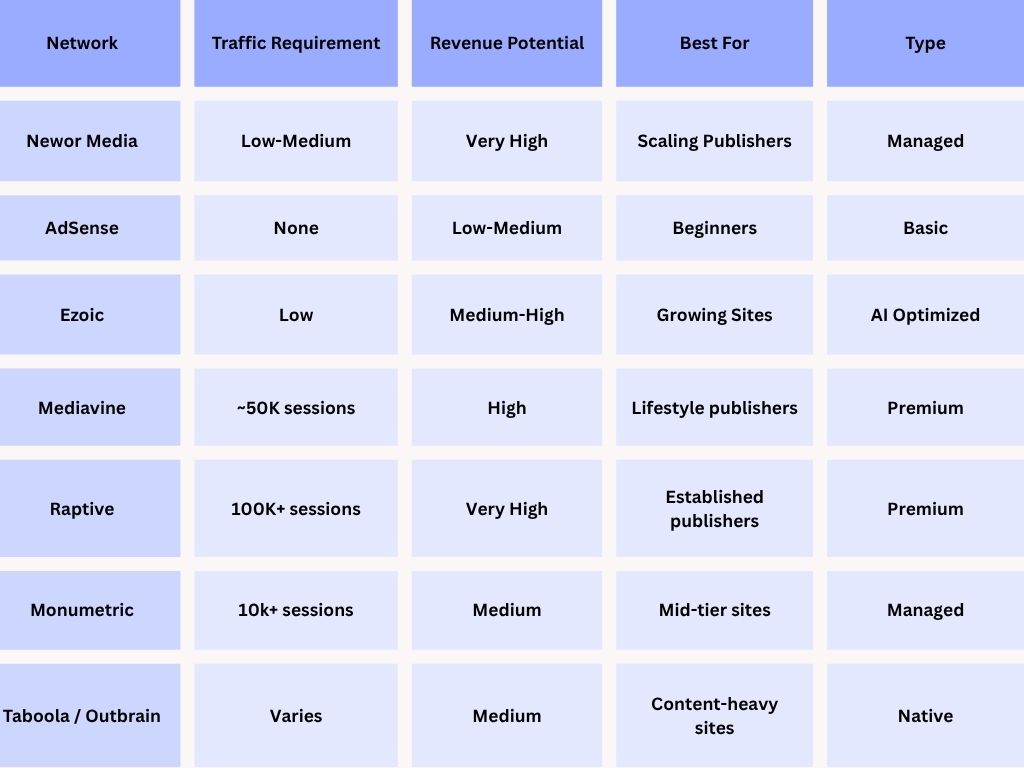
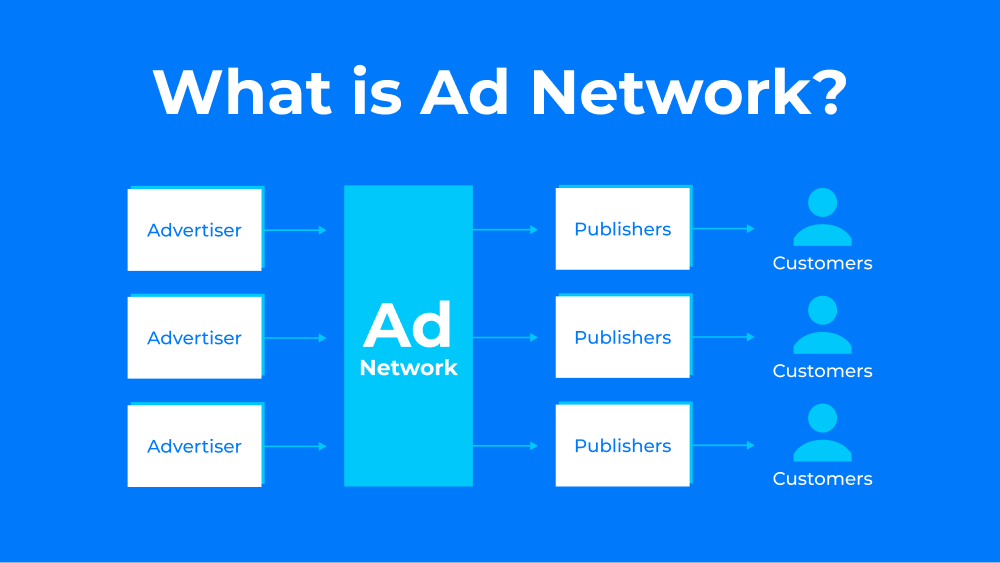
Student publishers looking to monetize their websites in 2026 generally find the most success with Google AdSense, Ezoic, and Media.net. These networks are ideal because they offer lower traffic entry barriers, robust support for educational content, and automated optimization tools that allow students to focus on their studies while generating passive advertising revenue.
Navigating the world of digital advertising as a student publisher presents a unique set of challenges. Unlike corporate media houses with dedicated "Ad Ops" teams, a student publisher is often a one-person operation balancing academic deadlines with content creation. In 2026, the advertising landscape has shifted significantly toward privacy-first data and AI-driven ad placements, making it essential to choose a partner that simplifies the technical burden.
Whether you are running a campus news site, a niche academic blog, or a creative portfolio, the ad network you choose will determine not only your revenue but also your site’s user experience. This guide analyzes the top ad network examples specifically suited for the student demographic, focusing on eligibility, ease of use, and revenue potential.
The 2026 Landscape for Student-Led Digital Publishing
In 2026, the digital publishing environment is defined by the total phase-out of third-party cookies and the rise of "First-Party Data" strategies. For a student publisher, this means that the context of your content matters more than ever. Ad networks are no longer just looking for "clicks"; they are looking for high-quality, original content that attracts a specific, engaged audience.
Student publishers often occupy high-value niches. For example, a blog focusing on "Sustainable Engineering for Undergraduates" or "LLM Prompting for Law Students" provides a highly targeted environment for advertisers. Because these audiences are difficult to reach through generic social media targeting, specialized ad networks are willing to pay a premium for placements on these sites.
Furthermore, the technical barrier to entry has lowered. In 2026, most entry-level networks provide "Header Bidding" wrappers that are essentially "plug-and-play," allowing students to compete for high-value bids without needing a degree in computer science.
1. Google AdSense: The Industry Standard for Beginners
Google AdSense remains the most recognized ad network for student publishers in 2026. Its primary appeal lies in its massive advertiser base and its integration with the broader Google ecosystem. For a student who already uses Google Workspace for their studies, the interface feels familiar and intuitive.
Why It Works for Students
AdSense does not have a strict minimum traffic requirement, which is a major hurdle for new student blogs. As long as your site has high-quality, original content and a professional layout (including a privacy policy and "About" page), you are likely to be approved.
Requirements and Limitations
The approval process has become more stringent in 2026 regarding AI-generated content. Google now requires publishers to demonstrate "Experience, Expertise, Authoritativeness, and Trustworthiness" (E-E-A-T). For a student, this means your "About" page should clearly state your academic credentials or your specific interest in the topic.
- Payment Threshold: $100.
- Approval Time: Typically 2 to 14 days.
- Ad Formats: Auto-ads (AI-driven placement), display ads, and "In-feed" ads.
2. Ezoic: Scaling Through AI Optimization
Ezoic has become a favorite for student publishers who have moved past the initial "hobby" phase and are seeing 5,000 to 10,000 monthly visits. Their "Access Now" program specifically caters to smaller publishers, providing them with the same machine-learning technology used by large-scale media companies.
The Power of Automated Testing
Ezoic uses AI to test thousands of different ad placeholders, sizes, and colors to see which combinations yield the highest revenue without slowing down the site. For a student, this is "set-it-and-forget-it" monetization. You don't have to manually place banners; the system handles the optimization based on real-time user behavior.
Technical Depth: Leap and Cloud Integration
Ezoic provides a tool called "Leap," which helps student publishers optimize their Core Web Vitals. In 2026, search engine rankings are heavily dependent on page speed. Ezoic’s integration at the DNS level (via Cloudflare) ensures that ads load efficiently, which is crucial for maintaining a professional image for your campus or academic site.
3. Media.net: Best for Educational and Contextual Content
Owned by Bing and Yahoo, Media.net is the leader in contextual advertising. Unlike display ads that follow a user around based on their history, contextual ads look at the words on the page to decide what to show.
Strategic Advantage for Academic Sites
If you run a site that covers complex academic topics—such as molecular biology or historical analysis—standard display ads might show irrelevant products. Media.net, however, will show ads related to "Laboratory Equipment" or "Historical Research Grants." These are often higher-paying "search" ads.
Requirements
Media.net prefers sites that receive the majority of their traffic from the US, UK, and Canada. If your student blog is globally focused, your earnings might be lower here compared to AdSense. However, their customer service is notably more responsive than Google’s, often providing a dedicated account manager even for mid-sized publishers.
4. Monetag: High Approval and Diverse Formats
Monetag (formerly known as part of PropellerAds) is an excellent example of a network that prioritizes accessibility. If you are a student publisher struggling to get approved by AdSense due to "low value content" or technical issues, Monetag is often the best alternative.
Unique Ad Formats
Beyond standard banners, Monetag offers:
- SmartLinks: A simple URL you can place in social media bios or within text that directs users to the most relevant offer.
- Push Notifications: A way to monetize users even after they leave your site (with their permission).
- Vignette Ads: Full-screen ads that appear between page loads, which often have very high payout rates.
While these formats can be more intrusive, they are highly effective for student sites that rely on viral social media traffic rather than long-term SEO.
5. Infolinks: Non-Intrusive, Text-Based Monetization
For students who are protective of their site's design—perhaps a design student or a photographer—Infolinks offers a way to monetize without cluttered banners. Infolinks focuses on "InText" and "InFold" ads.
How Infolinks Integrates
The network scans your articles and turns specific keywords into clickable links. When a user hovers over the link, a small ad appears. This keeps the layout of your portfolio or blog clean and professional while still generating a steady stream of micro-income. In 2026, Infolinks has improved its intent-based algorithm to ensure that these links are highly relevant to the reader's journey.
Comparison of Top Ad Networks for Student Publishers
The following table compares these networks based on 2026 industry standards for entry-level and mid-tier publishers.
| Ad Network | Min. Traffic Requirement | Best For... | Approval Difficulty | Primary Ad Type |
|---|---|---|---|---|
| Google AdSense | None (Content-based) | General niches | Moderate | Display & Auto-Ads |
| Ezoic | None (Access Now) | Growth & Optimization | Moderate | AI-Tested Display |
| Media.net | High-Quality Context | Academic/Text-heavy | High | Contextual Search |
| Monetag | None | Fast Approval | Low | Multitag & SmartLinks |
| Infolinks | None | Design-heavy sites | Low | In-Text/Overlay |
Technical Prerequisites for Student Publishers
Before applying to any of these networks in 2026, there are several technical hurdles you must clear to ensure approval and maximize your earnings.
1. The Ads.txt File
Most ad networks require you to host an ads.txt file in your site's root directory. This is a public record of which companies are authorized to sell your ad space. It prevents "domain spoofing," where bad actors pretend to be your site to steal ad revenue. Most WordPress plugins or CMS settings make this easy to implement.
2. Privacy Policy and Consent Management (CMP)
In 2026, privacy regulations like GDPR (Europe) and CCPA/CPRA (California) are strictly enforced. To be eligible for top-tier networks, your site must have a Consent Management Provider (CMP)—the popup that asks users to "Accept Cookies." Networks like Ezoic and AdSense provide these tools for free.
3. Content Volume and Consistency
A common mistake among student publishers is applying with only three or four posts. To be seen as a legitimate publisher, aim for at least 15–20 high-quality articles of 1,000+ words each. This demonstrates to the network that your site is a long-term project, not a "made-for-ads" site.
Maximizing Revenue on a Student Budget
Monetization is more than just "turning on" ads. To truly benefit from these networks, you need to understand the relationship between your content and your CPM (Cost Per Mille, or cost per 1,000 views).
Target High-CPM Keywords
Advertisers in 2026 pay more for audiences looking for financial services, software (SaaS), healthcare, and specialized education. If you are writing about "Best Free Apps for Students," your CPM might be $2.00. If you are writing about "The Best Student Loans for Medical School," your CPM could jump to $20.00.
Optimize for Mobile
Over 70% of student-focused traffic comes from mobile devices. Ensure that the ad network you choose offers "responsive" ads that don't break your site's layout on a smartphone. Google AdSense and Ezoic are particularly strong in this area, automatically resizing ads to fit the screen.
Leverage First-Party Data
Start an email newsletter. In 2026, having a list of 500 dedicated email subscribers is often more valuable than 5,000 random visitors. Some ad networks allow you to monetize your newsletter directly, providing a secondary revenue stream that isn't dependent on SEO or social media algorithms.
Common Mistakes to Avoid
- Clicking Your Own Ads: This is the fastest way to get a lifetime ban. Ad networks in 2026 have sophisticated AI that can detect "invalid click activity" based on IP addresses and behavioral patterns.
- Over-Monetizing: It is tempting to put five ads on a single page to increase revenue. However, this slows down your site and increases your "Bounce Rate" (users leaving immediately). High bounce rates lead to lower search engine rankings and, eventually, lower revenue.
- Ignoring Analytics: Use Google Analytics 4 (or a privacy-focused alternative) to see which pages are making the most money. Focus your content creation efforts on those high-earning topics.
Frequently Asked Questions
Can I use multiple ad networks at the same time?
Yes, you can generally use multiple networks (e.g., AdSense and Infolinks) as long as they do not violate each other's terms of service and your site doesn't become cluttered. Most publishers use one "anchor" network for display ads and a secondary network for specialized formats like text-links or video ads.
How much can a student publisher expect to earn?
Earnings vary wildly based on niche and traffic. A site with 10,000 monthly pageviews in a high-value academic niche can earn between $150 and $400 per month in 2026. Sites with broader, "viral" topics might earn $50 to $100 for the same traffic volume.
Is AdSense still worth it in 2026?
Absolutely. While there are many competitors, AdSense still offers the highest "fill rate" (the percentage of time an ad is actually shown). For students, it provides the most reliable payment system and the widest reach across different global markets.
Do I need a business license to receive ad payments?
In most jurisdictions, you can sign up as an "Individual" or "Sole Proprietor" using your Social Security number or equivalent tax ID. However, once you start earning significant revenue (usually over $600/year in the US), you will receive a tax form (like a 1099), and you must report this income.
What if my site is rejected?
Don't panic. Most rejections are due to "Low Value Content" or technical errors like a broken menu. Add more original content, fix your navigation, ensure your ads.txt is correct, and reapply after 30 days.
Practical Recommendation for Student Publishers
If you are just starting, apply for Google AdSense first. It is the baseline for all digital monetization. Once you have established a consistent traffic flow of at least 5,000 sessions per month, switch to or integrate Ezoic. Ezoic’s testing capabilities will almost always outperform a static AdSense setup, providing the extra revenue needed to cover hosting costs, research tools, or even a portion of your tuition.
Remember that in 2026, the most successful student publishers are those who view their website as a professional asset. Quality content attracts quality advertisers. By choosing a network that aligns with your site’s goals and user experience, you can build a sustainable source of income that lasts throughout your academic career and beyond.