In 2026, the average actuary salary in the United States typically ranges from $85,000 for entry-level analysts to over $220,000 for experienced Fellows. Total compensation, including performance bonuses and exam-completion incentives, often exceeds these figures, particularly in high-demand sectors such as Property and Casualty (P&C) insurance and specialized financial risk consulting.
The actuarial profession remains one of the most lucrative and stable career paths in the American financial sector. Unlike many other professions where salary growth is tied strictly to years of service, actuarial compensation is uniquely structured around a rigorous professional examination system. As of 2026, the integration of advanced predictive analytics and climate-risk modeling has further driven demand, resulting in significant upward pressure on wages across all experience levels.
Understanding the Actuarial Compensation Model
To understand actuary salary in the United States, one must first understand the "exam-raise" culture. Actuaries are not just paid for their daily output; they are compensated for their evolving technical expertise. Most actuarial employers provide a formal "study program" that includes paid study hours, covered exam fees, and, most importantly, automatic salary increases upon passing professional exams administered by the Society of Actuaries (SOA) or the Casualty Actuarial Society (CAS).
The Component Breakdown
Actuarial pay is generally composed of three distinct layers:
- Base Salary: The guaranteed annual pay based on experience and job title.
- Exam Increments: Permanent additions to the base salary (typically $2,000 to $5,000 per exam) that accrue as the individual moves toward Associateship and Fellowship.
- Variable Compensation: Performance-based bonuses which, for senior-level actuaries, can represent 15% to 40% of their total annual earnings.
In the 2026 market, "sign-on bonuses" have also become standard for candidates who have already completed three or more exams before their first full-time role, reflecting the intense competition for mid-tier talent.
Average Actuary Salary by Career Stage in 2026
The trajectory of an actuary’s earnings is steep. While an entry-level professional starts well above the national median for all occupations, the most dramatic increases occur between years three and seven, coinciding with the attainment of professional designations.
Entry-Level (0–2 Years Experience)
New graduates entering the field in 2026 can expect starting base salaries between $80,000 and $95,000. Those who have completed internships and passed at least two exams are often positioned at the higher end of this range. At this stage, the primary focus is on technical execution—data cleaning, basic modeling, and regulatory reporting—while spending significant personal time studying for the next set of credentials.
Associate Level (ASA or ACAS)
Achieving Associateship (typically taking 3–5 years) marks a major milestone. In 2026, an Associate actuary in the United States earns an average base salary between $120,000 and $155,000. At this level, professionals begin to take on project management responsibilities and peer-review the work of junior analysts. Their value lies in their ability to interpret complex data rather than just process it.
Fellowship Level (FSA or FCAS)
Fellowship is the "gold standard" of the profession. By 2026, a Fellow with 7–10 years of experience typically commands a base salary between $175,000 and $240,000. Beyond the base, Fellows often participate in lucrative executive bonus pools. These individuals are responsible for signing off on financial statements, set the strategic direction for pricing, and manage entire risk departments.
Geographic Impact: Top-Paying Regions and Cities
Geography remains a primary determinant of actuary salary in the United States. While remote work has become more prevalent by 2026, "insurance hubs" and major financial centers still offer the highest compensation packages to account for both the local cost of living and the concentration of competing firms.
| Region/City | Entry-Level (Base) | Mid-Level (ASA/ACAS) | Senior-Level (FSA/FCAS) |
|---|---|---|---|
| New York City, NY | $92,000 - $105,000 | $145,000 - $175,000 | $210,000 - $285,000+ |
| Hartford, CT | $85,000 - $98,000 | $130,000 - $160,000 | $190,000 - $250,000 |
| Chicago, IL | $88,000 - $102,000 | $135,000 - $165,000 | $200,000 - $265,000 |
| San Francisco, CA | $95,000 - $110,000 | $150,000 - $185,000 | $220,000 - $300,000+ |
| Des Moines, IA | $78,000 - $88,000 | $115,000 - $140,000 | $170,000 - $225,000 |
| Charlotte, NC | $82,000 - $92,000 | $125,000 - $150,000 | $180,000 - $240,000 |
The "Hartford Effect" vs. The "Tech Premium"
Cities like Hartford, Connecticut, are known as insurance capitals. While the base salary might look lower than San Francisco, the relative purchasing power is often higher. Conversely, the rise of "InsureTech" in the Silicon Valley area has created a "Tech Premium," where actuaries are paid highly to blend traditional risk assessment with modern machine learning and software engineering practices.
The Influence of Professional Credentials (SOA vs. CAS)
The choice between the Society of Actuaries (SOA) and the Casualty Actuarial Society (CAS) significantly impacts long-term earning potential.
- SOA (Life, Health, Retirement): Traditionally, the SOA covers the majority of the actuarial workforce. Salaries in Life and Health insurance are stable and high. By 2026, those specializing in Predictive Analytics or Enterprise Risk Management (ERM) within the SOA track are seeing the fastest salary growth.
- CAS (Property and Casualty): The CAS focuses on insurance for homes, autos, and commercial liability. Historically, P&C actuaries have earned a slight premium (roughly 5-10% more) over their life/health counterparts. This is due to the extreme volatility and complexity associated with catastrophe modeling, cyber-risk, and litigation trends, which require highly specialized mathematical approaches.
Industry Breakdown: Where Actuaries Earn the Most
In 2026, the specific industry in which an actuary works can be just as influential as their exam status.
1. Reinsurance
Reinsurance companies—which provide insurance for insurance companies—typically offer the highest salaries. Because the risks involved are catastrophic and global, the actuaries employed here must be the "best of the best." Senior roles in reinsurance often see total compensation packages exceeding $350,000.
2. Consulting
Actuarial consultants work for firms like Milliman, Mercer, or the "Big Four" accounting firms. These roles often pay higher base salaries and larger bonuses than insurance carriers, but they come with the trade-off of high billable-hour requirements and frequent travel. In 2026, a high-performing consulting Fellow can earn significantly more than an in-house actuary, often reaching the $400,000 mark at the Principal level.
3. Direct Insurance Carriers
This is the most common employer. While the ceiling might be lower than consulting or reinsurance, the work-life balance is generally superior. Health insurance carriers, in particular, have increased their compensation by 2026 to keep up with the complexities of evolving federal regulations and personalized medicine data.
4. Government and Regulatory Bodies
Working for the state or federal government (such as the Social Security Administration) typically offers the lowest base salary but the highest job security and most robust pension benefits. In 2026, government actuary salaries range from $75,000 to $170,000, rarely reaching the heights of the private sector.
Emerging Trends Impacting 2026 Salaries
Several shifts in the global economy have fundamentally altered the actuarial landscape by 2026, leading to the current salary levels.
The Rise of Climate Risk Modeling
Actuaries are now at the forefront of quantifying the financial impact of climate change. Firms are paying a premium for actuaries who can integrate environmental data into traditional pricing models. This specialization has created a new sub-tier of "Climate Risk Actuaries" who command salaries 15% higher than generalists.
AI and Automation Integration
By 2026, Artificial Intelligence has not replaced actuaries; it has augmented them. The automation of routine valuation and data entry has allowed actuaries to focus on high-level strategy. Consequently, the market now demands "Actuarial Data Scientists"—professionals who can code in Python and R while maintaining their actuarial credentials. This dual-skill set is the primary driver for those hitting the upper echelons of the salary bracket.
Remote Work and "Geo-Neutral" Pay
The 2026 labor market has seen a stabilization of remote work. Many firms now offer "geo-neutral" pay for Fellows, meaning an actuary living in a low-cost area like Tennessee can earn a salary close to what a Chicago-based firm pays, provided they possess rare, high-level skills.
Benefits and Total Rewards Beyond Base Pay
When evaluating an actuary salary in the United States, one must look at the "Total Rewards" package, which is exceptionally generous in this field:
- 401(k) Matching: Most insurance firms offer a 6% to 10% match, often with an additional non-elective contribution.
- Study Time: Companies typically provide 100–150 hours of paid study time per exam. This is effectively a "paid vacation" to learn, which is a massive hidden value.
- Health and Wellness: Comprehensive coverage is standard, as insurance companies tend to have the best insights into healthcare value.
- Sabbaticals: By 2026, many consulting firms have introduced 4-week paid sabbaticals every five years to prevent burnout among high-level Fellows.
FAQs
How many exams do I need to get a high salary?
While even one exam can get you an entry-level job, the "high" salaries ($150,000+) generally require at least Associateship (ASA/ACAS), which involves about seven exams and several modules. Fellowship (FSA/FCAS) is required to reach the $200,000+ threshold in most standard corporate roles.
Is an actuary's salary higher than a data scientist's?
In 2026, entry-level data scientists and entry-level actuaries have similar base pays. However, the actuarial career path offers more structured, guaranteed raises via the exam system. Data science salaries can be more volatile and depend heavily on the specific tech company's stock performance.
Do actuary salaries differ between Life and Property & Casualty (P&C) insurance?
Yes, P&C actuaries (CAS track) generally earn 5-10% more than Life or Health actuaries (SOA track). This is due to the increased complexity of modeling non-life events (like lawsuits or hurricanes) compared to the more predictable mortality tables used in life insurance.
How does the 2026 economy affect actuarial job security?
Actuarial science is considered "recession-proof." During economic downturns, insurance remains a necessity, and companies actually increase their reliance on actuaries to manage heightened financial risks. In 2026, this stability contributes to the "premium" placed on the role.
Can I reach a $300,000 salary as an actuary?
Yes, but this usually requires moving into management, such as a Chief Actuary, VP of Pricing, or a Partner at a consulting firm. Reaching this level typically requires Fellowship and 15+ years of experience, along with strong leadership and communication skills.
Practical Recommendation for Aspiring Actuaries
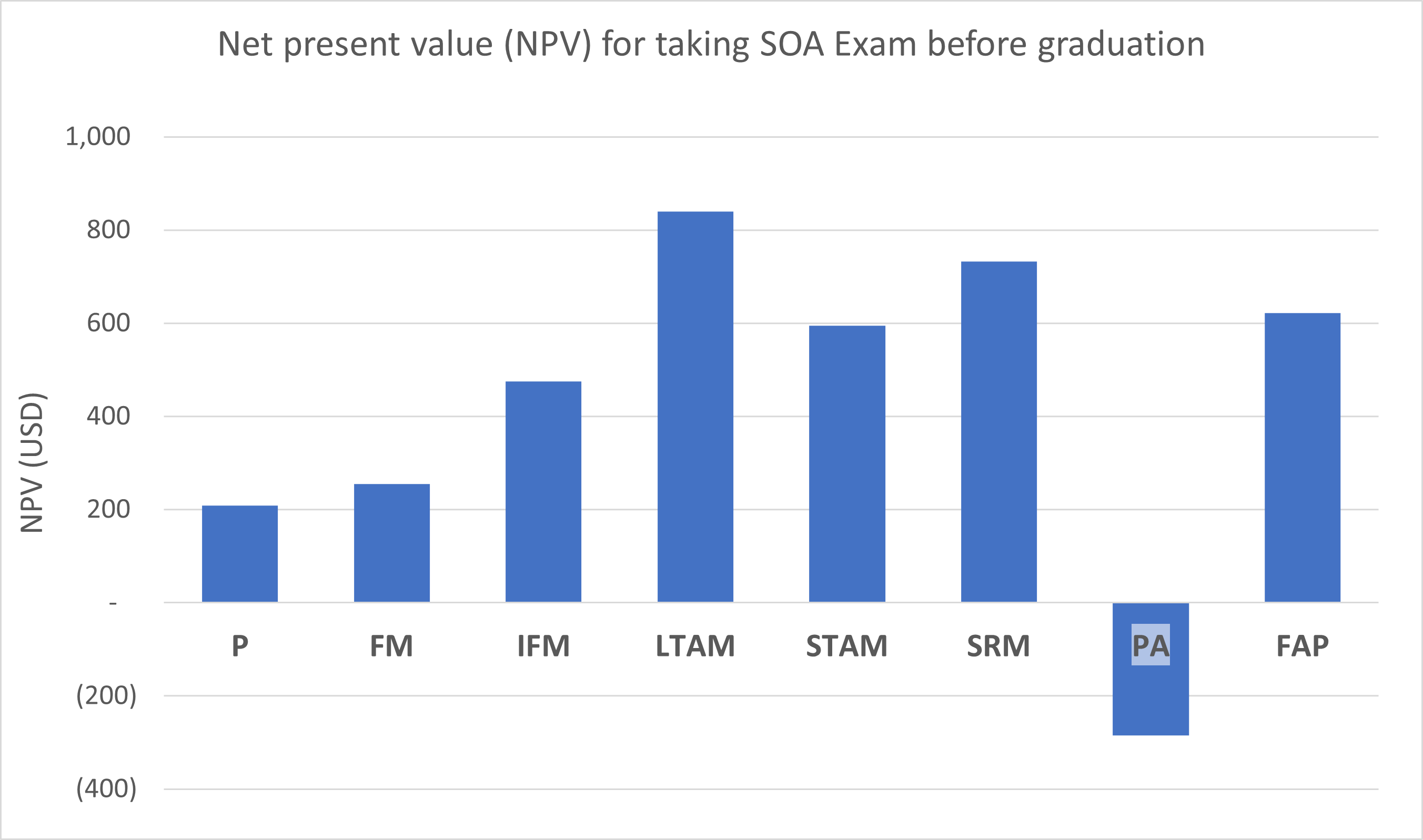
If you are looking to maximize your actuary salary in the United States by 2026, the most effective strategy is to front-load your exams. Passing 2–3 exams while still in university allows you to bypass the lowest salary rungs immediately upon graduation. Once employed, specialize in high-growth areas such as Cyber Risk, Climate Analytics, or InsureTech modeling. Finally, do not overlook the importance of "soft skills." In 2026, the highest-paid actuaries are those who can translate complex stochastic models into actionable business strategies for non-technical executives.
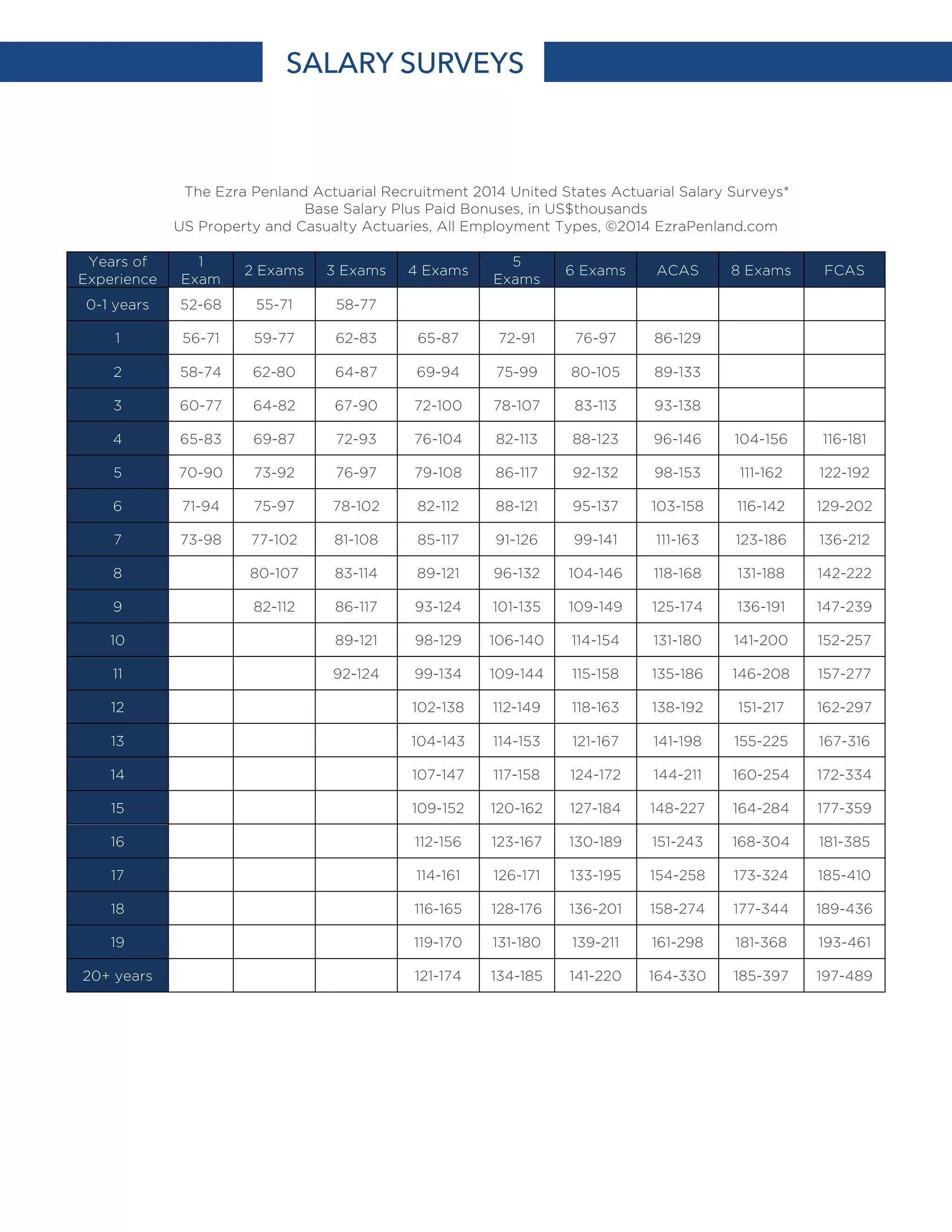
For the most accurate and up-to-date individual salary benchmarking, professionals should consult the annual salary surveys published by major actuarial recruiting firms like Ezra Penland or DW Simpson, which provide granular data based on specific exam progress and regional shifts.