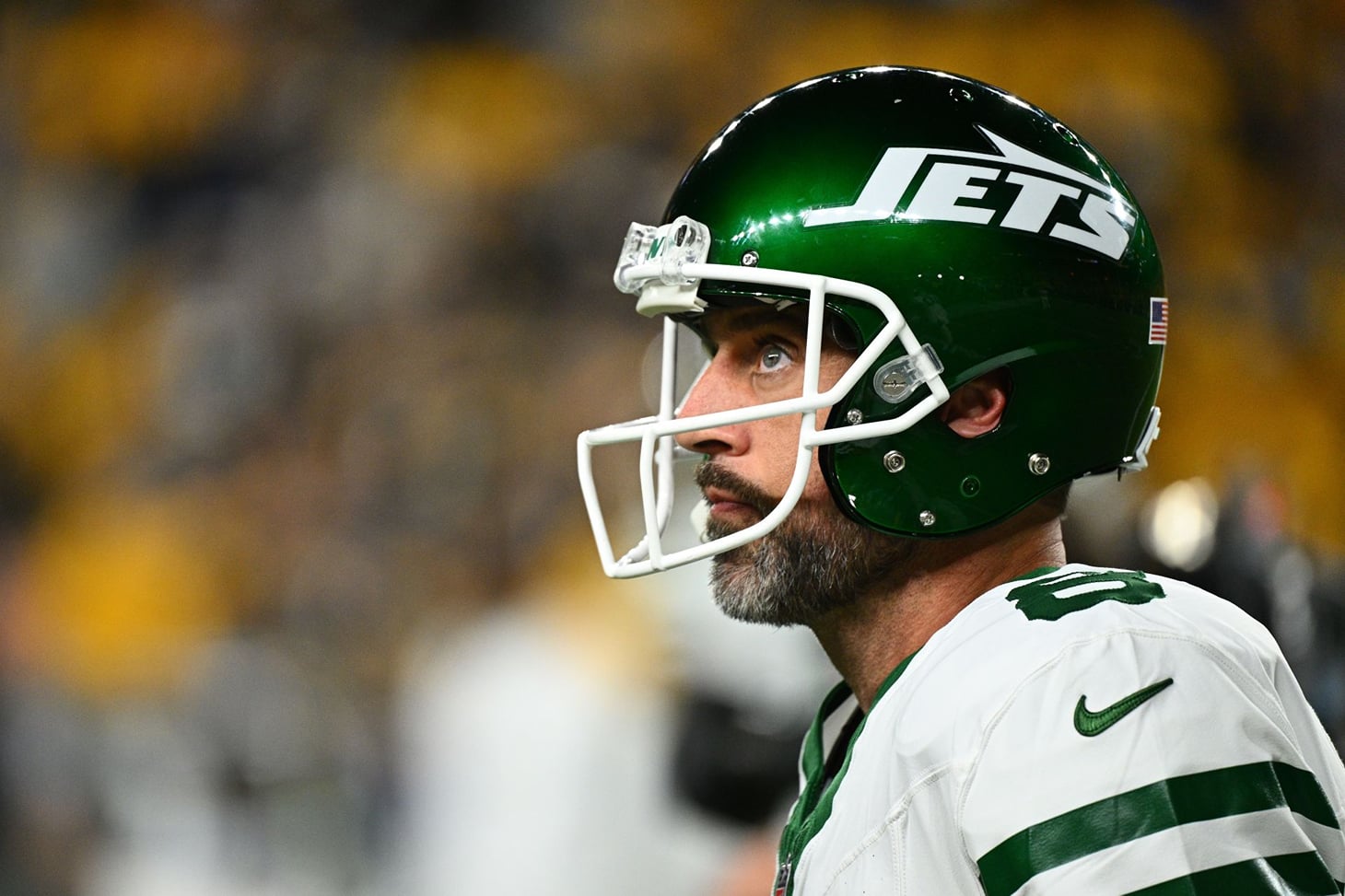
Aaron Rodgers’ 2024 NFL campaign was defined by a persistent knee issue that hampered his mobility, limited his effectiveness in the pocket, and ultimately influenced the New York Jets’ offensive strategy throughout the season. The injury necessitated significant adjustments to the team’s play-calling, forced a reliance on shorter passing concepts, and underscored the challenges of maintaining elite quarterback play at an advanced age while recovering from recurring lower-body trauma.
The Context of the 2024 Injury
In the 2024 season, Aaron Rodgers, playing for the New York Jets, navigated a series of physical setbacks that became a focal point of sports media and tactical analysis. Unlike his season-ending Achilles tear from the previous year, the 2024 knee injury was a chronic concern—a nagging ailment that fluctuated in severity from week to week. For a quarterback whose game has historically relied on subtle pocket movement, an internal "clock," and the ability to extend plays, a compromised knee fundamentally altered how he interacted with the defensive front.
The injury created a ripple effect. When a quarterback cannot plant their lead leg effectively or push off the back foot with full velocity, the ball’s trajectory and release speed are often impacted. Rodgers, known for his precision, had to compensate by adjusting his mechanics, often relying on his upper body strength to get the ball out quicker to avoid pressure he could no longer easily evade.
Tactical Shifts and Offensive Adjustments
The primary impact of the knee injury on the Jets’ offense was the necessitated transition from a dynamic, play-extension-heavy scheme to a more rigid, rhythm-based passing attack. Coaches and offensive coordinators are often forced to rebuild their playbook mid-season when a marquee quarterback is physically limited.
Reduction in RPO Utilization
Run-Pass Options (RPO) require the quarterback to be a constant threat to keep the ball or move quickly to the perimeter. Because of his limited lateral mobility, Rodgers was frequently removed from read-option packages. This effectively shrunk the field for the defense, as they no longer had to respect the threat of a quarterback scramble or a quick bootleg. The opposing defense could focus more heavily on the running back and the wide receivers, knowing that Rodgers would likely be anchored to a specific spot in the pocket.
Shift to "Quick-Game" Concepts
To protect Rodgers, the coaching staff implemented a higher frequency of three-step drops and slants. By getting the ball out of his hands in under 2.5 seconds, the team minimized the time Rodgers spent under pressure. While this strategy prevented further injury and kept the team competitive in several contests, it limited the team’s ability to generate explosive plays down the field. The offense became predictable, relying on timing rather than the improvisational magic that has defined Rodgers’ Hall of Fame career.
Physiological Challenges for Veteran Quarterbacks
The 2024 season highlighted the physiological reality of playing the quarterback position into one's 40s. While modern sports medicine has made it possible for athletes to extend their careers, lower-body injuries—specifically those involving the knee—remain the most significant hurdle for pocket passers.
When the knee joint is compromised, the kinetic chain is broken. A quarterback's throw begins in the lower body, transfers energy through the core, and finishes with the wrist flick. If the "foundation" is unstable, the quarterback experiences a decrease in velocity and accuracy. Over the course of a 17-game season, the fatigue factor becomes exponentially higher; what might be a manageable injury in Week 1 can become a chronic mobility issue by Week 12.
| Feature | Pre-Injury Impact | Post-Injury Compensation |
|---|---|---|
| Pocket Presence | Ability to slide and reset | Reliance on quick internal clock |
| Play Extension | Scrambling to create yardage | Immediate check-downs/dump-offs |
| Mechanics | Fluid weight transfer | Upper-body dominated release |
| Offensive Depth | Vertical passing threat | High-percentage short rhythm passing |
Implications for Team Performance
The impact of the injury on the team went beyond the stats sheet. The morale and psychological confidence of an offense are often tied to the perceived health of the leader. When a team watches their starting quarterback struggle to walk or navigate the pocket, the play-callers lose aggression, and the offensive line often overcompensates, leading to penalties or missed assignments.
Furthermore, the uncertainty surrounding his health during the 2024 season caused ongoing roster management issues. Because the backup quarterback situation remained a concern, the Jets were forced to keep Rodgers in the game even when they were down by significant margins, purely because his presence—even at 70% health—offered a better chance of winning than the alternatives. This, however, created a feedback loop where he was unable to fully rest the knee during the crucial mid-season window.
Evaluating the "What-If" Scenarios
Critics and analysts often debate how much of the Jets' 2024 offensive failure can be attributed to the injury versus the team’s surrounding talent. It is essential to distinguish between systemic issues and injury-related limitations.
The injury forced the team to play in a "narrower" way. In games where the opponent had a strong interior pass rush, the lack of mobility meant Rodgers could not step up to navigate the pressure. This resulted in an increased number of sacks and forced throwaways. While his mental processing of defenses remained elite, the physical tools required to execute those high-level reads were frequently unavailable.
Frequently Asked Questions
How did the knee injury specifically affect Aaron Rodgers' passing mechanics in 2024? The knee injury affected his ability to drive off his back leg. This resulted in a slight reduction in "zip" on intermediate out-routes and forced him to rely more on arm strength, which can lead to increased fatigue and decreased accuracy over the duration of a game.
Did the injury make the Jets' offense easier to defend? Yes. By limiting Rodgers' mobility, the defense did not have to account for him as a runner. This allowed linebackers to drop deeper into coverage and safeties to play closer to the line of scrimmage, effectively suffocating the middle of the field.
Was the 2024 injury a recurring issue from previous seasons? The 2024 injury was distinct from his 2023 Achilles injury, though there is clinical literature suggesting that compensatory movements following a major lower-body injury can place undue stress on other joints, including the knees and hips, in subsequent seasons.
Why did the team continue to play him if he was limited? In professional football, coaches are judged on winning the immediate game. Even a hobbled Aaron Rodgers is often viewed as providing better schematic control and pre-snap recognition than a healthy but less experienced backup, leading to the decision to start him despite the limitations.
How does a knee injury at age 40 differ from one at age 25? The primary difference is the rate of tissue repair and inflammation management. At 40, the body requires significantly longer recovery periods between games. The 2024 season illustrated that there is effectively no "off-season" recovery during the regular season, meaning an injury in September is likely to persist until the following spring.
Conclusion and Looking Ahead
The 2024 season served as a stark reminder that even the most talented quarterbacks are subject to the physical limitations of the human body. The impact of the knee injury was not merely a list of missed games or lower completion percentages; it was a fundamental shift in the identity of the New York Jets' offense. The team had to move away from what they wanted to run and into a scheme that catered to a quarterback playing in a survival mode of sorts.
For fans and analysts looking at the long-term trajectory, the 2024 experience underscores the importance of a robust backup plan and the necessity of elite offensive line protection for veteran quarterbacks. Moving forward, the lesson is clear: protecting the quarterback's lower body is not just about avoiding sacks; it is about maintaining the tactical versatility required to compete at the highest level of professional football.