Data centers optimized for Continuous Delivery (CD) must prioritize agility, automation, and high availability to support rapid software release cycles. The six essential design choices include adopting Software-Defined Infrastructure (SDI), modular power and cooling systems, edge computing integration, hybrid cloud interconnectivity, Zero Trust security frameworks, and AI-driven operational automation.
In the landscape of 2026, the traditional data center has evolved from a static repository of servers into a dynamic, programmable entity. For organizations practicing Continuous Integration and Continuous Delivery (CI/CD), the underlying physical and virtual infrastructure must mirror the velocity of the software it hosts. A "CD-ready" data center is not merely a facility with high uptime; it is a platform that treats hardware as code, enabling developers to provision, scale, and secure environments through automated pipelines.
Selecting the right design architecture is critical for reducing "deployment friction"—the delay between code completion and production readiness. As high-density workloads and AI-driven applications become the norm, these design choices determine whether a data center facilitates growth or becomes a bottleneck.
1. Software-Defined Infrastructure (SDI) and Infrastructure as Code
The most fundamental choice for a CD-oriented data center is the transition to a Software-Defined Infrastructure (SDI). In this model, the management and control of networking, storage, and compute are decoupled from the physical hardware. For CD pipelines, this means that every environment—from staging to production—can be defined in a configuration file (such as YAML or JSON) and deployed via tools like Terraform or Ansible.
The Role of API-First Hardware
In 2026, hardware procurement focuses on "API-first" capabilities. Design choices must prioritize servers and switches that offer robust RESTful APIs. This allows the CD pipeline to interact directly with the physical layer. For example, when a deployment requires a specific network VLAN or a storage volume, the pipeline triggers an API call to the Software-Defined Networking (SDN) controller, which configures the fabric automatically. This eliminates the manual "ticket-and-wait" culture that previously plagued data center operations.
Achieving Environment Parity
SDI ensures environment parity, a cornerstone of successful CD. By using the same code to define the data center resources for testing as for production, organizations eliminate the "it works on my machine" syndrome. Design choices here involve selecting hyper-converged infrastructure (HCI) that bundles compute and storage into software-defined blocks, allowing for granular scaling that matches the microservices architecture of modern applications.
2. Modular and Scalable Power and Cooling Architectures
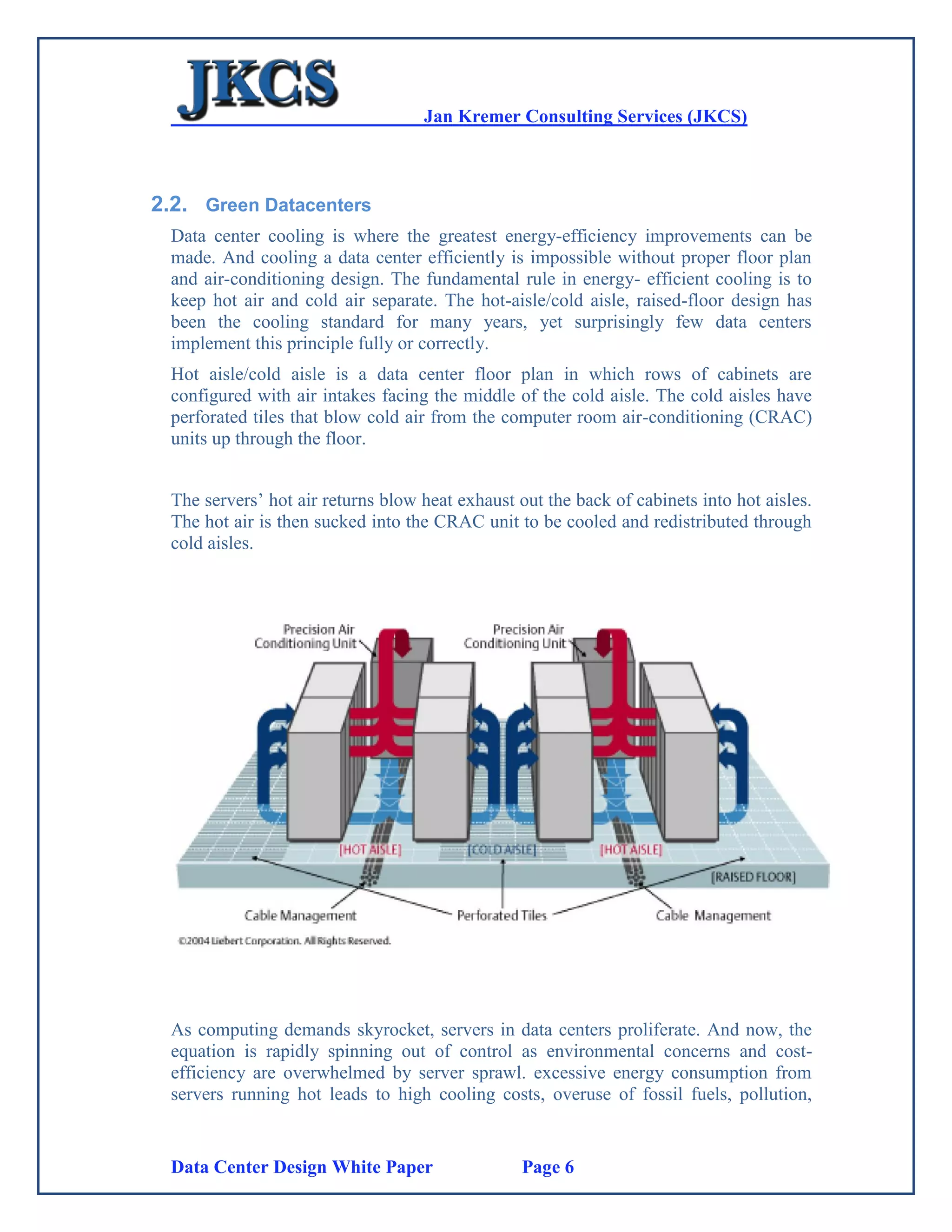
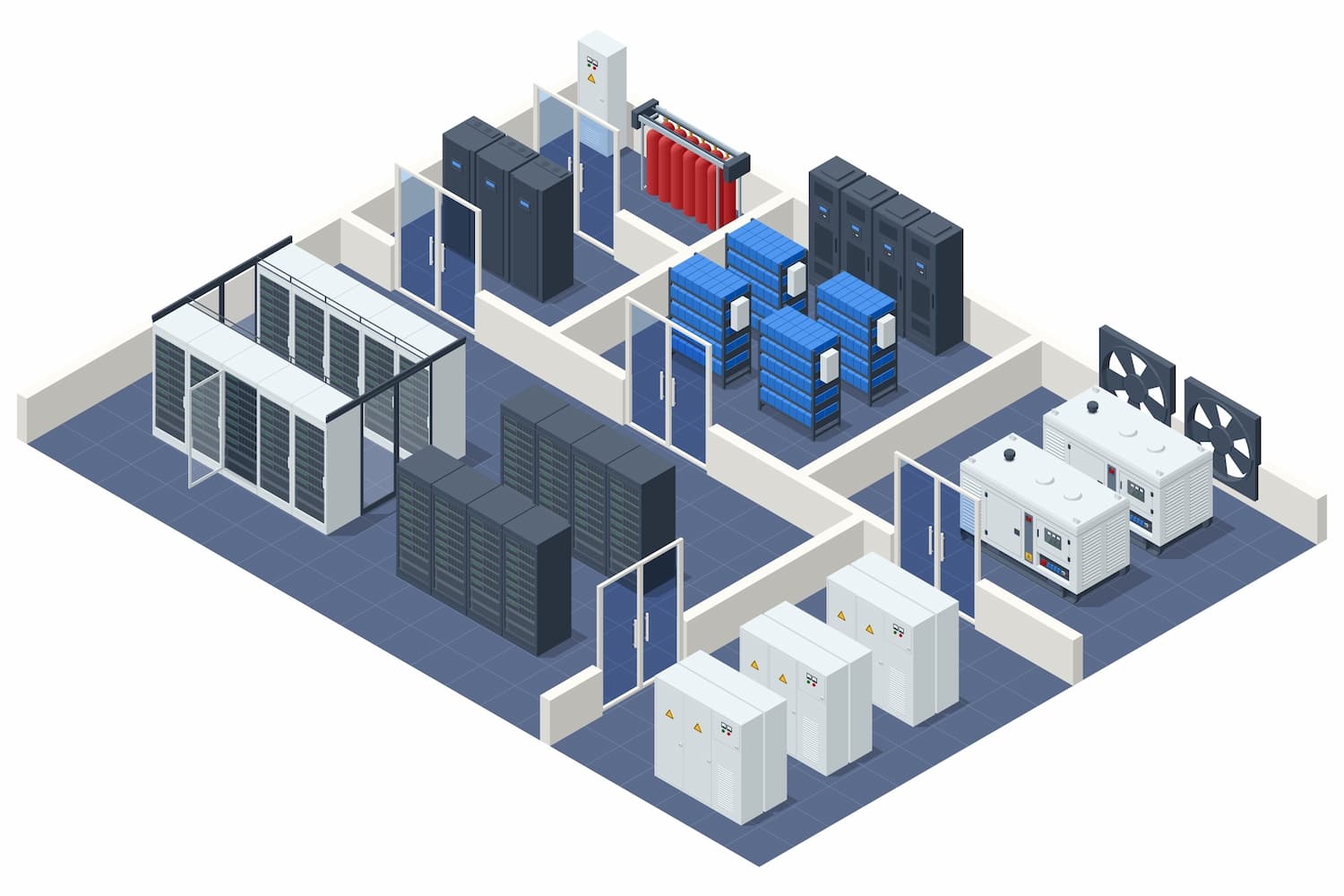
The physical constraints of a data center—specifically power and cooling—often limit the speed at which new capacity can be added. A CD-aligned design favors modularity. Instead of building out a massive, monolithic hall, architects are choosing "POD" (Performance Optimized Datacenter) designs or modular data center (MDC) units.
Transitioning to Liquid Cooling
As of 2026, the heat generated by high-performance chips used for AI and automated testing has surpassed the capabilities of traditional air cooling. A key design choice is the integration of Direct-to-Chip (D2C) or immersion cooling. Modular cooling units allow teams to scale up high-density racks without retrofitting the entire facility. This modularity supports the CD philosophy of "incremental updates," allowing the data center to grow in small, manageable iterations.
Modular Power Distribution
Traditional Uninterruptible Power Supply (UPS) systems were often oversized for initial needs, leading to inefficiency. Modern design choices favor modular UPS systems where power modules can be added as the load increases. This "pay-as-you-grow" approach ensures that the data center remains cost-effective while providing the N+1 or 2N redundancy required for continuous deployment environments where downtime is not an option.
3. Edge Computing Integration for Distributed Delivery
Continuous Delivery in 2026 is no longer confined to a single centralized hub. User expectations for low-latency applications require that the "Delivery" part of CD happens as close to the end-user as possible. Design choices must incorporate Edge Computing nodes—localized micro-data centers that act as an extension of the primary facility.
Localized CD Pipelines
Integrating edge nodes into the data center design allows for "canary deployments" at the edge. Developers can push updates to a specific geographic edge location first, monitor performance, and then roll out to the rest of the network. This distributed architecture requires a design choice centered on ultra-reliable, low-latency backhaul connectivity between the core data center and the edge.
Hardware Standardization at the Edge
Because edge sites are often unmanned, the design choice must focus on "zero-touch" provisioning hardware. These units should be ruggedized and include out-of-band management capabilities, ensuring that the CD pipeline can recover from a hardware-level failure without sending a technician to a remote site.
4. Hybrid and Multi-Cloud Interconnectivity
Very few organizations operate solely in a private data center. A critical design choice for 2026 is the implementation of high-speed, software-defined interconnects to public cloud providers (e.g., AWS, Azure, Google Cloud). This creates a hybrid environment where the data center acts as the "anchor" for sensitive data, while the public cloud provides burstable compute for CI/CD build runners.
Strategic Interconnection Hubs
Choosing a data center location or provider that functions as an interconnection hub is vital. Design choices should prioritize facilities with "Direct Connect" or "ExpressRoute" on-ramps. This allows the CD pipeline to move massive container images and datasets between the private and public clouds with minimal latency and zero egress volatility.
Data Sovereignty and Gravity
The design must account for "Data Gravity." While compute can be ephemeral and move between clouds, data is heavy and expensive to migrate. CD-ready data centers design their storage layers to be "cloud-adjacent," meaning the storage is physically close to the cloud providers' entry points, allowing for high-speed access without the data ever truly leaving the organization's control.
5. Zero Trust Security within the Physical Layer
Security is often the "brake" on the Continuous Delivery "accelerator." To maintain speed, the data center design must incorporate Zero Trust principles directly into the infrastructure layer. This is often referred to as "DevSecOps" at the hardware level.
Micro-Segmentation
A key design choice is the implementation of micro-segmentation through the SDN. In a CD environment, where new services are constantly being spun up, the data center must automatically apply granular security policies. If a new microservice is deployed, the network should only allow it to communicate with the specific databases and services it requires, regardless of its physical location in the rack.
Physical-to-Logical Security Mapping
In 2026, design choices include Secure Enclaves and Trusted Platform Modules (TPM) on every server. This ensures that the code being delivered in the CD pipeline is running on verified, untampered hardware. The design should also include automated auditing of the physical environment, where biometric access logs and cabinet sensors are integrated into the security dashboard, providing a full "chain of custody" for the software being deployed.
6. AI-Driven Operational Automation and Predictive Maintenance
The final design choice involves moving from reactive to proactive operations. A CD pipeline is only as reliable as the underlying hardware. If a server fails during a critical deployment, the pipeline stalls. AI-driven Data Center Infrastructure Management (DCIM) is now a mandatory design component.
Predictive Telemetry
Modern data centers are designed with thousands of sensors monitoring everything from vibration in cooling fans to fluctuations in power draw. The design choice here is to feed this telemetry into AI models that predict failures before they happen. For the CD pipeline, this means the orchestration layer can be notified to "drain" a rack of its virtual workloads before a predicted hardware failure occurs, ensuring zero interruption to the delivery process.
Automated Resource Optimization
AI also assists in "Right-Sizing" the data center. By analyzing the patterns of the CD pipeline, the AI can suggest design adjustments—such as moving high-intensity build runners to rows with better airflow or adjusting power distribution during peak deployment windows. This level of automation ensures that the data center is always optimized for the specific workloads of the CI/CD lifecycle.
Comparison of CD Data Center Design Choices
The following table compares the primary impacts and requirements of these six design choices.
| Design Choice | Primary Benefit | Implementation Complexity | Impact on CD Pipeline |
|---|---|---|---|
| Software-Defined (SDI) | Eliminates manual provisioning | High (Requires cultural shift) | Critical: Enables "Infrastructure as Code" |
| Modular Power/Cooling | Scalability and efficiency | Medium | High: Prevents physical bottlenecks |
| Edge Integration | Ultra-low latency for users | High (Distributed management) | High: Enables localized canary releases |
| Hybrid Cloud Interconnect | Burst capacity and flexibility | Low to Medium | High: Facilitates build runner scaling |
| Zero Trust Security | Reduced risk of breaches | High | Medium: Automates compliance checks |
| AI-Driven Operations | Maximized uptime/predictability | Medium (Requires data maturity) | High: Ensures pipeline reliability |
Technical Prerequisites for 2026 Implementation
To successfully execute these design choices, organizations must meet several technical and organizational prerequisites:
- High-Bandwidth Fabric: The internal network must support at least 400GbE to handle the massive east-west traffic generated by microservices and automated testing.
- Unified API Management: A centralized layer to manage the various APIs from servers, storage, and networking vendors.
- Cultural Alignment: Data center operations teams (NetOps, SysOps) must adopt DevOps practices, learning to use version control and automation tools.
- Advanced DCIM Software: Investment in 2026-era DCIM platforms that support AI integration and real-time telemetry streaming.
Common Pitfalls in CD Data Center Design
- Over-Engineering for Peak Load: Designing a data center for the absolute maximum possible load leads to wasted capital. Modular design is the antidote to this.
- Neglecting Latency in Hybrid Setups: Relying on standard internet connections for hybrid cloud CD pipelines often results in "flaky" builds and timeouts.
- Siloed Security: Treating security as a final "gate" rather than integrating it into the SDN and hardware layer will inevitably slow down the CD process.
- Ignoring Hardware Lifecycle: In a CD environment, hardware ages quickly due to high utilization. Failing to plan for a three-year refresh cycle can lead to performance degradation.
Frequently Asked Questions
How does Software-Defined Infrastructure (SDI) specifically speed up CD?
SDI speeds up CD by allowing the automation server (like Jenkins or GitLab Runner) to use scripts to build the exact environment needed for a specific version of the software. This happens in seconds rather than the days or weeks required for manual configuration, ensuring that the environment is always ready for the next stage of the pipeline.
Is liquid cooling necessary for all CD-ready data centers in 2026?
While not strictly necessary for every rack, liquid cooling is becoming a standard design choice for the "build clusters" within data centers. These clusters often use high-TDP (Thermal Design Power) CPUs and GPUs to compile code and run parallel tests, generating heat that air cooling struggle to dissipate efficiently.
What is the difference between "Cloud-Adjacent" and "Cloud-Integrated" design?
"Cloud-Adjacent" refers to placing your physical data center resources in a facility with a direct, low-latency link to a public cloud (like a carrier-neutral hub). "Cloud-Integrated" involves using a unified management plane to treat the private data center and public cloud as a single pool of resources. For CD, cloud-adjacency is often preferred for data-heavy applications to avoid high egress costs.
How does Zero Trust affect the speed of deployment?
Initially, Zero Trust can seem to slow things down due to the requirement for strict identity verification. However, once the design is implemented, it speeds up the "Delivery" phase by automating security audits. Instead of a manual security review, the SDN automatically verifies that the new deployment adheres to the pre-defined security policy.
Can old data centers be retrofitted for these CD design choices?
Yes, but it is often done incrementally. The easiest "entry point" is implementing Software-Defined Networking (SDN) over existing hardware. Modular power and cooling can also be added to specific rows or "pods" within an older facility to create a high-performance zone specifically for CD workloads.
Practical Recommendation
For organizations looking to modernize their infrastructure for Continuous Delivery in 2026, the first step should be the adoption of Software-Defined Infrastructure (SDI). Without the ability to treat hardware as code, all other design choices—such as AI-driven maintenance or edge integration—will be limited by manual processes. Start by selecting a "pilot pod" in your data center and equipping it with API-first networking and storage. Once the CD pipeline can successfully provision this pod without human intervention, expand the modular architecture to the rest of the facility, prioritizing hybrid cloud interconnects to ensure scalability.