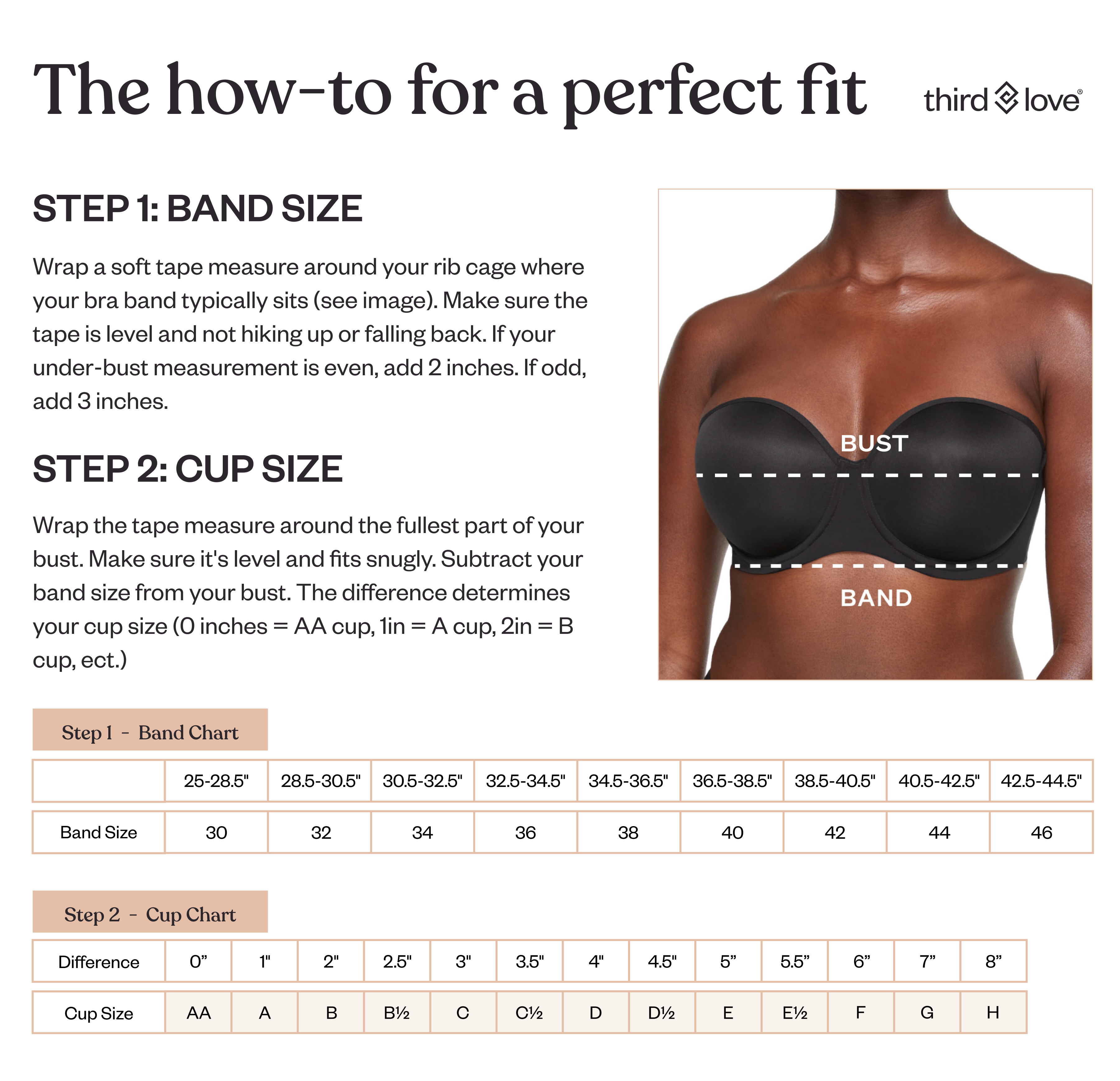
A 40 double D (40DD) bra size indicates a 40-inch frame circumference (band size) paired with a cup volume designed for a five-inch difference between the underbust and the fullest part of the bust. This size is a common "full-figure" designation, balancing a sturdy support structure with significant cup capacity.
Understanding your bra size is more than just a matter of comfort; it is a fundamental aspect of posture, spinal health, and confidence. The 40DD size is frequently misunderstood, often caught between "standard" and "plus-size" marketing categories. In 2026, sizing technology and fabric engineering have made finding the perfect 40DD easier than ever, provided you understand the technical nuances of how this specific size functions.
The Anatomy of a 40DD Bra Size
To master the fit of a 40DD, one must first deconstruct what the numbers and letters actually represent. Bra sizing is a relative system, not an absolute one. This means a DD cup on a 40 band holds significantly more physical volume than a DD cup on a 34 band.
Understanding the 40 Band
The "40" in 40DD refers to the band size, which is the most critical element of any bra. In a properly fitting garment, the band provides approximately 80% of the total support. For a 40DD, the band is designed to fit an individual whose ribcage measures roughly 38 to 40 inches.
Because a 40DD supports a heavier breast weight than smaller sizes, the band must be constructed with high-tension materials. In 2026, many manufacturers use reinforced power mesh or multi-layered microfiber to ensure the band remains parallel to the floor without riding up. If the band is too loose, the weight of the breasts will pull the front of the bra down, causing the back of the band to arch upward and placing the entire burden of support on the shoulder straps.
Defining the Double D Cup
The "DD" label is where many consumers experience confusion. Historically, the cup progression went A, B, C, D, and then "Double D." In modern sizing systems, a DD is technically a 5-inch difference between the underbust and the overbust measurement.
In some international sizing systems, particularly in Europe, a DD is often labeled as an "E" cup. However, in the United States and the United Kingdom, the DD designation remains the standard. For a 40DD, this means if your underbust is 40 inches, your overbust (the measurement around the fullest part of your chest) should be approximately 45 inches.
How to Measure for a 40DD in 2026
Accurate measurement is the only way to verify if 40DD is your true size. While professional fittings are helpful, you can achieve professional-grade results at home using a soft measuring tape and the following steps.
Step 1: The Underbust Measurement
Stand in front of a mirror wearing a non-padded bra or no bra at all. Wrap the measuring tape around your ribcage, directly under your breasts. The tape should be snug—tight enough that it doesn't slide, but not so tight that it dig into your skin or inhibits breathing.
If your measurement is an even number, like 40, that is your base band size. If it is an odd number, like 39 or 41, you may need to test both the size below and above (e.g., 38 and 40, or 40 and 42) to see which offers better tension and comfort.
Step 2: The Bust Measurement
Measure the fullest part of your chest. For most people, this is across the nipple line. Keep the tape level around your back. Do not pull the tape tight here; it should rest gently against your skin. If you have "projected" or pendulous breasts, it is often more accurate to lean forward at a 90-degree angle so your chest is parallel to the floor while measuring.
Step 3: The Calculation
Subtract your underbust measurement from your bust measurement.
- 1 inch = A
- 2 inches = B
- 3 inches = C
- 4 inches = D
- 5 inches = DD
If your underbust is 40" and your bust is 45", you are a 40DD.
The Importance of "Sister Sizing"
One of the most valuable tools for a person wearing a 40DD is the concept of sister sizes. Sister sizes are groups of bra sizes that have the same cup volume, even though the band and cup letters are different. This is useful because different brands have different levels of elasticity in their bands.
If you try on a 40DD and the cups fit perfectly but the band feels painfully tight, you might think you need a 42DD. However, if you move up to a 42DD, the cups will actually be larger than the 40DD. To keep the same cup volume with a larger band, you must go up a band size and down a cup size.
| Current Size | Sister Size (Down a Band) | Sister Size (Up a Band) |
|---|---|---|
| 40DD | 38DDD (or 38E) | 42D |
| 40D | 38DD | 42C |
| 40E (DDD) | 38F | 42DD |
Using this table, if the 40DD band is too loose, you should try a 38DDD. If the 40DD band is too tight, try a 42D. These sizes will maintain the volume necessary to house your breast tissue while adjusting the frame of the bra to fit your ribcage.
International Sizing Comparison for 40DD
Shopping for bras in 2026 often involves international brands. Understanding how 40DD translates across different regions is essential for avoiding returns and ensuring a proper fit.
| Region | Band Size | Cup Size | Notes |
|---|---|---|---|
| United States (US) | 40 | DD | Standard US sizing. |
| United Kingdom (UK) | 40 | DD | UK and US are generally identical at this size. |
| European Union (EU) | 90 | E | EU uses centimeters for band and E for DD. |
| France (FR) | 105 | E | France uses a different band numbering system. |
| Australia (AU/NZ) | 18 | DD | AU uses "Dress Size" numbering for the band. |
Common Fit Issues and Solutions for 40DD
Even when the measurements suggest a 40DD, the shape of the bra or the specific brand can lead to fit issues. Here is how to troubleshoot the most common problems encountered by those in this size range.
1. Spillage or "Quad-Boobing"
If your breast tissue is overflowing over the top or sides of the cups, creating a four-breasted silhouette under clothing, the cups are too small. This often happens because the 40DD is actually a 40DDD (E) or 40G in disguise. Even if your measurements say 40DD, different breast shapes (like "full on top") may require a larger cup to contain the tissue properly.
2. The Floating Gore
The "gore" is the center piece of the bra that connects the two cups. In a well-fitting underwire 40DD, the gore should sit flat against your sternum. If it is "floating" or pushing away from your chest, it usually means the cups are too small or too shallow, and your breasts are pushing the entire bra away from your body to find room.
3. Slipping Straps
Many people believe slipping straps mean the straps are too loose. While that’s sometimes true, in a 40DD, it usually means the band is too large. If the 40-inch band is sliding up your back, the straps lose their tension and fall off the shoulders. Try a 38DDD to see if a tighter band solves the strap issue.
4. Painful Underwires
If the underwire is poking your armpit or sitting on top of breast tissue at the sides, the cup is likely too narrow. A 40DD requires a wide underwire to encapsulate the tissue that often extends toward the underarm. Look for "full-figure" styles which generally feature wider wires.
Best Bra Styles for a 40DD Silhouette
Not all bra styles are created equal for the 40DD size. Because this size carries significant weight, the architecture of the bra is paramount.
- Full-Coverage Bras: These are the gold standard for 40DD. They offer the most containment and support, preventing spillage and providing a smooth silhouette under professional attire.
- Balconette Bras: Ideal for those who want lift without the high neckline of a full-coverage bra. Balconettes have straps that are set wider apart, which can be very flattering for broader shoulders.
- Minimizer Bras: If you wish to reduce the appearance of your bust projection to fit better into button-down shirts, a minimizer redistributes the breast tissue more broadly across the chest.
- Encapsulation Sports Bras: For high-impact activities, 40DD wearers should avoid "compression" sports bras (the ones you pull over your head) and instead opt for encapsulation bras that have defined cups and an underwire. This prevents the "unibrow" look and provides superior motion control.
Maintaining Your 40DD Bras
The lifespan of a 40DD bra is often shorter than smaller sizes because the materials work harder to counteract gravity. To maximize your investment:
- Rotate Your Bras: Never wear the same bra two days in a row. The elastic fibers need 24 hours to "snap back" to their original shape.
- Hand Wash or Use a Mesh Bag: Ideally, hand wash with a delicate detergent. If you must use a machine, use a cold cycle and a protective mesh bag.
- Never Use a Dryer: Heat is the enemy of elastic. Air-drying is mandatory to prevent the 40-inch band from becoming a 42-inch band prematurely.
Frequently Asked Questions
Is 40DD considered a large size?
In the context of the global bra market, 40DD is considered a "full-figure" or "plus" size, though it is one of the most commonly sold sizes in North America. It represents a significant volume of breast tissue relative to the frame, requiring specific structural features like wider straps and reinforced bands that are not always found in smaller sizes.
What is the difference between 40DD and 40E?
In most US brands, 40DD and 40E are the same size. However, in some UK and European brands, "E" is the size that comes after DD. Always check the brand's specific sizing chart to see if they follow the A-B-C-D-DD-DDD progression or the A-B-C-D-DD-E progression.
Why do my 40DD bras always feel tight at the end of the day?
This is often due to water retention or "ribcage expansion" that occurs naturally throughout the day. If the tightness is localized to the band, you might benefit from using a bra extender for the last few hours of the day rather than sizing up to a 42 band, which might be too loose in the morning.
Can I wear a 40DD if my measurement is 41 inches?
Yes. Bra bands are elastic. If your underbust measures 41 inches, a 40DD is often a better choice than a 42D because the 40 band will provide more support once the elastic relaxes slightly after a few wears. If it feels too tight initially, a bra extender can bridge the gap during the "break-in" period.
Should a 40DD always have an underwire?
While underwires provide the best lift and separation, they are not strictly necessary. In 2026, wireless technology has advanced significantly, using "molded" fabric zones and internal slings to provide support for 40DD without the discomfort of a metal wire. However, for maximum "uplift," an underwire remains the most effective tool.
Final Recommendation
If you believe you are a 40DD, your next step should be a "fit test" with a high-quality full-figure brand. Put the bra on and lean forward, allowing your breasts to settle into the cups—this is known as the "scoop and swoop" method. If the gore sits flat, the band is level, and there is no overflowing tissue, you have found your perfect match. Remember that your size can change due to weight fluctuations, hormonal shifts, or aging, so re-measure yourself at least once every twelve months to ensure your support system remains optimal.