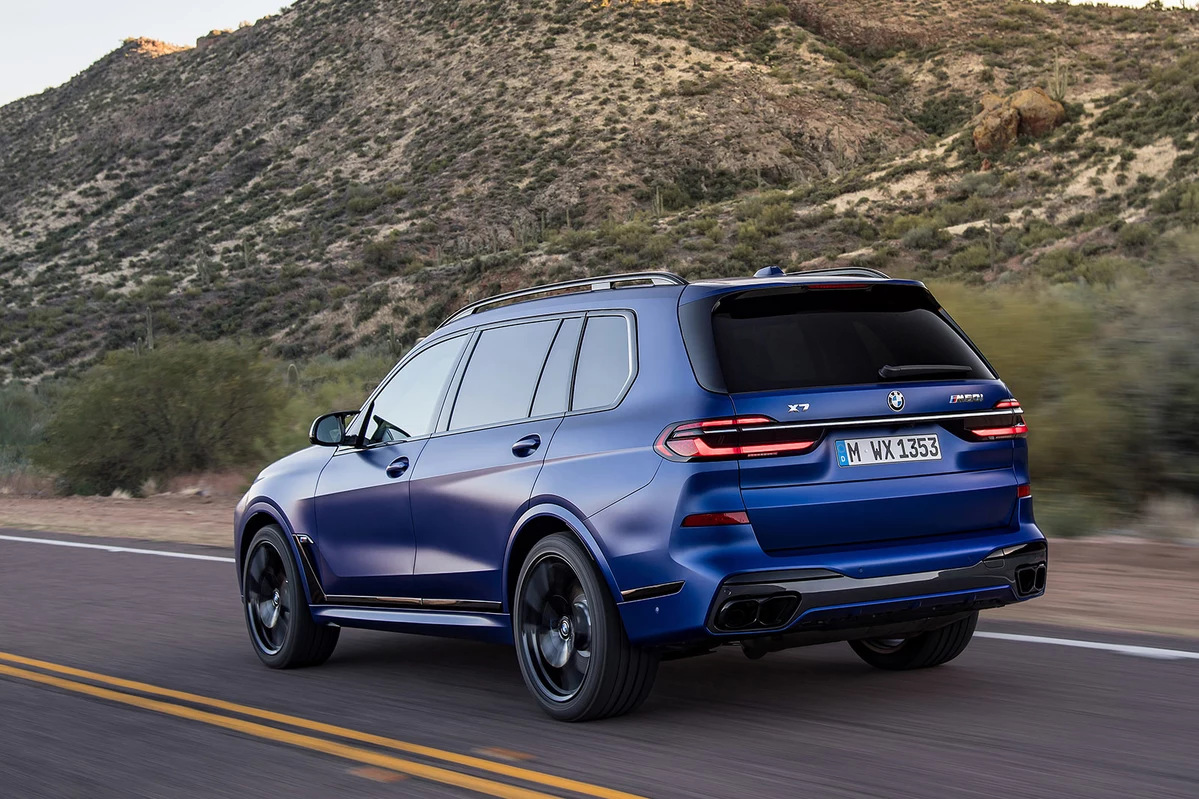
The 381 horsepower BMW X7 xDrive40i features a turbocharged 3.0-liter inline-six engine paired with a 48-volt mild-hybrid system, delivering robust performance, refined power delivery, and improved efficiency for BMW’s flagship full-size luxury sport utility vehicle.
The full-size luxury sport utility vehicle segment demands a delicate balance of commanding road presence, supreme passenger comfort, and effortless powertrain performance. Within the BMW lineup, the X7 occupies the pinnacle of this segment, offering three rows of spacious seating and cutting-edge automotive technology. At the heart of the most popular variant, the X7 xDrive40i, lies a meticulously engineered propulsion system rated at 381 horsepower. This output represents a significant milestone in BMW's powertrain evolution, integrating turbocharging and mild-hybrid electrification to deliver smooth, accessible power across a broad operating range. Examining this specific powertrain requires looking past the headline horsepower figure to understand how thermal engineering, electrical assistance, and transmission tuning work in concert.
Powertrain Architecture: The B58 Engine and 48-Volt Hybrid System
The foundation of the 381 horsepower BMW X7 xDrive40i is BMW’s legendary B58 engine family, specifically the TU2 (Technical Update 2) iteration of the 3.0-liter turbocharged inline-six. Long celebrated for its exceptional thermal efficiency, inherent primary and secondary balance, and robust tuning potential, the inline-six layout remains a hallmark of BMW engineering. In this application, the engine utilizes a single twin-scroll turbocharger, high-precision direct injection, Valvetronic fully variable valve control, and Double-VANOS variable camshaft timing.
- BMW X7 xDrive40i Powertrain
- 3.0L Turbocharged Inline-6 Engine (B58TU2)
- Base Output: 375 Horsepower
- 48-Volt Mild-Hybrid Integration
- Crankshaft-Mounted Starter Generator
- System Total: 381 Horsepower
- 3.0L Turbocharged Inline-6 Engine (B58TU2)
What elevates the modern X7 xDrive40i output to 381 horsepower (metric, or approximately 375 mechanical horsepower in North American specifications) is the integration of a 48-volt mild-hybrid system. Unlike full hybrids or plug-in hybrids, this system cannot propel the vehicle on electricity alone. Instead, it utilizes a compact electric motor integrated directly into the housing of the 8-speed automatic transmission, acting as a starter-generator.
This 48-volt architecture serves several critical functions:
- Instant Torque Fill: The electric motor provides up to 147 lb-ft of supplemental torque instantly, eliminating turbo lag during initial throttle tip-in.
- Seamless Start-Stop Operation: Engine restarts during the auto start-stop cycle are virtually imperceptible, reducing vibration and noise.
- Energy Recuperation: During deceleration and braking, the system captures kinetic energy, converting it into electrical power to replenish both the 48-volt lithium-ion battery and the traditional 12-volt onboard electrical system.
- Coasting and Efficiency: The vehicle can decouple the internal combustion engine during highway coasting to conserve fuel without sacrificing accessory power.
Performance Metrics and Real-World Driving Dynamics
Translating 381 horsepower into motion across a vehicle weighing over 5,500 pounds requires sophisticated transmission calibration and intelligent all-wheel-drive distribution. The engine pairs exclusively with an ZF-sourced 8-speed Steptronic Sport automatic transmission. This gearbox is praised throughout the automotive industry for its rapid, seamless gear changes and wide ratio spread, which ensures the engine stays within its optimal powerband during acceleration while dropping to low RPMs during highway cruising.
BMW’s xDrive intelligent all-wheel-drive system continuously monitors driving conditions, varying torque split between the front and rear axles to optimize traction and agility. In normal driving conditions, power biases heavily toward the rear wheels to maintain traditional BMW driving dynamics, but the system can shift up to 100 percent of available torque to either axle within milliseconds if slip is detected.
| Performance Parameter | Specification |
|---|---|
| Engine Type | 3.0L Turbocharged Inline-6 with 48V Mild-Hybrid |
| Total Horsepower | 381 hp (metric) / 375 hp (SAE) @ 5,200–6,250 rpm |
| Total Torque | 383 lb-ft @ 1,850–5,000 rpm |
| Transmission | 8-Speed Automatic with Paddle Shifters |
| Drivetrain | xDrive Intelligent All-Wheel Drive |
| 0–60 mph Acceleration | Approximately 5.6 seconds |
| Top Speed | 130 mph (standard) / 155 mph (with performance tires) |
The vehicle's acceleration figures defy its physical dimensions, moving from a standstill to 60 miles per hour in roughly 5.6 seconds. More importantly, the torque curve is remarkably flat, delivering its maximum 383 lb-ft from just 1,850 rpm all the way up to 5,000 rpm. This ensures that passing maneuvers at highway speeds require minimal effort, as the transmission quickly selects an appropriate gear while the electric motor fills any momentary gaps in boost pressure.
Ride Comfort, Suspension Engineering, and Chassis Control
Power is only one component of a flagship luxury vehicle; how that power is translated to the road through the chassis dictates the overall ownership experience. The BMW X7 xDrive40i utilizes a sophisticated chassis setup designed to isolate occupants from road imperfections while maintaining composure during dynamic cornering maneuvers.
Standard equipment includes a two-axle self-leveling air suspension system paired with electronically controlled dampers. The air suspension automatically adjusts ride height based on vehicle speed, driving mode, and cargo weight. At higher highway speeds, the vehicle lowers slightly to reduce aerodynamic drag and improve high-stability tracking. Conversely, drivers can raise the vehicle for clearance when navigating unpaved surfaces or deep snow.
For buyers seeking sharper handling and enhanced maneuverability, optional or higher-tier equipment like Integral Active Steering (rear-wheel steering) and active roll stabilization significantly transform the driving experience. Rear-wheel steering turns the rear wheels counter to the front wheels at low speeds to drastically reduce the turning radius—making parking lot navigation surprisingly easy for a large three-row SUV—while turning them in the same direction at high speeds to enhance lane-change stability. Active roll stabilization uses electromechanical actuators on the anti-roll bars to counteract body roll during aggressive cornering, keeping the cabin remarkably level.
Fuel Efficiency and Operational Considerations
Operating a vehicle with a 381-horsepower output and a large physical footprint naturally involves considerations regarding fuel consumption and ongoing maintenance. While the 48-volt mild-hybrid system optimizes urban efficiency by smoothing out stop-and-start traffic cycles and enabling efficient coasting, the physics of moving a large luxury utility vehicle dictate substantial energy usage.
Fuel economy ratings typically hover in the low-to-mid 20s for highway driving and the high teens in city driving cycles, according to standard testing protocols. Premium unleaded fuel is strictly required to prevent engine knocking and ensure that the turbocharger and high-compression direct-injection system operate within safe parameters.
Maintenance requirements mirror those of other modern high-performance European luxury vehicles. Frequent synthetic oil changes, precise coolant maintenance, and periodic inspection of the complex air suspension and electrical systems are vital for long-term reliability. Owners must also budget for specialized tires, as the large wheel diameters (ranging typically from 21 to 23 inches) fitted to the X7 experience accelerated wear due to the vehicle's weight and torque output.
Frequently Asked Questions
Is the 381 horsepower BMW X7 xDrive40i turbocharged?
Yes, the X7 xDrive40i utilizes a single twin-scroll turbocharged 3.0-liter inline-six engine. This forced-induction setup works in tandem with a 48-volt mild-hybrid system to produce its combined 381 horsepower and 383 lb-ft of torque.
Can the 48-volt mild-hybrid system drive on electricity alone?
No, the 48-volt mild-hybrid system in the X7 xDrive40i cannot propel the vehicle on pure electric power. The electric motor acts as a starter-generator, providing torque assist, smoothing out the automatic start-stop system, and recovering kinetic energy during braking.
How does the xDrive system manage traction in bad weather?
The intelligent xDrive all-wheel-drive system continuously monitors wheel slip, steering angle, and vehicle speed. It can actively vary torque distribution between the front and rear axles dynamically, ensuring optimal grip in rain, snow, and loose terrain without driver intervention.
What is the towing capacity of the X7 xDrive40i?
When properly equipped with a factory trailer hitch, the BMW X7 xDrive40i is rated to tow up to 7,500 pounds, making it fully capable of pulling boats, campers, and large utility trailers.
Premium fuel is expensive; can I run regular gasoline in this engine?
No, regular fuel should never be used. The high compression ratio and turbocharger boost pressures require high-octane premium unleaded gasoline (typically 91 AKI / 95 RON or higher) to prevent destructive engine detonation and ensure optimal power delivery.
Conclusion and Final Recommendation
The 381 horsepower BMW X7 xDrive40i represents a masterclass in modern powertrain engineering, successfully blending the silky smoothness of an inline-six engine with the efficiency and responsiveness of 48-volt electrification. For prospective buyers seeking the ideal balance within the X7 lineup, the xDrive40i variant provides more than enough performance for daily commuting, long-distance touring, and family transport without stepping up to the higher fuel consumption and costs of the V8-powered M60i. Prioritize test-driving models equipped with the optional dynamic handling packages to fully experience how well this chassis manages its substantial output and weight.