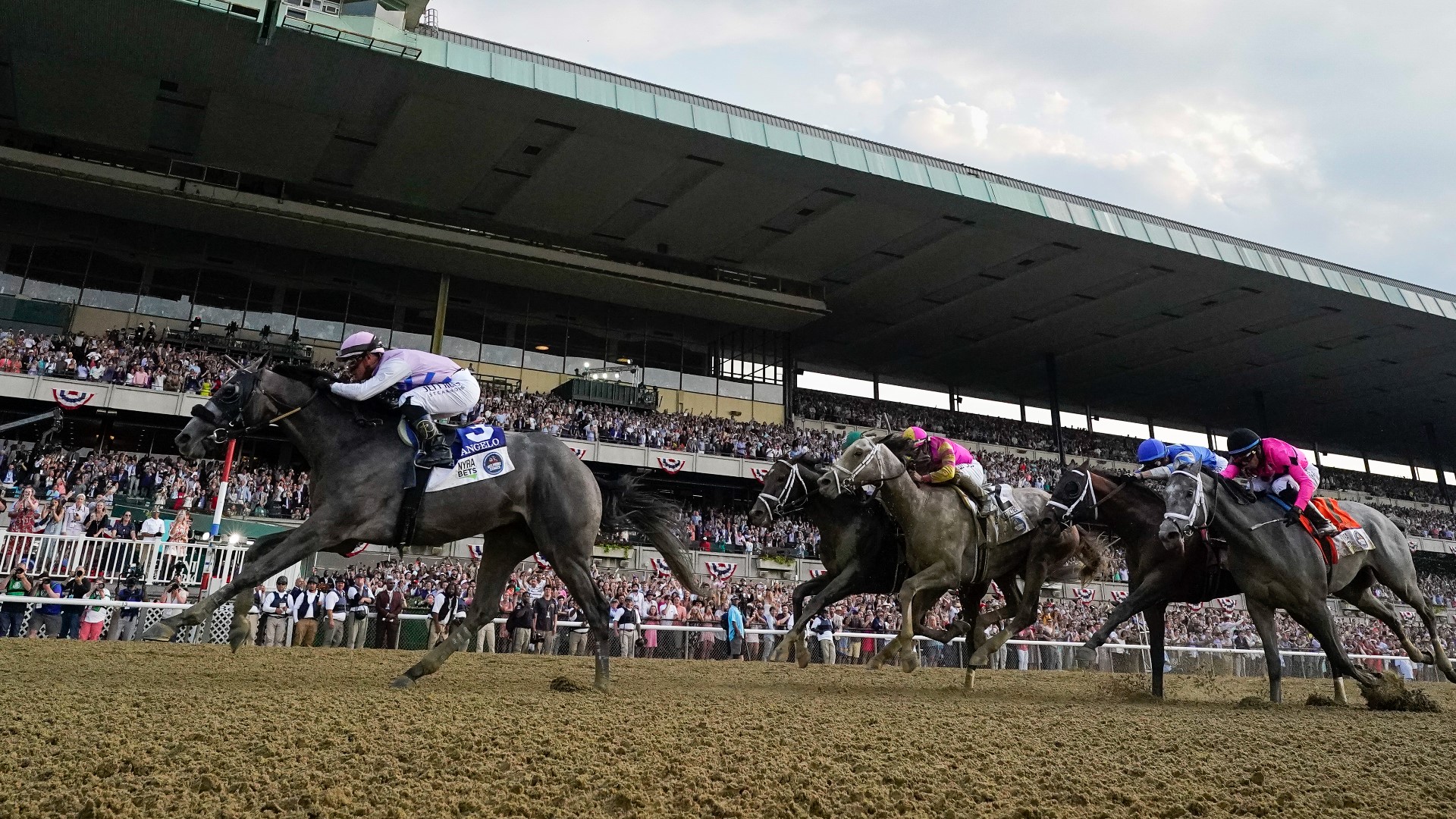
The 2018 Belmont Stakes stood out as a high-stakes sporting event characterized by profound unpredictability, culminating in Justify capturing the Triple Crown under conditions of intense tactical pressure and heavy track moisture. Held on June 9, 2018, at Belmont Park in Elmont, New York, the race challenged handicappers, trainers, and fans alike as questions surrounding fatigue, rival strategies, and weather conditions created an atmosphere where no single outcome felt guaranteed.
Setting the Stage: The 150th Running of the Test of the Champion
The 150th running of the Belmont Stakes arrived with enormous anticipation, anchored by the possibility of witnessing only the thirteenth Triple Crown winner in history. Justify, trained by Bob Baffert and ridden by Mike Smith, entered the starting gate having already conquered the Kentucky Derby on a sloppy track and survived a fierce challenge in a grueling Preakness Stakes at Pimlico Race Course.
Yet, the 1 1/2-mile "Test of the Champion" is notorious for exposing vulnerabilities in even the most dominant three-year-olds. The sheer distance—longer than any race these horses had previously contested—coupled with the demanding configuration of Belmont Park’s expansive dirt oval, introduces unique physiological and tactical variables. Pundits and racing analysts repeatedly highlighted the historical graveyard of Triple Crown bids, noting that brilliant Kentucky Derby and Preakness winners had frequently faltered when stamina gave way in the final furlong.
Adding to the complexity of 2018 was a talented field assembled to test the favorite. Contenders like Vino Rosso, the Wood Memorial winner trained by Todd Pletcher, and Hofburg, an impressive challenger trained by Bill Mott, presented formidable closing styles. Furthermore, the presence of Restoring Hope, a stablemate to Justify also conditioned by Baffert, introduced tactical dimensions regarding early pace management.
Pre-Race Variables and Tactical Uncertainty
Analyses leading up to the race focused heavily on whether Justify could handle the distance while facing a fresh group of competitors who had skipped the Preakness. This strategic freshness advantage has historically disrupted Triple Crown bids. Horses skipping the middle leg arrive at Belmont Park with fully recovered energy reserves, ready to exploit any sign of fatigue in the classic winner.
| Horse | Trainer | Key Prep / Qualification |
|---|---|---|
| Justify | Bob Baffert | Kentucky Derby & Preakness Winner |
| Vino Rosso | Todd Pletcher | Wood Memorial Winner |
| Hofburg | Bill Mott | Florida Derby Runner-Up |
| Bravazo | D. Wayne Lukas | Preakness Runner-Up |
| Gronkowski | Chad Brown | European Road to the Kentucky Derby |
The tactical landscape was further complicated by weather forecasts. Heavy rainfall in the days leading up to the race and on the morning of June 9 transformed the racing surface. A sealed, muddy track changes track bias, traction dynamics, and energy consumption patterns. While Justify had proven his affinity for an off-track in the Kentucky Derby slop, the physical toll of a third demanding race in five weeks on a tiring surface amplified the uncertainty.
Handicappers struggled to model how the early pace would unfold. Would Restoring Hope pressure Justify early, forcing a suicidal speed duel that would exhaust both horses and set the race up for deep closers like Hofburg or Gronkowski? Or would Mike Smith be permitted to dictate a comfortable, measured tempo on the lead? These unanswered questions fueled intense debate across the racing industry, making the betting public deeply divided despite Justify's status as the heavy morning-line favorite.
The Race Unfolds: Execution Under Pressure
When the starting gate opened for the 150th Belmont Stakes, Mike Smith wasted no time sending Justify to the front. Avoiding any trouble from the inside post position, Justify seized the initiative immediately, establishing command as the field swept past the grandstand for the first time.
The anticipated pace pressure materialized briefly as Restoring Hope raced to his outside, but Smith managed the fractions carefully. Justify completed the first quarter-mile in 23.37 seconds and the half-mile in 48.11 seconds. These fractions were remarkably sensible for a mile-and-a-half race, allowing the chestnut colt to conserve vital energy while keeping his rivals at bay.
As the field rounded the sweeping far turn—often referred to as "Big Sandy"—the chasing pack began to make their moves. Vino Rosso and Hofburg accelerated, trying to narrow the gap and test Justify's stamina reserves. However, Mike Smith still sat motionless in the saddle, waiting until the top of the stretch before asking his mount for maximum effort.
In upper stretch, Justify responded with characteristic brilliance, repelling every challenge. While contenders fought for minor placings behind him, Justify widened his advantage under a left-handed whip from Smith, crossing the finish line clear by 1 3/4 lengths. Gronkowski closed from far back to secure second place, while Vino Rosso held gamely for third, confirming the high quality of the competitive field.
Historical Context and Legacy
The victory cemented Justify's place in racing history as the thirteenth Triple Crown winner and only the second—following Seattle Slew in 1977—to achieve the feat while remaining undefeated. Accomplishing this milestone with only six career starts underscored the extraordinary raw talent of the horse, as well as the expert conditioning of Bob Baffert and his team.
Yet, the 2018 Belmont Stakes remains remembered as a race of uncertain outcomes because it pushed horse and rider to the absolute limits of endurance. The narrative of the race is defined not just by the victory margin, but by the myriad factors that could have tipped the result in another direction: the heavy track conditions, the fresh challengers, the tactical dilemmas, and the physical demands of the 1 1/2-mile distance.
For fans and historians, the event serves as a textbook study in how elite athletes navigate variable environments. It demonstrated that even when a dominant competitor enters an arena as the clear focal point, the unique geometry and heritage of races like the Belmont Stakes ensure that victory is never a foregone conclusion.
Frequently Asked Questions
Why is the Belmont Stakes known as the Test of the Champion?
The race earned this moniker because its distance of 1 1/2 miles is the longest of the American Triple Crown races. Running this grueling distance at a demanding stage of a three-year-old horse's physical development requires exceptional stamina, maturity, and soundness, often separating legendary champions from talented specialists.
How did the track conditions affect the 2018 Belmont Stakes?
Heavy rainfall prior to race day created a sealed, muddy track at Belmont Park. Off-track conditions alter footing, requiring horses to expend more energy for traction and potentially neutralizing the tactical advantages of horses that preferred fast, dry surfaces.
What made Justify's Triple Crown run historically unique?
Justify became only the second undefeated horse in history to sweep the Triple Crown, following Seattle Slew in 1977. Additionally, because he did not race as a two-year-old, he accomplished the entire feat within a compressed timeline of less than four months from his career debut.
What role did rest and fresh challengers play in the race?
Horses that skip the Preakness Stakes enter the Belmont Stakes with fresher legs than the Triple Crown contender. Trainers of challengers like Vino Rosso and Hofburg utilized this rest advantage to target the race specifically, adding strategic depth and unpredictability to the field.
Where can I find official historical records of the Belmont Stakes?
Official charts, historical race videos, and comprehensive statistical archives are maintained by the New York Racing Association (NYRA) and Equibase, the official database for North American thoroughbred racing.
Next Actions and Further Exploration
To deepen your understanding of thoroughbred racing dynamics and historic Triple Crown campaigns, review official race replays on verified platform channels, examine Equibase chart books for fractional timing breakdowns, and study biographical accounts of legendary trainers and jockeys who have mastered the classic distances.