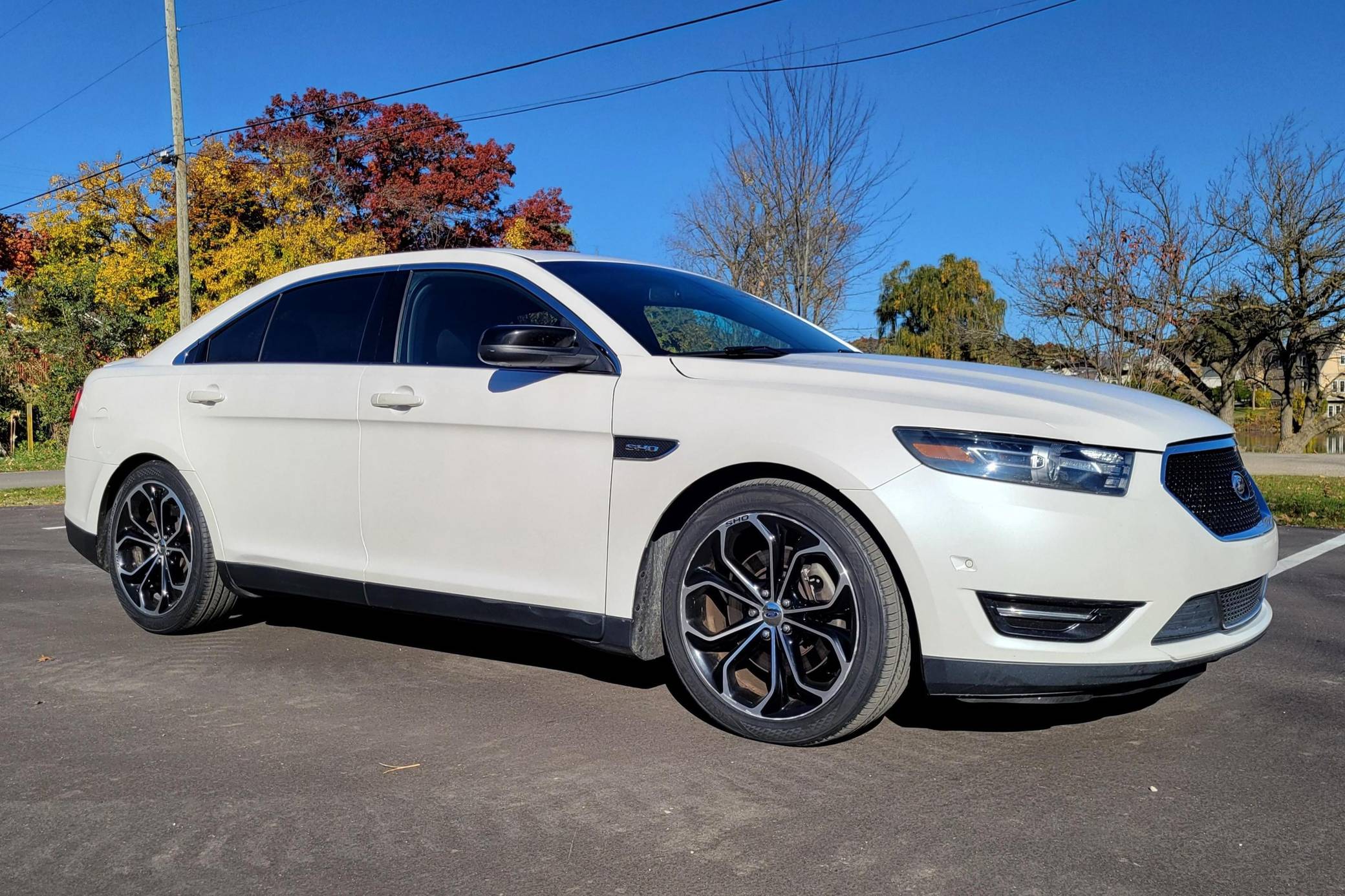
Thirteen years after its initial release, the 2013 Ford Taurus remains a prominent fixture in the used car market, offering a blend of full-size comfort and modern amenities. Generally, the 2013 Ford Taurus is considered moderately reliable, but its long-term viability is heavily dictated by how well previous owners managed specific "ticking time bomb" mechanical issues, most notably the internal water pump on the 3.5L V6 engine and the Power Transfer Unit (PTU) in All-Wheel Drive (AWD) models.
Understanding the 2013 Refresh and Its Impact on Reliability
The 2013 model year was a pivotal moment for the sixth-generation Taurus. Ford introduced a significant mid-cycle refresh that included updated styling, improved fuel economy through the introduction of the 2.0L EcoBoost engine, and the wide-scale implementation of the MyFord Touch infotainment system. While these updates modernized the vehicle, they also introduced new layers of complexity that have impacted its long-term reliability profile.
In 2026, many of these vehicles have surpassed the 150,000-mile mark. At this stage of its lifecycle, the Taurus transitions from a predictable daily driver to a vehicle that requires proactive, specialized maintenance. The structural integrity of the D4 platform (shared with the Explorer and Flex) is exceptionally high, but the auxiliary systems—steering, cooling, and electronics—are where most reliability concerns arise.
The 3.5L Duratec V6: The Internal Water Pump Critical Failure Point
The most significant reliability concern for the 2013 Ford Taurus involves its base engine, the 3.5L Ti-VCT V6. While this engine is capable of exceeding 250,000 miles, it contains a controversial design choice: an internal, chain-driven water pump.
Why the Design is Problematic
Unlike traditional engines where the water pump is bolted to the outside of the engine block and driven by an accessory belt, the Taurus’s water pump is located behind the timing cover. If the pump's internal seal fails, coolant does not leak onto the ground; instead, it leaks directly into the engine’s oiling system.
When coolant mixes with engine oil, it creates a "sludge" that destroys the oil's lubricating properties. If not caught within minutes of the failure, this usually results in total engine seizure. Because the pump is driven by the timing chain, replacing it is a labor-intensive process requiring 10 to 14 hours of work, often costing between $1,800 and $2,500 in 2026 currency values.
Mitigating the Risk
For owners in 2026, the best reliability strategy is "preventative replacement." If you are buying a Taurus with 120,000+ miles and there is no record of the water pump and timing chain being replaced, you should budget for this service immediately. High-quality synthetic oil changes every 5,000 miles can help prolong the life of the timing chain and the pump's seals, but they cannot eliminate the risk entirely.
The 2.0L EcoBoost and 3.5L EcoBoost (SHO) Reliability
The 2013 Taurus also offered two turbocharged options. The 2.0L EcoBoost was designed for fuel efficiency, while the 3.5L twin-turbo V6 powered the high-performance SHO (Super High Output) model.
2.0L EcoBoost Concerns
The 2.0L engine is generally reliable but suffers from common direct-injection issues, specifically carbon buildup on the intake valves. Over time, this buildup causes rough idling, reduced fuel economy, and power loss. In 2026, many 2.0L units may also face turbocharger wastegate wear, which triggers "Underboost" check engine lights.
3.5L EcoBoost (SHO) Considerations
The SHO is a favorite among enthusiasts, but it adds complexity. In addition to the internal water pump issue (which it shares with the base V6), the SHO's twin turbochargers are susceptible to oil coking if the oil wasn't changed frequently. Furthermore, the SHO comes standard with All-Wheel Drive, leading to the next major reliability hurdle: the PTU.
The AWD Power Transfer Unit (PTU) "Lifetime Fluid" Myth
One of the most persistent reliability issues with the 2013 Ford Taurus AWD models is the Power Transfer Unit. This component sends power to the rear wheels, but its placement near the exhaust manifold causes the gear oil inside to reach extreme temperatures.
Ford originally marketed the PTU fluid as "filled for life," meaning it never needed to be changed. However, real-world data has proven that the fluid often breaks down into a thick, tar-like substance by 60,000 to 80,000 miles. Once the fluid loses its viscosity, the gears overheat and the seals fail, eventually leading to a mechanical fracture of the unit.
Reliability Tip: If you own or are looking at an AWD Taurus in 2026, ensure the PTU fluid is changed every 30,000 miles. Since many 2013 units did not come with a drain plug, this often requires a vacuum extraction method, but it is far cheaper than the $2,000 cost of a new PTU.
Electronic Power Assisted Steering (EPAS) Failures
The 2013 Taurus transitioned from traditional hydraulic power steering to an Electric Power Assisted Steering (EPAS) system. This was a significant point of failure that resulted in a major recall (NHTSA Campaign Number 15V340000).
The EPAS sensors or the motor itself can fail, leading to a sudden loss of steering assist. While the car can still be steered manually, it requires significant physical effort, which can be dangerous at low speeds or during sudden maneuvers. Before purchasing a 2013 model, verify through the NHTSA Recalls Database that the steering rack has been inspected or replaced under this recall.
Interior Technology and the MyFord Touch System
The 2013 model year featured the second generation of MyFord Touch, powered by Microsoft. Early versions were notorious for crashing, freezing, and failing to recognize Bluetooth devices.
By 2026, most remaining Taurus units have likely been updated to the final software version (v3.8 or later), which stabilized many of these issues. However, the hardware itself—specifically the Accessory Protocol Interface Module (APIM)—is a known failure point. If the screen remains black or "stuck" on the logo, the APIM likely needs replacement.
Reliability and Maintenance Cost Comparison
To understand the long-term cost of ownership for a 2013 Taurus in 2026, refer to the following table outlining common high-mileage repairs.
| Component | Common Failure Mile Range | Estimated Cost (2026) | Severity Level |
|---|---|---|---|
| Internal Water Pump | 120k – 160k miles | $1,800 - $2,500 | Critical (Engine Failure) |
| AWD PTU Unit | 80k – 120k miles | $1,500 - $2,200 | High (Loss of Drive) |
| EPAS Steering Rack | 70k – 150k miles | $1,200 - $1,600 | High (Safety Issue) |
| Turbocharger (EcoBoost) | 130k – 170k miles | $1,400 - $2,000 | Moderate (Performance) |
| Blower Motor Resistor | 60k – 100k miles | $150 - $250 | Low (HVAC Comfort) |
| Door Latch Sensors | 80k – 130k miles | $200 - $400 | Low (Electrical Nuisance) |
Transmission Reliability: The 6F50 and 6F55
The 6-speed SelectShift automatic transmission used in the 2013 Taurus is generally considered one of the vehicle's stronger points. Developed in a joint venture between Ford and GM, the 6F50 (standard) and 6F55 (EcoBoost/SHO) transmissions are robust.
Common issues are usually limited to solenoid failures or "harsh shifting" caused by degraded fluid. Unlike the PTU, Ford's recommended 150,000-mile interval for transmission fluid is widely considered too long by mechanics. To maintain reliability into the high-mileage years, a fluid exchange every 50,000 to 60,000 miles is the gold standard for this transmission family.
Frequently Asked Questions (FAQ)
1. Is the 2013 Ford Taurus a good car for a first-time driver in 2026?
Yes, but with caveats. The Taurus offers excellent crash test ratings and a heavy, stable footprint that is forgiving for new drivers. However, the blind spots are significant due to the high beltline and thick pillars. Furthermore, a first-time driver might not notice the subtle signs of a failing water pump or PTU, which could lead to expensive repairs that exceed the car's value.
2. How many miles will a 2013 Ford Taurus last?
With meticulous maintenance, the chassis and engine block can easily last 250,000 to 300,000 miles. The "limiting factor" is usually the cost of a single major repair (like the $2,500 water pump) relative to the car's depreciated value. In 2026, many owners choose to retire the vehicle rather than perform repairs that cost more than 50% of the car's market worth.
3. Which engine is the most reliable in the 2013 Taurus?
The 3.5L Duratec V6 is the most reliable in terms of simple mechanical architecture, provided the water pump is replaced proactively. The 2.0L EcoBoost is also reliable but requires more frequent "top-end" cleaning of the intake valves and lacks the raw longevity of the naturally aspirated V6.
4. Are there common electrical problems besides the infotainment system?
Yes. A common "nuisance" reliability issue is the door latch sensor. The sensor often fails in the "open" position, causing the interior dome lights to stay on while driving or preventing the car from being locked via the remote. This is often solved by cleaning the latch with electrical contact cleaner, though sometimes the entire latch assembly requires replacement.
5. Does the 2013 Ford Taurus have rust issues?
Compared to its predecessors, the 2013 Taurus has decent corrosion resistance. However, in "Salt Belt" states, rust often forms on the rear wheel arches and the leading edge of the hood. Additionally, the aluminum hood can suffer from "paint bubbling" or galvanic corrosion, which is a cosmetic issue rather than a structural one.
6. Is the Taurus SHO significantly less reliable than the base model?
The SHO is inherently higher-maintenance. The addition of two turbochargers, a more stressed cooling system, and standard AWD means there are more components that can fail. While the core components are strong, the SHO requires an owner who is diligent about fluid changes and using high-quality fuel and oil.
Final Verdict and Recommendation
The reliability of the 2013 Ford Taurus in 2026 is highly conditional. It is not a "low-maintenance" car like a contemporary Toyota Avalon, but it offers a more substantial driving feel and better integrated technology for its era.
For Buyers: Look for a Front-Wheel Drive (FWD) model with the 3.5L V6 that has a documented history of a water pump replacement. Avoid AWD models unless you can verify the PTU fluid has been serviced.
For Current Owners: The 150,000-mile mark is the danger zone. If you intend to keep the car for another three to five years, perform a "refresh" of the cooling system, replace the water pump/timing chain, and service the transmission. Proactive spending of $2,500 today is often the only way to prevent a catastrophic failure that would otherwise force the car into a salvage yard.