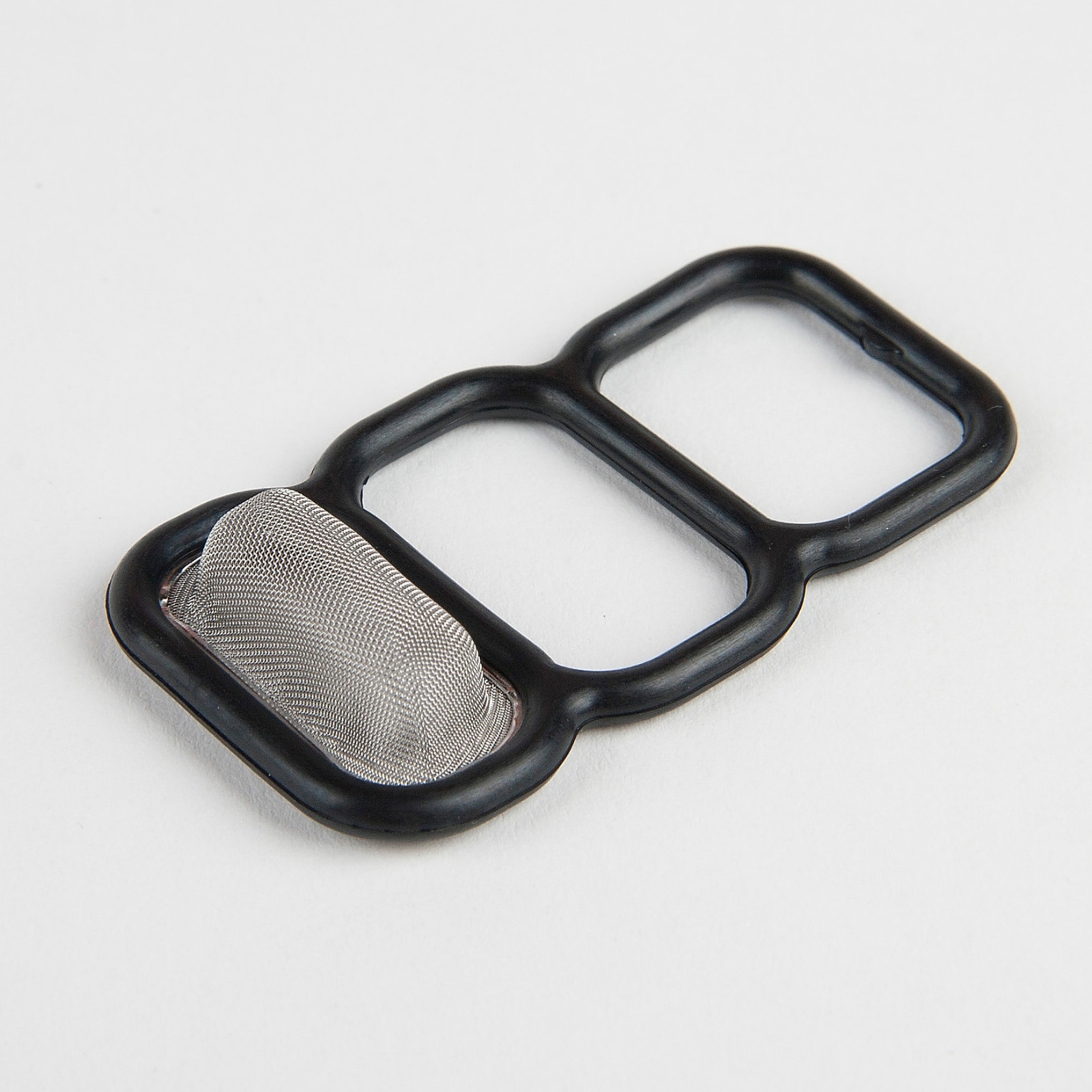
The 2003 Honda Accord VTEC solenoid is an electro-hydraulic valve that controls oil pressure to the variable valve timing system, and when it fails due to clogs or electrical faults, it commonly triggers a Check Engine Light, engine hesitation, and a reduction in fuel efficiency.
Understanding the 2003 Honda Accord VTEC System
The Variable Valve Timing and Electronic Control (VTEC) system on the seventh-generation 2003 Honda Accord is a sophisticated engineering marvel designed to blend fuel economy with high-RPM performance. Whether your vehicle is equipped with the 2.4-liter K24A4 inline-four engine or the 3.0-liter J30A4 V6 engine, the core principle remains consistent: maximizing volumetric efficiency across different engine speeds. At low revolutions per minute (RPM), the engine prioritizes smooth idling and low emissions by utilizing mild cam lobe profiles. As the engine reaches a specific RPM threshold and load condition—typically around 2,300 to 5,000 RPM depending on the specific engine variant—the powertrain control module (PCM) sends an electrical current to the VTEC solenoid.
The VTEC solenoid acts as a gatekeeper. By opening up, it allows pressurized engine oil to flow into the VTEC rocker arm assembly. This hydraulic pressure pushes a series of synchronization pins, locking the high-lift primary and secondary rocker arms to a central, more aggressive high-lift cam lobe. Consequently, the intake or exhaust valves open wider and stay open longer, allowing a greater volume of air and fuel into the combustion chambers. This mechanical shift produces the familiar surge in power and performance associated with Honda engines. However, because this entire sequence relies heavily on precise oil pressure, clean engine oil, and uninhibited electrical signals, any disruption to the VTEC solenoid or its integrated components will compromise the entire process, leading to noticeable performance degradation.
Common Symptoms of a Failing VTEC Solenoid
Recognizing the early warning signs of a failing VTEC solenoid on a 2003 Honda Accord can prevent secondary engine issues and restore vehicle drivability. Because the solenoid dictates how the engine breathes under load, its failure manifests through several distinct symptoms that drivers can easily identify during daily operation.
Check Engine Light and Diagnostic Trouble Codes
The most immediate indicator of a VTEC system malfunction is the illumination of the Check Engine Light (CEL) on the instrument cluster. When the PCM detects an anomaly—such as a voltage drop in the solenoid circuit, an incorrect oil pressure reading, or a failure of the system to engage when commanded—it stores a Diagnostic Trouble Code (DTC). The most common codes associated with the 2003 Honda Accord VTEC system include:
- P1259: VTEC System Malfunction (specifically common on the 2.4L K24 four-cylinder engine).
- P2646: A VTEC Rocker Arm System Fault / Stuck Off (often related to oil pressure switch or clogged filter).
- P2647: VTEC Rocker Arm System Stuck On.
Engine Hesitation and Lack of Power
If the VTEC solenoid fails to open or is blocked by sludge, the engine cannot switch to the high-performance cam lobes. Drivers will typically notice a severe flat spot or hesitation when accelerating past the standard VTEC engagement threshold (usually around 3,500 to 4,000 RPM). The car may feel sluggish, unresponsive, and heavily restricted, struggling to build speed when merging onto highways or climbing steep inclines.
Limp Mode and RPM Restrictions
To protect the engine from potential damage due to improper valve timing or oil starvation, the Honda PCM will often trigger a protective operational state commonly known as "limp mode." On the 2003 Honda Accord, this typically manifests as an aggressive hard rev limiter that prevents the engine from exceeding approximately 3,000 to 3,500 RPM, regardless of how far the accelerator pedal is depressed. This safety feature ensures the vehicle remains drivable enough to pull over safely or drive to a repair shop without over-stressing the valvetrain.
Rough Idling and Engine Stalling
While less common than power loss, a severe oil leak at the VTEC solenoid gasket can cause erratic engine behavior. Because the solenoid is often mounted near the top rear or side of the cylinder head, failing rubber seals allow engine oil to pool in the spark plug tube wells or leak onto hot exhaust components, producing a burning oil smell, engine misfires, a rough idle, or even unexpected engine stalling.
Causes of VTEC Solenoid Failure in the 2003 Honda Accord
Understanding why the VTEC solenoid fails helps owners not only fix the immediate issue but also prevent future occurrences. The 2003 Accord powerplants are generally robust, but their VTEC assemblies are sensitive to maintenance habits and environmental wear.
Clogged VTEC Filter Screen
The single most frequent cause of VTEC system failure on this generation of Accord is a clogged internal screen or spool valve filter gasket. The VTEC assembly incorporates a fine metal mesh filter designed to catch microscopic debris before it enters the solenoid and valve bore. If the vehicle has suffered from neglected oil changes, sludge, carbon deposits, and oxidized oil particles will accumulate on this screen. Once blocked, hydraulic oil cannot pass through efficiently, causing a pressure drop that triggers code P2646 and prevents VTEC engagement.
Electrical Failures and Wiring Damage
The VTEC solenoid relies on an electrical plunger actuated by a 12-volt signal from the engine computer. Over decades of exposure to extreme under-hood heat and vibration, the plastic electrical connector can become brittle and crack, locking tabs can snap off, and internal wiring pins can corrode or break. Additionally, the internal electromagnetic coil within the solenoid can develop an internal short or open circuit, rendering the valve incapable of opening mechanically even when commanded by the PCM.
Defective VTEC Oil Pressure Switch
Many 2003 Honda Accord VTEC assemblies feature an integrated oil pressure switch located directly on or adjacent to the solenoid body. This switch monitors whether adequate hydraulic pressure has built up when the solenoid activates. If this pressure switch fails internally or gets fouled with sludge, it sends an incorrect signal to the PCM, falsely indicating a system failure and triggering a Check Engine Light even if the mechanical solenoid and oil flow are functioning correctly.
Step-by-Step Diagnostic Procedures
Before investing in a replacement VTEC solenoid, proper diagnosis ensures that you are replacing the correct component and not chasing a symptom caused by low engine oil or a faulty wiring harness.
Step 1: Check Engine Oil Level and Condition
Because the VTEC system operates entirely on hydraulic oil pressure, the absolute first step in diagnosing any 2003 Honda Accord VTEC issue is checking the engine oil dipstick. If the oil level is critically low, the oil pump cannot generate the pressure required to actuate the VTEC pins. Furthermore, if the oil is severely overdue for a change, thick sludge may be choking the system. Top off or change the oil before proceeding if it is contaminated or low.
Step 2: Retrieve Diagnostic Trouble Codes
Connect an OBD-II scanner to the diagnostic port located beneath the driver-side dashboard. Scan for stored or pending trouble codes. Note any codes related to the VTEC system (such as P1259, P2646, or P2647). If other codes are present—such as camshaft position sensor faults—address those first, as they can mimic VTEC operational failures.
Step 3: Inspect Wiring and Electrical Connectors
Visually inspect the wiring harness leading to the VTEC solenoid and its associated oil pressure switch. Check for exposed copper, melted insulation caused by contact with the exhaust manifold, or oil contamination inside the plastic connector plug. Disconnect the plug, clean any oil or dirt out with electronic contact cleaner, and verify that the connector clicks securely back into place.
Step 4: Perform a Solenoid Resistance and Click Test
You can test the mechanical and electrical integrity of the solenoid directly using a digital multimeter and a set of jumper wires:
- Resistance Test: Set your multimeter to measure ohms ($\Omega$). Disconnect the VTEC wiring harness and measure the resistance across the solenoid terminal and ground. A healthy solenoid typically reads between 14 and 30 ohms. An infinite reading indicates an open circuit (internal break), while a reading near zero indicates a short.
- Continuity/Activation Test: Using fused jumper wires, briefly apply 12 volts from the battery directly to the solenoid terminal and ground the solenoid body. You should hear a distinct, audible "click" as the internal spool valve snaps open. If it fails to click, the internal actuator is dead.
Replacing the 2003 Honda Accord VTEC Solenoid: Tools and Procedure
If diagnostics confirm a failed solenoid, replacing it is a straightforward DIY project that requires basic hand tools and about 30 to 45 minutes of labor. The exact location varies slightly depending on whether you drive the 2.4L 4-cylinder (located on the passenger side rear of the cylinder head) or the 3.0L V6 (located near the front or rear cylinder bank depending on the specific head).
Required Tools and Materials
- New VTEC Solenoid Assembly (including a fresh gasket with integrated filter screen)
- 10mm socket, ratchet, and short extension
- Flathead screwdriver and pick tool
- Rags or shop towels
- Brake cleaner or electrical contact cleaner
- New engine oil (for priming the new gasket)
- Torque wrench (optional, but recommended)
Step-by-Step Replacement Guide
- Prep the Vehicle: Ensure the engine is completely cool to avoid burns from the hot exhaust manifold or cylinder head located nearby. Disconnect the negative battery cable as a safety precaution.
- Remove the Engine Cover (If Applicable): For aesthetic and sound-dampening purposes, remove any plastic engine covers using a 10mm socket or clips to gain clear access to the VTEC assembly.
- Disconnect Electrical Connections: Locate the VTEC solenoid and the oil pressure switch. Press the release tab on the electrical connector(s) and gently pull to disconnect them. If the tabs are brittle due to age, use a small flathead screwdriver to gently release the catch.
- Remove Mounting Bolts: Using a 10mm socket and ratchet, remove the three bolts securing the VTEC solenoid housing to the cylinder head. Keep track of these bolts, as their lengths may vary slightly.
- Remove the Old Assembly: Carefully pull the solenoid straight out from the cylinder head. Be prepared for a small amount of residual engine oil to spill out; place a shop towel underneath the assembly to catch drips. Remove the old gasket and filter screen, noting its orientation.
- Clean the Mounting Surface: Inspect the mounting surface on the cylinder head. Use a clean rag and brake cleaner to wipe away any old gasket material, carbon buildup, or dirt. Ensure no debris falls into the open oil passages.
- Install the New Gasket and Solenoid: Take your new VTEC gasket (ensuring the integrated metal mesh screen is clean and undamaged) and lubricate it lightly with fresh engine oil. Position it correctly onto the new solenoid or cylinder head mating surface. Align the spool valve and push the new solenoid assembly straight into place.
- Torque Mounting Bolts: Hand-thread the three 10mm mounting bolts to ensure they are not cross-threading. Tighten them evenly in a crisscross pattern. Torque them snugly to factory specifications (typically around 8.7–10.8 lb-ft or 12–15 Nm—do not over-tighten, as aluminum cylinder head threads strip easily).
- Reconnect Electrical Plugs: Plug the electrical connectors securely back into the solenoid and oil pressure switch until the locking tabs snap into place. Reconnect the negative battery terminal.
- Test and Verify: Start the engine and let it idle while inspecting the replacement area for any oil leaks. Clear any stored Diagnostic Trouble Codes using your OBD-II scanner. Take the vehicle for a test drive, ensuring the engine revs past the 4,000 RPM threshold smoothly without hesitation or triggering a Check Engine Light.
| Component / Parameter | 2.4L K24A4 Engine | 3.0L J30A4 Engine |
|---|---|---|
| Solenoid Location | Upper rear passenger side of cylinder head | Front/Rear cylinder head assembly |
| Primary DTC Codes | P1259, P2646, P2647 | P2646, P2647, P2649 |
| Standard Coil Resistance | 14 – 30 Ohms | 14 – 30 Ohms |
| Recommended Action | Replace gasket/screen or full assembly | Replace gasket/screen or full assembly |
| Bolt Torque Spec | ~9–11 lb-ft (12–15 Nm) | ~9–11 lb-ft (12–15 Nm) |
Maintenance and Prevention Best Practices
Preventing future VTEC solenoid failures on a 2003 Honda Accord comes down to rigorous fluid maintenance. Because the system relies on clean oil flowing through microscopic screen mesh, poor maintenance habits will inevitably lead to repeat failures.
- Stick to Strict Oil Change Intervals: Change your engine oil and filter every 3,000 to 5,000 miles if using conventional oil, or every 5,000 to 7,500 miles if using high-quality full synthetic oil. Never allow oil to degrade into sludge.
- Use the Correct Oil Viscosity: The 2003 Honda Accord is engineered to operate efficiently using specific oil weights (typically 5W-20 for the 2.4L and 5W-20 or 5W-30 for the V6). Using overly thick or incorrect oil weights can hinder hydraulic response times within the VTEC spool valve.
- Inspect Seals During Valve Adjustments: If you perform routine valve clearance adjustments—common maintenance milestones for these Honda powerplants—always inspect the exterior of the VTEC solenoid for weeping seals and replace the gasket proactively if it shows signs of hardening or cracking.
Frequently Asked Questions
Can I drive my 2003 Honda Accord with a bad VTEC solenoid?
You can drive short distances, but it is not recommended for extended periods. When the VTEC system fails, the engine usually enters a protective "limp mode" that restricts RPMs and cuts high-end power. Driving with a faulty solenoid can also cause poor fuel economy, unburned fuel emissions, and potential secondary issues if the underlying cause is low oil pressure or severe oil leaks.
Do I need to replace the entire VTEC assembly, or just the gasket?
It depends entirely on the root cause of the failure. If your diagnostic testing shows that the internal electrical coil is dead or the mechanical spool valve is stuck, you must replace the entire solenoid assembly. However, if the issue is solely a clogged filter screen or an external oil leak and the electrical components test normal, replacing just the VTEC gasket and filter screen is sufficient and significantly cheaper.
Will cleaning a clogged VTEC screen fix code P2646?
Yes, in the vast majority of cases where code P2646 is accompanied by a clogged mesh filter, removing the solenoid, thoroughly cleaning the screen and valve bore with brake cleaner, and reinstalling it will clear the code and restore normal VTEC operation. Always inspect the condition of the screen before discarding an old unit.
Can low engine oil cause a VTEC Check Engine Light?
Absolutely. The VTEC system relies entirely on hydraulic pressure generated by the engine oil pump. If your oil level drops below safe operating thresholds, the system cannot build the necessary pressure to actuate the rocker arm pins, immediately triggering a VTEC system fault code and Check Engine Light.