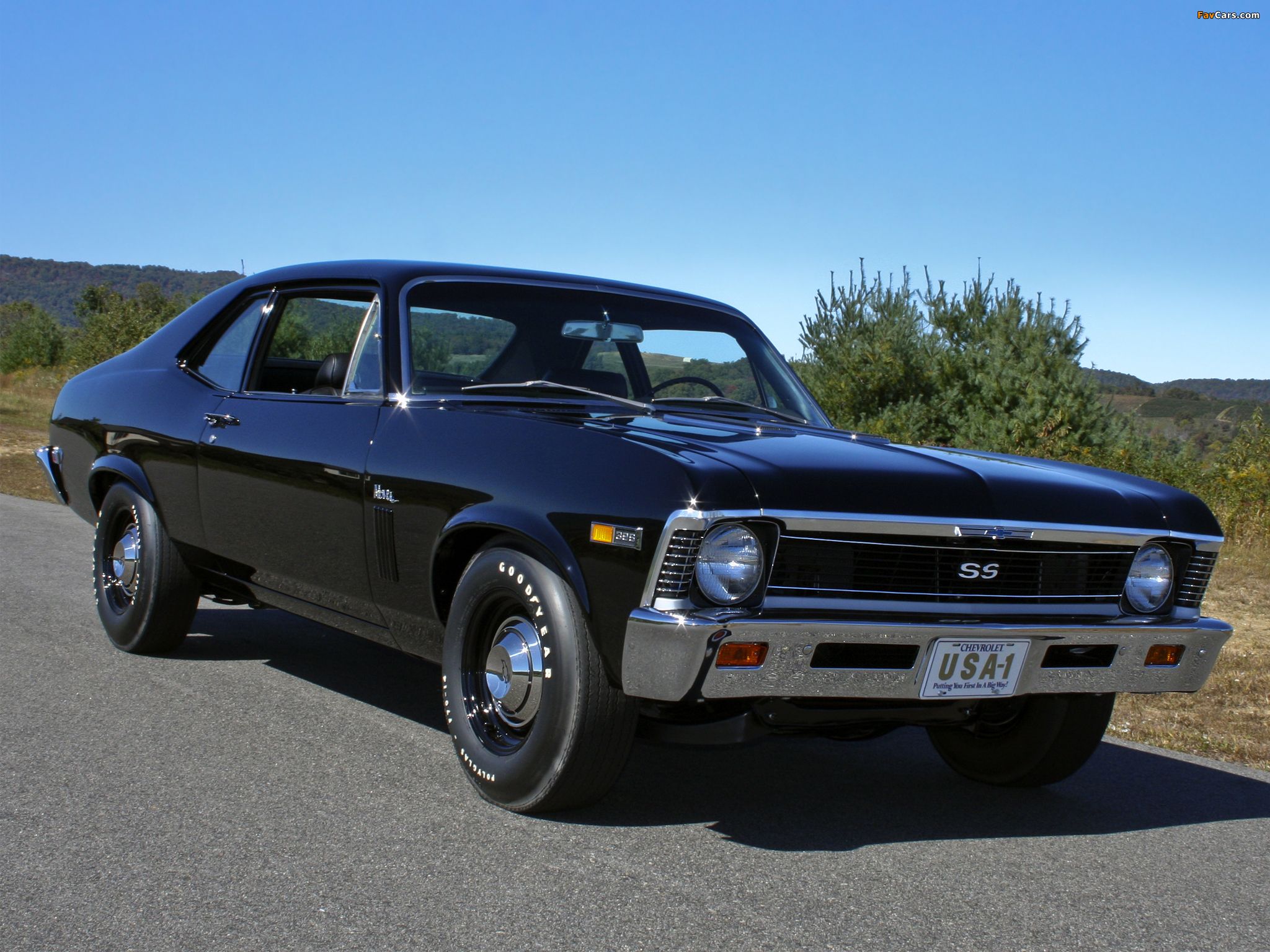
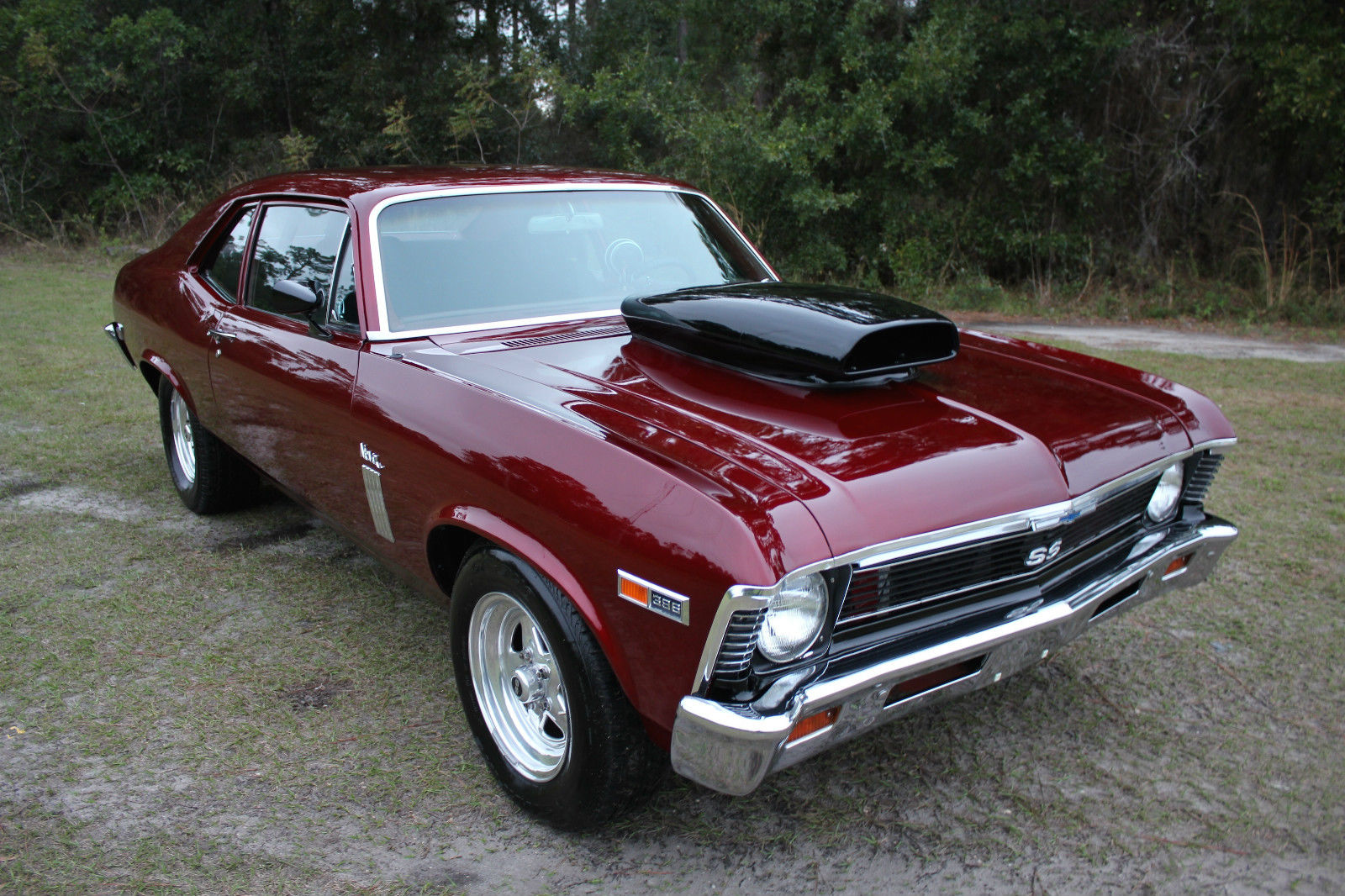
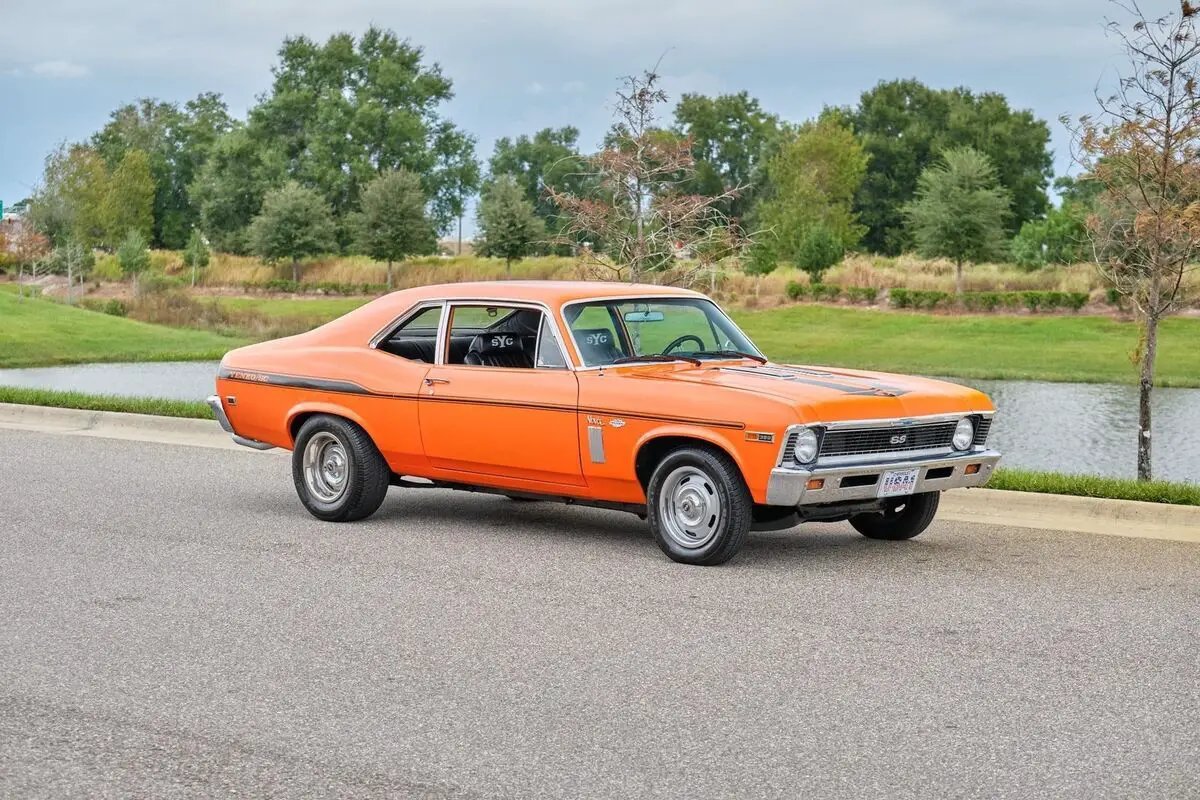
The 1969 Chevrolet Nova SS 396 represents a definitive high-water mark of the American muscle car era, packing a heavy-duty big-block V8 into a compact, lightweight body. Originally conceived as an economical commuter, Chevrolet’s clever engineering allowed this modest platform to accommodate legendary power, creating an iconic sleeper that remains fiercely coveted by collectors and performance enthusiasts today.
Evolution of the Nova Platform and the Birth of the Super Sport
To understand the impact of the 1969 Nova SS 396, one must first trace the evolution of Chevrolet’s compact line. Introduced for the 1962 model year as the Chevy II, the car was designed to compete directly with Ford's Falcon. It featured a straightforward, conventional unibody construction and a layout intended for daily driving and basic utility. However, the American automotive landscape shifted rapidly in the mid-1960s as the horsepower race took hold.
Chevrolet redesigned the compact platform for the 1968 model year, introducing a crisp, semi-fastback roofline, a wider track, and a subframe front architecture derived from the upcoming Camaro. This redesign provided the structural rigidity and engine-bay clearance needed for performance variants. For 1969, the Chevy II moniker was officially dropped, and the car was known simply as the Chevrolet Nova.
Within this lineup, the Super Sport (SS) package transformed the humble compact into a formidable contender. While earlier iterations relied on small-block engines, the introduction of the big-block Mark IV V8 turned the Nova into a literal rocket on wheels. The SS designation added aggressive styling cues, heavy-duty suspension components, and distinct badging, signaling to competitors that this small sedan meant business.
Powertrain and Mechanical Specifications of the 396 Big-Block
The beating heart of the 1969 Nova SS 396 was Chevrolet’s legendary 396-cubic-inch (6.5-liter) Mark IV big-block V8 engine. Unlike the heavy full-sized cars that often housed these massive powerplants, the Nova's lightweight unibody chassis created an exceptional power-to-weight ratio. This combination delivered blistering straight-line performance that frequently surprised drivers of larger muscle cars.
The 396 engine in the 1969 Nova was offered in two primary factory horsepower ratings, though output figures were famously underreported for insurance and racing classification purposes:
- L34 Engine: Rated at 350 horsepower, featuring a single 4-barrel carburetor, hydraulic lifters, and a compression ratio of 10.25:1. This version offered strong street manners and plenty of low-end torque.
- L78 Engine: Rated at 375 horsepower, equipped with solid lifters, a high-rise aluminum intake manifold, a Holley 4-barrel carburetor, 11:0:1 compression, and massive rectangular-port cylinder heads. The L78 was a high-revving track-oriented machine.
Transferring power to the pavement required robust drivetrain components. Buyers could choose between a heavy-duty Muncie 4-speed manual transmission or a Turbo Hydra-Matic 400 3-speed automatic. Power was sent to a rugged 12-bolt rear axle equipped with heavy-duty leaf springs and traction bars designed to manage the immense torque twist of the big-block engine.
| Engine Option | RPO Code | Horsepower | Torque (lb-ft) | Induction | Compression Ratio |
|---|---|---|---|---|---|
| Big-Block V8 | L34 | 350 @ 5200 RPM | 415 @ 3200 RPM | 4-Barrel Quadrajet | 10.25:1 |
| Big-Block V8 | L78 | 375 @ 5600 RPM | 415 @ 3600 RPM | 4-Barrel Holley | 11.00:1 |
Exterior Design, Interior Appointments, and Identifying Marks
Visually, the 1969 Nova SS 396 possessed a clean, understated aesthetic that leaned heavily into the sleeper archetype. It did not feature the overt scoops and massive wings of some contemporary muscle cars, relying instead on purposeful details. The front end featured a blacked-out grille with an SS badge, while simulated louvers adorned the front fenders.
Distinctive SS wheels, red-stripe or white-letter tires, and rear tail panel blackouts completed the exterior transformation. Dual exhaust pipes exited beneath the rear bumper, hinting at the high-performance capabilities hidden beneath the hood.
Inside, the cabin was driver-focused yet relatively spartan compared to luxury muscle cars like the Chevelle SS. Standard equipment included a simulated wood-grain steering wheel with an SS emblem, a flat-instrument panel containing a horizontal 120-mph speedometer, and bench seats upholstered in durable vinyl. Many buyers opted for front bucket seats and a floor-mounted console housing a Hurst shifter, along with auxiliary gauge clusters mounted beneath the dashboard to monitor oil pressure, water temperature, and electrical output.
Verifying a genuine 1969 Nova SS 396 requires careful inspection, as many standard six-cylinder or small-block Novas have been cloned into SS tributes over the decades. Authenticating a true big-block car involves examining specific documentation, casting numbers, and factory production anomalies.
Authentication and Verification Protocols
Because the VIN (Vehicle Identification Number) for 1969 Novas did not explicitly designate engine size in the way later models did, proving the authenticity of an SS 396 requires meticulous sleuthing. The VIN structure for a V8 Nova begins with "11427" for a 2-door coupe (where '1' designates Chevrolet, '14' designates Nova V8, and '27' designates the 2-door sedan body style). However, this sequence applies to both small-block and big-block V8 cars, making physical evidence paramount.
Enthusiasts and buyers rely on several critical verification points:
- Original Factory Documentation: Discovering a build sheet (often found tucked inside seat springs, glued to the top of the gas tank, or hidden behind door panels) or original protect-o-plate is the gold standard for authentication.
- Engine Pad Stamping: The engine block should feature a stamped suffix code on the pad located in front of the passenger-side cylinder head. Codes such as "JK" or "JL" correspond to L34 applications, while "JN" or "JO" typically denote L78 applications, matching the car's production timeframe and VIN suffix.
- Chassis and Suspension Reinforcements: Big-block cars required heavier front suspension coils, a thicker front sway bar, and specific multi-leaf rear springs. Furthermore, factory big-block Novas featured unique throttle linkage, specialized fuel lines, and specific radiator core supports with relocated mounting positions to accommodate the larger engine block.
Driving Dynamics, Performance, and Road Manners
Driving a 1969 Nova SS 396 is an unfiltered, visceral experience that highlights the engineering trade-offs of late-sixties muscle cars. With roughly 54 percent of the car's weight resting over the front wheels, the steering effort is heavy, particularly at low speeds without power assistance. The suspension setup is stiff, resulting in a firm ride that communicates every imperfection of the asphalt directly to the cabin.
Straight-line acceleration, however, is breathtaking. The massive low-end torque of the 396 cubic-inch engine means that rear traction is easily overwhelmed at a moment's notice. Launching the car requires a delicate touch on the throttle and precise clutch engagement in manual variants to prevent excessive wheel spin. Once hooked up, the Nova pulls relentlessly through the RPM range, accompanied by the authoritative roar of the big-block exhaust note.
Cornering requires respect and foresight. While the subframe architecture provided better handling than earlier generations, the sheer mass of the iron-block V8 means understeer is an ever-present companion when entering tight bends too quickly. Drum brakes were standard equipment on all four corners (though power front disc brakes were an available and highly recommended option), meaning repeated aggressive stops require careful management to prevent brake fade.
Frequently Asked Questions
How can I tell a real 1969 Nova SS 396 from a clone?
Verifying a true big-block Nova requires inspecting the engine block casting numbers, matching the suffix stamp on the engine pad to the vehicle's production date, and checking for factory-specific big-block hardware such as radiator mount locations, fuel lines, and heavy-duty multi-leaf rear springs. Factory documentation like a build sheet provides definitive proof.
What is the difference between the L34 and L78 engine options?
The L34 engine is rated at 350 horsepower and features hydraulic lifters, making it more tractable for casual street driving. The L78 engine is rated at 375 horsepower and utilizes solid lifters, a high-rise aluminum intake manifold, and higher compression, designed for high-RPM performance and competitive racing.
Did the 1969 Nova SS 396 come with an automatic transmission?
Yes, buyers could pair either the L34 or L78 big-block engines with the heavy-duty Turbo Hydra-Matic 400 3-speed automatic transmission, or select the Muncie 4-speed manual gearbox with a floor-mounted Hurst shifter.
Are power front disc brakes standard on the 1969 Nova SS 396?
No, power front disc brakes were optional equipment. Many base Super Sport models left the factory equipped with standard four-wheel drum brakes, making disc brake upgrades one of the most common modifications performed by modern restorers.
How rare is the 1969 Nova SS 396?
Production numbers for big-block Novas represent a fraction of total Nova output for 1969. While exact figures are subject to historical debate among registries, L78-equipped cars are particularly scarce, making documented, numbers-matching examples highly prized by automotive historians and collectors.
Restoration and Market Value Considerations
Restoring a 1969 Nova SS 396 requires careful attention to factory-correct details, as reproduction parts are widely available but vary significantly in quality. Because many of these cars were modified, raced, or driven hard during their lifetimes, finding an intact, rust-free chassis is the primary hurdle for restorers. Particular attention must be paid to the subframe attachment points, rear frame rails, and lower quarter panels, which are prone to corrosion.
In the collector car market, values fluctuate based on documentation, mechanical integrity, and historical accuracy. Numbers-matching L78 cars command a significant premium over standard small-block clones or modified examples. When evaluating a potential acquisition, prospective buyers should prioritize verified provenance, professional mechanical inspection, and rust-free sheet metal over superficial paint and interior cosmetic condition.