The Second Spanish Republic (1931–1939) offers a profound historical study in radical democratic transition, deep societal polarization, and institutional fragility. By examining its ambitious reforms, structural failures, and political radicalization, contemporary political scientists and historians extract twelve critical lessons regarding the preservation of democratic stability, the management of ideological polarization, and the limits of rapid structural transformation.
The Historical Context of the Second Spanish Republic
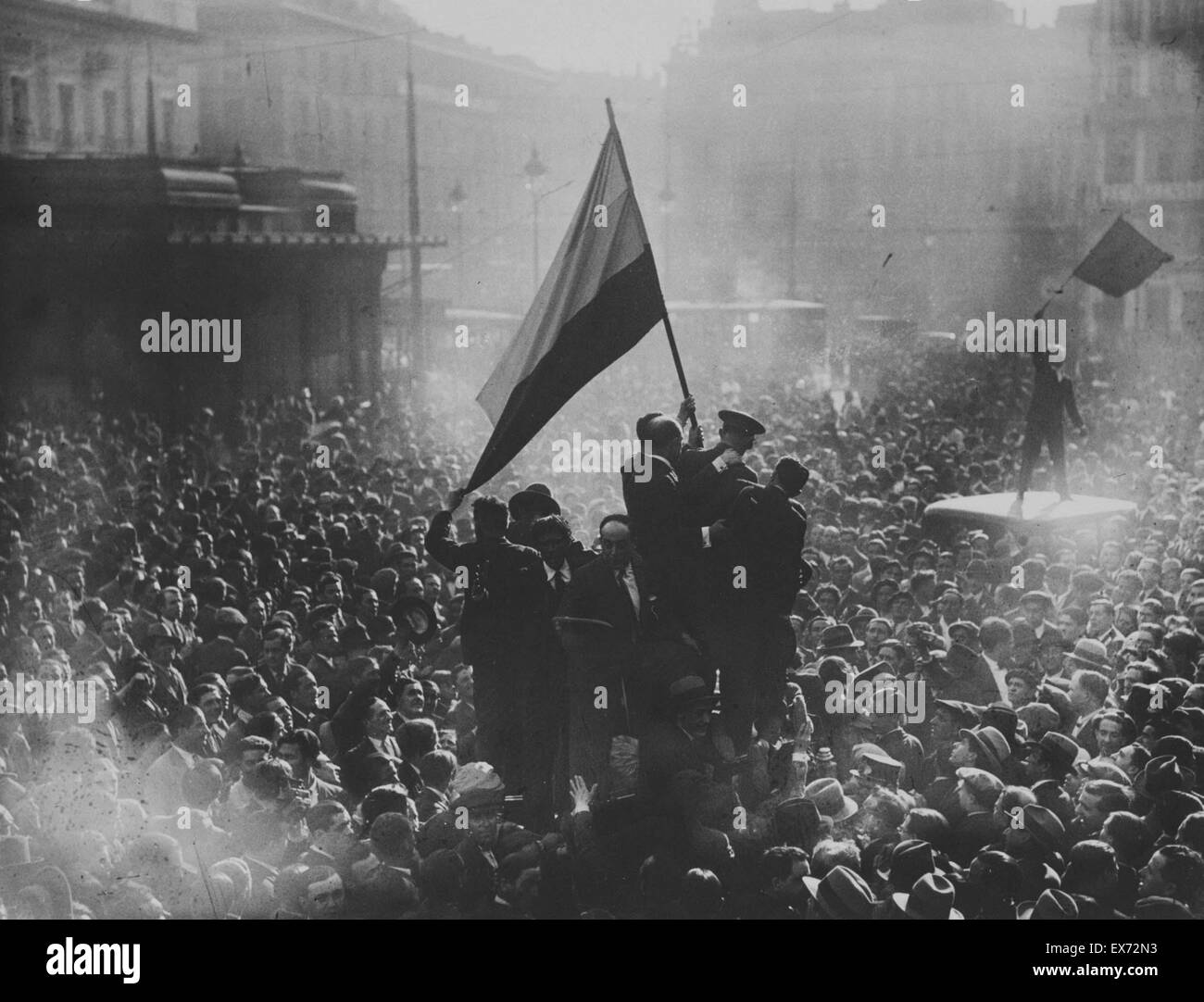
Proclaimed on April 14, 1931, following the departure of King Alfonso XIII, the Second Spanish Republic emerged with immense popular enthusiasm. It aimed to modernize a predominantly agrarian nation burdened by severe economic inequality, a powerful and politically dominant Catholic Church, vast military influence, and deeply entrenched regional autonomies.
While the early provisional government and the constituent cortes drafted one of Europe's most progressive democratic constitutions of the era, the Republic quickly found itself besieged by radical factions from both the left and the right. The polarization ultimately culminated in the devastating Spanish Civil War (1936–1939) and the establishment of a decades-long authoritarian regime under Francisco Franco. To understand how a democratic experiment collapsed into civil conflict, one must analyze twelve core lessons derived from its trajectory.
1. Ambitious Reforms Require Broad Societal Consensus
One of the defining miscalculations of the early Republican leadership was the belief that sweeping legislative changes could be successfully imposed without securing the buy-in of traditional power centers. The government attempted to simultaneously reform the military, restructure the agrarian economy, secularize education, and grant regional autonomy to Catalonia.
While these reforms addressed genuine historical grievances, executing them concurrently alienated the military hierarchy, the landowning oligarchy, and the Catholic Church. A stable democracy often requires pacing transformative legislation to prevent cohesive opposition blocks from forming against the state itself. When reform feels like an existential threat to major social pillars, institutional survival becomes exceedingly difficult.
2. The Danger of Hyper-Polarization and the Erosion of the Center
As the Republic progressed, the political center—comprising moderate republicans and democratic socialists—steadily eroded. Politics transformed into a zero-sum game where compromise was viewed as treason. The radicalization of both the revolutionary left (which sought a proletarian state) and the anti-republican right (which favored authoritarian corporatism) left moderate voices politically isolated.
This polarization teaches that a healthy democracy depends on a robust, functional political center capable of bridging divides. Once extremists dictate the terms of public discourse, democratic institutions lose their mediating capacity, paving the way for confrontation rather than negotiation.
3. Agrarian Reform is Essential but Legally and Economically Complex
Spain was structurally a semi-feudal agrarian society, particularly in the south (Andalusia and Extremadura), where vast estates (latifundios) coexisted with destitute, landless rural laborers (jornaleros). The Agrarian Reform Law of 1932 sought to redistribute uncultivated land to peasant cooperatives.
However, the process was hobbled by bureaucratic inefficiency, inadequate state funding for compensation and equipment, and administrative gridlock. The reform moved too slowly to satisfy the desperate peasantry, yet fast enough to terrify landowners. Successful structural economic reform requires realistic timelines, adequate capital investment, and clear legal frameworks that balance equity with economic productivity.
4. Church-State Separation Must Balance Secular Rights with Social Cohesion
The Second Republic championed a secular state, disestablishing the Catholic Church, banning religious orders from teaching, and legalizing civil marriage and divorce. While these measures aligned with modern European liberal norms, their abrupt implementation in a deeply Catholic society provoked fierce cultural backlash.
For millions of conservative Spaniards, these policies were interpreted as a direct assault on their religious identity and personal morality. The lesson is not that secularization is invalid, but that rapid cultural engineering by state decree can galvanize intense opposition, weaponizing religious devotion against democratic institutions.
5. Military Loyalty to the Democratic Constitution is Non-Negotiable
The Spanish military had a long history of intervening in national politics (pronunciamientos). Although the Prime Minister Manuel Azaña attempted to reform the armed forces by reducing the bloated officer corps and closing the General Military Academy in Zaragoza, these measures fostered deep resentment rather than loyalty.
Disgruntled officers, organized behind the scenes by figures like General Emilio Mola and ultimately led by General Francisco Franco, viewed themselves as the ultimate arbiters of the nation's destiny. A democracy cannot endure if its armed forces operate as an autonomous political actor rather than an instrument subordinate to civilian authority.
6. Managing Regional Autonomy Requires Institutional Clarity
The Second Republic pioneered the concept of the "State of Autonomy," granting statutory self-government to Catalonia (via the Statute of Nuria in 1932) and initiating similar processes for the Basque Country and Galicia. While this addressed historical and cultural aspirations, the relationship between central authority and regional governments remained legally ambiguous and politically volatile.
Conservative nationalists viewed regional devolution as the dismemberment of Spain, while regional nationalists frequently pushed the boundaries of central oversight. Balancing national unity with regional diversity requires precise constitutional boundaries and continuous, good-faith dialogue to prevent federalism from devolving into centrifugal fragmentation.
7. Economic Instability Undermines Democratic Legitimacy
The birth of the Republic coincided with the onset of the Great Depression. Plummeting international trade, rising unemployment, and inflation severely strained the newly formed government's resources. Economic hardship fueled social unrest, as impoverished urban workers and desperate rural peasants demanded immediate material improvements.
When democratic governments fail to deliver basic economic security, populist and radical alternatives gain immense traction. Popular faith in abstract democratic ideals quickly wanes when citizens face material deprivation and the state appears powerless to intervene effectively.
8. Extremism on the Margins Feeds Extremism in the Center
Throughout the 1930s, extremist movements on both sides fed off each other in a self-reinforcing cycle of provocation and retaliation. The anarchist CNT-FAI launched violent uprisings and strikes, while fascist-inspired groups like the Falange Española engaged in street violence and political assassinations.
Moderate politicians often found themselves trapped, pressured by radical allies to abandon democratic norms to counter the opposing extreme. This dynamic demonstrates that once political violence becomes normalized, it hollows out democratic norms from within, making peaceful coexistence virtually impossible.
9. The Perils of Electoral Volatility and Majoritarian Excess
The Spanish electoral system under the 1931 Constitution heavily favored majoritarian coalitions, leading to wild legislative swings. In the 1931 municipal and general elections, the left triumphed overwhelmingly. In the 1933 elections, a coalition of conservative and radical center parties won, leading to the "Bienio Radicto-Cederista" (the black two years), during which many reforms of the previous leftist government were systematically rolled back.
When an election victory results in the total disenfranchisement or reversal of the previous administration's foundational policies, politics becomes an existential battle where losing power feels catastrophic. Stability requires institutional continuity and constitutional guardrails that protect minority rights across changing electoral cycles.
10. External Geopolitical Pressures Can Accelerate Domestic Collapse
The Spanish Civil War did not occur in a vacuum; it rapidly transformed into a proxy conflict for the ideological battles of 1930s Europe. Nazi Germany and Fascist Italy provided vital military airlifts, tanks, and troops to the Nationalist forces, while the Soviet Union supplied arms and advisors to the Republican government (along with volunteers in the International Brigades).
The Western democracies (Britain and France), paralyzed by fear of a wider European war, enacted a toothless Non-Intervention Agreement that starved the legitimate Republic of vital arms while dictators flagrantly violated it. Domestic democratic collapse is frequently accelerated when international actors exploit internal divisions for geopolitical gain.
11. Disinformation, Propaganda, and the Loss of Shared Reality
Political discourse during the Second Republic was deeply degraded by sensationalist journalism, conspiracy theories, and radical propaganda. Newspapers on both the left and the right routinely dehumanized their political opponents, portraying them not merely as mistaken adversaries, but as existential threats to the nation.
When citizens inhabit entirely different informational realities, public debate ceases to function. The breakdown of shared facts and mutual respect for truth makes democratic compromise structurally impossible, as every political disagreement becomes a battle between absolute good and absolute evil.
12. The Fragility of Democratic Institutions Without a Culture of Tolerance
Ultimately, the deepest lesson of the Second Spanish Republic is that a democratic constitution on paper is insufficient without a deep, society-wide culture of democratic tolerance, civic compromise, and institutional respect. Laws and parliaments are only as resilient as the willingness of citizens and elites to abide by their outcomes, even when those outcomes are unfavorable.
When powerful social actors prioritize ideological purity and absolute victory over institutional continuity, even the most elegantly drafted constitution will collapse under the weight of partisan fury.
Comparative Analysis of Republican Phases
| Phase | Years | Key Political Alignment | Major Focus & Policies | Primary Challenges |
|---|---|---|---|---|
| Reformist Biennium | 1931–1933 | Center-Left Coalition (Socialists & Left Republicans) | Secularization, military reform, Catalonia autonomy, early agrarian reform. | Opposition from Church, landowners, and military; impatience of radical labor. |
| Conservative Biennium | 1933–1936 | Center-Right & CEDA Coalition | Suspension of radical agrarian reforms, halting secularization, suppression of the 1934 Asturian miners' strike. | Deep polarization; loss of democratic legitimacy among the left; rising fascism. |
| Popular Front Era | 1936 (Feb–Jul) | Left-Wing Electoral Coalition | Amnesty for political prisoners, reinstatement of regional autonomy and agrarian reforms. | Rampant street violence, military conspiracy, breakdown of public order. |
Frequently Asked Questions
What caused the collapse of Spain's Second Republic?
The collapse was caused by a combination of severe economic depression, deep-seated social inequalities, rapid and polarizing reforms that alienated traditional power structures, political radicalization on both the left and right, and ultimately a military coup in July 1936 that triggered the Spanish Civil War.
Were the reforms of the Second Republic too radical?
Historians debate this extensively. While the reforms addressed glaring historical injustices—such as massive land concentration and the dominance of the Church in public life—their rapid implementation without broad societal consensus alienated key elites and conservative segments of the population, destabilizing the fragile new democracy.
What role did the military play in the Republic's downfall?
A significant portion of the Spanish officer corps remained ideologically opposed to the Republic's secular and democratic principles. Viewing themselves as guardians of national unity, military leaders organized and executed the July 1936 conspiracy that initiated the Spanish Civil War.
How did international powers impact the Second Republic?
International powers played a decisive role, particularly during the Civil War. Nazi Germany and Fascist Italy provided crucial military support to Francisco Franco's Nationalist forces, while the Soviet Union aided the Republic. Meanwhile, Britain and France enforced a policy of non-intervention that crippled the legitimate government's ability to defend itself.
What can modern democracies learn from the Second Spanish Republic?
Modern democracies can learn the vital importance of protecting the political center, maintaining institutional neutrality in the military and judiciary, managing economic inequality without provoking systemic backlash, and preserving a shared civic culture based on tolerance and compromise.
Conclusion
The Second Spanish Republic remains a sobering case study in the vulnerability of democratic governance. Its history demonstrates that democracy requires more than legislative majorities; it demands civic restraint, economic stability, institutional loyalty, and a commitment to peaceful compromise. By studying its noble aspirations and tragic downfall, contemporary societies gain essential insights into protecting democratic institutions from the perils of polarization and radicalization.