The Circuit de Spa-Francorchamps in Belgium holds the distinction of being the longest circuit currently on the Formula 1 World Championship calendar. Measuring 7.004 kilometers (4.352 miles) in length, it offers a unique challenge that balances extreme high-speed sections with demanding technical corners, cementing its status as a favorite among both drivers and fans.
Understanding the Scale and Scope of Spa-Francorchamps
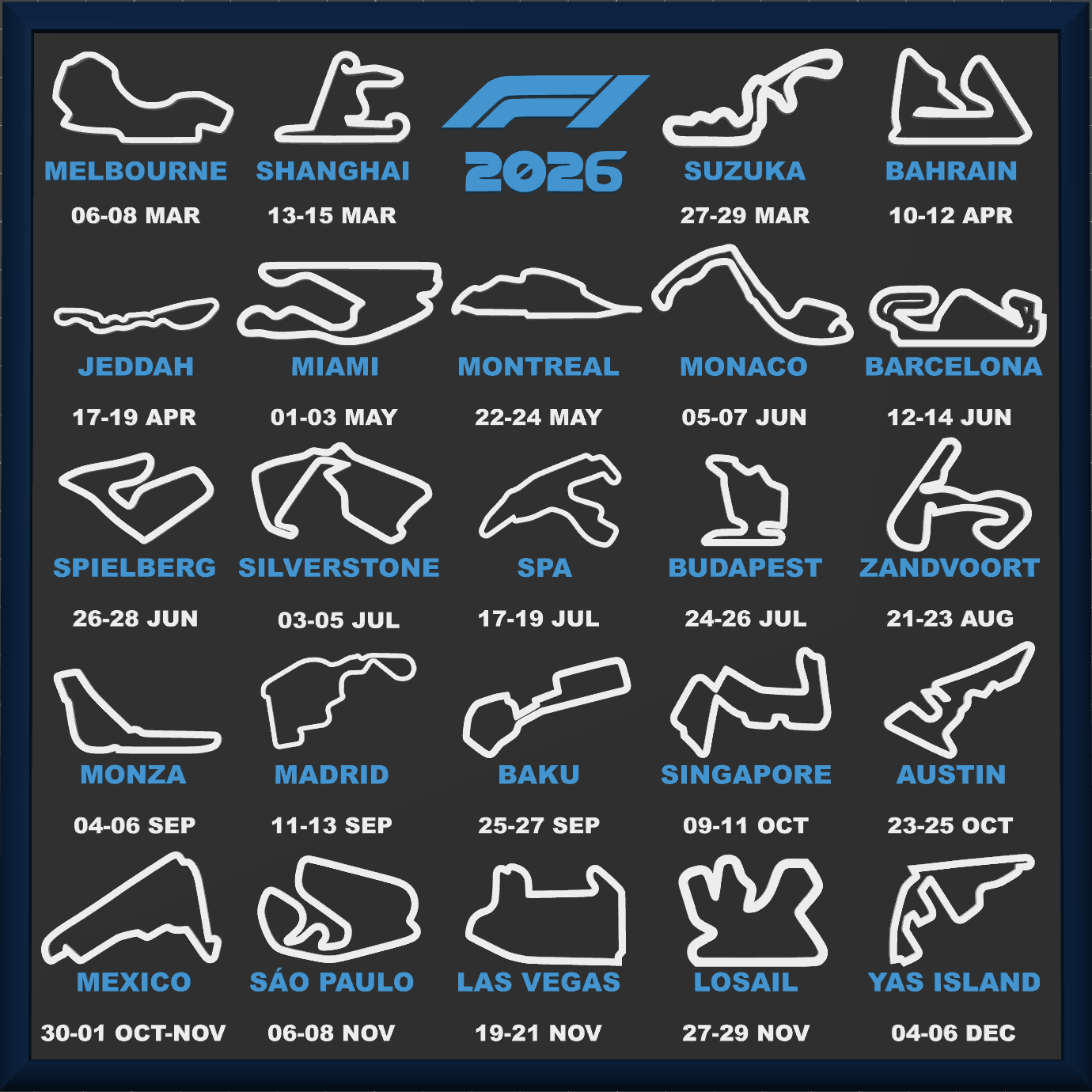
When discussing the "1 largest f1 circuit," it is vital to distinguish between active venues and historical anomalies. While tracks like the Pescara Circuit—which hosted the 1957 Pescara Grand Prix—measured over 25 kilometers, those venues have long since been retired from modern Formula 1 competition due to safety regulations. As of the 2026 season, the Circuit de Spa-Francorchamps stands as the undisputed titan of the modern calendar.
Its massive scale is not merely a matter of total length. The circuit is characterized by significant elevation changes, with a vertical drop and climb of approximately 102 meters throughout a single lap. This unique topography, combined with its sheer length, creates weather patterns that can see one part of the track bathed in sunlight while another sector is drenched in heavy rain, a phenomenon that has defined many legendary race outcomes.
Technical Specifications and Layout
The 7.004-kilometer layout is a masterpiece of natural terrain integration. Unlike modern "tilke-drome" circuits that are often purpose-built on flat land with a focus on safety run-off areas, Spa-Francorchamps evolved from public roads.
Key Sectors of the Circuit
- Sector 1 (La Source to Les Combes): This sector begins with the tight La Source hairpin, followed by the iconic Eau Rouge and Raidillon complex. This high-speed climb is arguably the most famous section of track in global motorsport.
- Sector 2 (Kemmel Straight to Stavelot): Dominated by the long Kemmel Straight, this section allows for top-end speed testing. The subsequent technical sequence through Malmedy and Pouhon tests the aerodynamic balance of the car.
- Sector 3 (Blanchimont to the Bus Stop Chicane): The final sector is defined by the flat-out Blanchimont curve, which leads into the final chicane. This sequence is a test of driver nerve, as the entry speeds are some of the highest on the entire calendar.
Comparison of Lengths: Modern F1 Circuits
To appreciate why Spa-Francorchamps is considered the "largest," it is helpful to look at how it compares to other iconic circuits currently in operation as of 2026.
| Circuit Name | Location | Length (km) |
|---|---|---|
| Circuit de Spa-Francorchamps | Belgium | 7.004 |
| Jeddah Corniche Circuit | Saudi Arabia | 6.174 |
| Baku City Circuit | Azerbaijan | 6.003 |
| Suzuka International Circuit | Japan | 5.807 |
| Silverstone Circuit | United Kingdom | 5.891 |
As shown in the table, Spa-Francorchamps is significantly longer than its nearest rivals. This length impacts everything from race strategy to the total number of laps completed on Sunday.
Operational Impacts of a Long Circuit
The length of the Spa-Francorchamps circuit forces teams to approach their race strategy differently than they would at a shorter, tighter venue like the Hungaroring.
Fuel Consumption and Tyre Wear
Because the lap is so long, the cars spend more time at full throttle, which naturally increases fuel consumption per lap. While modern F1 cars have specific fuel flow restrictions and race limits, the "fuel burn" at Spa is a constant factor in strategy. Furthermore, the high-speed nature of the track subjects the tyres to immense lateral and longitudinal forces, particularly through corners like Pouhon. Teams must calculate the trade-off between a soft tyre's grip and the need for longevity over the 7-kilometer loop.
Communication and Safety
Operating a race on a track of this size presents unique logistical challenges for the FIA and race control. Marshalling the entire 7.004-kilometer loop requires more personnel and more sophisticated camera coverage than shorter circuits. In the event of an incident, the time it takes for emergency services to reach a remote section of the track is carefully accounted for in the safety protocols.
The Evolution of the Track
The modern 7.004-kilometer iteration of Spa-Francorchamps is a shadow of its original 14-kilometer version. Throughout the 1960s and 1970s, the danger inherent in such a long, narrow road circuit led to its temporary removal from the F1 calendar. It was eventually redesigned to balance the spirit of the original high-speed layout with the rigid safety requirements demanded by modern racing standards.
The current configuration preserves the "old school" feel that drivers covet. It remains a "power track," where engine performance is rewarded, but it is also a "driver's track," where the ability to maintain momentum through sweeping, high-speed corners is the difference between a podium finish and the middle of the pack.
Frequently Asked Questions
Why is Spa-Francorchamps considered the largest F1 circuit?
It is the longest track currently used in the FIA Formula 1 World Championship. With a length of 7.004 km, it requires the most distance to complete a single lap compared to any other venue on the 2026 calendar.
Does the length of the track affect the number of laps in a race?
Yes. FIA regulations dictate that a Grand Prix must cover a distance of approximately 305 kilometers (with the exception of Monaco). Because Spa is so long, the race is contested over fewer laps—typically 44—compared to a track like Monaco, where the race is 78 laps.
Is Eau Rouge part of the longest circuit?
Yes, the Eau Rouge and Raidillon complex is a centerpiece of the Spa-Francorchamps layout. It is located shortly after the La Source hairpin and is integral to the flow of the first sector of this 7-kilometer circuit.
Can cars reach their maximum top speed at Spa?
The track features long straights like the Kemmel Straight and the approach to Blanchimont, allowing cars to achieve very high top speeds. However, the track also has technical, slower corners that require high-downforce setups, meaning teams must find a balance between top-end speed and cornering stability.
Are there longer tracks in other motorsport series?
Yes. The Nürburgring Nordschleife in Germany, often used for endurance racing, is over 20 kilometers long. However, this circuit is not used for Formula 1 Grand Prix races; it is generally considered too dangerous and difficult to marshal for the specific safety requirements of modern F1 cars.
How do weather conditions affect the largest circuit?
Due to its location in the Ardennes forest and its sheer size, weather is notoriously unpredictable at Spa. It is common for "micro-climates" to occur, where a heavy downpour might affect only the back portion of the circuit, forcing teams to make difficult split-second decisions on tyre compounds.
Strategic Recommendations for Fans and Enthusiasts
For those planning to attend or study the mechanics of the Belgian Grand Prix, it is essential to prioritize the specific nature of the track. If you are analyzing performance, do not simply look at total lap times; focus on sector times. The difference between a winning car and a losing car at Spa is often found in the mastery of the middle sector, where the combination of technical corners and straight-line speed reveals the true efficiency of the vehicle's aerodynamic package.
To fully appreciate the scale of this circuit, consider watching from different vantage points. The view from the top of Raidillon offers a perspective on the elevation change that cameras rarely capture, while the grandstands near the Bus Stop chicane provide insight into the precision required to bring a high-speed vehicle to a halt after a long, intense lap. By focusing on these specific technical segments, you can better understand why, despite its size and complexity, Spa-Francorchamps remains the ultimate test of man and machine.