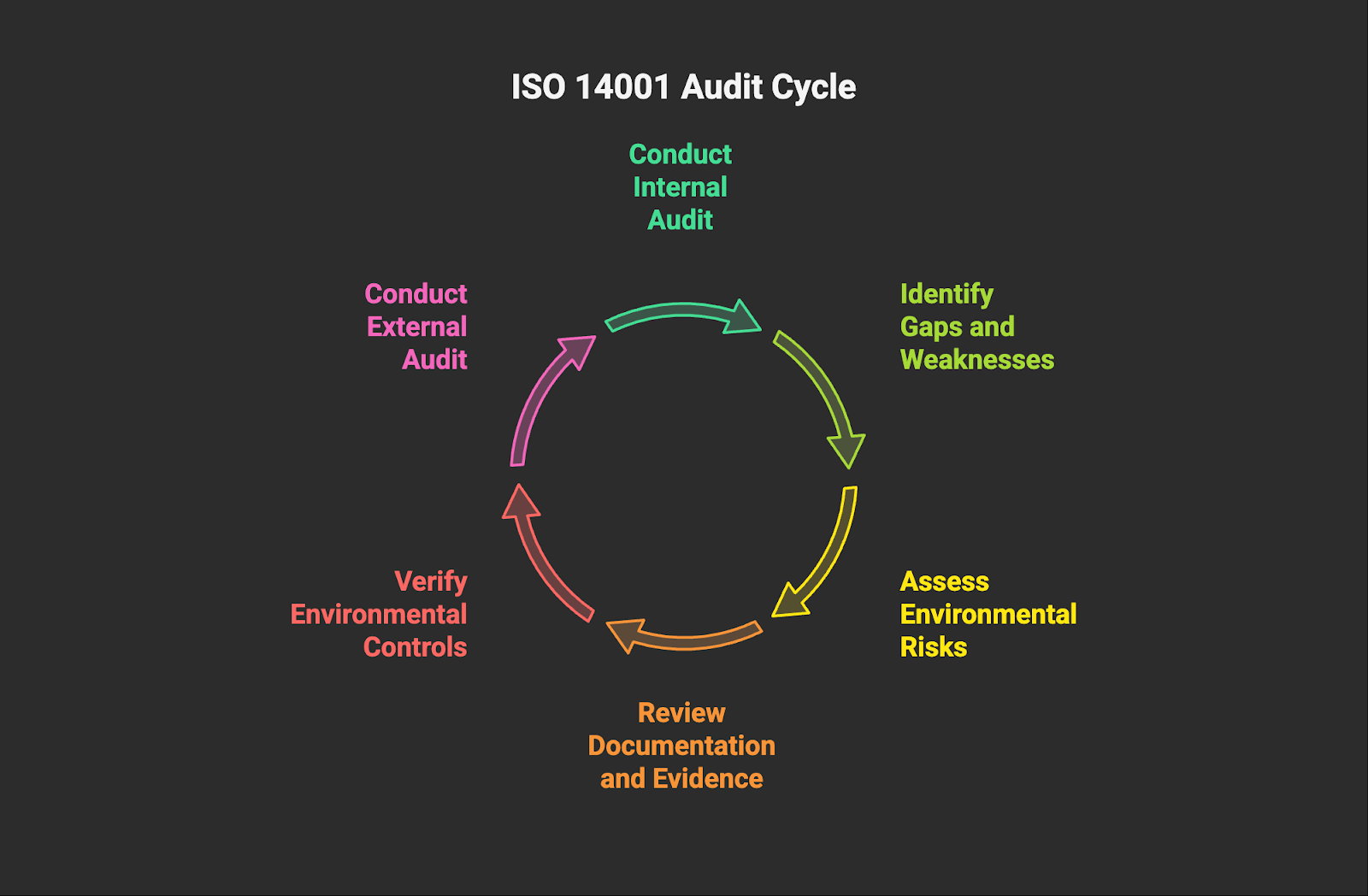
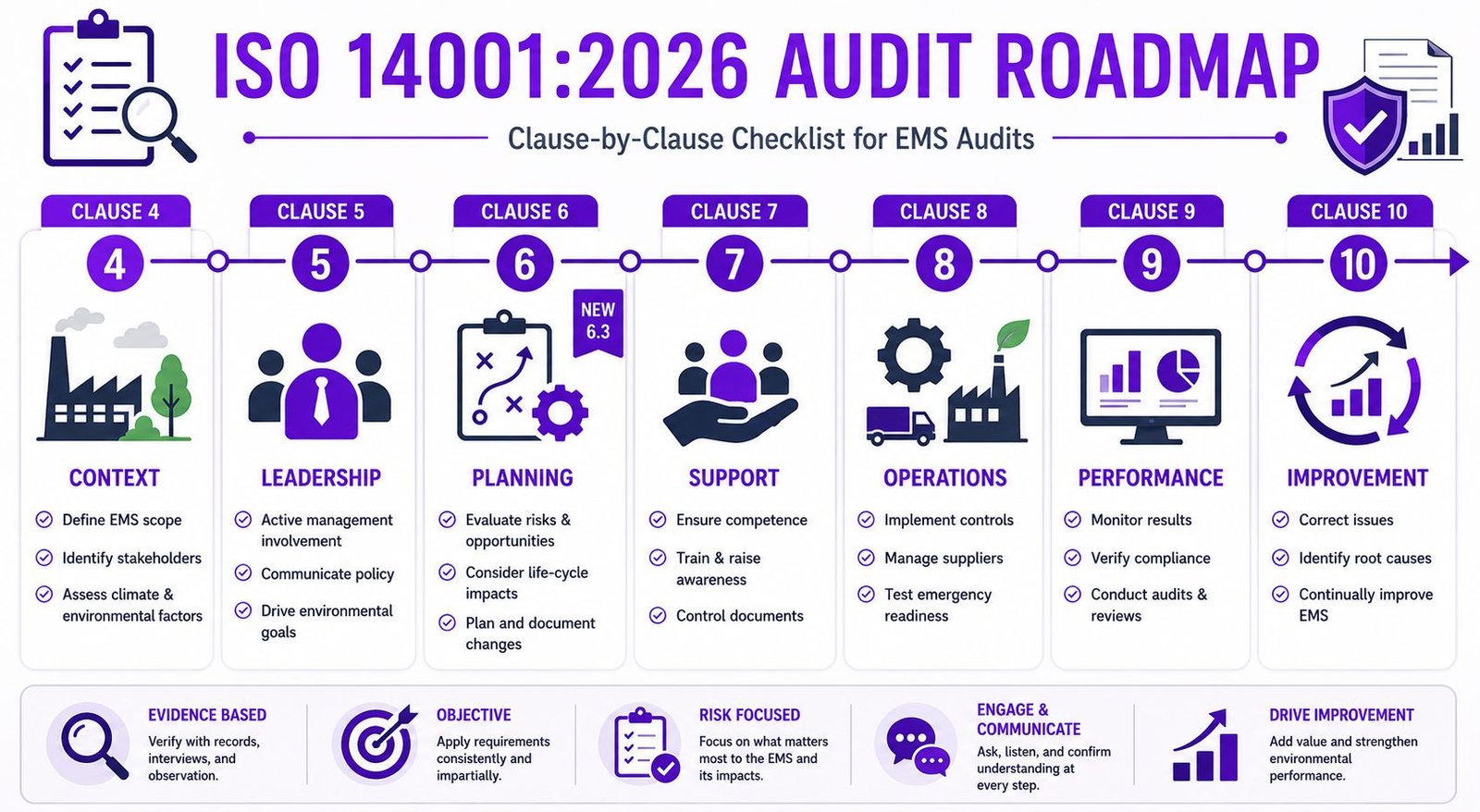
Becoming an ISO 14001 auditor requires a combination of formal education, environmental management systems (EMS) training, professional auditing experience, and ongoing competency maintenance. To qualify, candidates typically need secondary education, recognized Lead Auditor training (such as a 40-hour IRCA-certified course), several years of practical work and auditing experience, and registration with an independent certification body.
Introduction to ISO 14001 Auditing
Environmental compliance, sustainability, and systematic ecological risk management are central pillars of modern industrial and corporate operations. At the heart of this global movement is ISO 14001, the international standard that specifies requirements for an effective environmental management system (EMS). Organizations worldwide adopt this standard to minimize their environmental footprint, comply with statutory obligations, and demonstrate continuous ecological improvement.
However, implementing an EMS is only part of the equation; organizations must systematically verify its effectiveness through internal and external audits. This creates a critical demand for qualified professionals who understand the standard's nuances.
Navigating the landscape of ISO 14001 auditor requirements involves understanding the exact credentials, training milestones, and practical experiences needed to evaluate an environmental management system properly. Whether you are an internal professional looking to audit your own facility or an aspiring third-party registrar auditor seeking professional certification, understanding these foundational criteria is essential for career advancement and organizational credibility.
Understanding the ISO 14001 Standard and Audit Types
Before reviewing the prerequisites for becoming an auditor, it is necessary to understand the document being evaluated and the different contexts in which audits take place. ISO 14001 is structured around the High-Level Structure (HLS), or Annex SL, which applies to all modern ISO management system standards. It emphasizes risk-based thinking, leadership engagement, life-cycle perspectives, and environmental performance evaluation.
Audits are generally categorized into three distinct types, each carrying unique requirements for the auditor:
- First-Party Audits (Internal Audits): Conducted by or on behalf of the organization itself for management review and internal improvement. These require foundational knowledge of ISO 14001 and internal auditing techniques.
- Second-Party Audits: Conducted by customers on their suppliers, or by organizations on external contractors. These require strong technical knowledge of the specific industry alongside standard auditing skills.
- Third-Party Audits (Certification Audits): Conducted by independent auditing bodies (registrars) to determine if an organization's EMS conforms to ISO 14001 and can be certified. These demand the highest level of formal training, examination, and professional registration.
Core Auditor Competencies Outlined in ISO 19011
The overarching guidelines for auditing management systems are detailed in ISO 19011: Guidelines for auditing management systems. While ISO 14001 defines the requirements for the environmental management system itself, ISO 19011 defines the competence criteria for the people evaluating it.
According to ISO 19011, an auditor must possess generic knowledge and skills, plus discipline-specific knowledge related to environmental management.
Generic Knowledge and Skills
Every auditor, regardless of the specific standard they are evaluating, must understand:
- Audit principles, procedures, and techniques (planning, executing, reporting, and following up).
- Management system standards and normative documents.
- Organizational contexts, including governance, size, structure, functions, and relationships.
- Applicable legal, regulatory, and other requirements relevant to the auditee.
Environmental Discipline-Specific Knowledge
For ISO 14001 specifically, auditors must demonstrate competence in environmental science and technology, which includes:
- Environmental terminology, ecological principles, and pollution prevention techniques.
- Life cycle assessment (LCA) principles and environmental impact evaluation.
- Facility operations, such as waste management, wastewater treatment, air emissions control, and hazardous material handling.
- National and international environmental legislation, permitting processes, and compliance tracking mechanisms.
Step-by-Step Pathway to Becoming a Certified ISO 14001 Auditor
Earning a recognized professional credential as a third-party lead auditor requires a structured career path. While internal auditor requirements can be met via internal corporate training, external registrar certification demands a rigorous verification of background and capability.
| Auditor Grade / Type | Typical Education Prerequisites | Formal Training Required | Practical Auditing Experience | Examination & Registration |
|---|---|---|---|---|
| Internal Auditor | Secondary education or professional experience | 16 to 24-hour internal auditor course | Participation in 2-3 internal audits under supervision | Internal corporate qualification or training certificate |
| Provisional / Associate Auditor | Post-secondary education (degree or diploma) | 40-hour IRCA/exemplar global certified Lead Auditor course | None required initially (entry-level grade) | Pass written examination; register with a scheme body |
| Lead Auditor / Principal Auditor | Post-secondary education in science, engineering, or related field | 40-hour certified Lead Auditor course | Act as team leader on multiple full-system audits (typically 20+ days) | Comprehensive peer review, logbook verification, and board approval |
1. Educational Foundation
Most professional personnel certification bodies (such as the CQI and IRCA, Exemplar Global, or equivalent national bodies) require candidates to hold a minimum level of formal education. A university degree—preferably in environmental science, engineering, chemistry, or a related technical discipline—is standard. However, extensive practical industrial experience can often substitute for a formal degree depending on the specific certification scheme.
2. Formal Training (The 40-Hour Course)
Aspiring lead auditors must successfully complete a training course recognized by an authoritative certification scheme. The industry standard is a 40-hour IRCA-certified (or equivalent) ISO 14001 Lead Auditor Training Course.
- These intensive courses span five consecutive days.
- They cover the interpretation of ISO 14001 requirements, audit planning, execution methodologies, interviewing techniques, non-conformity writing, and audit reporting.
- Participants must pass a continuous assessment and a rigorous written final examination (typically requiring a score of 70% or higher) to receive their course completion certificate.
3. Practical Audit Experience
Passing a training course proves theoretical understanding, but certification requires proof of real-world competence. Candidates must accumulate practical auditing experience under the supervision of a qualified lead auditor.
- This usually involves participating in a set number of complete management system audits (Stage 1 and Stage 2 audits).
- Candidates must maintain an audit log detailing the dates, auditee organizations, audit days spent, and the specific clauses of ISO 14001 evaluated.
4. Personal Attributes and Continuous Professional Development (CPD)
Beyond technical requirements, certification bodies evaluate personal attributes. Auditors must be ethical, open-minded, diplomatic, observant, versatile, tenacious, and self-reliant. Once certified, auditors must maintain their credentials through Continuous Professional Development (CPD), attending relevant seminars, completing update training when standards change, and logging active annual auditing hours.
Technical Scope and Industry-Specific Competencies
An auditor certified in ISO 14001 cannot automatically audit every industry. Environmental impacts vary drastically between a chemical manufacturing plant, a software development office, and a municipal waste facility. Therefore, auditor competence is tied to technical scopes.
Accreditation bodies and certification programs categorize industrial sectors. An auditor wishing to evaluate a metal fabrication facility must demonstrate specific technical competence in metallurgy, surface treatment, and heavy manufacturing waste streams. When organizations select a certification body or assign internal auditors, they must verify that the auditor's technical scope matches the operational profile of the company. This prevents gaps in understanding localized ecological risks, such as specialized air pollution permits or complex chemical storage regulations.
Common Challenges and Pitfalls in Meeting Auditor Requirements
Candidates and organizations often encounter roadblocks when navigating ISO 14001 auditor requirements. Recognizing these challenges helps prevent delays in certification and professional growth.
- Over-reliance on Theory: Many candidates pass the 40-hour lead auditor exam with high scores but struggle during live audits due to a lack of operational familiarity. Understanding the standard text is different from identifying fugitive emissions on a factory floor.
- Neglecting Legal Compliance Verification: A frequent audit finding against auditors during witness assessments is failing to adequately verify how an organization evaluates its compliance with environmental legislation. Auditors must be comfortable inspecting complex legal registers and statutory permits.
- Failing to Maintain CPD Records: Certified auditors often let their professional registrations lapse by failing to submit annual CPD hours or audit logs on time, requiring costly reinstatement processes.
- Misinterpreting "Life Cycle Perspective": Since the major revision of ISO 14001, auditors must evaluate how organizations manage environmental impacts throughout product design, delivery, use, and end-of-life treatment. Auditors who focus solely on factory-gate compliance fail to meet modern competency expectations.
Frequently Asked Questions
Can I become an ISO 14001 auditor without a university degree?
Yes, many certification schemes allow equivalent professional experience in an environmental, engineering, or industrial management role to substitute for a formal university degree, provided you complete the required training course and accumulate sufficient auditing experience.
How long is an ISO 14001 Lead Auditor certificate valid?
Course completion certificates from training providers do not expire, but professional registration with schemes like IRCA or Exemplar Global requires annual renewal, payment of maintenance fees, and verification of ongoing professional development and audit activity.
What is the difference between an internal auditor and a lead auditor?
An internal auditor evaluates their own company's systems to prepare for external reviews or drive internal improvements, typically requiring a shorter 16-to-24-hour training course. A lead auditor is qualified to manage entire audit teams, lead third-party certification audits for registrar bodies, and evaluate full compliance across complex supply chains.
Does ISO 14001 require auditors to be legal experts?
Auditors are not expected to be practicing environmental lawyers, but they must possess a thorough understanding of applicable environmental laws, local regulations, and permit conditions relevant to the scope of the organization they are auditing, and they must verify how the company ensures compliance.
How do I transition from auditing ISO 9001 to auditing ISO 14001?
Because ISO 9001 (Quality) and ISO 14001 share the Annex SL high-level structure, experienced quality auditors already understand core audit principles and process approaches. To transition, you must complete an ISO 14001 specific lead auditor conversion course or full course, study environmental science concepts, and gain supervised experience in environmental auditing.
Next Actions for Aspiring Auditors
If you are looking to enter the field of environmental auditing, your immediate next step is to assess your current educational and professional background against the criteria set by recognized certification bodies such as CQI/IRCA or Exemplar Global. Enroll in an accredited 40-hour Lead Auditor training course, begin building relationships with experienced auditors to secure shadow-audit opportunities, and ensure your understanding of modern environmental legislation is up to date. For organizations seeking to qualify internal staff, start by establishing an internal training matrix that aligns with ISO 19011 competence guidelines.