The Airbus A330-200F is a versatile, mid-sized widebody freighter offering a maximum structural payload of up to 71 tonnes with a range of approximately 3,200 nautical miles. It bridges the gap between narrowbody express freighters and large-capacity long-haul aircraft like the Boeing 777F, providing a critical balance of volume and efficiency for regional and transcontinental cargo routes.
Understanding the A330-200F Technical Architecture
The Airbus A330-200F was designed as a dedicated freighter derivative of the successful A330-200 passenger jet. Entering service in the early 2010s, it addressed a specific need in the market for a modern, medium-lift freighter that could replace aging DC-10F and early MD-11F units. As of 2026, the aircraft remains a vital asset in the global supply chain, particularly for operators who require more flexibility than a standard narrowbody can offer but do not have the volume requirements to justify a heavy-lift "jumbo" freighter.
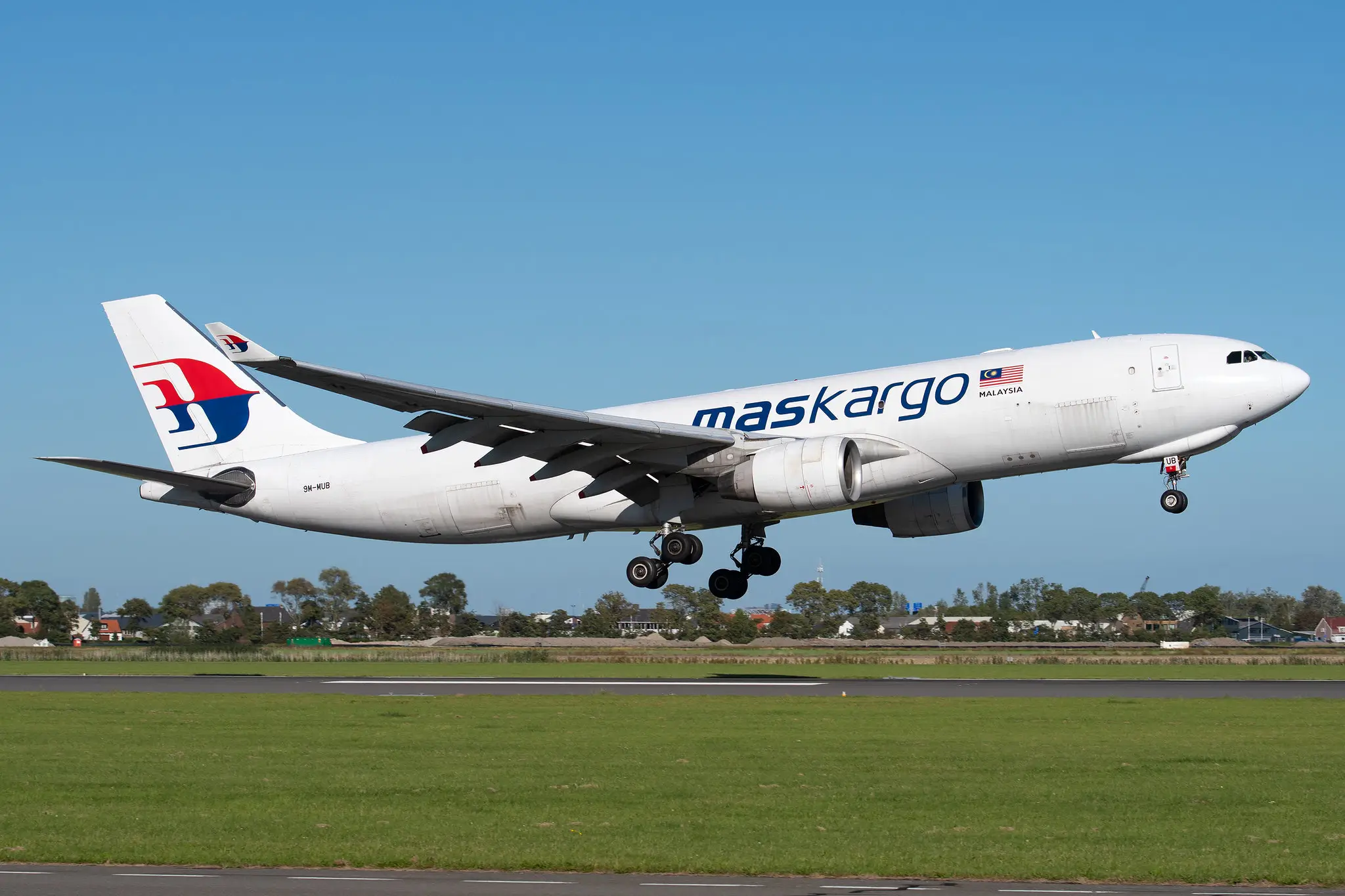
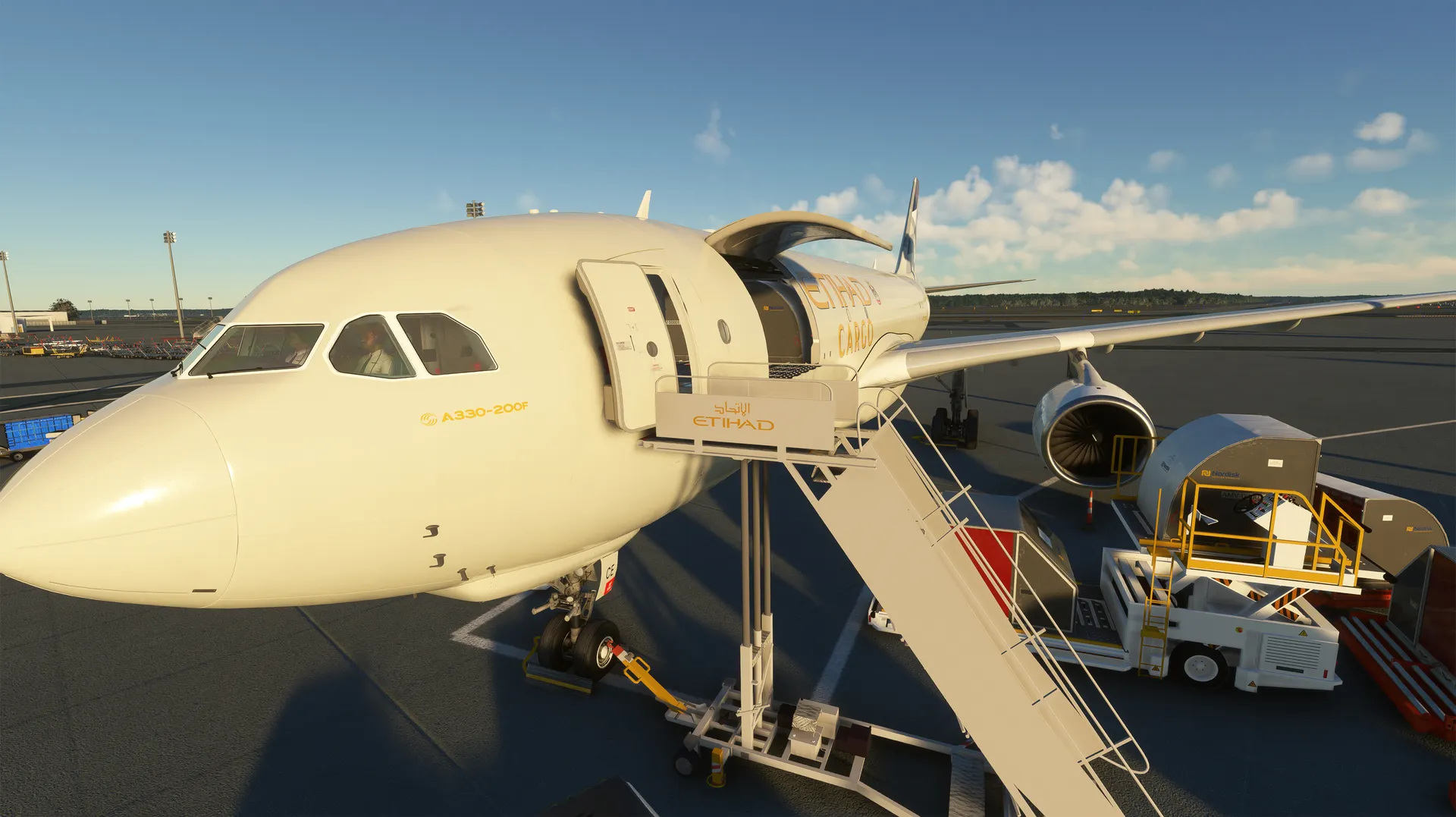
A defining technical characteristic of the A330-200F is its unique nose-gear modification. On the passenger version of the A330, the aircraft has a slight nose-down pitch when on the ground. For cargo operations, a level cabin floor is essential for the rapid movement of heavy pallets. Airbus solved this by redesigning the nose gear attachment point, housing it in a distinctive "blister" or "bubble" under the nose. This ensures the main deck remains horizontal during loading and unloading, facilitating the use of automated Cargo Loading Systems (CLS).
The airframe itself benefits from advanced composite materials and high-strength metallic alloys, which reduce the operating empty weight while maintaining structural integrity for high-cycle cargo operations. Powered by either Rolls-Royce Trent 700 or Pratt & Whitney PW4000 engines, the aircraft provides high reliability and commonality with existing A330 passenger fleets, significantly lowering the barrier to entry for airlines already operating the type.
Freight Capacity Breakdown: Main Deck and Lower Hold
The primary value proposition of the A330-200F lies in its optimized interior volume and flexible loading configurations. Unlike passenger-to-freighter (P2F) conversions that may have structural weight penalties from previous interior fittings, the factory-built 200F is optimized for maximum density.
Main Deck Capabilities
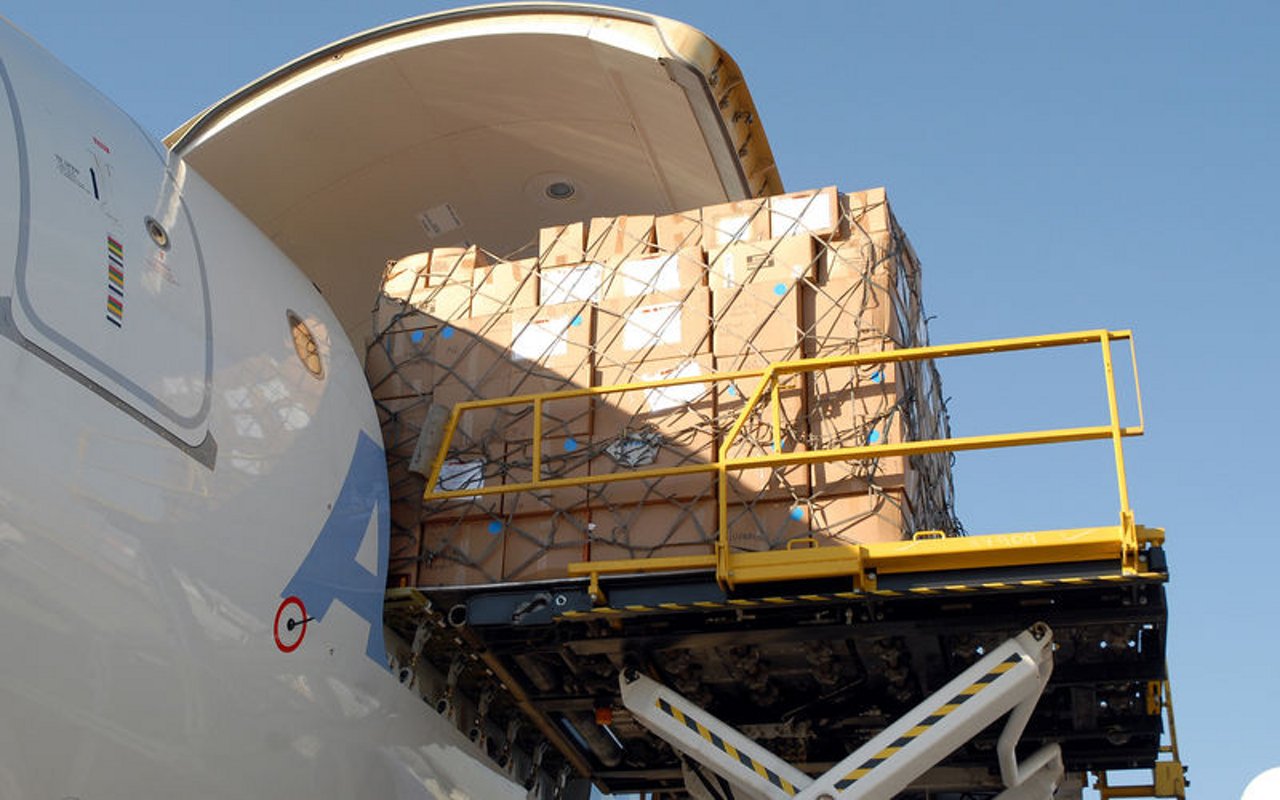
The main deck of the A330-200F is designed to accommodate a variety of Unit Load Device (ULD) configurations. In a standard high-density layout, it can hold up to 22 to 23 Side-by-Side pallets. The main deck cargo door is large enough to handle oversized items, making the aircraft suitable not just for general freight and e-commerce, but also for machinery, automotive parts, and aerospace components.
Lower Hold Flexibility
One of the distinct advantages of the A330-200F over its primary competitor, the Boeing 767-300F, is its superior lower-hold capacity. The A330-200F can carry standard LD3 containers in a side-by-side configuration in the belly. This allows operators to mix "express" cargo on the main deck with "general" or "bulk" cargo in the lower holds. As of 2026, this versatility is highly prized by ACMI (Aircraft, Crew, Maintenance, and Insurance) providers who serve diverse clients with varying density requirements.
Payload-Range Performance
The aircraft offers two primary performance modes:
- Max Payload Mode: Carrying roughly 71 tonnes of freight over distances of 3,200 nautical miles (5,926 km).
- Max Range Mode: Carrying a lighter load of approximately 65 tonnes over 4,000 nautical miles (7,408 km).
This dual-capability allows the A330-200F to serve "thin" long-haul routes or "thick" regional routes with equal efficiency.
Comparison of Mid-Size Freighter Specifications
To understand the market position of the A330-200F in 2026, it is helpful to compare it against its closest rivals in the mid-size widebody category.
| Specification | Airbus A330-200F | Boeing 767-300F | Airbus A330-300P2F |
|---|---|---|---|
| Max Payload | ~71 Tonnes | ~52-58 Tonnes | ~61-63 Tonnes |
| Max Range (Full Load) | 3,200 nm | 3,255 nm | 3,600 nm |
| Main Deck Positions | 22-23 Pallets | 24 Pallets (Narrower) | 26 Pallets |
| Total Volume | 475 m³ | 438 m³ | 525 m³ |
| Engine Options | RR Trent 700 / PW4000 | GE CF6-80C2 | RR Trent 700 / PW4000 |
| MTOW (Max Take-Off) | 233 Tonnes | 186.8 Tonnes | 233-242 Tonnes |
Market Impact and the 2026 Operational Landscape
By 2026, the market impact of the A330-200F is characterized by its role as a "stabilizer" in the mid-range cargo sector. While newer models like the A350F and the Boeing 777-8F dominate the ultra-long-haul heavy markets, the A330-200F remains the preferred choice for several key logistics segments.
The Rise of Regional E-Commerce Hubs
The global explosion of e-commerce has shifted the focus from massive centralized hubs to more distributed regional networks. The A330-200F is ideally suited for this "middle-mile" logistics. Its ability to take off from shorter runways than a fully loaded 747-8F allows it to serve secondary airports that are closer to distribution centers. This reduces ground transit times, which is critical for "next-day" delivery promises.
Express Integrator Adoption
Major express carriers, such as DHL Aviation, have historically utilized the A330-200F to connect regional hubs. In 2026, these aircraft are increasingly being utilized for high-frequency "shuttle" flights between continents (e.g., Europe to North Africa or Asia to Oceania). The reliability of the A330 platform ensures high aircraft utilization rates, often exceeding 12 hours of flight time per day in intense express environments.
Influence on the P2F Conversion Market
The success of the A330-200F factory freighter paved the way for the A330P2F (Passenger-to-Freighter) conversion programs. As passenger airlines retired older A330-200 and A330-300 airframes, a secondary market emerged. The factory-built 200F set the performance benchmark that these conversions strive to meet. In 2026, we see a bifurcated market: the factory 200F remains the "gold standard" for structural payload, while the A330-300P2F offers more volume for lower-density e-commerce freight.
Environmental and Economic Considerations
Operating a widebody freighter in 2026 requires a strict adherence to carbon emission standards and noise regulations. The A330-200F performs well in these areas compared to older generation freighters.
- Fuel Efficiency: The A330-200F burns significantly less fuel per tonne of cargo than the MD-11F or the DC-10F it was designed to replace. Its aerodynamic efficiency and high-bypass turbofan engines contribute to a lower carbon footprint per tonne-kilometer.
- Maintenance Commonality: For airlines already operating A330 or A340 passenger fleets, the A330-200F offers massive savings in spare parts inventory, pilot training, and maintenance infrastructure. This "cross-crew qualification" allows pilots to transition between passenger and cargo flights with minimal additional training, providing airlines with significant operational flexibility.
- Asset Value: Because it was built as a dedicated freighter, the A330-200F maintains a higher residual value than many converted aircraft. Its reinforced floor and specialized cargo systems are designed for a 20-to-25-year service life from the outset, rather than being retrofitted mid-way through the airframe's life.
Operational Limitations and Challenges
Despite its strengths, the A330-200F faces specific challenges in the 2026 environment. One primary issue is the competition from new-generation widebody conversions. The A330-300P2F, while having a slightly lower structural payload capacity, offers more floor space (26 pallet positions vs. 23). For e-commerce operators who "cube out" (run out of space) before they "gross out" (reach maximum weight), the -300P2F can sometimes be more economically attractive.
Furthermore, as the industry moves toward 2030 sustainability goals, the A330-200F is beginning to face pressure from "clean-sheet" designs like the A350F. While the A330-200F is efficient, the A350F offers even greater fuel savings and reduced CO2 emissions through the extensive use of carbon-fiber-reinforced polymers (CFRP). However, the significantly lower acquisition or lease cost of a mid-life A330-200F often offsets the fuel savings of a brand-new A350F for many regional carriers.
Expert Guidance: Optimizing A330-200F Utilization
For cargo operators considering the integration of an A330-200F into their fleet in 2026, several strategic factors should be considered:
- Route Selection: The A330-200F shines on routes between 2,500 and 3,500 nautical miles. On shorter routes, the landing fees and cycle-related maintenance may erode margins. On longer routes, payload must be sacrificed for fuel, potentially making a larger freighter like the 777F more viable.
- Cargo Mix: To maximize ROI, operators should aim for a mix of high-density general cargo and low-density express parcels. Utilizing the lower hold for heavy "base" cargo while filling the main deck with e-commerce volume allows for the best use of the aircraft’s MTOW.
- Digital Integration: Modern cargo operations in 2026 rely on real-time tracking and automated weight/balance systems. Integrating the A330-200F into a digital supply chain helps optimize loading times and ensures the aircraft operates as close to its maximum efficiency as possible.
FAQ
How many pallets can an A330-200F carry?
The A330-200F typically carries 22 to 23 pallets on its main deck, depending on the specific configuration and the size of the pallets used (standard 88"x125" or 96"x125"). Additionally, the lower holds can accommodate 8 standard pallets plus additional bulk cargo, making it a highly versatile aircraft for mixed cargo types.
Is the A330-200F still in production?
As of 2026, Airbus has shifted its primary freighter production focus to the A350F and the A330neo-based platforms. While new factory-built A330-200Fs are no longer the primary offering, the existing fleet is very active, and the airframe continues to be a dominant force in the secondary market through lease transfers and the related A330P2F conversion programs.
Why does the A330-200F have a bulge under the nose?
The "bulge" or "blister" houses a lowered nose-gear attachment point. The standard A330 passenger aircraft sits with a nose-down attitude. For a freighter, a level floor is required to allow cargo to be rolled easily from the loader into the cabin. By lowering the nose gear, Airbus leveled the aircraft’s fuselage during ground operations.
What is the maximum range of an A330-200F with a full load?
With a maximum structural payload of approximately 71 tonnes, the A330-200F has a range of about 3,200 nautical miles. If the payload is reduced to 65 tonnes, the range increases to 4,000 nautical miles, allowing it to easily facilitate transcontinental routes or flights between Europe and the US East Coast.
How does the A330-200F compare to the Boeing 767-300F?
The A330-200F is generally considered a more capable aircraft in terms of payload and volume. It offers a higher maximum payload (71t vs. ~58t) and a more modern cockpit and fly-by-wire system. However, the Boeing 767-300F has a narrower fuselage, which some operators prefer for specific regional apron constraints and lower operating costs on certain routes.
Practical Recommendation
For regional logistics providers and ACMI operators in 2026, the Airbus A330-200F represents the most balanced investment in the mid-size widebody category. Its high payload capacity, combined with the versatility of its lower holds, makes it superior to narrowbody freighters for scaling operations. While newer aircraft offer better fuel metrics, the proven reliability and lower acquisition costs of the A330-200F ensure its continued relevance. Operators should focus on utilizing this aircraft for "middle-mile" routes that connect major international hubs to regional distribution centers, where its specific payload-range profile is most profitable.