In most jurisdictions, you are legally required to present valid proof of auto insurance whenever requested by law enforcement during a traffic stop, following a motor vehicle accident, or when completing vehicle-related administrative tasks like registration. Failure to provide this documentation can result in significant fines, license suspension, or vehicle impoundment, even if you are currently insured.
The Legal Foundation: Financial Responsibility Laws
The requirement to present auto insurance is rooted in "Financial Responsibility Laws." As of 2026, nearly every state in the U.S. and most developed nations operate under the principle that any individual operating a motor vehicle must demonstrate the ability to cover costs associated with potential bodily injury or property damage they may cause to others.
Auto insurance serves as the primary mechanism for meeting this financial responsibility. While some states allow for alternative methods, such as surety bonds or cash deposits with the state treasurer, the vast majority of motorists use an insurance policy. The "requirement to present" is the enforcement mechanism that allows the state to verify you are operating within the law. It is important to distinguish between having insurance and presenting proof of it; while the former is the substantive legal requirement, the latter is a procedural requirement that carries its own set of penalties.
Situations Where You Must Present Proof of Insurance
There are four primary scenarios where your legal obligation to present proof of insurance is triggered. Understanding these can help you remain prepared and avoid unnecessary legal complications.
1. Law Enforcement Traffic Stops
Whenever a police officer or highway patrol agent pulls you over for a moving violation (such as speeding or a broken taillight), they will almost invariably ask for "license, registration, and proof of insurance." In 2026, this remains a standard protocol for public safety. The officer needs to verify that the vehicle is legally allowed to be on the road. Even if the officer can see your insurance status on their mobile data terminal (MDT), you are still legally obligated to produce the document upon request in most jurisdictions.
2. Following a Motor Vehicle Accident
If you are involved in a collision, regardless of who is at fault, you are legally required to exchange insurance information with the other drivers involved. If law enforcement arrives at the scene, they will require all parties to present proof of insurance for the official police report. Failing to provide this information at the scene of an accident is often treated more severely than a simple traffic stop omission, as it can be perceived as an attempt to evade financial liability for damages.
3. Vehicle Registration and Renewal
When you purchase a new vehicle or renew your existing registration at the Department of Motor Vehicles (DMV) or equivalent agency, you must present proof of insurance. In 2026, many states have integrated databases that allow the DMV to verify insurance electronically; however, if the system fails to find a match, or if you are registering a vehicle in a new state, you will be required to provide physical or digital documentation.
4. Mandatory Vehicle Inspections
In states that require annual or biennial safety and emissions inspections, the technician or state official is often required to verify that the vehicle is insured before the inspection can proceed. This ensures that only legally compliant vehicles are being certified for road use.
Acceptable Forms of Proof in 2026
The transition from physical paper cards to digital verification has reached a point of near-universal acceptance. However, the requirements for what constitutes "valid proof" can vary.
Digital Insurance Cards
As of 2026, nearly all 50 U.S. states and many international jurisdictions allow drivers to present an electronic version of their insurance ID card on a smartphone or mobile device. This can be via a dedicated insurance company app, a digital wallet (like Apple Wallet or Google Wallet), or a downloaded PDF.
Privacy Note: When presenting a digital card to law enforcement, you are only consenting to the officer viewing the insurance information. Legal precedents have largely established that handing an unlocked phone to an officer for the purpose of showing insurance does not grant them the right to search through your photos, messages, or other private data. However, many drivers prefer to use a "locked screen" version of the digital card to maintain maximum privacy.
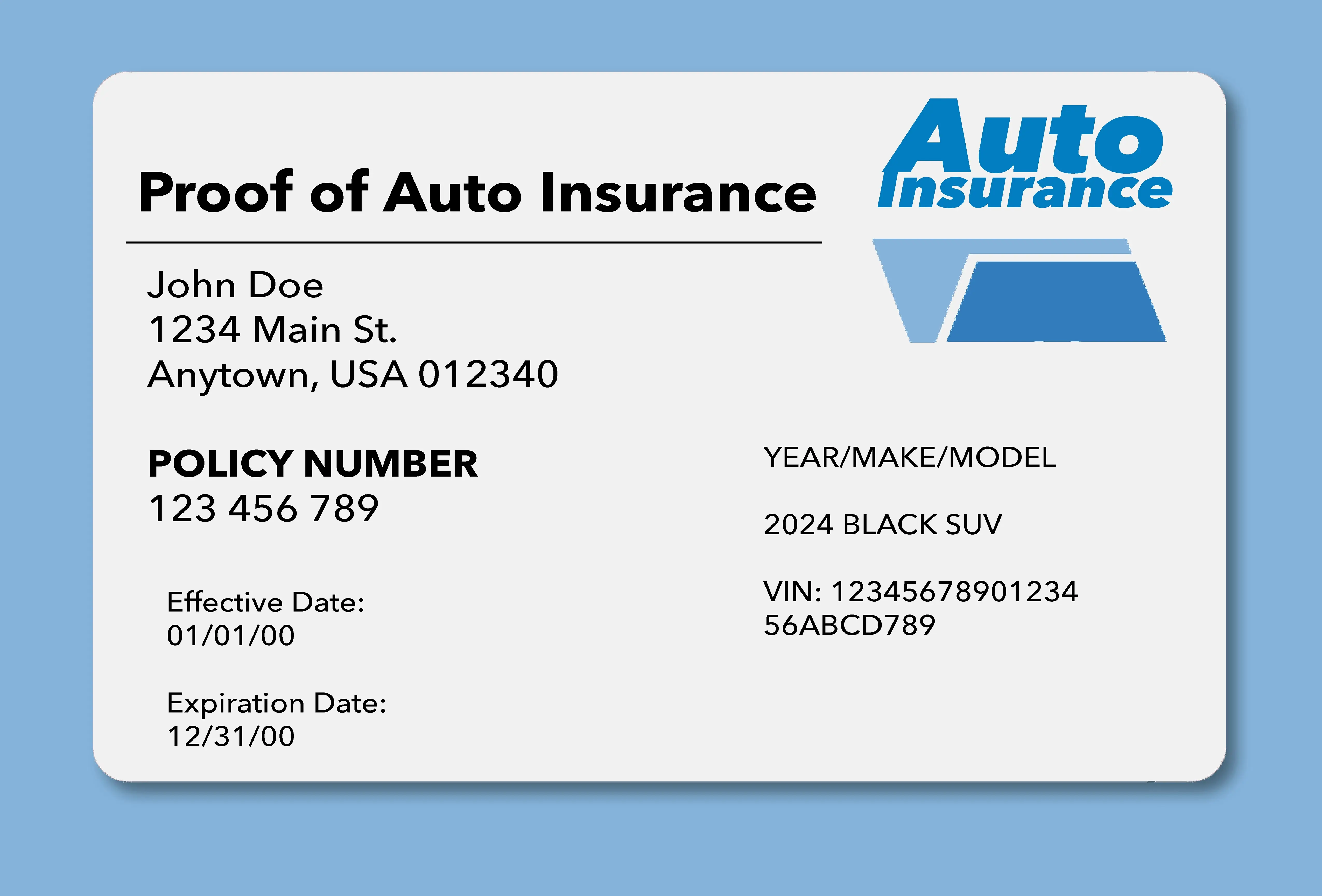
Physical ID Cards
The traditional paper insurance card remains the most reliable form of proof. It does not require a battery, a cellular signal, or a functioning screen. Most insurance experts recommend keeping a physical copy in the glove box even if you primarily use a digital version.
Insurance Binders
If you have just purchased a vehicle and have not yet received your permanent ID card, an "insurance binder" serves as valid temporary proof. This is a legal document issued by your agent or carrier that confirms coverage is active until the formal policy documents are processed.
Consequences of Failing to Present Insurance
It is a common misconception that if you have insurance but simply don't have the card with you, you are "safe." In the eyes of the law, "Failure to Provide Proof of Insurance" is a specific offense, distinct from "Driving Without Insurance."
Fines and Court Costs
If you are pulled over and cannot present proof, the officer will likely issue a citation. In some states, this is a "fix-it ticket," meaning the fine is waived or reduced if you later provide proof to the court that you were insured at the time of the stop. However, you may still be responsible for administrative court fees, which can range from $25 to $100.
License Suspension
In stricter jurisdictions, multiple offenses of failing to provide proof of insurance can lead to a suspension of your driver’s license. Reinstating a license often involves paying significant fees and may require you to file an SR-22 certificate, which labels you as a high-risk driver.
Vehicle Impoundment
In 2026, several metropolitan areas have adopted "no pay, no play" policies. If an officer cannot verify your insurance status through their digital systems and you cannot present proof, they may have the statutory authority to impound your vehicle on the spot to prevent an uninsured vehicle from remaining on public roads.
Impact on Insurance Premiums
While a "failure to provide" citation is a secondary offense, it still appears on your driving record. Insurance companies may view this as a sign of administrative negligence, which could lead to small increases in your premium or the loss of "good driver" discounts.
Comparison of Proof Requirements and Penalties
The following table outlines the general landscape of insurance presentation requirements across different regions in 2026. Note that specific local statutes should always be verified.
| Jurisdiction Type | Digital Proof Accepted? | Common Penalty (First Offense) | Verification Method |
|---|---|---|---|
| Strict Compliance States (e.g., NY, CA) | Yes | High fines ($150 - $500) | Real-time database & physical/digital card |
| Standard States (e.g., TX, FL) | Yes | "Fix-it" ticket with fee ($25 - $100) | Officer MDT query & presentation |
| Non-Compulsory Jurisdictions (e.g., NH*) | No | N/A (unless in accident) | Self-insurance verification |
| EU / UK Standards | Yes | Immediate vehicle seizure | Automated License Plate Recognition (ALPR) |
*New Hampshire does not mandate auto insurance for most drivers but requires financial responsibility if an accident occurs.
Real-Time Electronic Verification (EIV) Systems
By 2026, many law enforcement agencies have moved toward Electronic Insurance Verification (EIV). These systems link state DMV databases directly with insurance company records. When an officer enters your license plate number into their system, they often receive an instant "Confirmed" or "Unconfirmed" status regarding your insurance.
However, these systems are not perfect. There can be "data lags" when you switch insurance companies, or technical glitches between the carrier and the state. This is why the legal requirement to manually present proof still exists. If the database shows you as "Unconfirmed" but you can present a valid physical or digital card, you can avoid a citation or impoundment that would have otherwise occurred based on faulty data.
Special Scenarios and Exceptions
Rental Cars
When driving a rental car, you are still required to present proof of insurance if stopped. This proof can be the rental agreement itself (if you purchased the rental company's insurance) or your personal insurance card (if your policy extends to rentals). It is vital to ensure the rental agreement is easily accessible in the vehicle.
Borrowed Vehicles
If you are borrowing a friend’s car, the "insurance follows the car" in most instances. However, you should still ensure that the owner's proof of insurance is in the glove box. If you are stopped, you must present the insurance for that specific vehicle, not your own personal insurance for a car that is sitting in your driveway at home.
Non-Owner Policies
If you do not own a car but frequently drive (using car-sharing services or borrowing vehicles), you may carry a Non-Owner Auto Insurance policy. In this case, you should carry your non-owner ID card, though you will likely also need to show the specific vehicle's registration or the car-sharing app's coverage details.
Expert Guidance: Maintaining Compliance
To ensure you never face penalties for failing to present insurance, consider the following best practices updated for the 2026 landscape:
- The Multi-Format Approach: Maintain your insurance proof in three formats: a physical card in the glove box, a digital card in your phone's wallet (accessible without internet), and a PDF saved in your cloud storage.
- Verify New Policies Immediately: When you change insurance providers, do not wait for the paper card to arrive in the mail. Download the digital ID immediately and verify that the VIN (Vehicle Identification Number) is correct. A card with a typo in the VIN is often considered invalid by law enforcement.
- Check Expiration Dates: Insurance cards generally expire every six months or one year. Set a calendar reminder for 48 hours before your policy expires to ensure you have updated the documents in your vehicle.
- Privacy Preparation: If you use digital proof, learn how to use your phone's "App Pinning" or "Guided Access" feature. This allows you to show the insurance card while preventing the officer from swiping to other apps or notifications.
Frequently Asked Questions
Can I show a photo of my insurance card?
While many officers will accept a simple photo of your insurance card, it is not technically a "digital ID" and may not meet the legal requirements in all jurisdictions. Official digital IDs provided through an insurer's app contain security features (like QR codes) that a photo lacks. It is always better to use the official app or a PDF.
What if I am driving a company car?
If you are driving a vehicle owned by your employer, the company is responsible for providing proof of insurance. This is usually kept in the glove box along with the registration. If it is missing, you should request a copy from your fleet manager or HR department immediately, as the driver is the one who typically receives the citation during a stop.
Does my insurance need to be from the state where I am driving?
Your insurance should be issued for the state where the vehicle is registered. However, due to "reciprocity" agreements, your valid insurance from your home state is recognized as legal proof when you are traveling through other states or countries like Canada and Mexico (though Mexico often requires additional specific liability coverage).
What if my digital card won't load because of poor cell service?
This is a common issue. Legally, the burden is on the driver to provide the proof. If you cannot load the card due to a lack of signal, the officer has the right to ticket you. This is why keeping an "offline" version (like a downloaded PDF or a physical card) is critical for compliance in rural or "dead zone" areas.
Is a "Binder" the same as an ID card?
A binder is a temporary document that provides evidence of coverage before the formal policy is issued. It is legally sufficient to present a binder if you have recently purchased or insured a vehicle, but it usually expires within 30 to 60 days. You must replace it with a standard ID card as soon as one is issued.
Practical Recommendation
As of 2026, the most effective way to handle the requirement to present auto insurance is to digitize first but carry paper for backup. Ensure your insurance company's mobile app is installed and that you have added your insurance card to your phone's digital wallet. Simultaneously, keep a current paper ID card in your vehicle's glove compartment. This redundant system protects you against technology failures, battery issues, and jurisdictional quirks, ensuring that a routine traffic stop does not escalate into a costly legal or administrative burden.