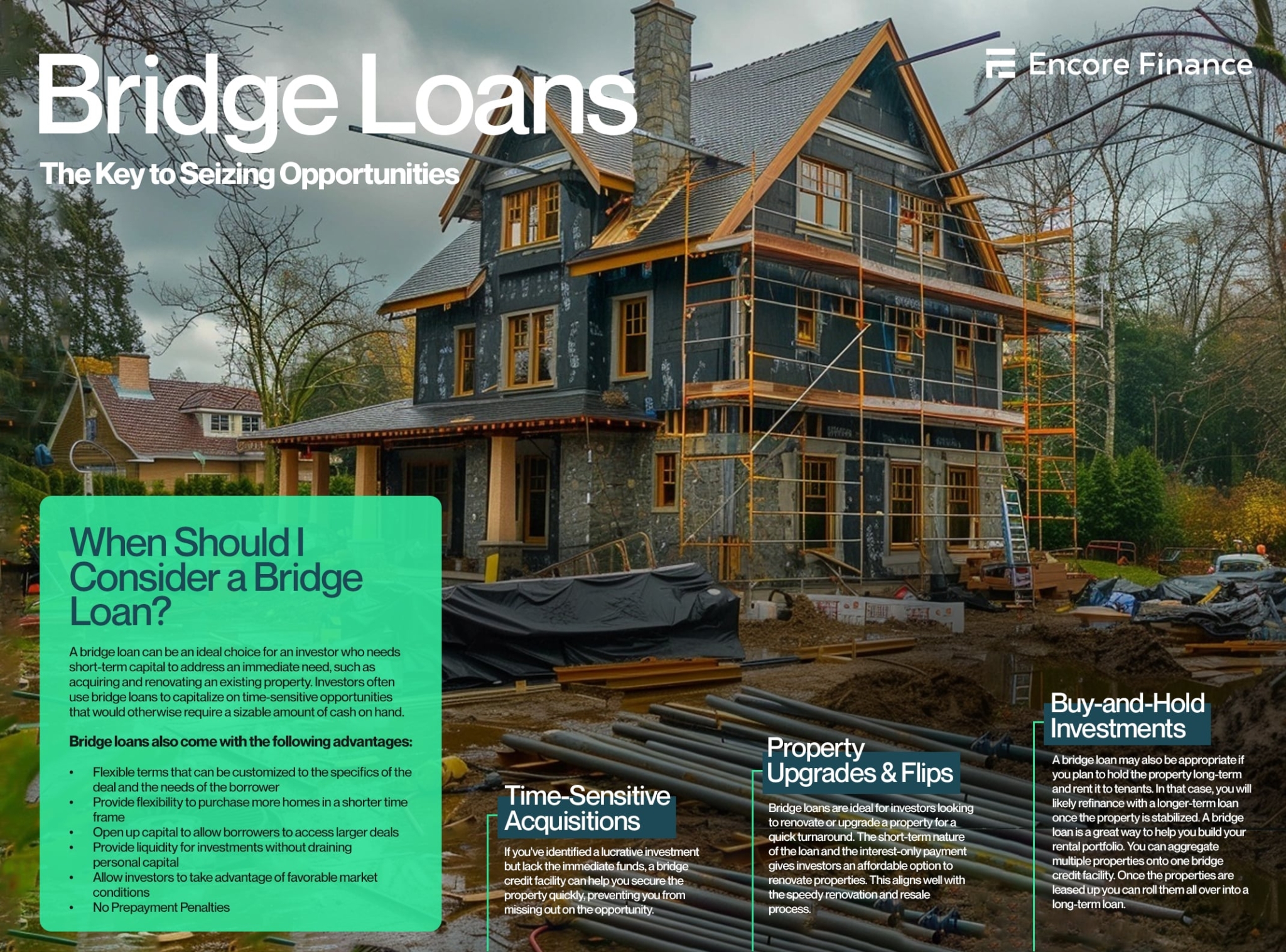
Bridge loans are worth it for residential real estate if you possess significant equity in your current home and must secure a new property quickly without a sale contingency. While they carry higher interest rates and fees than traditional mortgages, they provide the necessary liquidity to navigate competitive markets where sellers prioritize non-contingent offers.
The residential real estate landscape in 2026 remains characterized by high demand in specific metropolitan hubs and a continued emphasis on transaction speed. For many homeowners, the traditional "sell first, then buy" sequence is not only inconvenient but can lead to being priced out of the market during the transition. A bridge loan serves as a temporary financial span, allowing a buyer to leverage the equity in their existing home to fund the down payment and closing costs of a new one. However, the decision to utilize this instrument requires a nuanced understanding of the costs, risks, and specific market conditions.
The Mechanism of a Residential Bridge Loan
A bridge loan, often referred to as "gap financing," is a short-term loan typically lasting from six months to one year. It is designed to be repaid immediately upon the sale of the borrower's current residence. Unlike a standard mortgage, which is underwritten primarily based on long-term income stability and the value of a single property, a bridge loan is often "cross-collateralized." This means the lender places a lien on both the current home and the new property being purchased.
In the 2026 lending environment, bridge loans are primarily offered by private lenders, credit unions, and the specialized lending arms of major banks. They are structured to provide enough capital to pay off the existing mortgage on the first home (if one exists) and provide the down payment for the second. Some structures allow the borrower to keep their current mortgage in place and take the bridge loan as a second lien, though this depends heavily on the borrower’s debt-to-income (DTI) ratio.
The "exit strategy" is the most critical component of the bridge loan mechanism. Lenders rarely approve these loans without a clear, documented plan for repayment—usually the finalized sale of the primary residence. If the market cools or the home fails to sell within the term, the borrower faces significant financial pressure, as bridge loans are not typically designed for long-term carry.
Analyzing the Costs and Fees in 2026
To determine if a bridge loan is "worth it," one must first quantify the premium paid for this convenience. Bridge loans are significantly more expensive than conventional 30-year fixed-rate mortgages or even Home Equity Lines of Credit (HELOCs).
Interest Rates and Points
As of 2026, interest rates for residential bridge loans generally hover between 2% and 4% above standard mortgage rates. If a conventional mortgage is at 6.5%, a bridge loan might range from 8.5% to 10.5%. Furthermore, lenders almost always charge "points" or origination fees, typically ranging from 1% to 3% of the total loan amount. On a $500,000 bridge loan, an origination fee could immediately cost the borrower $5,000 to $15,000 before a single interest payment is made.
Closing and Administrative Costs
Borrowers must also account for:
- Appraisal Fees: Since the loan is often secured by two properties, you may be required to pay for two professional appraisals.
- Title Insurance and Legal Fees: Cross-collateralization involves complex legal documentation to ensure the lender's interest is protected across multiple jurisdictions or property types.
- Late Payment Penalties: Bridge loans often have aggressive penalty structures because the lender expects a short-term turnaround.
The "Double Carry" Scenario
The most overlooked cost is the monthly debt service. For the duration of the bridge loan, the borrower may be responsible for the interest-only payments on the bridge loan, the mortgage on the new home, and potentially the remaining balance on the old home (if it wasn't rolled into the bridge loan). This "double carry" can drain cash reserves rapidly, making the loan only viable for those with high liquidity.
Strategic Advantages: When the Value Outweighs the Cost
Despite the high price tag, bridge loans offer strategic advantages that can save money or secure a primary residence that would otherwise be lost.
Eliminating the Sale Contingency
In competitive 2026 markets, a "sale contingency"—a clause stating that the buyer will only purchase the new home if their old one sells—is often a deal-breaker for sellers. Sellers prefer "clean" offers. A bridge loan turns a contingent buyer into a non-contingent buyer, placing them on equal footing with all-cash investors. In a bidding war, this can be the difference between winning the home and losing it.
Avoiding the "Double Move"
Without a bridge loan, a homeowner who sells first must find temporary housing, pay for short-term rentals, and move their belongings into storage, only to move them again once a new home is found. The combined cost of two professional moves, storage fees, and the premium on short-term leases can easily exceed $15,000 to $20,000 in major urban areas. When compared to these "soft costs," the interest and fees of a bridge loan often appear much more reasonable.
Capitalizing on Immediate Opportunities
Occasionally, a "dream home" or a significantly undervalued property hits the market. These opportunities do not wait for a 60-day escrow on a previous home. A bridge loan provides the agility to strike while the iron is hot, potentially securing a property that will appreciate at a rate that far outstrips the loan's short-term costs.
Risk Factors and Potential Pitfalls
The primary danger of a bridge loan is market volatility. If the real estate market in your specific neighborhood shifts or interest rates spike, your home may sit on the market longer than the 6-month or 12-month term of the loan.
The Foreclosure Risk
If the bridge loan term expires and the original home has not sold, the lender has the right to foreclose. While many lenders will offer short-term extensions for an additional fee, they are under no legal obligation to do so. This puts the borrower in a position of extreme weakness, often forcing them to accept a low-ball "fire sale" price for their home just to satisfy the debt.
Underestimation of Time-to-Close
In 2026, while digital processing has sped up many aspects of lending, physical inspections, repairs, and buyer mortgage approvals still take time. Borrowers often underestimate how long it takes to stage, list, and close a sale. A "90-day" bridge loan is rarely sufficient; experts recommend a minimum 6-month term to provide a safety buffer.
Comparison of Short-Term Financing Options
Before committing to a bridge loan, it is essential to compare it against other equity-based tools. The following table outlines the key differences in the 2026 market.
| Feature | Bridge Loan | HELOC | Cash-Out Refinance |
|---|---|---|---|
| Typical Term | 6–12 Months | 10–20 Years | 15–30 Years |
| Interest Rate | High (8%–11%) | Variable (Prime + %) | Moderate (Fixed) |
| Approval Speed | Fast (2–3 weeks) | Moderate (4–6 weeks) | Slow (45+ days) |
| Monthly Payment | Usually Interest-Only | Interest-Only or P+I | Principal + Interest |
| Best Use Case | Competitive buying | Renovations/Long-term | Debt consolidation |
| Contingency | Removes Sale Contingency | Removes Sale Contingency | Removes Sale Contingency |
Eligibility and Prerequisites for Approval
Lenders in 2026 have maintained strict standards for bridge financing to avoid the "bridge-to-nowhere" scenarios seen in past cycles. To qualify, you generally need to meet the following criteria:
- Substantial Equity: Most lenders require a maximum Loan-to-Value (LTV) ratio of 80% across both properties. This means you typically need at least 20% to 30% equity in your current home to make the math work.
- Excellent Credit Score: Because these are considered higher-risk, short-term instruments, a credit score of 720 or higher is usually required to access the best rates.
- Proven Exit Strategy: You must demonstrate that your current home is in "marketable" condition. Some lenders may require a Broker Price Opinion (BPO) or a pre-listing agreement with a reputable real estate agency before approving the funds.
- Debt-to-Income (DTI) Resilience: Even though the loan is short-term, the lender will calculate whether you can technically afford all outgoing debt payments simultaneously if the home sale is delayed.
Common Mistakes to Avoid
Even if a bridge loan is the right choice on paper, execution errors can make it a financial burden.
- Over-leveraging: Do not take out the maximum amount offered. Borrow only what is necessary for the down payment and closing costs to keep your interest payments manageable.
- Ignoring the "As-Is" Value: Homeowners often overestimate what their home will sell for. If you base your bridge loan on an inflated sale price and the home sells for 10% less, you may not have enough to cover the loan balance.
- Failing to Shop Around: Many people simply use the bridge loan product offered by their current mortgage holder. However, private "hard money" lenders or local credit unions often have more flexible terms or lower origination fees.
- Neglecting the New Mortgage: Ensure that the bridge loan does not disqualify you from the permanent mortgage on your new home. Some conventional lenders see the bridge loan as a significant liability that pushes your DTI over the limit.
FAQs
Can I get a bridge loan if my house is already under contract?
Yes, and this is actually the ideal scenario. If you have a signed purchase agreement for your current home with a firm closing date, lenders view the bridge loan as significantly lower risk. You may even be able to negotiate a lower interest rate or reduced fees because the "exit" is already guaranteed.
What happens if I can't pay back the bridge loan on time?
If the term ends and you haven't sold the property, you must either refinance the bridge loan into a different type of debt (like a HELOC or a second mortgage) or request an extension from the lender. Extensions usually involve paying another point (1% of the loan) and potentially a higher interest rate. If no agreement is reached, the lender can initiate foreclosure.
Are bridge loans available for investment properties?
Yes, but the terms differ. Residential bridge loans for owner-occupied "fix-and-flip" or "buy-and-hold" transitions are common, but they are often classified as business-purpose loans. These may have even higher rates but fewer consumer protection regulations than a loan for a primary residence.
Is a HELOC better than a bridge loan?
A HELOC is generally better if you have the time to set it up before you list your home for sale. HELOCs have lower interest rates and longer repayment terms. However, many lenders will not open a new HELOC on a home that is already listed for sale. Therefore, the bridge loan is often the only option left once the moving process has officially begun.
Do I need a home inspection for a bridge loan?
The lender usually requires an appraisal rather than a full home inspection. However, because the loan relies on the sale of your home, any major structural issues that could derail a future buyer's mortgage will be a concern for the bridge lender.
Final Recommendation: Deciding Your Path
A bridge loan is a high-performance financial tool that should be used with precision. It is worth it if you are moving from a high-demand area where your home is guaranteed to sell quickly, and you are moving into a market where "cash-like" offers are the only way to win.
Next Steps:
- Consult a Realtor: Get a realistic Net Sheet to see exactly how much equity you will have after commissions and closing costs.
- Speak to a Mortgage Broker: Ask about "bridge-to-perm" programs that bundle the bridge loan and the new mortgage together, which can sometimes reduce total closing costs.
- Evaluate Your Cash Reserves: Ensure you have at least six months of "double carry" payments in the bank to avoid panic if your home sale hits a snag.
If your current home is unique, luxury-tier, or in a slow-moving market, the risk of a bridge loan likely outweighs the benefits. In those cases, a traditional contingent offer or selling first and moving into temporary housing remains the safer, albeit more tedious, financial path.