An Arizona auto insurance card serves as official proof that you maintain the state-mandated minimum financial responsibility coverage required to operate a motor vehicle on public roadways. Drivers in Arizona must carry this documentation—either in physical paper format or in an accessible digital format—whenever they are operating a vehicle to comply with Arizona Revised Statutes regarding vehicle registration and financial responsibility.
The Legal Framework of Financial Responsibility in Arizona
Arizona law operates under a strict financial responsibility mandate. Under the Arizona Revised Statutes (A.R.S.) § 28-4133, every owner of a motor vehicle required to be registered in the state must maintain financial responsibility in the form of a motor vehicle liability insurance policy, a surety bond, or a certificate of deposit.
The insurance card acts as the primary tool for law enforcement and the Arizona Department of Transportation (ADOT) Motor Vehicle Division (MVD) to verify that your vehicle is compliant. When you are pulled over by a law enforcement officer or if you are involved in a traffic accident, you are legally required to present this evidence. Failing to provide proof of insurance can lead to significant penalties, including the suspension of your vehicle registration and, in some cases, the suspension of your driver’s license.
Minimum Coverage Requirements
To hold a valid insurance card in Arizona, your policy must meet specific minimum liability limits. As of 2026, these state-mandated requirements are:
- $25,000 for bodily injury or death of one person in any one accident.
- $50,000 for bodily injury or death of two or more persons in any one accident.
- $15,000 for injury to or destruction of property of others in any one accident.
It is important to understand that these figures represent the minimum legal threshold. Many insurance experts recommend higher limits to protect your personal assets in the event of a significant liability claim, as medical costs and property damage repairs often exceed these baseline state requirements.
Physical vs. Digital Insurance Cards
Modern insurance practices have evolved to accommodate digital integration. In Arizona, you are not strictly required to carry a paper copy of your insurance card. Per state regulations, law enforcement officers are required to accept electronic proof of insurance displayed on a mobile device, such as a smartphone.
| Feature | Physical Insurance Card | Digital Insurance Card |
|---|---|---|
| Accessibility | Stored in glove box or wallet | Accessed via mobile app or email |
| Durability | Subject to wear and tear | Available as long as device is charged |
| Verification | Immediate visual inspection | Requires screen access for officer |
| Security | Susceptible to loss or theft | Password protected/biometric security |
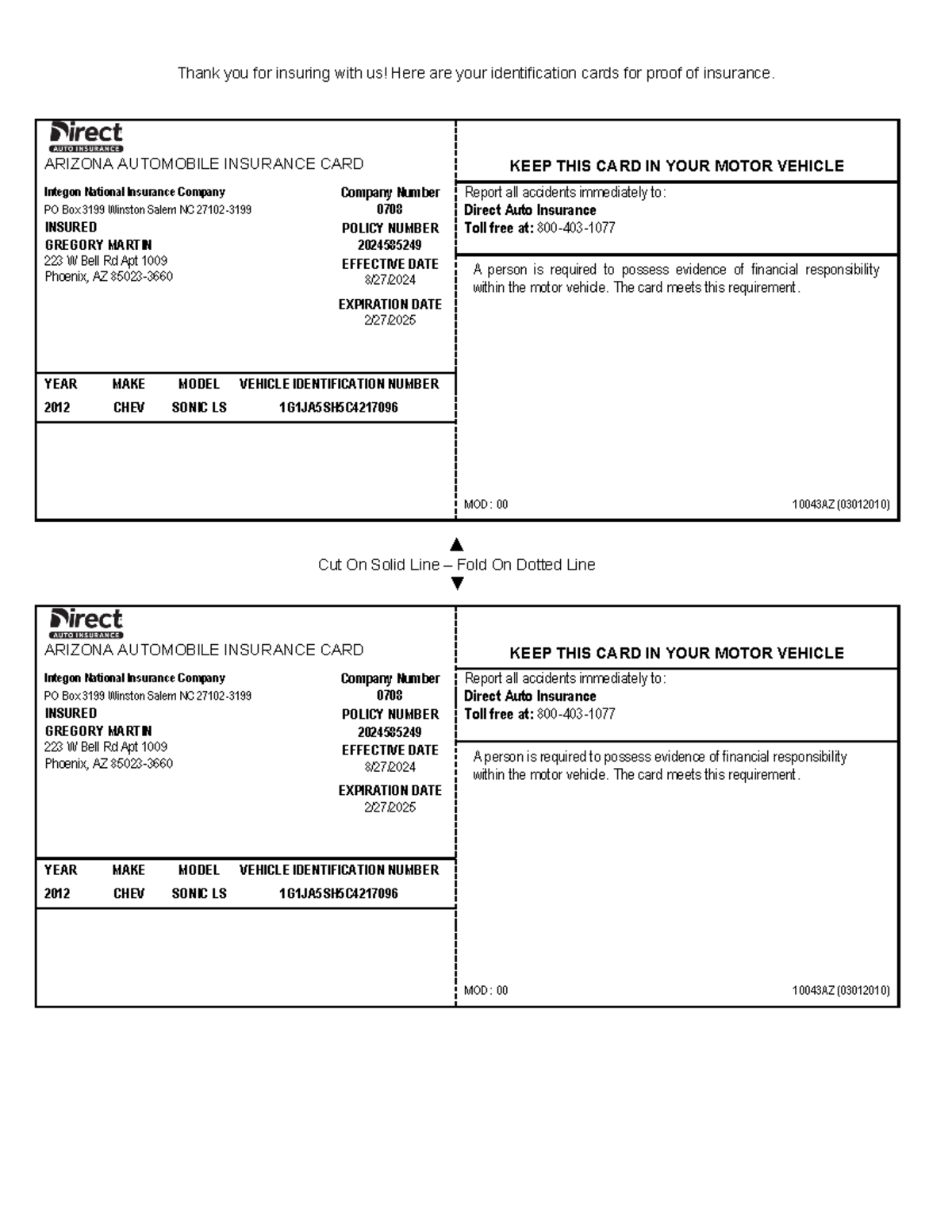
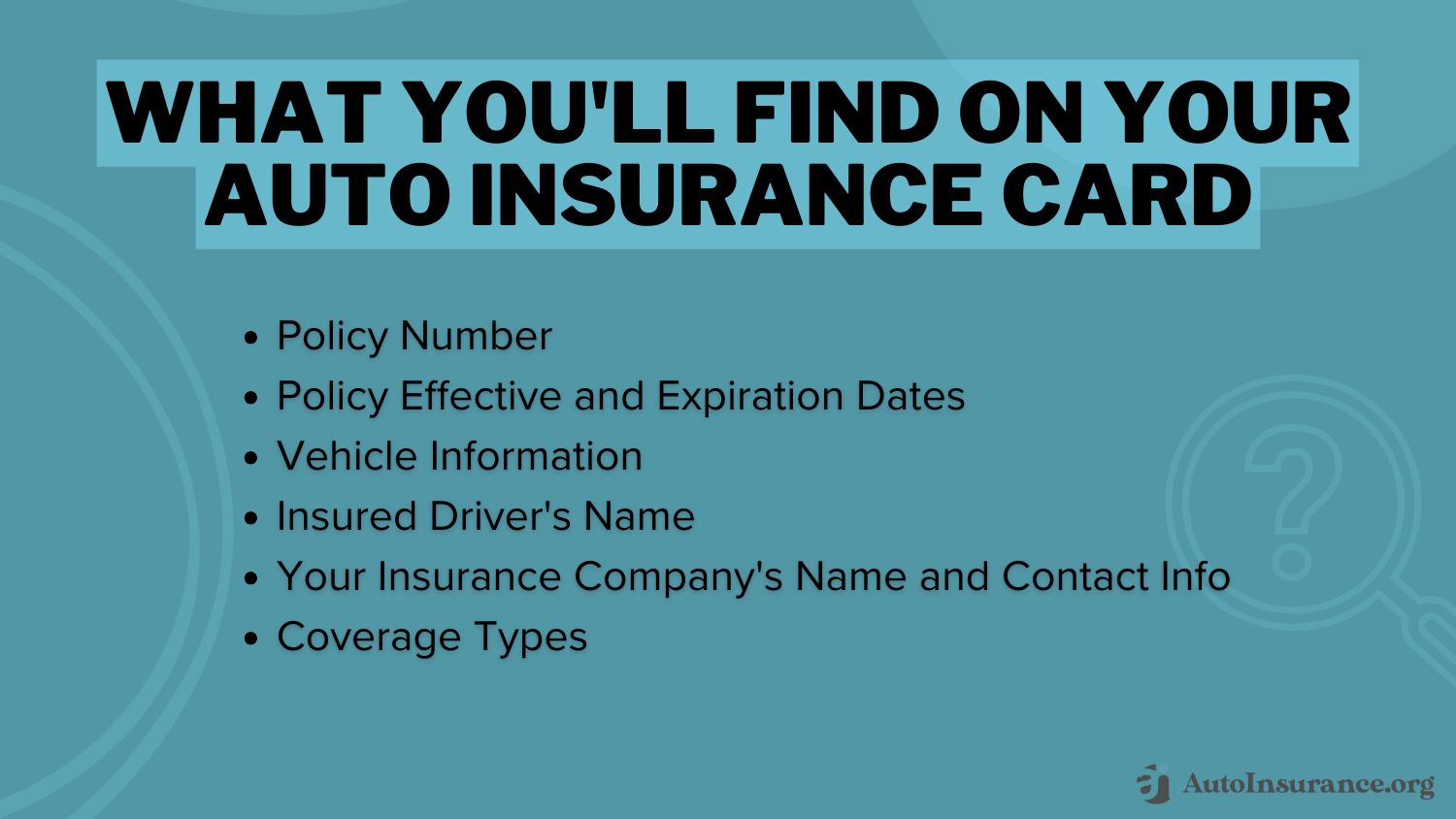
Regardless of the format you choose, the information on the card must be current. The document typically contains the name of the insured, the vehicle description (often including the VIN), the policy number, and the effective dates of the policy coverage.
What Information Must Be Present
Your Arizona auto insurance card is a formal legal document, and its validity depends on the accuracy of the information displayed. Whether you receive it via the mail or download it from your insurer’s web portal, ensure it contains the following mandatory data points:
- Insurance Company Name: The legal name of the carrier providing the coverage.
- Policy Number: The unique identifier assigned to your specific insurance contract.
- Effective Dates: The exact start and expiration dates of your policy period.
- Vehicle Identification Number (VIN): This links the insurance policy directly to the specific vehicle registered with the Arizona MVD.
- Policyholder Information: The name and address of the person or entity insured.
If you purchase a new vehicle, update your address, or switch providers, you must ensure that your card reflects these changes immediately. An insurance card with an expired date or an incorrect VIN is functionally useless during a traffic stop or at an MVD office.
How to Retrieve Your Insurance Card
If you have misplaced your physical copy or cannot locate your digital version, retrieving a new one is generally a straightforward process that takes only a few minutes.
- Mobile Applications: Most major auto insurance providers offer proprietary apps that allow you to view, download, or print your proof of insurance instantly. This is often the fastest method.
- Online Account Portals: You can log in to your insurer’s official website, navigate to the “Documents” or “Policy Management” section, and download a PDF version of your current insurance ID card.
- Agent Request: If you work with a local insurance agent or broker, they can usually issue a temporary ID card or mail you a fresh set of documents upon request.
- Email Requests: Many insurers provide the option to have an electronic copy sent directly to your registered email address, which can then be saved to your mobile device’s digital wallet (such as Apple Wallet or Google Wallet).
Troubleshooting Common Issues
Drivers occasionally encounter situations where their insurance card is not recognized or is missing essential details. One common issue is the "MVD Verification" error. Arizona uses a system called the Arizona Insurance Verification System (AZIVS). This system electronically verifies insurance coverage using information provided by your insurance company.
If you recently changed your policy or updated your vehicle registration and receive a notice from the MVD claiming you are uninsured, the data may simply be in the process of updating in the AZIVS database. In these instances, keep a printed copy of your insurance card in your vehicle as a backup while the electronic system synchronizes.
Additionally, always ensure the name on your registration matches the name on your insurance card. If you are leasing a vehicle, the insurance card may list the lienholder or the leasing company as the owner, which is standard practice and should not cause issues, provided your name is listed as the primary driver.
Frequently Asked Questions
1. Is a screenshot of my insurance card valid in Arizona? Yes, most law enforcement agencies accept a saved image or screenshot of your digital insurance card. However, it is a best practice to use the official mobile application from your insurance provider, as it guarantees that the information is current and can be updated in real-time.
2. What should I do if I get pulled over and forgot my card? Remain calm and inform the officer that you have coverage. Many officers can verify insurance status through the AZIVS database using your vehicle’s VIN or license plate number. If you cannot produce proof, you may be issued a citation. If you are later able to prove you had active insurance at the time of the stop, the court may dismiss the citation, though you might still be responsible for administrative fees.
3. Does my insurance card cover me if I rent a car? Generally, your personal auto insurance policy extends to rental vehicles in the United States, but this depends on your specific coverage. Always check with your insurance provider before renting a vehicle. You do not need to update your insurance card to include a rental car; your standard policy typically covers "non-owned" vehicles up to the policy's limits.
4. How often should I print a new card? You should update your card whenever your policy renews or if you make any changes to your coverage, address, or vehicle. If you rely on digital copies, you do not need to print new cards unless you prefer having a paper backup in your glove compartment.
5. Does my Arizona insurance card work in other states? Yes. Your Arizona insurance card is recognized in all 50 states. If you are traveling outside of Arizona and are involved in an incident, your proof of insurance will serve as evidence of your financial responsibility, regardless of which state you are in.
Recommendation for Drivers
To ensure seamless compliance, maintain a dual-system approach. Keep a physical copy of your current insurance card inside your vehicle’s glove box or center console alongside your vehicle registration. Simultaneously, ensure you have your insurer’s mobile application installed on your primary smartphone. This combination protects you against scenarios where your phone battery might be depleted or if a digital screen becomes unreadable due to glare or damage. Regularly verify that the effective dates on your card are current, and set a reminder in your calendar for your policy renewal dates to ensure you never have a lapse in coverage.