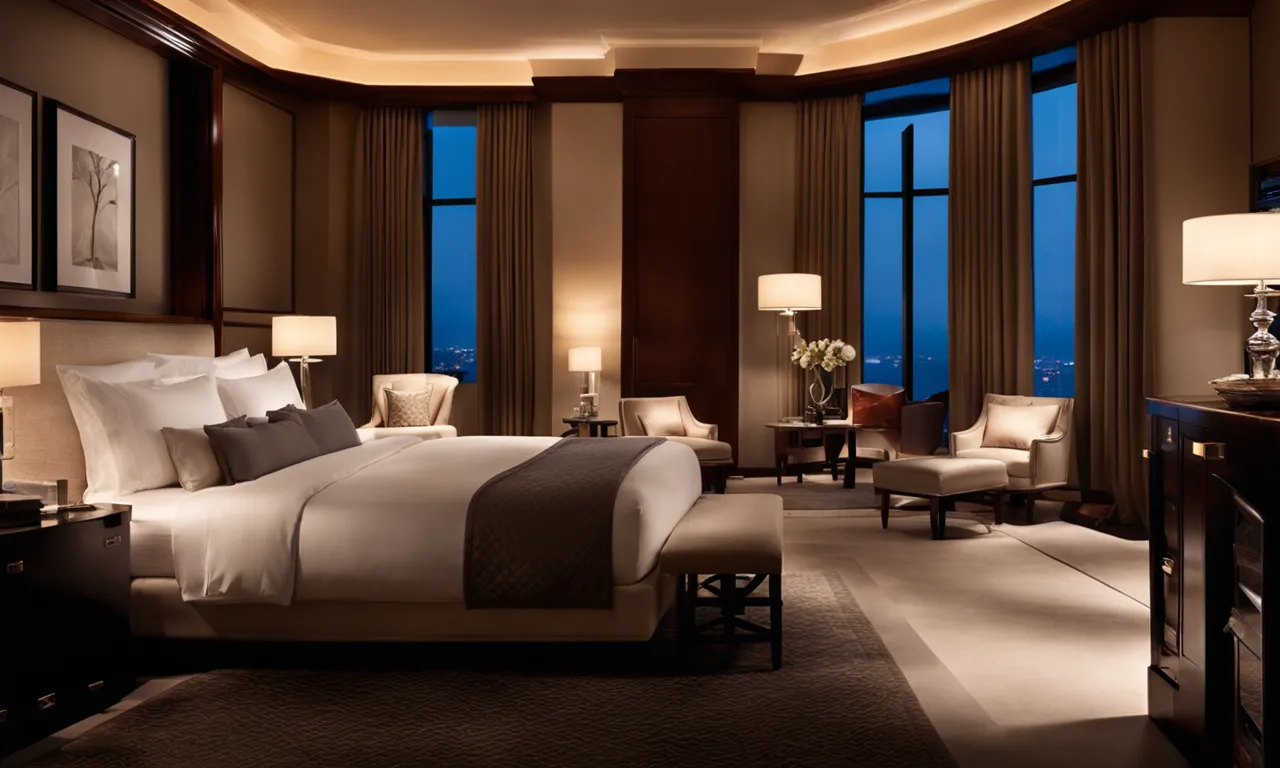
Technically, there is no official, universally recognized rating system that includes a 7-star category for hotels. Most global hospitality standards cap at 5 stars, which denotes luxury and high-end service. While the term "7-star" is frequently used in marketing and media to describe ultra-exclusive properties, it is not an industry-standard classification or an accredited credential.
The Origin and Evolution of Hotel Star Ratings
To understand why the concept of a 7-star hotel persists despite the absence of an official rating, one must first look at how hotel star ratings function. Historically, the star-rating system emerged as a way for travelers to gauge the level of amenities, facilities, and service quality they could expect from an establishment.
In the mid-20th century, the system was relatively simple: 1 star meant basic, no-frills accommodations, while 5 stars represented luxury, fine dining, and personalized service. While these ratings are used globally, there is no single international body that mandates them. Instead, ratings are often awarded by local government agencies, national tourism boards, or private organizations like Forbes Travel Guide or the American Automobile Association (AAA).
The industry standard generally peaks at 5 stars. Some countries or regions have adopted a "5-star superior" or "deluxe" designation to account for properties that exceed standard 5-star expectations, but the scale itself does not officially move into the 6th or 7th tier.
Marketing vs. Reality: Where Does "7-Star" Come From?
The term "7-star hotel" is almost exclusively a marketing construct. It gained significant traction in the late 1990s and early 2000s, largely surrounding the opening of the Burj Al Arab in Dubai. When the property debuted, journalists and travel writers—impressed by the unparalleled opulence, gold-leaf interiors, and extreme private services—began referring to it as "the world’s only 7-star hotel."
The hotel itself has never officially branded itself as a 7-star property, nor has any accreditation body awarded it such a status. However, the media-generated label proved so effective for branding that it became ingrained in the public consciousness. Since then, any hotel aiming to signal that it offers a level of luxury far beyond a standard 5-star experience often gets tagged with the "7-star" label in headlines. This is a deliberate strategy to differentiate high-end luxury assets from the rest of the market.
What Defines Ultra-Luxury Hospitality?
Since there is no "7-star" metric to measure, how does one distinguish an ordinary 5-star hotel from one perceived as "beyond" 5 stars? The difference lies in service delivery and hyper-personalization. Properties often associated with the 7-star moniker, such as the Burj Al Arab (Dubai), the Emirates Palace (Abu Dhabi), or the Pangu 7 Star Hotel (Beijing), typically share specific characteristics that elevate the guest experience:
- Hyper-Personalized Butler Service: Beyond a concierge, these guests are often assigned a dedicated butler who anticipates needs before they are voiced, from unpacking luggage to organizing private excursions.
- Gold and Rare Materials: A heavy emphasis on architectural opulence, including the use of 24-carat gold leaf, rare marble, and high-end artwork.
- Privacy and Security: Advanced security measures, private entrances, and exclusive access points that ensure high-profile guests remain entirely shielded from the public.
- Space-to-Guest Ratio: A massive ratio of staff members to guests, ensuring that service is virtually instantaneous at all hours of the day.
- Tech-Forward Features: Cutting-edge in-room automation, private theaters, and bespoke technology integration that 5-star properties might not offer as standard.
Comparative Standards of Luxury
It is helpful to compare what guests actually receive when booking at the top tier of international luxury. While the stars themselves are informal at the top of the chain, professional rating systems use rigorous checklists to evaluate quality.
| Metric | Standard 5-Star Hotel | "Ultra-Luxury" (Non-Official) |
|---|---|---|
| Service Model | Excellent, responsive staff | Proactive, predictive, 24/7 butler |
| Room Configuration | Standard suites or luxury rooms | Massive, bespoke multi-room villas |
| Dining | Multiple high-end options | Celebrity chefs, private dining, 24/7 |
| Guest Privacy | Secure, controlled access | Private entry, high-security wings |
| Amenities | High-end linens, pool, spa | Private jet transfers, yacht access |
Challenges of Non-Standardized Ratings
The persistence of the "7-star" myth presents several challenges for travelers. When a hotel is marketed as "7-star," it creates an expectation of perfection that no physical entity can realistically sustain. Because there are no agreed-upon criteria for what a 7th star would look like, the term is purely subjective. A property could potentially self-proclaim a 10-star status without breaking any international law, provided they are not misleading consumers about specific, verifiable amenities like the presence of a pool or the size of a room.
For the traveler, this means that star ratings above 5 are essentially meaningless as a baseline for comparison. Instead, it is more beneficial to look for:
- Independent Reviews: Verified, high-quality reviews from platforms that focus on luxury travel.
- Forbes Travel Guide Ratings: This organization specifically uses a star system (up to 5) based on hundreds of objective criteria, which remains the industry benchmark for true luxury.
- Recent Accolades: Awards from reputable organizations such as the World Travel Awards or Condé Nast Traveler often carry more weight than self-proclaimed "star" rankings.
Common Misconceptions
A frequently encountered error is the belief that government authorities regulate the upper limit of hotel stars. While government tourism boards do monitor star ratings, they generally do so to ensure the safety and basic standard of mid-range and lower-tier hotels. At the ultra-luxury level, the "stars" are largely influenced by brand reputation and perception.
Another misconception is that the Burj Al Arab is the only hotel to claim such a status. Throughout the 2010s and 2020s, hotels in places like Milan, Istanbul, and Saudi Arabia have seen their marketing departments lean into the "7-star" language. None of these claims have been validated by any reputable hospitality accreditation entity, emphasizing that the term is a rhetorical device rather than a professional classification.
Frequently Asked Questions
Are there any official 6 or 7-star hotels? No. There is no official, recognized international rating system that goes beyond 5 stars. Any hotel using a "6-star" or "7-star" label is using it as a marketing term to convey exceptional luxury.
Why do some hotels claim to be 7-star? Hotels use the term to distinguish themselves from the thousands of other 5-star properties globally. It signals to high-net-worth individuals that the service and amenities provided are meant to be significantly more exclusive than a standard luxury offering.
Which hotel is the most famous for being called 7-star? The Burj Al Arab in Dubai is the most famous example. It was the first property widely labeled as such by the media upon its opening, setting a precedent for other hotels to follow in using the, albeit unofficial, designation.
How can I verify if a luxury hotel is truly high-end? Ignore the star count above 5 and focus on objective indicators: the number of staff members per room, the inclusion of private butler services, membership in ultra-luxury hotel associations like The Leading Hotels of the World, and verified reviews from reputable luxury-focused travel publications.
Is a 5-star hotel in one country the same as in another? Not necessarily. Because ratings are often managed by local tourism boards, a 5-star hotel in a developing tourism market may have different criteria than a 5-star hotel in a mature market like Switzerland or France. Always check the specific property's recent reputation and awards.
Final Recommendation
When researching ultra-luxury accommodations for your next trip, do not let the term "7-star" influence your decision. Instead, prioritize properties that are recognized by established, independent organizations like the Forbes Travel Guide. Focus on specific services, such as dedicated butler assistance and private transfer arrangements, rather than abstract, unofficial ratings. Evaluate the property based on the specific amenities relevant to your travel goals—whether that is a private beach, specific culinary experiences, or high-level security—to ensure your stay meets your personal standard of excellence.