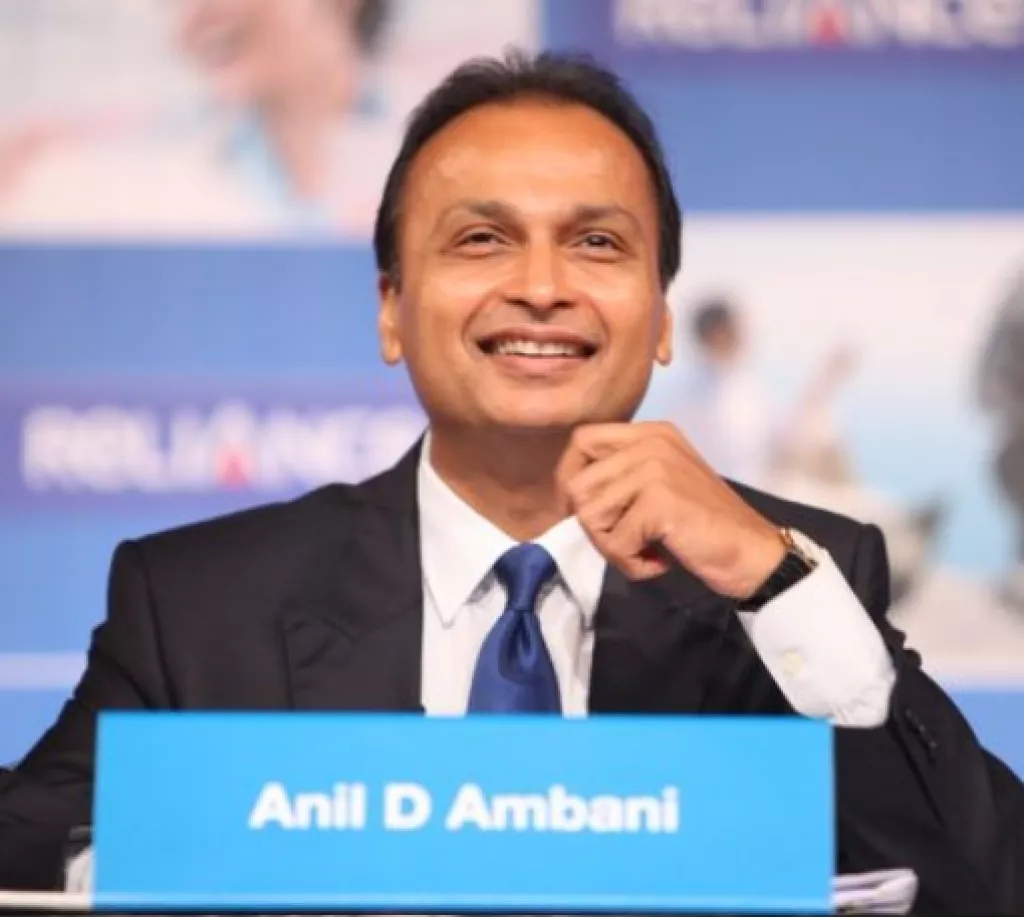
Anil Ambani's corporate trajectory represents one of the most dramatic shifts of fortune in global business history. After inheriting choice high-growth assets following the 2005 split of Reliance Industries, his wealth peaked in 2008 before unwinding through heavy debt, market disruptions, and protracted insolvency proceedings. Today, restructuring efforts mark a quiet attempt at operational recovery.
The Great Reliance Split of 2005
The story of Anil Ambani’s modern business empire began with the division of India’s largest private enterprise, Reliance Industries Limited (RIL). Following the death of founder Dhirubhai Ambani in July 2002 without a written will, operational friction emerged between his two sons, Mukesh Ambani and Anil Ambani. The public rift centered on corporate governance, decision-making authority, and strategic direction.
In June 2005, their mother, Kokilaben Ambani, brokered a formal demerger agreement to partition the conglomerate:
- Mukesh Ambani retained the core industrial assets, including oil refining, petrochemicals, oil and gas exploration, and textile manufacturing under Reliance Industries Limited.
- Anil Ambani assumed control of the high-growth, consumer-facing, and service-oriented divisions. These were grouped under the newly formed Reliance Anil Dhirubhai Ambani Group (Reliance ADAG), later rebranded simply as the Reliance Group.
The assets allocated to Anil Ambani were widely viewed by market analysts at the time as the growth engines of the 21st century. They included Reliance Communications (RCom) in telecommunications, Reliance Energy (formerly BSES, later Reliance Infrastructure) in power generation and distribution, Reliance Capital in financial services, and newly created ventures in media, entertainment, and health care.
A crucial component of the 2005 settlement was a ten-year non-compete clause. This agreement restricted Mukesh Ambani from entering telecommunications, power, and financial services, giving Anil Ambani a clear field to expand these businesses across India.
The Peak Years: Rapid Expansion and Market Euphoria (2006–2008)
Following the split, Anil Ambani embarked on an aggressive expansion campaign driven by public capital markets and heavy debt financing. His vision aimed to build infrastructure, provide energy, and dominate digital communications for India's rapidly growing economy.
- 2005 Reliance Split
- Aggressive Leverage & Expansion
- RCom Telecom Buildout
- Reliance Power Mega Projects (UMPPs)
- Reliance Capital & Global Media Deals
- Global Financial Crisis & Disruptions
- 2008 Market Collapse
- CDMA vs GSM Technology Trap
- Regulatory & Fuel Allocation Hurdles
- Debt Crisis & Insolvency
- RCom NCLT Bankruptcy (2019)
- Personal Guarantees & Court Cases
- Reliance Capital Asset Sales
- Restructuring & Debt Reduction
- One-Time Settlements (OTS)
- Focus on Defense, Clean Energy & EPC
The Reliance Power IPO
In January 2008, Reliance Power launched what was then the largest Initial Public Offering (IPO) in the history of the Indian capital market. The IPO sought to raise ₹11,563 crore (approximately $3 billion at the time) to finance massive power projects, including Ultra Mega Power Projects (UMPPs) at Sasan, Tilaiya, and Krishnapatnam.
The offer generated unprecedented investor enthusiasm, getting fully subscribed within one minute of opening and ultimately receiving over 70 times oversubscription. However, the listing coincided with the onset of the 2008 Global Financial Crisis. On its trading debut in February 2008, the stock tumbled below its issue price, prompting the company to issue bonus shares to retail investors to soften the impact.
Global Media and Infrastructure Ambitions
During this period, Anil Ambani expanded into international media and entertainment. In 2008, Reliance Entertainment inked a landmark joint venture with Steven Spielberg's DreamWorks Studios, injecting over $325 million into the production company. The group also acquired major cinema chains in India and the United States (Adlabs, later Big Cinemas).
Concurrently, Reliance Infrastructure expanded into urban transport, securing high-profile Engineering, Procurement, and Construction (EPC) and Build-Own-Operate-Transfer (BOOT) contracts, including the Mumbai Metro Line 1 project and several national highway turnpikes.
By early 2008, Forbes listed Anil Ambani as the sixth richest person in the world, with an estimated net worth exceeding $42 billion.
Catalysts of the Downfall: High Debt and Technology Missteps
The rapid unwind of the Reliance Group’s fortune stemmed from structural operational challenges, aggressive leverage, capital-intensive expansion, and external technology shifts.
The RCom Telecom Trap: CDMA vs. GSM
Reliance Communications made an early technological commitment to Code Division Multiple Access (CDMA) networks for its wireless services. While CDMA offered efficient voice capacity, the global telecommunications industry overwhelmingly adopted Global System for Mobile Communications (GSM) as the standard for mobile data and international roaming.
As mobile consumption shifted from voice to data, RCom was forced to spend billions of dollars building a parallel GSM network. The company invested heavily in 3G spectrum auctions in 2010, taking on substantial bank credit.
| Key Causes of RCom's Financial Decline | Details |
|---|---|
| 1. CDMA Investment Trap | Heavy commitment to CDMA made migration to high-speed data expensive and complex. |
| 2. High Spectrum Costs | Massive debt taken to fund 3G and 4G spectrum acquisitions at government auction. |
| 3. Cancellation of Clause | Early expiration of non-compete allowed Mukesh Ambani's re-entry with Reliance Jio. |
| 4. Price War (2016) | Jio's free voice and cheap data destroyed traditional per-minute revenue models. |
In 2010, Mukesh and Anil Ambani renegotiated their original demerger agreement, canceling the non-compete clause. This paved the way for Mukesh Ambani to return to the telecommunications sector via Infotel Broadband, which later became Reliance Jio Infocomm.
When Reliance Jio commercially launched in September 2016 offering free voice calls and extremely cheap 4G VoLTE data, it disrupted the Indian telecom landscape. Incumbent operators faced severe revenue compression. RCom, already burdened by over ₹45,000 crore in debt, could not match Jio's capital expenditure requirements or price cuts. A proposed merger between RCom and Aircel collapsed in 2017, sealing RCom's financial distress.
Fuel and Regulatory Roadblocks in Power
Reliance Power’s large thermal power initiatives faced unexpected external headwinds:
- Coal Allocations: Regulatory shifts and legal interventions by public institutions invalidated several captive coal block allocations.
- Gas Price and Supply Disputes: A long-running legal battle between RCom/Reliance Natural Resources Limited (RNRL) and Mukesh Ambani’s RIL over gas pricing from the Krishna-Godavari (KG-D6) basin ended in 2010 when the Supreme Court of India ruled that government pricing guidelines superseded private family agreements.
- Imported Fuel Costs: Changes in Indonesian mining regulations significantly increased the cost of imported coal for coastal power stations like the Krishnapatnam plant, rendering original power purchase agreements (PPAs) economically unviable.
Legal Battles, Insolvency, and Debt Resolution
By 2018, defaults began cascading across multiple group entities. Creditors initiated proceedings under the Insolvency and Bankruptcy Code (IBC) to recover outstandings.
- Reliance Group Capital Structure Collapse
- Reliance Communications
- Debt > ₹45,000 Cr
- Filed for NCLT (2019)
- Ericsson Supreme Court Contempt Proceeding
- Reliance Capital
- RBI Board Supersession
- IBC Resolution Plan
- Acquired by IIHL (Hinduja Group)
- Reliance Infrastructure/Power
- Asset Sales (Roads/Transmission)
- Debt Settlements via OTS
- Pivot to Defense & Renewables
- Reliance Communications
The Ericsson Dispute and Supreme Court Ruling
In 2018, Swedish telecom equipment manufacturer Ericsson dragged RCom to court over unpaid dues of ₹550 crore. Despite undertakings given to the court, RCom missed payment deadlines. In February 2019, the Supreme Court of India held Anil Ambani in contempt of court, ordering him to pay Ericsson approximately ₹458 crore within four weeks or face a three-month prison sentence.
A day before the deadline expired in March 2019, Anil Ambani cleared the debt using funds provided by his brother Mukesh Ambani, averting incarceration.
International Legal Actions and Guarantee Claims
In 2019 and 2020, three state-backed Chinese banks—Industrial and Commercial Bank of China, China Development Bank, and Exim Bank of India—pursued legal action against Anil Ambani in the High Court of Justice in London. The banks sought enforcement of a $680 million personal guarantee securing loans made to RCom in 2012.
During these proceedings in February 2020, Anil Ambani stated in court filings that his net worth was "zero" after accounting for liabilities, and that his asset base had completely eroded.
Regulatory Action by SEBI
In August 2024, the Securities and Exchange Board of India (SEBI) issued a final order banning Anil Ambani and 24 other entities from the securities market for a period of five years. SEBI found evidence of illegal diversion of funds from Reliance Home Finance Limited (RHFL), a subsidiary of Reliance Capital, into entities associated with the promoter group. SEBI imposed a personal penalty of ₹25 crore on Anil Ambani and restrained him from holding key managerial positions in listed companies during the restriction period.
Comprehensive Status of Major Reliance Group Entities
The operational and financial trajectory of the primary businesses established under the 2005 split shows the extent of restructuring across the group:
| Enterprise / Entity | Original Strategic Vision | Peak Valuation & Performance Era | Catalyst for Financial Crisis | Resolution / Operational Status |
|---|---|---|---|---|
| Reliance Communications (RCom) | Wireless telecom leader using CDMA network. | Peak market capitalization exceeded ₹100,000 crore (2007–2008). | CDMA trap, high spectrum auction debt, price competition from Reliance Jio. | Admitted to NCLT insolvency in 2019. Wireless assets and fiber networks undergoing resolution. |
| Reliance Capital | Diversified financial services (insurance, mutual funds, broking). | Managed over ₹300,000 crore in assets under management (AUM). | High exposure to inter-corporate deposits, debt default propagation from group firms. | Reserve Bank of India superseded board in 2021. Acquired by IndusInd International Holdings Ltd (IIHL). |
| Reliance Power | Mega power generation portfolio (thermal, hydro, solar). | Record-breaking $3B IPO in Jan 2008; high retail participation. | Cancellation of coal blocks, expensive imported coal, unviable PPAs. | Debt significantly reduced through bank settlements. Shifting focus to solar energy and battery storage. |
| Reliance Infrastructure | EPC projects, metro rail, highways, defense manufacturing. | Major contracts including Mumbai Metro Line 1 and national toll roads. | Cost overruns, extended arbitrations, high corporate guarantee liabilities. | Cleared major bank liabilities via One-Time Settlements (OTS); expanding defense and EPC footprint. |
| Reliance Naval & Engineering | Defense shipbuilding and marine engineering (Pipavav shipyard). | Acquired Pipavav Defense in 2015 to target naval defense contracts. | Lack of new orders, execution delays, high working capital debt burden. | Corporate Insolvency Resolution Process (CIRP). Acquired by Swan Energy via NCLT process. |
Operational Recovery and Strategic Pivots
Following years of asset sales, debt resolution, and legal proceedings, the remaining publicly listed companies of the group—primarily Reliance Power and Reliance Infrastructure—have focused on clearing balance sheet liabilities to stabilize operations.
Balance Sheet De-leveraging
By executing One-Time Settlements (OTS) with commercial banks and raising capital through preferential equity issues, warrant allotments, and qualified institutional placements (QIP), both Reliance Power and Reliance Infrastructure reduced their bank debt significantly.
Key Financial Reconstruction Steps:
- Selling non-core assets (e.g., selling power transmission lines to Adani Transmission).
- Settling outstanding lender claims via bank-approved One-Time Settlement (OTS) schemes.
- Converting debt into equity or issuing preference shares to promoter group entities.
- Capital raising via QIPs to fund operational working capital without fresh term loans.
Strategic Focus Areas
- Renewable Energy: Reliance Power has shifted away from greenfield thermal plant construction, reallocating capital toward utility-scale solar installations and battery energy storage systems (BESS).
- Defense Manufacturing: Reliance Infrastructure continues to build out joint ventures in defense manufacturing, including alliances with international aerospace companies at the Dhirubhai Ambani Aerospace Park in Nagpur, Maharashtra.
- Engineering, Procurement, and Construction (EPC): The infrastructure arm maintains an operational focus on third-party EPC contracts and managing existing urban transit assets like Mumbai Metro Line 1.
Corporate Governance and Strategic Lessons
The trajectory of Anil Ambani’s enterprise provides critical insights into corporate finance, leverage management, and market dynamics within family-owned conglomerates.
1. The Dangers of Excess Leverage
Expanding capital-intensive infrastructure projects using short- to medium-term debt leaves a balance sheet vulnerable to macroeconomic shocks. When cash flows are delayed due to regulatory approvals or construction delays, interest costs rapidly eat away at equity value.
2. Technology Execution Risk
RCom’s long reliance on CDMA technology highlights the threat of technology lock-in. Companies that delay adapting to industry-wide shifts risk losing market share rapidly when disruptive competitors enter the market.
3. Non-Compete Clauses in Corporate Demergers
The cancellation of the non-compete clause in 2010 altered the strategic trajectory of both brothers' businesses. It demonstrated how long-term market positions can shift once regulatory or contractual boundaries are lifted.
Frequently Asked Questions
What caused the split between Mukesh Ambani and Anil Ambani in 2005?
Following the death of founder Dhirubhai Ambani in 2002 without a will, differences arose between the brothers over management control and strategic vision. Their mother, Kokilaben Ambani, arranged a demerger in 2005. Mukesh took control of oil, gas, and petrochemicals, while Anil received telecom, power, infrastructure, and financial services.
How did Reliance Communications fall into insolvency?
Reliance Communications suffered from an early commitment to CDMA technology, expensive 3G/4G spectrum acquisitions, and high debt. The launch of Reliance Jio in 2016 triggered a price war that eroded RCom's cash flows, making it impossible to service its debt. RCom entered insolvency proceedings in 2019.
What was SEBI's regulatory order against Anil Ambani?
In August 2024, SEBI banned Anil Ambani and 24 related entities from the Indian securities market for five years. The regulator cited fund diversion from Reliance Home Finance Limited to promoter-linked entities, imposing a ₹25 crore penalty on Ambani and barring him from executive roles in listed firms.
Did Mukesh Ambani assist Anil Ambani during his debt crisis?
Yes. In March 2019, Mukesh Ambani provided the funds required for Anil Ambani to pay ₹458 crore to Ericsson, fulfilling a Supreme Court mandate and preventing potential incarceration for contempt of court.
What is the current operational status of Reliance Power and Reliance Infrastructure?
Both companies have worked through debt restructuring, using asset sales and equity raises to reduce bank debt. Operational activities now center on renewable power, battery storage, EPC contracts, and targeted defense manufacturing joint ventures.
Key Takeaways for Financial Analysts and Investors
- Capital Allocation Matters: High capital growth targets must be balanced against debt capacity and market cycle dynamics.
- Disruption Can Accelerate Unwind: Highly leveraged firms have minimal resilience when hit by external market changes or regulatory shifts.
- Resolution Mechanisms Work: India's Insolvency and Bankruptcy Code framework has facilitated systemic debt resolution, allowing stressed assets to be reallocated while legacy enterprises restructure.