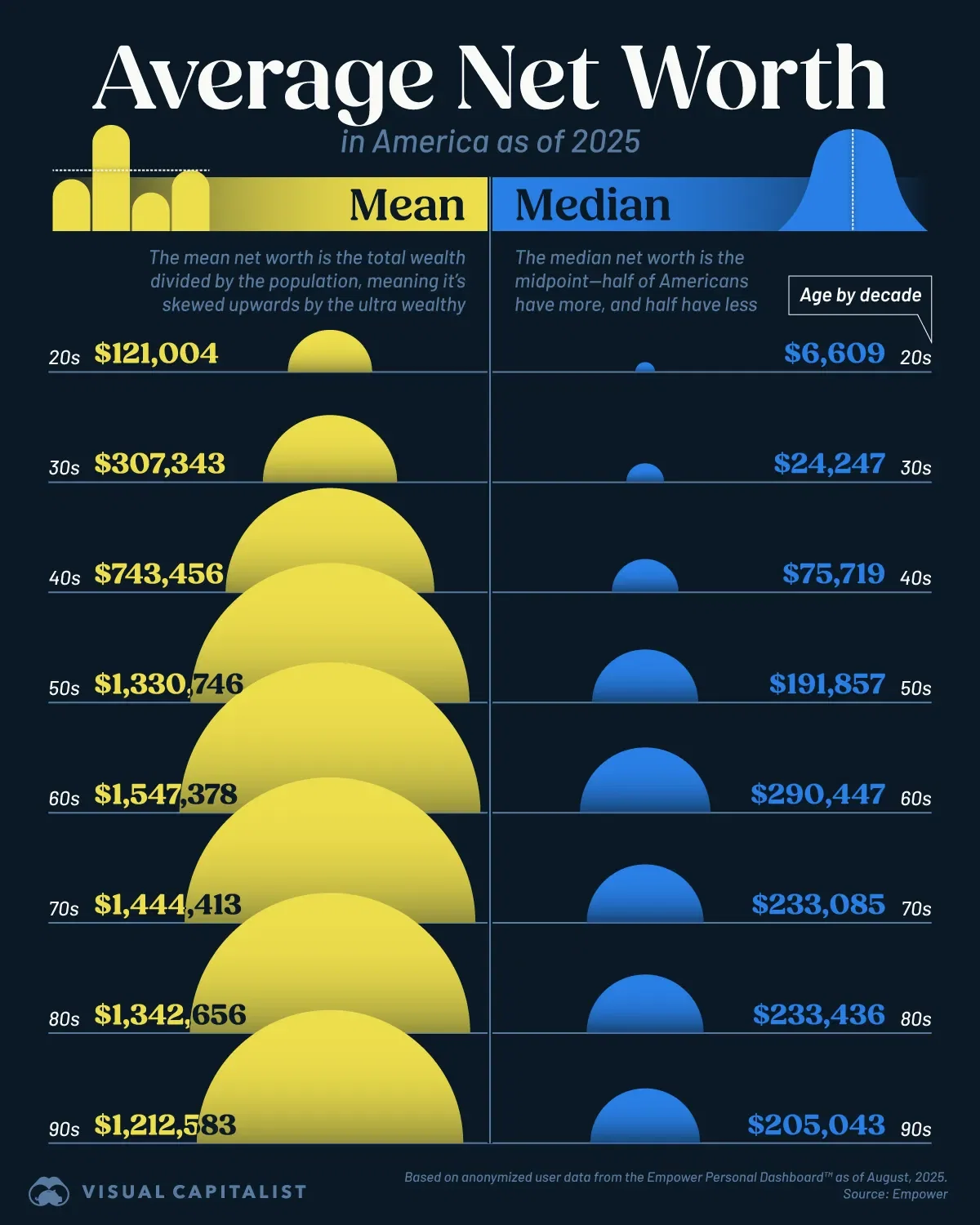
An American net worth study reveals persistent and expanding wealth gaps driven by structural disparities in asset ownership, income growth, and generational inheritance. These studies highlight how economic stratification shapes access to financial stability, housing, and long-term security across different demographic groups.
Understanding the Landscape of American Wealth Disparities
Analyzing economic inequality in the United States requires looking beyond basic annual income figures. While salary data captures immediate cash flow, net worth reflects total accumulated financial health, accounting for both assets—such as real estate, retirement accounts, stocks, and business equity—and liabilities like mortgages, student loans, and credit card debt. When researchers conduct a comprehensive American net worth study, they consistently find that accumulated wealth is distributed far more unevenly than income alone.
This deep concentration of financial resources stems from decades of compounding economic trends. Households with high initial capital can leverage compounding returns, whereas households living paycheck to paycheck struggle to build emergency savings, let alone invest in appreciating assets. Understanding these disparities requires examining the macroeconomic factors, institutional practices, and systemic barriers that prevent broad-based wealth accumulation. Without targeted interventions or shifts in economic policy, the gap between asset-rich and asset-poor households continues to widen, fundamentally altering the trajectory of successive generations.
Key Findings from Recent Economic Studies
Major economic evaluations, such as the Federal Reserve’s Survey of Consumer Finances and independent analyses by academic institutions, consistently map the contours of American economic inequality. These findings illustrate a stark division in how different segments of the population experience financial security.
- Top-Tier Concentration: The upper echelons of earners and asset holders control a disproportionate share of total national net worth, with the top 10 percent holding a commanding majority of corporate equities and mutual fund shares.
- The Middle-Class Squeeze: Middle-income households rely heavily on primary residences for wealth storage, making their net worth uniquely vulnerable to regional housing market corrections and interest rate fluctuations.
- Asset-Poor Households: A significant percentage of American households maintain zero or negative net worth, leaving them highly susceptible to financial shocks such as medical emergencies, job loss, or unexpected vehicle repairs.
- Retirement Readiness Disparities: Access to employer-sponsored retirement plans, such as 401(k) accounts with matching contributions, remains heavily skewed toward white-collar and higher-income workers.
Structural Drivers Behind the Expanding Wealth Gap
The widening divide in American net worth is not the result of individual financial choices alone, but rather the cumulative effect of systemic economic structures. Primary among these drivers is the nature of asset appreciation. Wealth generates wealth through passive income streams, capital gains, and dividend yields. Individuals who lack the initial capital to enter the housing or stock markets miss out entirely on these compounding mechanisms.
Furthermore, educational attainment and the associated burden of student loan debt play a critical role. While higher education historically served as a reliable gateway to the middle class, the surging cost of tuition has forced many younger Americans to take on substantial debt. This debt delays key life milestones, such as purchasing a home or starting a business, which are vital components of early-career wealth building. Geographic mobility and regional economic disparities also compound these issues, as high-paying jobs concentrate in expensive metropolitan areas, pricing out lower- and middle-income workers from high-opportunity regions.
Income Inequality Versus Net Worth Stratification
| Economic Metric | Income Focus | Net Worth Focus |
|---|---|---|
| Primary Definition | Flow of money earned through wages, salaries, and investments over a specific period. | Stock of accumulated assets minus total outstanding liabilities at a given point in time. |
| Primary Driver | Labor market dynamics, professional skills, education levels, and hourly or salaried pay rates. | Asset ownership, generational inheritance, real estate holdings, and investment portfolio performance. |
| Compounding Effect | Limited by wage caps, salary ceilings, and the finite number of hours in a work week. | Exponential growth potential through reinvested capital gains, dividends, and property appreciation. |
| Resilience to Shocks | Vulnerable to immediate job loss, industry downturns, or sudden wage reductions. | Cushioned by diversified asset portfolios, emergency reserves, and equity liquidity. |
Generational Wealth and Inheritance Disparities
Generational transfers—including financial gifts, direct inheritances, and family assistance with home purchases or college tuition—play a defining role in shaping modern net worth profiles. Families with established wealth can pass down significant financial support, giving younger generations a head start that bypasses decades of manual saving.
Conversely, households without generational wealth often start their adult lives at a net-zero or negative financial baseline. This dynamic creates a persistent feedback loop. When parents cannot assist with down payments for homes or fund higher education without loans, their children enter the workforce encumbered by financial liabilities. Over time, this disparity reinforces racial, ethnic, and geographic wealth gaps, making individual upward mobility increasingly difficult to achieve through hard work alone.
Policy Implications and Potential Solutions
Addressing the structural disparities highlighted in an American net worth study requires a multifaceted policy approach aimed at both wealth-building facilitation and safety-net strengthening. Economists and policymakers debate various interventions to promote broader asset ownership and financial inclusion.
- Expanding Retirement Access: Implementing state-sponsored or federally mandated auto-enrollment retirement plans for workers whose employers do not offer traditional 401(k) options.
- Housing Affordability Initiatives: Providing down-payment assistance programs and expanding zoning reforms to increase housing supply, thereby facilitating homeownership for first-time buyers.
- Targeted Savings Instruments: Utilizing programs such as "baby bonds," where government-funded accounts are established at birth for children from low-income families, maturing into capital for education, housing, or business creation upon adulthood.
- Student Debt Reform: Streamlining income-driven repayment plans and exploring targeted debt forgiveness to alleviate the balance-sheet drag on younger, lower-income borrowers.
Frequently Asked Questions
What is the primary difference between income and net worth?
Income measures the flow of money coming into a household over a specific period through salaries, wages, and business earnings. Net worth measures the total value of all accumulated assets minus all outstanding debts, providing a comprehensive snapshot of overall financial health.
Why do wealth gaps grow faster than income gaps?
Wealth gaps expand more rapidly because accumulated assets generate passive income and capital gains through compounding interest, stock market appreciation, and real estate growth. Households with zero net worth cannot leverage these mechanisms, allowing high-asset households to pull further ahead.
How does homeownership impact American net worth?
For the vast majority of middle-class American households, homeownership serves as the primary vehicle for wealth accumulation. As mortgage principal is paid down and local property values appreciate, home equity forms a substantial portion of family net worth.
What role does student debt play in net worth stratification?
High levels of student loan debt delay major financial milestones such as purchasing a home, starting a business, or contributing to retirement accounts. This delay reduces the timespan over which younger individuals can benefit from compounding investment returns.
Are regional differences a factor in American wealth disparities?
Yes, geographic disparities significantly influence net worth. Residents in high-cost-of-living metropolitan areas often experience rapid real estate appreciation compared to those in rural or economically stagnant regions, creating divergent wealth trajectories based strictly on location.
Practical Next Steps for Long-Term Financial Health
For individuals navigating an economy marked by significant wealth gaps, building personal net worth requires a deliberate focus on asset accumulation and liability management. Begin by establishing an emergency fund covering three to six months of essential living expenses to prevent high-interest debt accumulation during unexpected shocks. Next, prioritize minimizing high-interest consumer debt, such as credit cards, which directly drains monthly cash flow. Focus on maximizing contributions to employer-sponsored retirement plans, especially up to any company match threshold, and explore low-cost index fund investing to participate in broader market growth. Consistently monitoring personal balance sheets, budgeting effectively, and pursuing continuous skill development remain essential steps for improving individual financial security.