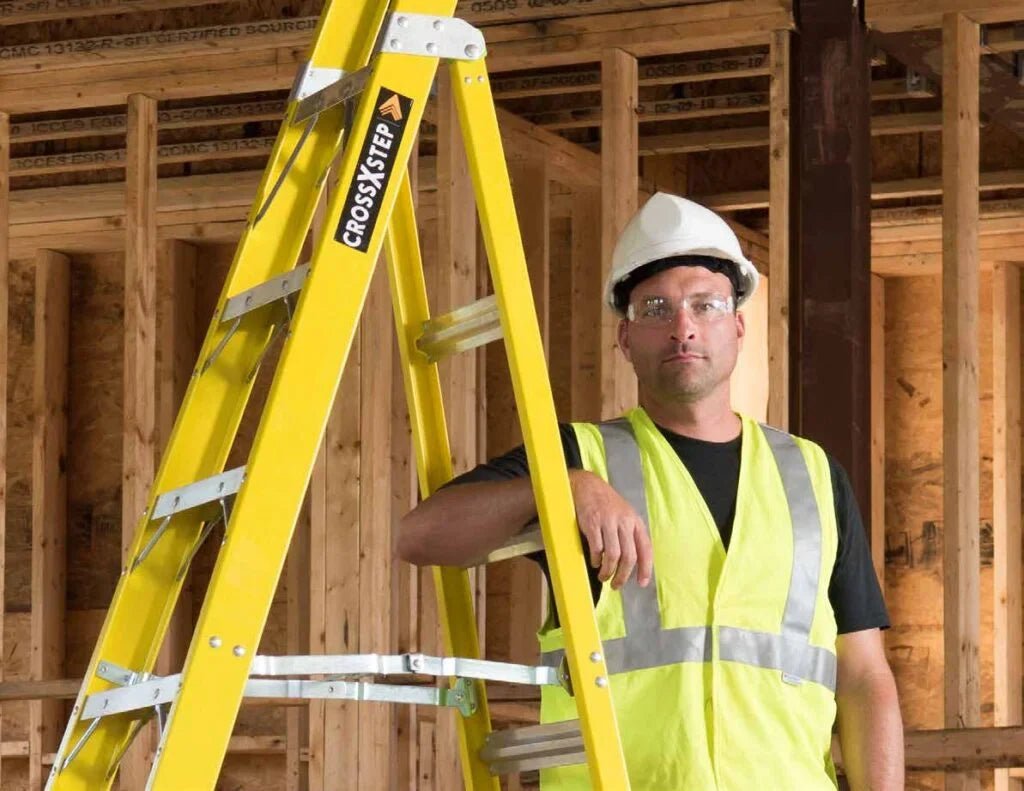
An American ladder is defined by its compliance with rigorous safety standards set by the American National Standards Institute (ANSI) and the Occupational Safety and Health Administration (OSHA). Choosing the correct ladder involves evaluating the specific manufacturer—such as American Ladder & Scaffold Co.—as well as the material, duty rating, and intended application for residential or industrial environments.
Navigating the landscape of American ladders in 2026 requires more than just picking a height. It involves an understanding of material science, strict regulatory compliance, and the engineering behind weight capacities. Whether you are looking for the specific products of the American Ladder & Scaffold company or simply seeking a ladder manufactured to American safety specifications, the criteria for quality remain consistent across the industry.
Understanding American Ladder Safety Standards (ANSI and OSHA)
The foundation of every American ladder is the set of safety standards that govern its design, testing, and use. In the United States, two primary bodies dictate these requirements: ANSI and OSHA. While they are often mentioned in the same breath, they serve different roles in the lifecycle of a ladder.
The Role of ANSI A14
The American National Standards Institute (ANSI) coordinates the development of voluntary consensus standards. For ladders, the A14 series is the "gold standard." These documents provide manufacturers with precise instructions on how to build and test their products to ensure they can handle the stresses of daily use.
For example, ANSI A14.2 covers metal ladders, while ANSI A14.5 focuses on reinforced plastic (fiberglass) ladders. These standards specify everything from the thickness of the side rails to the slip-resistance of the rungs. When a product is labeled as ANSI-compliant, it means the manufacturer has followed these engineering benchmarks. As of 2026, these standards continue to evolve to incorporate newer composite materials that offer higher strength-to-weight ratios.
OSHA Compliance for Workplaces
The Occupational Safety and Health Administration (OSHA) is a federal agency that sets and enforces workplace safety regulations. Unlike ANSI, which is a set of voluntary manufacturing guidelines, OSHA regulations are law. In any commercial or industrial setting in the U.S., using a ladder that does not meet OSHA requirements (specifically 29 CFR 1910.23 for general industry and 29 CFR 1926.1053 for construction) can result in significant fines and legal liability.
OSHA typically adopts ANSI standards as the basis for its regulations. Therefore, a ladder that meets the current ANSI A14 requirements is generally considered OSHA-compliant. This dual layer of oversight ensures that American ladders are among the safest in the global market.
American Ladder & Scaffold Co.: Manufacturer Profile
When discussing the term "American ladder," it often refers to the American Ladder & Scaffold Co., a long-standing entity in the industrial equipment sector. Based primarily in the southeastern United States with major operations in Miami, Florida, and distribution networks reaching across the country, this company has specialized in high-reach solutions for decades.
Product Range and Specialization
American Ladder & Scaffold is not merely a retailer; they are known for providing heavy-duty scaffolding, custom work platforms, and industrial-grade ladders. Their inventory typically caters to professional contractors, shipyards, and aviation maintenance crews who require equipment that exceeds standard residential capabilities.
In 2026, their focus remains on modular scaffolding systems and aluminum pump jacks. These tools allow for extended work periods at height, offering more stability than a traditional extension ladder. For professionals, the "American Ladder" brand signifies a commitment to the "Made in USA" ethos, emphasizing durability and local sourcing of raw materials.
Choosing the Right Ladder: Materials and Construction
The material of a ladder determines its weight, durability, and safety near electrical hazards. In the American market, three materials dominate the industry: fiberglass, aluminum, and wood.
Fiberglass: The Professional Choice
Fiberglass is currently the most popular material for professional-grade American ladders. Its primary advantage is that it is non-conductive, making it the only safe choice for electricians or anyone working near power lines.
The manufacturing process for fiberglass ladders involves pultrusion, where glass fibers are pulled through a resin bath and then cured. This results in side rails that are extremely strong and resistant to weathering. However, fiberglass is heavier than aluminum and can become brittle if left in direct sunlight for years without UV-protective coatings.
Aluminum: Lightweight and Versatile
Aluminum ladders are prized for their portability. They are significantly lighter than fiberglass or wood, making them ideal for homeowners who need to move a ladder from the garage to the backyard frequently.
While aluminum is naturally resistant to rust and corrosion, it is a conductor of electricity. An aluminum ladder should never be used near exposed wiring or during a lightning storm. In 2026, many manufacturers have improved aluminum alloys to reduce "flex" in extension ladders, providing a more stable feel at maximum height.
Wood: The Traditional Option
Though less common in modern construction, wood ladders are still manufactured for specific niche uses. They are non-conductive when dry and often used in certain chemical environments where metal might react. However, wood is heavy, prone to rot if not maintained, and can hide cracks under layers of paint—which is why OSHA prohibits painting wood ladders in a way that obscures the grain.
Duty Ratings: Navigating Load Capacities
One of the most critical aspects of selecting an American ladder is understanding the Duty Rating. This is the maximum weight capacity the ladder is designed to hold, including the person, their tools, and any materials.
Exceeding the duty rating can lead to structural failure. It is important to note that the duty rating is not just about the weight on the rungs; it also reflects the overall ruggedness of the ladder's construction.
| Ladder Type | Duty Rating | Load Capacity (Lbs.) | Recommended Use |
|---|---|---|---|
| Type IAA | Special Duty | 375 lbs. | Heavy-duty industrial, heavy tools |
| Type IA | Extra Heavy Duty | 300 lbs. | Industrial construction, roofing |
| Type I | Heavy Duty | 250 lbs. | Professional trades, maintenance |
| Type II | Medium Duty | 225 lbs. | Light commercial, painting, DIY |
| Type III | Light Duty | 200 lbs. | Household chores, light cleaning |
When calculating your needs, always round up. If you weigh 200 lbs. and carry a 30 lb. bucket of paint, a Type III ladder is at its limit. A Type II or Type I would provide a much safer margin of error.
Safety Protocols and Best Practices in 2026
Even the best-engineered American ladder cannot prevent accidents caused by improper use. Data from the Consumer Product Safety Commission (CPSC) consistently shows that falls from ladders are a leading cause of emergency room visits.
The Three-Point Contact Rule
The most fundamental rule of ladder safety is maintaining three points of contact at all times. This means either two feet and one hand, or two hands and one foot, must be firmly on the ladder while climbing or descending. This minimizes the risk of a slip turning into a fall.
Proper Setup and the 4-to-1 Ratio
For extension ladders, the angle of the ladder is paramount. The "4-to-1 ratio" states that for every four feet of height to the point where the ladder touches the support (like a wall or gutter), the base of the ladder should be one foot away from that support.
If the base is too close, the ladder may tip backward. If it is too far, the ladder may slide out from under the user or the side rails may buckle under the stress. In 2026, many high-end American ladders come equipped with built-in bubble levels or indicators on the side rails to help users achieve the perfect angle.
Securement and Surface Stability
Before climbing, ensure the ladder feet are on a firm, level surface. On soft ground, use "spur" feet or mud plates to prevent sinking. If working on a roof, the ladder should extend at least three feet above the roofline to provide a secure handhold when transitioning from the ladder to the roof and back.
Maintenance and Inspection Checklists
A ladder is a piece of precision equipment and should be treated as such. Regular inspections are required by OSHA and are a best practice for any owner.
- Check for Structural Damage: Look for dents, bends, or cracks in the side rails and rungs. On fiberglass ladders, look for "fiber blooming," where the glass fibers become exposed and can cause painful splinters.
- Inspect the Hardware: Ensure that spreader bars on step ladders lock firmly and that the locks (dawgs) on extension ladders function smoothly without sticking.
- Clean the Rungs: Grease, oil, or wet paint can make rungs incredibly slippery. Clean the ladder after every use to ensure a high-traction surface.
- Check the Feet: The rubber or plastic pads on the feet are designed to prevent slipping. If they are worn smooth or missing, the ladder is unsafe to use. Replacement feet are widely available from American manufacturers.
Frequently Asked Questions
Is an American-made ladder better than an imported one?
While many countries produce high-quality equipment, "American-made" often ensures that the product was manufactured under the direct oversight of ANSI A14 standards and US labor laws. Domestic manufacturing also simplifies the process of sourcing replacement parts and handling warranty claims.
Why are fiberglass ladders more expensive than aluminum?
The cost of raw materials (resins and glass fibers) and the more complex pultrusion manufacturing process make fiberglass more expensive to produce. However, for professionals, the added safety of non-conductivity and the longevity of the material often justify the higher initial investment.
Can I use a Type III ladder for professional work?
No. Most professional worksites specifically require Type I, IA, or IAA ladders. Type III ladders are designed strictly for light household use and do not have the structural integrity required for the rigors of a construction site. Using a Type III ladder at work is an OSHA violation.
How often should a ladder be replaced?
There is no set expiration date for a ladder. A well-maintained fiberglass or aluminum ladder can last 10 to 20 years. However, a ladder should be taken out of service immediately if it shows any signs of structural failure, such as a cracked rail or a loose rung.
Can I use a ladder stabilizer with an American ladder?
Yes, most American extension ladders are compatible with "stand-off" stabilizers. These attachments prevent the ladder from resting directly against gutters or windows and provide a wider base of support at the top, which significantly increases stability.
Final Recommendation for Selection
When purchasing an "American ladder" in 2026, your primary focus should be the match between the tool and the task. For general home maintenance, a Type II Aluminum Multi-Position ladder offers the best balance of versatility and weight. For professional contractors or those working near any electrical source, a Type IA Fiberglass Step or Extension ladder is the non-negotiable standard. Always verify the ANSI and OSHA labels on the side rail before purchase, and never compromise on the duty rating to save on cost.