The primary amendments to civil rights in America are the 13th, 14th, 15th, 19th, 24th, and 26th Amendments. These constitutional changes collectively abolished slavery, guaranteed equal protection under the law, and expanded voting rights regardless of race, gender, or age, forming the legal bedrock for modern American equality and justice.
The history of the United States is defined by the tension between its founding ideals and the practical reality of its laws. While the original Constitution provided a framework for governance, it was the subsequent amendments—specifically those following the Civil War and the various suffrage movements—that transformed the document into a shield for individual civil rights. In 2026, as we look back on over two centuries of legal evolution, these amendments remain the most vital tools for litigating equality in federal and state courts.
The Reconstruction Amendments: The Birth of Second Founding
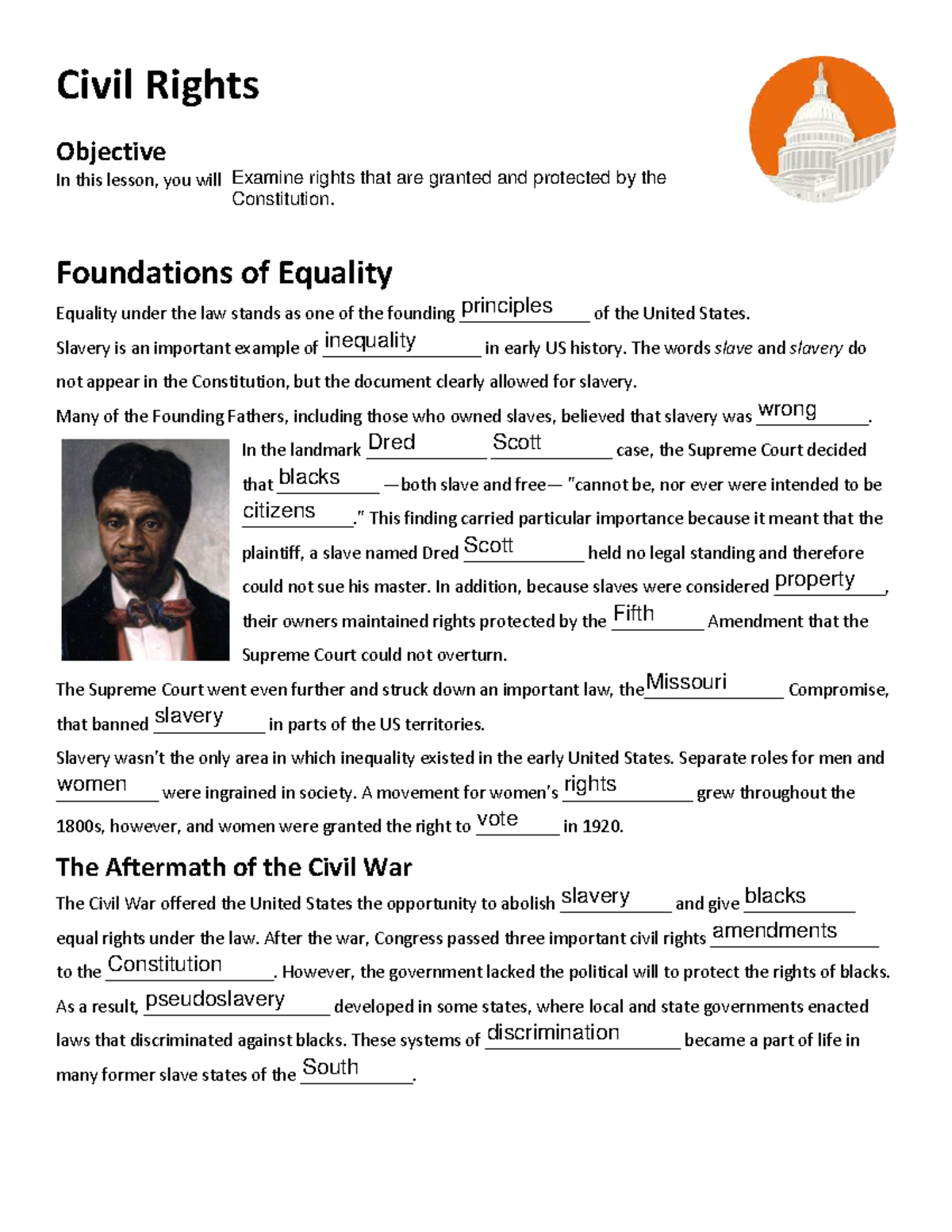
Often referred to as the "Second Founding," the 13th, 14th, and 15th Amendments were ratified in the immediate aftermath of the American Civil War. These three amendments represent the most significant shift in American constitutional law, moving the nation from a system that permitted chattel slavery to one that, at least on paper, mandated racial equality.
The 13th Amendment: The End of Legal Servitude
Ratified in December 1865, the 13th Amendment abolished slavery and involuntary servitude, except as punishment for a crime. This was a radical departure from the original Constitution, which had indirectly protected the institution of slavery through the Three-Fifths Compromise and the Fugitive Slave Clause.
The "Why" behind the 13th Amendment was the realization that the Emancipation Proclamation of 1863 was a wartime measure with questionable legal longevity. To ensure that slavery could never be legally reinstated, a constitutional amendment was required. In 2026, the 13th Amendment continues to be relevant in discussions regarding prison labor and human trafficking. However, its primary historical achievement was the legal destruction of the "property" status of millions of Black Americans.
The 14th Amendment: The Cornerstone of Civil Rights
If there is a "Swiss Army Knife" of American law, it is the 14th Amendment, ratified in 1868. It contains three critical clauses that have been used to expand civil rights more than any other piece of legislation:
- The Citizenship Clause: Granted citizenship to all persons born or naturalized in the United States, including formerly enslaved people.
- The Due Process Clause: Prohibits state and local governments from depriving persons of life, liberty, or property without a fair procedure.
- The Equal Protection Clause: Requires each state to provide equal protection under the law to all people within its jurisdiction.
The 14th Amendment also established the Incorporation Doctrine. Originally, the Bill of Rights only applied to the federal government. Through the 14th Amendment, the Supreme Court has gradually "incorporated" these rights, making them applicable to the states as well. This ensured that a state could not pass laws that infringed upon fundamental liberties like freedom of speech or the right to a fair trial.
The 15th Amendment: Universal Male Suffrage
Ratified in 1870, the 15th Amendment prohibited the federal government and each state from denying a citizen the right to vote based on "race, color, or previous condition of servitude." While this was a monumental step, its implementation was hindered for nearly a century by Jim Crow laws, including literacy tests and grandfather clauses. It wasn't until the Voting Rights Act of 1965 that the full force of the 15th Amendment was finally realized through federal enforcement.
Expanding the Franchise: The Suffrage Amendments
Following the Reconstruction era, the focus of civil rights amendments shifted toward the expansion of the electorate. These amendments recognized that true civil equality is impossible without the power of the ballot.
The 19th Amendment: Gender Equality at the Polls
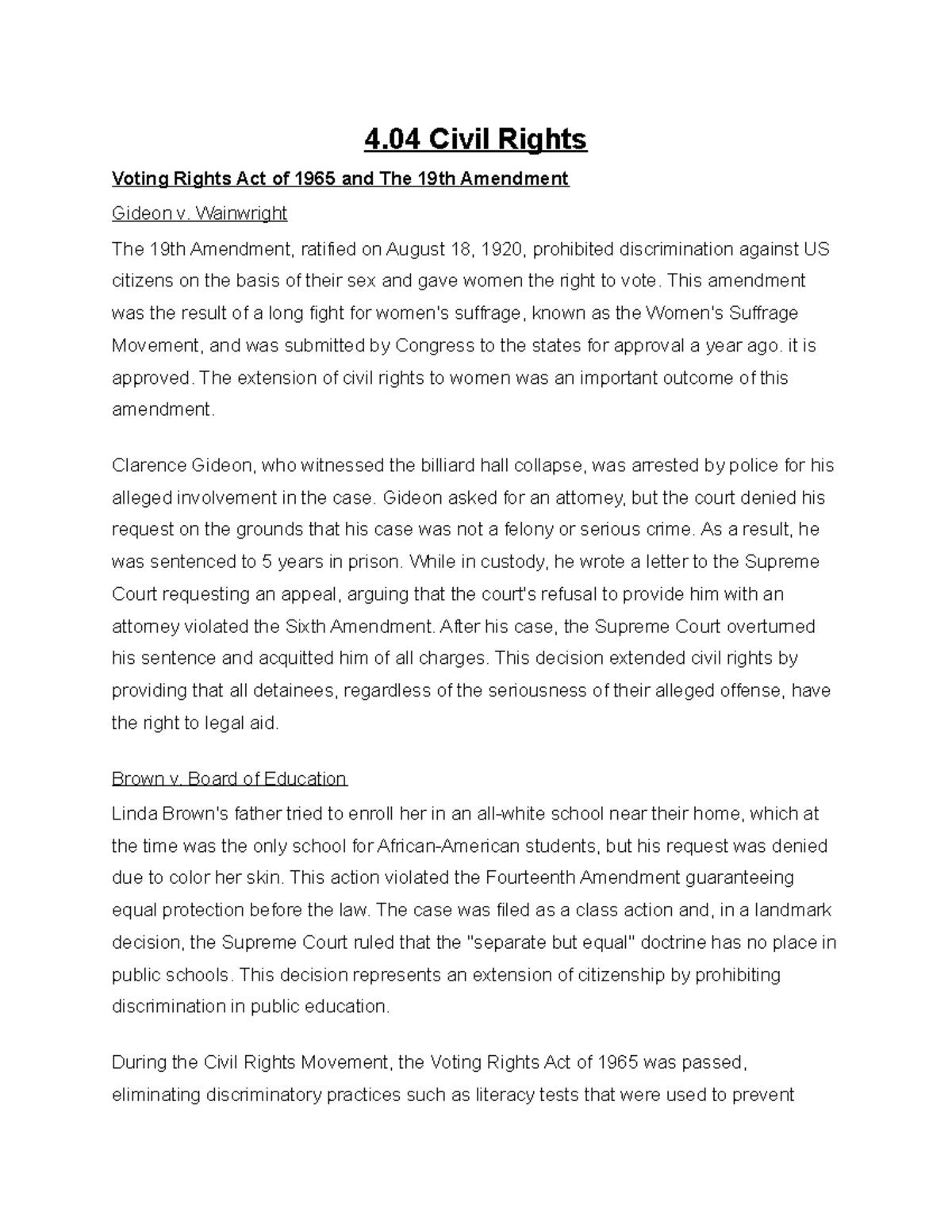
Ratified in 1920, the 19th Amendment guaranteed that the right of citizens to vote shall not be denied or abridged on account of sex. This was the culmination of decades of activism by the women's suffrage movement. In the context of 2026, this amendment is viewed not just as a voting rights milestone, but as the constitutional precursor to broader gender equality litigation, including Title IX and various equal pay initiatives.
The 24th Amendment: Eliminating Wealth Barriers
By the mid-20th century, many Southern states used poll taxes to disenfranchise low-income voters, particularly Black Americans. The 24th Amendment, ratified in 1964, abolished the use of poll taxes in federal elections. This amendment was a critical component of the Civil Rights Movement, ensuring that the right to participate in democracy could not be sold or taxed. It reinforced the principle that poverty should not be a barrier to citizenship.
The 26th Amendment: The Youth Vote
During the Vietnam War, a powerful slogan emerged: "Old enough to fight, old enough to vote." At the time, the voting age in most states was 21, even though 18-year-olds were being drafted. The 26th Amendment was ratified with record speed in 1971, lowering the voting age to 18 for all federal and state elections. This amendment recognized that young adults have a vested interest in the direction of the country and must have a legal voice in its governance.
Comparative Summary of Civil Rights Amendments
The following table outlines the key constitutional amendments that have defined civil rights in the United States from the 19th century through today.
| Amendment | Year Ratified | Primary Focus | Practical Impact in 2026 |
|---|---|---|---|
| 13th | 1865 | Abolition of Slavery | Foundation for anti-trafficking laws; prohibits forced labor. |
| 14th | 1868 | Equal Protection & Citizenship | Basis for most civil rights litigation and privacy rights. |
| 15th | 1870 | Voting Rights (Race) | Prohibits racial discrimination in the electoral process. |
| 19th | 1920 | Voting Rights (Gender) | Established constitutional gender equality in voting. |
| 24th | 1964 | Abolition of Poll Taxes | Prevents financial barriers to exercising the franchise. |
| 26th | 1971 | Voting Rights (Age) | Standardized 18 as the national minimum voting age. |
The 14th Amendment and Judicial Interpretation
While the text of the amendments provides the framework, it is the Supreme Court's interpretation that gives these rights their modern meaning. The 14th Amendment's Equal Protection Clause, for instance, was the basis for the 1954 decision in Brown v. Board of Education, which ruled that "separate but equal" facilities were inherently unequal.
In 2026, legal experts continue to debate the scope of the 14th Amendment. Issues such as affirmative action, reproductive rights, and LGBTQ+ protections often hinge on how the Court interprets "liberty" and "equal protection." The tension usually lies between Originalism (interpreting the text as it was understood at the time of ratification) and the Living Constitution theory (interpreting the text in the context of contemporary society).
The Doctrine of Incorporation
As mentioned earlier, the 14th Amendment "incorporated" the Bill of Rights. This means that when we talk about civil rights amendments, we must also consider how the first ten amendments interact with the 14th. For example:
- The 1st Amendment: Freedom of religion and speech is protected from state interference via the 14th Amendment.
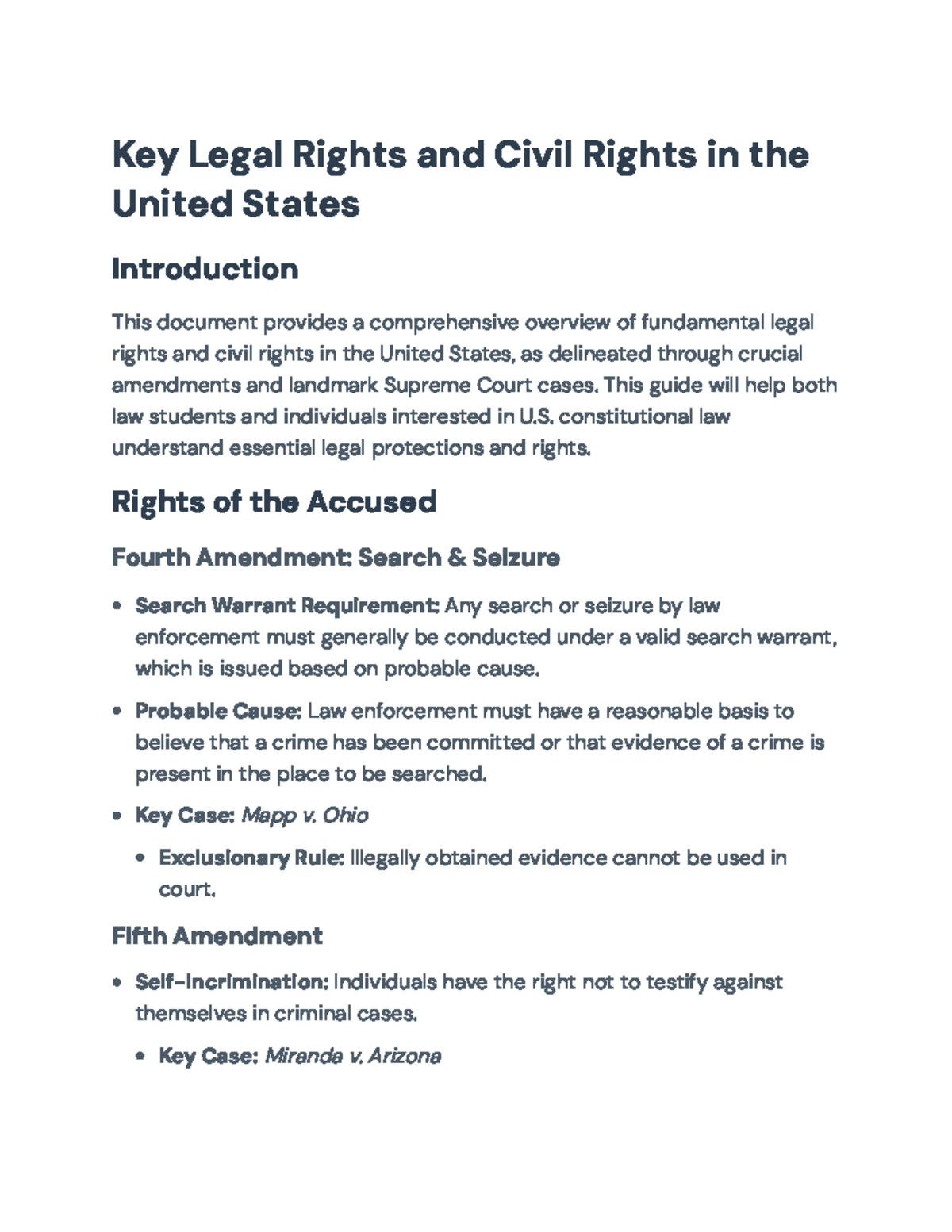
- The 4th Amendment: Protection against unreasonable searches and seizures is a civil right that states must honor.
- The 6th Amendment: The right to an attorney in criminal cases was applied to the states through the 14th Amendment in the landmark case Gideon v. Wainwright.
Current Status and Challenges in 2026
As of 2026, the application of these amendments faces new challenges. While the 15th, 19th, 24th, and 26th Amendments protect the right to vote, they do not necessarily dictate the method of voting. This has led to significant legal battles over:
- Voter Identification Laws: Proponents argue they ensure election integrity; opponents argue they act as a modern-day poll tax (violating the 24th Amendment).
- Gerrymandering: The practice of drawing district lines to favor one party. Courts are frequently asked if this violates the Equal Protection Clause of the 14th Amendment.
- Digital Privacy: The 4th Amendment's protection against unreasonable searches is being re-evaluated in an era of mass data collection and artificial intelligence.
The "Next Frontier" of civil rights amendments often involves the proposed Equal Rights Amendment (ERA). Although it was first introduced in 1923, it has never been fully ratified into the Constitution. Proponents in 2026 continue to argue that a specific amendment is needed to explicitly prohibit discrimination based on sex, rather than relying on the 14th Amendment's broader language.
Troubleshooting Common Misconceptions
Understanding civil rights amendments requires distinguishing between civil rights and civil liberties.
- Civil Liberties are protections from government interference (e.g., the government cannot stop you from speaking). These are found primarily in the Bill of Rights.
- Civil Rights are guarantees of equal social opportunities and protection under the law, regardless of race, gender, or other characteristics (e.g., the right to be treated equally in the workplace). These are found primarily in the Reconstruction and Suffrage Amendments.
Another common mistake is believing the Bill of Rights has always applied to everyone. Historically, these rights were limited to a very small subset of the population. It was the "amendments to civil rights" that expanded these protections to include all citizens regardless of their background.
Legal Disclaimer: This article provides historical and legal information for educational purposes and does not constitute legal advice. Jurisdictional interpretations of constitutional law can vary, and Supreme Court rulings are subject to change. For specific legal inquiries, consult a qualified attorney or official records from the U.S. Department of Justice.
Frequently Asked Questions
Which amendment is known as the "Civil Rights Amendment"?
While many amendments deal with civil rights, the 14th Amendment is most frequently cited as the primary civil rights amendment. Its Equal Protection Clause is the most common basis for civil rights lawsuits in the United States, covering everything from desegregation to marriage equality.
Do these amendments protect against discrimination by private individuals?
Generally, no. Constitutional amendments regulate government action (state or federal). To address discrimination by private individuals, businesses, or organizations, the U.S. relies on statutes passed by Congress, such as the Civil Rights Act of 1964 or the Americans with Disabilities Act (ADA), which are authorized by the enforcement clauses of these amendments.
How are these amendments enforced?
Each of the Reconstruction Amendments contains an "Enforcement Clause" (usually Section 2 or Section 5), which gives Congress the power to enforce the article by "appropriate legislation." This allowed for the passage of major laws like the Voting Rights Act of 1965 and the Fair Housing Act.
Can an amendment be repealed?
Yes. The only way to repeal a constitutional amendment is to pass another amendment. The most famous example is the 21st Amendment, which repealed the 18th Amendment (Prohibition). Repealing a civil rights amendment would require a two-thirds vote in both houses of Congress and ratification by three-fourths of the states, making it extremely difficult.
What is the difference between the 15th and the 19th Amendments?
The 15th Amendment (1870) prohibited denying the vote based on race, whereas the 19th Amendment (1920) prohibited denying the vote based on sex. Both were necessary because the 15th Amendment was interpreted at the time as only applying to men.
Why is the 24th Amendment still relevant today?
The 24th Amendment, which banned poll taxes, is often cited in modern court cases regarding voter ID laws. If a state requires a specific type of ID that costs money to obtain, some legal scholars argue this constitutes a "de facto" poll tax, violating the 24th Amendment.
Recommendations for Further Action
To deeply understand the practical application of civil rights amendments in 2026, citizens and students should take the following steps:
- Review Primary Sources: Read the actual text of the amendments at the National Archives. The language is often surprisingly brief, and understanding the exact phrasing is essential for legal literacy.
- Monitor Supreme Court Dockets: Use resources like Oyez or SCOTUSblog to follow current cases involving the 14th Amendment. The interpretation of "Equal Protection" continues to evolve with every judicial term.
- Engage with Local Governance: Civil rights are often protected or restricted at the state level. Understanding how your state constitution interacts with federal amendments is crucial for local advocacy.
- Verify Voting Status: Ensure your rights under the 15th, 19th, 24th, and 26th Amendments are active by checking your voter registration through official state portals.