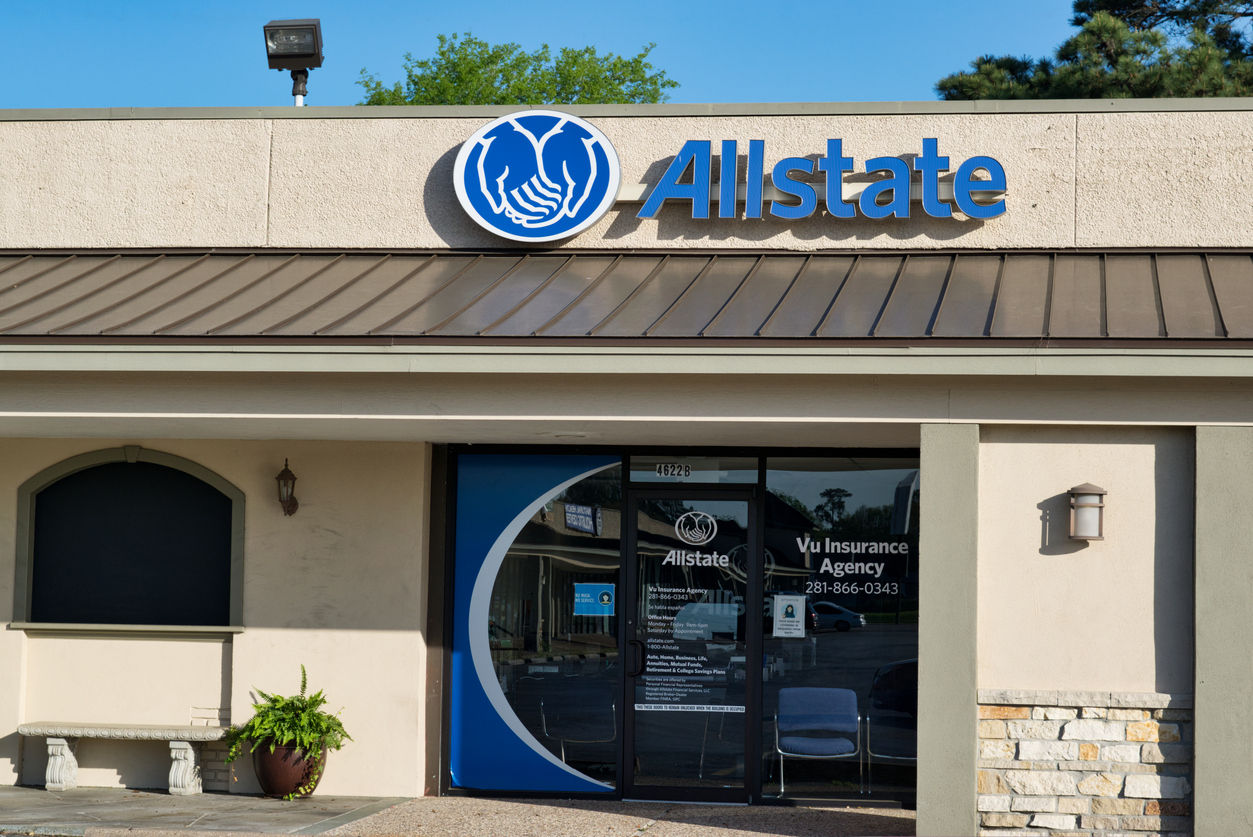
The Allstate Corporation (NYSE: ALL) is one of the largest publicly traded property and casualty insurance providers in the United States. As of 2026, the company maintains its market leadership through a multi-brand strategy, focusing on personal lines such as auto and homeowners insurance, while expanding its reach into protection services and health benefits through both independent agents and direct-to-consumer digital channels.
The Evolution of Allstate: From Sears Subsidiary to Industry Powerhouse
The Allstate Corporation’s journey began in 1931 as part of Sears, Roebuck & Co., initially selling auto insurance by mail. This innovative approach to distribution—leveraging an existing retail giant—set the stage for nearly a century of disruption in the insurance sector. By the mid-20th century, Allstate had evolved into a powerhouse with a massive captive agent network, famously symbolized by the "Good Hands" slogan introduced in 1950.
In 1993, Allstate went public in what was then the largest initial public offering (IPO) in U.S. history, fully divesting from Sears in 1995. This independence allowed the corporation to aggressively pursue a diversified portfolio. In the 2020s, Allstate underwent a "Transformative Growth" plan, which pivoted the company away from its traditional life insurance and annuity businesses to focus almost exclusively on property and casualty (P&C) and protection services. By 2026, this shift is fully realized, with the company operating as a leaner, more technology-driven entity capable of responding rapidly to climate-driven risks and changing consumer behaviors.
The Transformative Growth Strategy and Business Model
At the heart of the 2026 Allstate Corp overview is the "Transformative Growth" strategy. This multi-year initiative was designed to increase market share by making Allstate insurance more affordable and accessible. The strategy rests on three primary pillars:
- Lowering Costs: By simplifying the organizational structure and consolidating support functions, Allstate has sought to lower its expense ratio. This allows the company to offer more competitive premiums while maintaining healthy profit margins.
- Expanding Distribution: Historically reliant on captive agents (Allstate Agents), the corporation significantly expanded its reach through the 2021 acquisition of National General. This allowed Allstate to penetrate the independent agent channel more effectively, offering a wider range of non-standard auto and specialty products.
- Customer-Centric Technology: Allstate has shifted from being a traditional "policy-focused" company to a "protection-focused" one. This involves heavy investment in telematics (Arity), digital claims processing, and a unified technology platform that creates a seamless experience across Allstate, National General, and Esurance brands.
Core Business Segments and Product Offerings
The Allstate Corporation categorizes its operations into distinct segments that allow for specialized management of risk and customer service. Understanding these segments is crucial for any overview of the company's operational health.
Allstate Protection
This is the flagship segment, contributing the vast majority of the corporation's revenue. It primarily focuses on personal lines of insurance:
- Private Passenger Auto: Utilizing sophisticated pricing models and telematics data (Drivewise), Allstate provides coverage for millions of drivers, emphasizing safety and rewards for low-risk behavior.
- Homeowners Insurance: Allstate is a top-three provider of home insurance in the U.S. In 2026, the company utilizes advanced satellite imagery and AI to assess property risk, particularly in areas prone to wildfires and hurricanes.
- Specialty Lines: This includes coverage for motorcycles, off-road vehicles, motorhomes, and watercraft.
Protection Services
This segment represents Allstate’s push into non-traditional insurance products that build brand loyalty and provide fee-based income.
- Allstate Protection Plans: Formerly SquareTrade, this unit provides extended warranties and protection plans for consumer electronics, appliances, and furniture. It has become a significant growth engine through partnerships with major global retailers.
- Allstate Roadside: One of the largest roadside assistance networks in North America, serving both individual policyholders and corporate partners (such as auto manufacturers and car-sharing services).
- Allstate Identity Protection: Providing monitoring and recovery services for individuals and employee benefit programs.
- Arity: A mobility data and analytics company founded by Allstate. Arity processes billions of miles of driving data to help insurers and transportation companies better understand risk.
Allstate Health and Benefits
Following the divestiture of its traditional life insurance units, Allstate focused on voluntary benefits and individual health products. This segment provides supplemental health, disability, and dental insurance, primarily distributed through employer-sponsored programs.
Market Position and Competitive Landscape
As of 2026, Allstate competes in a highly fragmented market against both traditional incumbents and digital-first "insurtech" firms. Its primary competitors include State Farm, Progressive, GEICO (Berkshire Hathaway), and Liberty Mutual.
| Feature | Allstate Corporation | State Farm | Progressive | GEICO |
|---|---|---|---|---|
| Primary Distribution | Multi-channel (Agents + Direct) | Exclusive Agents | Independent Agents + Direct | Direct-to-Consumer |
| Market Strength | Tech-driven Personal Lines | Scale and Agent Network | Telematics Leadership | Low-cost Digital Brand |
| Diversification | High (Protection Plans) | Moderate (Banking/Life) | Low (Primarily P&C) | Low (Primarily Auto) |
| Tech Focus | Arity/Data Analytics | Operational Efficiency | Snapshot/Pricing Models | Digital UX/Marketing |
Allstate’s competitive advantage in 2026 lies in its ability to blend the personal touch of a professional agent with a high-performance digital platform. While GEICO and Progressive have historically dominated the "direct" space, Allstate’s integration of Esurance and the revitalization of Allstate.com have closed the gap in digital acquisition costs.
Financial Strength and Investor Relations
Allstate is a staple of the Fortune 500 and is recognized for its disciplined capital management. The company’s financial health is monitored by major credit rating agencies, including A.M. Best, Moody’s, and Standard & Poor’s.
Investors typically view Allstate as a "total return" stock, offering a combination of share price appreciation and consistent dividends. The company’s ability to generate cash flow is driven by its underwriting income (the difference between premiums collected and claims paid) and its massive investment portfolio. Allstate invests its float—the money held between the time premiums are paid and claims are settled—primarily in high-quality fixed-income securities, though it also maintains allocations in private equity and real estate to enhance yields.
In 2026, the company's financial performance is increasingly sensitive to "catastrophe losses." Due to climate volatility, Allstate has implemented sophisticated reinsurance programs—essentially buying insurance for itself—to protect its balance sheet against "black swan" weather events.
Technological Innovation: Telematics and AI
Allstate has positioned itself as a leader in "InsureTech" within a legacy corporate structure. The company’s use of telematics is a prime example. Through the Drivewise and Milewise programs, Allstate collects real-time data on braking, speed, and time of day. This allows for "usage-based insurance" (UBI), where premiums are determined by how a person actually drives rather than just their demographic profile.
In 2026, AI is deeply embedded in Allstate’s claims process. "Virtual Assist" tools allow customers to upload photos of vehicle damage via a smartphone app, with AI algorithms estimating repair costs in minutes. This reduces the need for physical adjusters for minor claims, lowering overhead and significantly increasing customer satisfaction scores through faster payouts.
Corporate Social Responsibility and Sustainability
The Allstate Corporation places significant emphasis on its "Empowerment Plan," which focuses on inclusive diversity, climate resiliency, and community youth programs.
From an environmental standpoint, Allstate is a vocal advocate for better building codes and land-use planning. Because the company’s bottom line is directly impacted by natural disasters, Allstate supports the Insurance Institute for Business & Home Safety (IBHS) to promote "fortified" construction standards. In 2026, Allstate also reports extensively on its carbon footprint and its transition toward sustainable office operations, reflecting a broader trend in the financial services sector toward ESG (Environmental, Social, and Governance) transparency.
Common Challenges and Troubleshooting for Policyholders
While Allstate is a robust organization, customers often face specific challenges related to premiums and claims. In 2026, the most common issues involve:
- Rate Adjustments: Due to inflation in auto parts and home construction costs, premiums across the industry have risen. Allstate users can mitigate this by reviewing their "Easy Pay" discounts or enrolling in telematics programs.
- Claim Disputes: While AI speeds up claims, complex cases (such as total losses or liability disputes) may still require manual intervention. Allstate provides a "Claim Satisfaction Guarantee" in many states, which can provide premium credits if a customer is unhappy with the claims experience.
- Digital Login Issues: With the consolidation of National General and Allstate systems, some legacy users may experience credentialing issues on the mobile app. The standard resolution involves clearing cache or utilizing the "Forgot ID" feature specifically on the primary Allstate.com portal.
Frequently Asked Questions
Is Allstate a direct-to-consumer company or an agent-based company?
Allstate is a multi-channel company. You can purchase policies directly through their website or mobile app, or you can work with a dedicated Allstate Agent who provides personalized advice. Since 2021, they have also significantly increased their presence in the independent agent market through their National General brand.
How does Allstate's telematics program (Drivewise) affect my privacy?
Drivewise collects data on driving behavior to provide discounts. Allstate states that this data is used primarily for pricing and risk assessment. Users have access to their own data through the Allstate mobile app, and participation is voluntary. The data is managed by Arity, Allstate’s analytics subsidiary.
What is the difference between Allstate and National General?
Allstate is the parent corporation. The Allstate brand typically focuses on preferred (lower risk) customers and is sold by captive agents or directly. National General, owned by Allstate, focuses on the independent agent channel and often handles non-standard auto insurance (for drivers with higher risk profiles) and specialty products like RV insurance.
Does Allstate provide life insurance in 2026?
Following a strategic shift in the early 2020s, Allstate divested its primary life insurance and annuity businesses (such as Allstate Life Insurance Company) to companies like Blackstone and Wilton Re. While they may offer some life products through third-party partners or voluntary employee benefits, it is no longer a core, internally managed business segment.
How can I lower my Allstate premiums?
Policyholders can lower costs by bundling auto and home insurance, maintaining a high credit score, increasing deductibles, and utilizing discounts for safety features (like anti-theft devices). Enrolling in Drivewise for auto insurance or completing a home safety inspection are also effective methods in 2026.
Practical Recommendation for Consumers and Investors
For consumers, the best way to interact with Allstate in 2026 is through their unified digital platform. Before signing a policy, download the Allstate mobile app to check your eligibility for telematics-based discounts, which currently offer the most significant savings for safe drivers. Always compare the "Standard" Allstate quote with a "National General" quote if you are working through an independent broker, as pricing models between the two brands can vary based on your specific risk profile.
For investors, Allstate remains a core holding for those seeking exposure to the U.S. consumer economy and the P&C insurance market. The company’s success depends on its ability to price risk accurately in an era of climate volatility and to continue reducing its expense ratio through automation. Monitoring the "Combined Ratio"—a measure of underwriting profitability—is the most effective way to gauge the corporation's operational health.