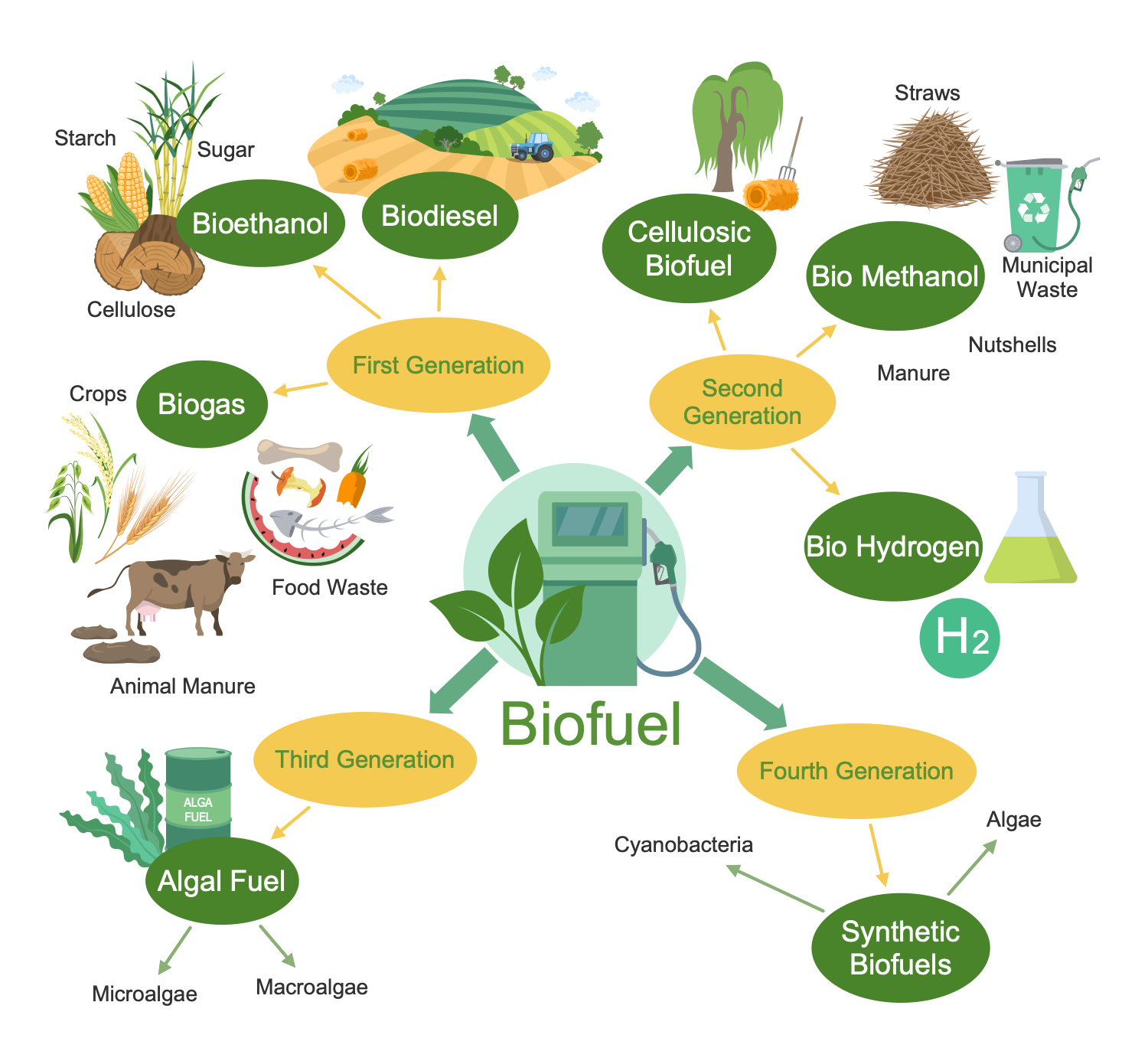
Algenol biofuels represent a specialized class of third-generation renewable energy derived from microalgae, engineered to convert carbon dioxide, sunlight, and saltwater into ethanol and other high-value fuels. By bypassing traditional food-crop feedstocks, this technology addresses critical land-use conflicts and offers a closed-loop carbon sequestration process suitable for industrial-scale deployment in non-arable environments.
The Science Behind Algenol’s Proprietary Process
The foundational premise of Algenol’s approach—often referred to as the Direct-to-Ethanol technology—diverges significantly from conventional biofuel production. While traditional ethanol, such as that derived from corn or sugarcane, relies on the fermentation of plant sugars harvested through labor-intensive agricultural processes, Algenol’s method utilizes genetically modified cyanobacteria (blue-green algae).
These microorganisms are housed in photobioreactors—specialized transparent enclosures designed to optimize the exposure of algae to sunlight. Within these reactors, the algae undergo photosynthesis, a process where they consume carbon dioxide and water. Instead of storing the chemical energy solely for biomass growth, the engineered strains are designed to secrete ethanol directly into the surrounding saline medium.
This "secretion" aspect is the critical differentiator. Because the ethanol is released into the medium rather than being stored inside the cellular structure, the need for energy-intensive cell harvesting, drying, and crushing is eliminated. The ethanol-water mixture is then separated via low-energy distillation techniques, significantly reducing the overall energy return on investment (EROI) compared to traditional starch-based biofuels.
Sustainability and Environmental Impact
The environmental value proposition of algae-based fuels rests on three pillars: feedstock independence, carbon neutrality, and water efficiency.
Feedstock and Land Use
First-generation biofuels are frequently criticized for the "food vs. fuel" debate, as they consume massive tracts of arable land that could otherwise be used for food production. Algenol’s process utilizes non-arable land, such as arid coastal regions or desert environments where agricultural crops cannot survive. This decoupling of fuel production from food supply chains is a vital requirement for long-term global food security.
Carbon Sequestration
The system is explicitly designed as a carbon-capture technology. The carbon dioxide used in the photobioreactors can be sourced from industrial point-source emitters, such as power plants or refineries. By recycling this carbon dioxide into a transportable fuel, the process effectively mitigates the emission profile of the industrial host site, creating a circular carbon economy rather than contributing to atmospheric accumulation.
Water Management
Water scarcity is a major constraint for industrial biofuels. Algenol’s technology is engineered to operate using brackish or saline water. By utilizing saltwater sources—or even recycled wastewater—the process avoids depleting freshwater aquifers, which is a major environmental failure of conventional bioethanol production.
Evaluating Technical and Operational Requirements
Deploying an Algenol-based facility is not a plug-and-play solution. It requires a specific integration of geography, technology, and infrastructure. Understanding these prerequisites is essential for stakeholders looking to evaluate the viability of such systems in a 2026 energy market.
- Climatic Suitability: Optimal productivity requires high solar irradiance. Tropical and subtropical regions are the most effective locations, as consistent sunlight year-round ensures that the photobioreactors operate at peak efficiency.
- Infrastructure Integration: To be effective as a carbon-reduction strategy, the facility must be located near a concentrated source of CO2. Transporting gas over long distances introduces economic and energy costs that can negate the carbon benefits.
- Saline Resource Access: The proximity to saltwater sources or a stable supply of brackish water is necessary for the culture medium.
- Distillation Capacity: The separation of ethanol from the dilute aqueous medium requires onsite distillation infrastructure, which represents a significant portion of the initial capital expenditure (CapEx).
Comparative Analysis: Algenol vs. Traditional Alternatives
To understand the positioning of algae-based biofuels, it is necessary to compare them against established renewable energy sources. The following table highlights the primary operational distinctions.
| Metric | Traditional Bioethanol (Corn) | Algenol (Algae-based) |
|---|---|---|
| Primary Feedstock | Edible starch/sugars | Carbon Dioxide & Sunlight |
| Land Requirement | High (Arable land) | Low (Non-arable/Coastal) |
| Water Source | Freshwater (High demand) | Saline or Wastewater |
| Carbon Impact | Low net reduction | High net capture |
| Energy Input | Moderate to High | Low (No harvesting required) |
| Scalability | High (Infrastructure exists) | Emerging (Site-specific) |
Overcoming Operational Limitations
While the technology offers significant potential, it faces hurdles in widespread adoption. The primary challenge remains the cost of production at scale. In 2026, the global energy market continues to struggle with the parity between synthetic fuels and fossil fuels.
The maintenance of large-scale photobioreactor arrays is complex. Biological contamination, where invasive species outcompete the engineered strains, can rapidly reduce the yield of a reactor. Maintaining a "monoculture" requires constant monitoring, pH control, and strict biosecurity measures. Furthermore, the longevity of the transparent materials used in the reactors is tested by high UV exposure and environmental degradation, leading to ongoing operational expenses related to maintenance and replacement.
Troubleshooting these facilities usually involves a high degree of automated sensing. Sensors track the concentration of ethanol in the medium, the pH levels, and the optical density of the culture. When productivity drops, operators must perform a systematic check of the gas-exchange efficiency and nutrient balance to restore the culture to a productive state.
Economics and Market Viability
The economic viability of algae-derived fuels is heavily dependent on the "co-product" model. Because producing ethanol alone may not currently compete with the low costs of fossil fuels or subsidized electric vehicle infrastructure, the most successful implementations are those that monetize the biomass byproduct.
After the algae have finished their primary lifecycle, the leftover biomass can be processed into a variety of high-value goods, such as:
- Animal Feed: High-protein content makes algae biomass a viable supplement for the aquaculture and livestock industries.
- Bio-plastics: The complex polymers extracted from the cell walls can be used as building blocks for sustainable, biodegradable plastics.
- Nutraceuticals: Certain algae strains produce oils and pigments that are highly valued in the pharmaceutical and cosmetic industries.
By integrating these revenue streams, a facility can achieve a lower effective cost for its fuel production, making it more resilient to the volatility of global energy markets.
Future Outlook and Research Direction
As of 2026, the research focus has shifted toward synthetic biology, specifically improving the "secretion efficiency" of the algae. Genetic engineering efforts are concentrated on modifying the cellular pathways to force the algae to export an even higher percentage of their photosynthetic output.
Another area of active development is the use of automated drone technology and advanced AI-based modeling for facility monitoring. These tools allow operators to predict biological crashes before they occur, optimizing the harvest cycles and minimizing downtime. As global carbon-pricing mechanisms become more stringent, the financial incentive to utilize carbon-capture technologies like Algenol's increases, likely accelerating the transition from pilot projects to regional industrial hubs.
Frequently Asked Questions (FAQ)
1. Is Algenol biofuel compatible with standard car engines? Yes. The ethanol produced through these processes is chemically identical to the ethanol used in E10 or E85 fuel blends. It can be blended with conventional gasoline and utilized in existing internal combustion engine vehicles without requiring mechanical modifications to the engine.
2. Does the algae production process require large amounts of freshwater? No. One of the primary advantages of this technology is its reliance on saltwater or brackish water. This feature makes it highly suitable for coastal areas where freshwater is limited and essential for agricultural or municipal use.
3. What are the main drawbacks of using algae as a fuel source? The main limitations are the high upfront capital expenditure for photobioreactor infrastructure and the biological risks of contamination. Additionally, maintaining a consistent yield across massive, non-controlled environments requires precise, high-tech management that is currently more expensive than traditional land-based farming.
4. How does Algenol biofuel contribute to carbon sequestration? The system acts as a carbon sink by utilizing CO2 captured from industrial waste streams. The carbon that would have otherwise entered the atmosphere is converted into liquid fuel. When this fuel is burned, the carbon is released, creating a closed loop that avoids the extraction of "new" fossil carbon from the earth, thereby reducing the net carbon footprint of the fuel cycle.
5. Can Algenol fuels replace electric vehicles (EVs)? These technologies are generally viewed as complementary rather than competitive. While EVs are highly efficient for light passenger transport, heavy-duty transport, aviation, and maritime shipping remain difficult to electrify due to energy-density requirements. Renewable liquid fuels like algae-derived ethanol provide a low-carbon energy source for these harder-to-decarbonize sectors.
Recommendations for Further Action
For organizations and investors considering the adoption or analysis of algae-based biofuel technologies, the first step is a feasibility study focusing on location-specific resource availability. Verify the proximity to an industrial CO2 source and assess the year-round solar data for the proposed site.
Prioritize partnerships that leverage the biomass byproduct, as this is the most reliable path to financial sustainability. Seek independent audits regarding the specific strain performance of the algae being utilized, as the metabolic engineering of these organisms remains a fast-evolving technical field. In the current energy landscape, focus on integration with existing industrial emitters to maximize both economic efficiency and carbon-reduction claims.