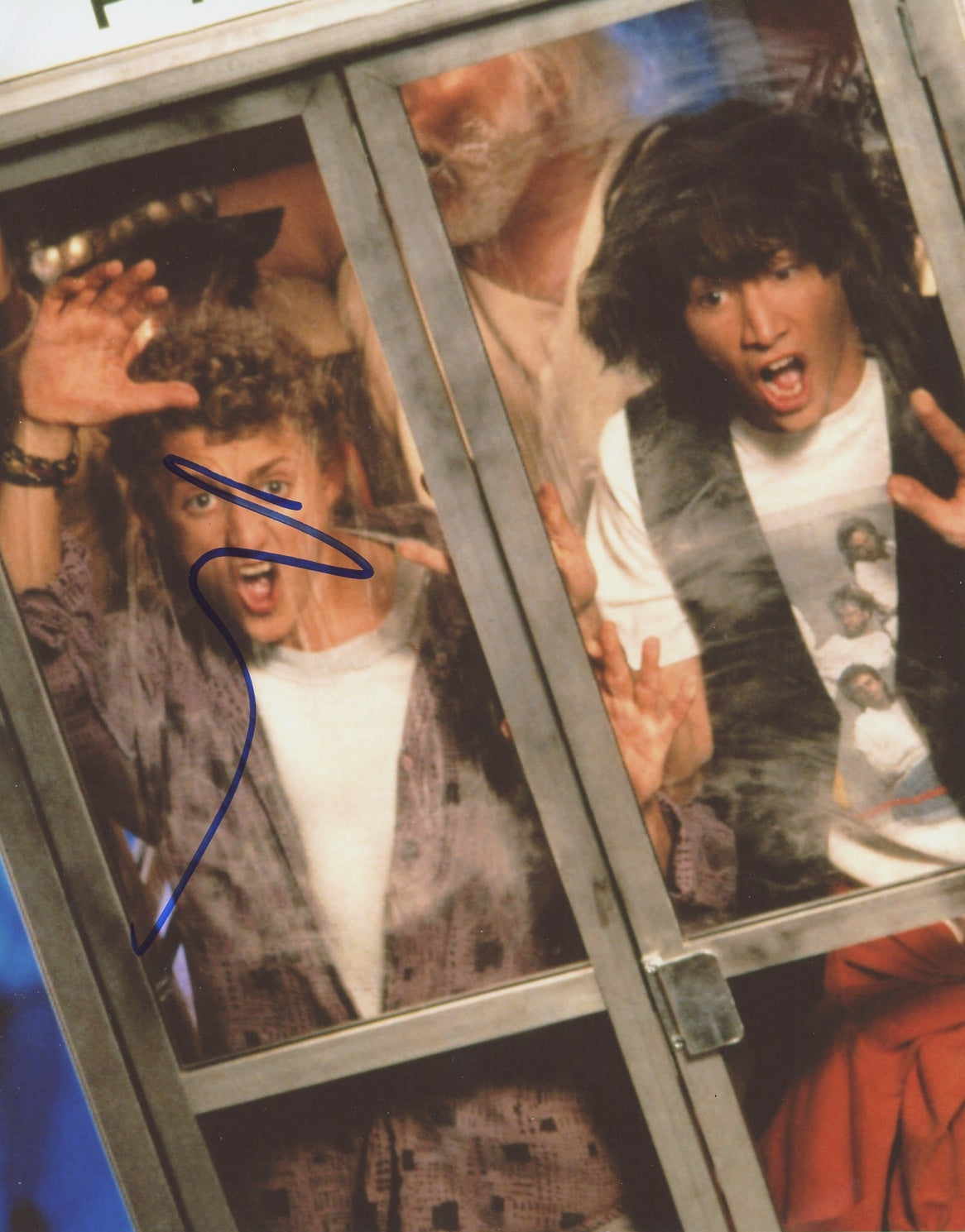
Alex Winter’s early years were defined by a transition from a London-born child of professional dancers to a Broadway star and, eventually, a cinematic legend in the 1980s. Before achieving global fame as Bill S. Preston, Esq., he was a classically trained actor and a dedicated NYU film student who prioritized technical craft over celebrity.
The Artistic Foundations of Alex Winter
To understand Alex Winter when he was young, one must look at the disciplined, multicultural environment of his childhood. Born Alexander Ross Winter on July 17, 1965, in London, England, he was the son of two professional modern dancers. His mother, Gregg Mayer, was an American-born dancer and teacher who performed with the Martha Graham Dance Company, while his father, Ross Albert Winter, was an Australian dancer.
This lineage provided Winter with a unique perspective on the performing arts. Unlike many child actors who stumble into the industry through commercials, Winter was raised in a household where art was a rigorous profession involving physical discipline and technical precision. When his family moved to Missouri and later to New York, the young Winter brought this work ethic with him. By the time he reached his teenage years, he was already a veteran of the stage, having performed in professional productions that required a level of maturity and stamina far beyond his age.
His early years in London and the subsequent move to the United States gave him a "chameleon" quality. While he is often associated with the quintessentially American "Bill S. Preston" persona, his roots were deeply international. This duality allowed him to navigate different social and professional circles with ease, a trait that would later serve him well as both a character actor and a documentary filmmaker.
The Broadway Years: A Child Star with Discipline
Long before he was a "Wyld Stallyn," Alex Winter was a fixture on the New York stage. His career began in earnest during the late 1970s, a period when he successfully auditioned for major Broadway productions. For many fans who only know him from film, his theatrical pedigree is often a surprising revelation.
In 1977, at just 12 years old, Winter appeared in the Broadway revival of The King and I, starring alongside the legendary Yul Brynner. Working with a performer of Brynner's stature provided Winter with an early education in "stage presence" and the demands of long-running productions. Following this, he took on the role of John Darling in the 1979 Broadway production of Peter Pan, starring Sandy Duncan.
These were not minor credits. Broadway in the late 70s was a grueling environment for child performers, involving strict rehearsals, schooling on set, and the pressure of live performance. Winter’s ability to thrive in this setting established him as a serious professional. It also helped him develop the physicality that would later define his most famous roles. In Peter Pan, the "flying" sequences and choreographed movements required a high degree of athletic coordination—a direct carryover from his parents’ background in modern dance.
Transitions: From the Stage to the Screen
As Winter entered his mid-teens, he faced the common challenge of many child actors: the transition to adult roles. However, unlike many of his peers, Winter was not interested in being a traditional leading man. He was increasingly drawn to the technical side of the industry, particularly directing and film theory.
After graduating from high school, Winter enrolled in the New York University (NYU) Tisch School of the Arts. This was a pivotal moment in his young life. While at NYU, he wasn't just looking for acting gigs; he was studying the mechanics of filmmaking. It was during this period that he began writing and directing his own short films. This academic environment fostered a lifelong interest in the "behind-the-scenes" aspects of Hollywood, which eventually led to his successful second career as a documentary director.
Even while attending NYU, Winter continued to take acting roles to support his studies. His look during this era—characterized by his distinctive curly hair, a lean build, and an intelligent, somewhat mischievous gaze—made him a natural fit for the burgeoning "teen movie" genre of the 1980s. However, he remained selective, often leaning toward projects that had a cult or alternative edge rather than mainstream blockbusters.
The Breakout Role: Marko in The Lost Boys (1987)
The year 1987 marked a significant shift in Winter’s career when he was cast as Marko in Joel Schumacher’s vampire classic, The Lost Boys. Although he was part of a large ensemble that included Kieanu Reeves’ future peers and "Brat Pack" adjacent stars, Winter made a lasting impression.
As Marko, Winter embodied the "80s punk vampire" aesthetic. He wore heavy leather, multiple earrings, and sported a wild mane of curls that became iconic for the era. The role allowed him to showcase a darker, more aggressive side than his previous theatrical work. The Lost Boys was more than just a horror movie; it was a cultural touchstone that defined "cool" for a generation.
For Winter, the experience of filming The Lost Boys in Santa Cruz was his first major taste of the Hollywood machine. Despite the film's massive success, he remained grounded, often spending his downtime on set talking to the crew and learning about lighting and cinematography. This period solidified his status as a recognizable face in young Hollywood, setting the stage for the role that would change his life forever.
The Bill & Ted Era: Defining a Generation
In 1989, Alex Winter became a household name with the release of Bill & Ted's Excellent Adventure. His portrayal of Bill S. Preston, Esq. was a masterclass in comedic timing and earnestness. Interestingly, when Winter and Keanu Reeves first met during the audition process, they weren't competing for specific roles; they were both auditioning for "Bill" and "Ted" interchangeably.
The chemistry between Winter and Reeves was instantaneous. They bonded over their shared interests in film, music, and their mutual status as "outsiders" in the Hollywood system. This real-life friendship translated perfectly to the screen, creating a duo that felt authentic rather than manufactured.
As a young man in his early 20s during the height of "Bill & Ted" mania, Winter faced a unique challenge. The public often conflated him with his dim-witted, "surfer-speak" character. In reality, Winter was an intellectual film student who spent his free time reading scripts and planning his directorial debut. While he embraced the success of the franchise, he was careful not to let it define his entire identity. He used the leverage from the film's success to launch more experimental projects, such as the surrealist comedy Freaked (1993), which he co-wrote, co-directed, and starred in.
Comparing Alex Winter's Early Milestones
The following table summarizes the key projects and shifts in Alex Winter’s career during his younger years, highlighting the diversity of his early professional life.
| Year(s) | Project / Milestone | Role | Medium | Significance |
|---|---|---|---|---|
| 1977–1978 | The King and I | Prince | Broadway | Professional debut with Yul Brynner. |
| 1979–1980 | Peter Pan | John Darling | Broadway | Developed physical performance skills. |
| 1983–1986 | NYU Tisch School | Student | Education | Formal training in film direction and theory. |
| 1985 | Death Wish 3 | Hermosa | Film | Early film role demonstrating character range. |
| 1987 | The Lost Boys | Marko | Film | Established his cult status and 80s icon image. |
| 1989 | Bill & Ted's Excellent Adventure | Bill S. Preston, Esq. | Film | Global stardom and career-defining role. |
| 1991 | Bill & Ted's Bogus Journey | Bill S. Preston / Granny | Film | Expanded comedic range through multiple roles. |
| 1991 | The Idiot Box | Various / Director | TV | First major venture into surrealist directing. |
The Visual Evolution and Public Perception
When Alex Winter was young, his physical appearance was as much a part of his "brand" as his acting. In the mid-80s, he was often seen as the "cool, edgy" alternative to the more traditional leading men of the time. His look—often involving vintage clothing, leather jackets, and his signature curls—fit perfectly into the New York and Los Angeles underground scenes.
Unlike many actors who sought the spotlight, Winter was known for being somewhat press-shy or, at the very least, uninterested in the "celebrity" lifestyle. He was frequently photographed with Keanu Reeves, and the two were known to spend their time riding motorcycles and discussing art rather than attending high-profile parties. This "authentic" persona helped him maintain a loyal fan base that respected his artistic integrity even as he moved away from mainstream acting and into documentary filmmaking.
By the early 1990s, the "young" Alex Winter began to fade into the "professional" Alex Winter. He took fewer acting roles, choosing instead to focus on music videos (directing for bands like Red Hot Chili Peppers and Ice Cube) and television. This transition was intentional; he had achieved what he wanted in the acting world and was ready to command the camera from the other side.
Frequently Asked Questions
Was Alex Winter a child actor on Broadway?
Yes, Alex Winter began his career as a highly successful child actor on Broadway. His most notable early roles were in the 1977 revival of The King and I and the 1979 production of Peter Pan. These roles provided him with a foundation in disciplined, professional performance long before he ever appeared in a Hollywood film.
Did Alex Winter and Keanu Reeves know each other before Bill & Ted?
No, they met during the audition process for Bill & Ted's Excellent Adventure in the late 1980s. However, they formed an immediate and lasting friendship during the auditions. They often tell the story of how they were the only two actors who actually talked to each other in the waiting room, which likely contributed to their undeniable on-screen chemistry.
What was Alex Winter’s first major film role?
While he had a small role in Death Wish 3 (1985), his first major breakout role was playing the vampire Marko in the 1987 film The Lost Boys. This role made him a recognizable figure in the 80s "teen" cinema landscape and established his early cult-hero status.
Where did Alex Winter go to college?
Alex Winter attended the New York University (NYU) Tisch School of the Arts. He studied filmmaking, which was his primary passion even as his acting career took off. His time at NYU was instrumental in his later transition into directing documentaries and feature films.
Why did Alex Winter stop acting as much in the 90s?
Winter didn't necessarily "stop" acting, but he shifted his focus toward his primary interest: directing. Having spent his youth in front of the camera, he wanted to explore the creative control found in writing and directing. He became a prolific director of music videos, commercials, and eventually critically acclaimed documentaries like The Panama Papers and Zappa.
Practical Guidance for Fans and Historians
For those looking to explore Alex Winter’s early work, the best course of action is to view his performances chronologically to see his evolution. Start with The Lost Boys to understand his "cool" 80s persona, then move to Bill & Ted's Excellent Adventure to see his comedic range. To appreciate his directorial roots, seek out his early TV project The Idiot Box, which showcases the surrealist, anti-establishment humor he developed during his young adult years. In 2026, most of these works are readily available on major streaming platforms and in high-definition archival collections, offering a clear window into the formative years of a multi-talented artist.