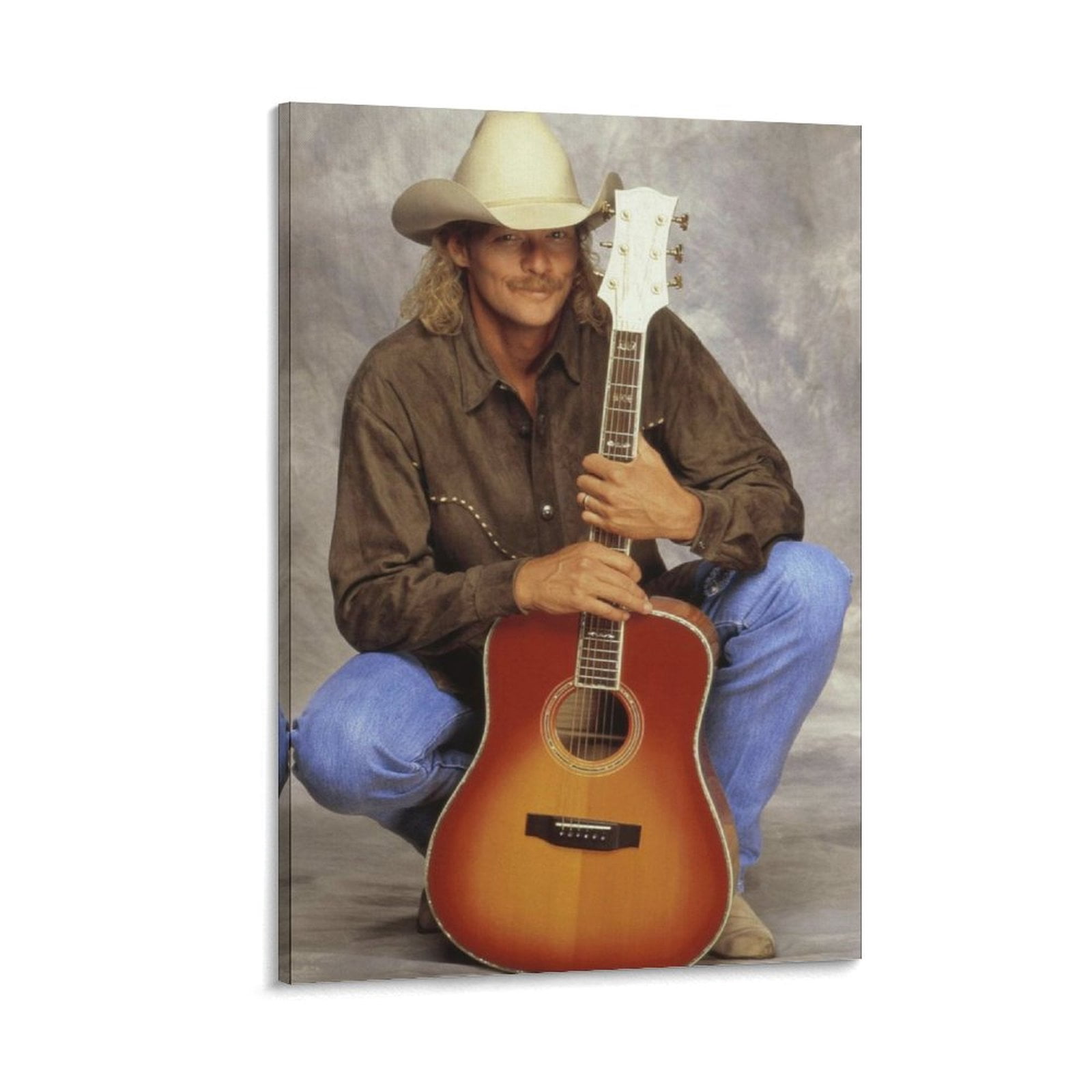
Alan Jackson’s premier rural retreat, most famously represented by his massive hilltop estate in Franklin, Tennessee, is a testament to Neoclassical architecture and Southern privacy. Spanning 120 acres, the "ranch" featured a 22,000-square-foot main residence, professional-grade car equestrian facilities, and a legendary "car barn" reflecting the singer's personal passions and storied career.
For decades, Alan Jackson has been as well known for his meticulously designed real estate portfolio as he is for his chart-topping honky-tonk hits. While the singer has owned several significant properties throughout his career, including coastal escapes and lakeside mansions, his Tennessee "ranch" properties remain the definitive examples of his personal aesthetic. These estates are not merely homes; they are curated environments designed to provide a sanctuary from the rigors of the music industry while housing his extensive collections of vintage automobiles and music memorabilia.
The Evolution of the Jackson Estate: From Sweetbriar to the Hilltop
To understand the concept of the "Alan Jackson Ranch," one must look at the two primary Tennessee properties that defined his rural lifestyle. The first, known as Sweetbriar, was a 135-acre estate in Franklin, Tennessee, modeled after the fictional "Tara" plantation from Gone with the Wind. Completed in the late 1990s, Sweetbriar set the standard for what a country superstar’s retreat could be, featuring a 18,600-square-foot main house, a private lake, and extensive horse stalls.
Following the sale of Sweetbriar in 2010 for a then-record $28 million, Jackson and his wife, Denise, moved toward an even more secluded vision: the Hilltop Estate (often referred to in real estate circles by its location on Moran Road). This property, which he eventually sold in 2020 for approximately $19 million, represents the pinnacle of his "rural retreat" philosophy. It balanced the grandiosity of a European manor with the rugged, rolling landscape of Middle Tennessee’s equestrian corridor.
Architectural Grandeur and Design Philosophy
The architecture of Jackson’s primary rural retreats consistently leans toward Neoclassical and Federal-style influences. These are not "ranches" in the sense of low-slung, mid-century Western designs; rather, they are stately manors that command the landscape.
The Main Residence
The hilltop manor features a facade of hand-cut stone and massive white columns, a signature of Jackson’s preference for symmetry and timelessness. Inside, the design emphasizes "Old World" craftsmanship. Key architectural features typically include:
- Mahogany Millwork: Extensive use of dark, polished woods in the library and formal offices.
- Grand Entryways: Double-height foyers with sweeping staircases and custom-forged iron railings.
- Artisan Plasterwork: Hand-finished crown molding and ceiling medallions that reflect 19th-century luxury.
Seamless Indoor-Outdoor Integration
A critical component of a rural retreat is the ability to interact with the land. The Jackson ranch was designed with expansive loggias and screened porches that offer panoramic views of the Tennessee hills. These spaces were equipped with outdoor kitchens and stone fireplaces, allowing for year-round utility even in the humid Southern summers or crisp autumn evenings.
The Famous "Car Barn" and Secondary Structures
Perhaps the most unique aspect of Alan Jackson’s rural retreats is the focus on his hobbies. Jackson is a world-renowned collector of vintage cars, and his property requirements always included specialized facilities for maintenance and display.
The "Car Barn" on his 120-acre estate was more than a garage; it was a climate-controlled museum. Capable of housing dozens of vehicles, the structure featured professional-grade lifts, a detailing station, and a lounge area for guests. This facility allowed Jackson to maintain his collection of 1950s Chevrolets and vintage Fords without needing to transport them to off-site warehouses.
In addition to the car facilities, the property included:
- A Private Pub: A detached building designed to look like a rustic cabin, featuring a full bar, pool tables, and music memorabilia. This served as a private entertainment hub for his close friends and family.
- Guest Log Cabins: Strategically placed throughout the 120 acres to provide visitors with a sense of "roughing it" in luxury, far removed from the main house's formal atmosphere.
- Equestrian Facilities: Even when Jackson moved away from heavy horse breeding, the infrastructure for paddocks and riding trails remained a core part of the land’s utility.
Land Management and Privacy Requirements
Privacy is the primary currency for a celebrity of Alan Jackson's stature. The selection of the Moran Road site was strategic, utilizing the natural topography of Williamson County to shield the home from public view.
The acreage was managed not as a working cattle ranch, but as a private parkland. This involved significant investment in:
- Gated Security: A multi-layered security system beginning at a distant gatehouse and continuing through the winding, mile-long driveway.
- Wildlife Conservation: Maintaining the timber and meadows to encourage local deer and turkey populations, contributing to the "rural retreat" atmosphere.
- Water Features: The creation of man-made lakes and ponds, which provided both aesthetic beauty and a place for Jackson to indulge in his love for fishing.
The 2020 Sale and Modern Context
In 2020, Alan Jackson made headlines by listing his hilltop estate for $23 million, eventually closing the sale at $19 million. This move marked a transition for the singer. As the year 2026 unfolds, Jackson's real estate moves are often viewed through the lens of his health journey. Having been open about his diagnosis of Charcot-Marie-Tooth (CMT) disease, a neurological condition that affects balance and muscle movement, the singer has gradually pivoted toward properties that offer easier navigation and proximity to specialized care, while still maintaining his need for rural seclusion.
The sale of the large-scale "ranch" properties signifies a broader trend among legacy country stars: downsizing the physical footprint of their estates while upgrading the technological and accessibility features of their primary residences.
Comparative Features of Alan Jackson’s Major Estates
The following table compares the two most significant Tennessee properties that define Alan Jackson’s legacy as a landowner.
| Feature | Sweetbriar (Sold 2010) | The Hilltop Estate (Sold 2020) |
|---|---|---|
| Total Acreage | 135 Acres | 120 Acres |
| Square Footage | ~18,600 Sq. Ft. | ~22,012 Sq. Ft. |
| Primary Style | Neoclassical / "Tara" Inspired | French Country / Neoclassical |
| Bedrooms/Baths | 6 Bedrooms / 7 Full, 4 Half Baths | 5 Bedrooms / 8 Full, 2 Half Baths |
| Unique Amenity | Private Lake & Boathouse | 15-Car Climate Controlled Showroom |
| Location | Franklin, TN | Franklin, TN (Moran Rd) |
| Last Sale Price | $28,000,000 | $19,000,000 |
Why Country Stars Choose Williamson County
Alan Jackson’s choice to remain in the Franklin and College Grove areas of Williamson County for decades is not accidental. This region has become the "Hamptons of the South" for several reasons:
- Tax Advantages: Tennessee’s lack of state income tax makes it an ideal home base for high-earning entertainers.
- Discretion: The local culture is accustomed to high-profile residents (including George Strait, Keith Urban, and Carrie Underwood), allowing them to shop and dine with relative anonymity.
- Topography: The rolling hills provide natural "blind spots," making it easy to hide large mansions from the road without needing unsightly walls or fences.
Maintaining a Rural Retreat: Practical Considerations
Owning a property like the Jackson ranch comes with immense operational requirements. For those looking to emulate this lifestyle, several factors must be considered:
Staffing and Operations
A 120-acre estate with a 22,000-square-foot home requires a full-time staff. This usually includes a property manager, several groundskeepers for the acreage, a housekeeping team, and dedicated security personnel. The "ranch" lifestyle is a business in itself, requiring meticulous scheduling for HVAC maintenance, pool care, and land grading to prevent erosion on the hills.
Land Use and Zoning
In Williamson County, properties of this size are often subject to "Greenbelt" tax status. This requires the owner to maintain the land for agricultural or timber use in exchange for lower property tax rates. Jackson’s estates often balanced this by keeping significant portions of the land in their natural, forested state or maintaining horse-ready pastures.
Common Questions About Alan Jackson’s Ranch
Does Alan Jackson still live on the 120-acre ranch?
No. Alan Jackson sold his primary 120-acre hilltop estate in Franklin, Tennessee, in 2020 for $19 million. He has since moved into a more manageable, yet still highly private, residence in the Nashville area and maintains properties in Florida.
Where exactly is the Alan Jackson ranch located?
The most famous of his recent properties was located on Moran Road in Franklin, Tennessee, within Williamson County. This area is known for its high-value equestrian estates and is roughly 30 minutes south of Nashville.
Why did Alan Jackson sell his Tennessee estates?
While the singer rarely discusses his real estate motivations in detail, the sales coincided with his daughters reaching adulthood and his public announcement regarding Charcot-Marie-Tooth (CMT) disease. Scaling down from a 22,000-square-foot multi-level home to a more accessible layout is a common move for those managing mobility-impacting conditions.
Can you tour the Alan Jackson ranch?
The properties are private residences and are not open to the public. Unlike Elvis Presley’s Graceland, Jackson’s homes remain in the hands of private owners who maintain the security and privacy measures established by the country star.
Did Alan Jackson design the houses himself?
Alan and Denise Jackson worked closely with architects and interior designers to ensure the homes met their specific needs. Jackson is known for his keen eye for detail, particularly regarding the garages and "man cave" areas, which he often personally conceptualized to house his collections.
Final Recommendation for Real Estate Enthusiasts
For those seeking to find or build their own "rural retreat" inspired by Alan Jackson, the focus should be on topography and multi-functional outbuildings. The hallmark of the Jackson estates was not just the main house, but the ability to pursue hobbies—whether car restoration, songwriting, or equestrian arts—within the privacy of the property boundaries. When evaluating a rural retreat in 2026, prioritize land that offers natural privacy through elevation changes rather than man-made structures, as this preserves the "country" feel that Alan Jackson has championed throughout his life and career.