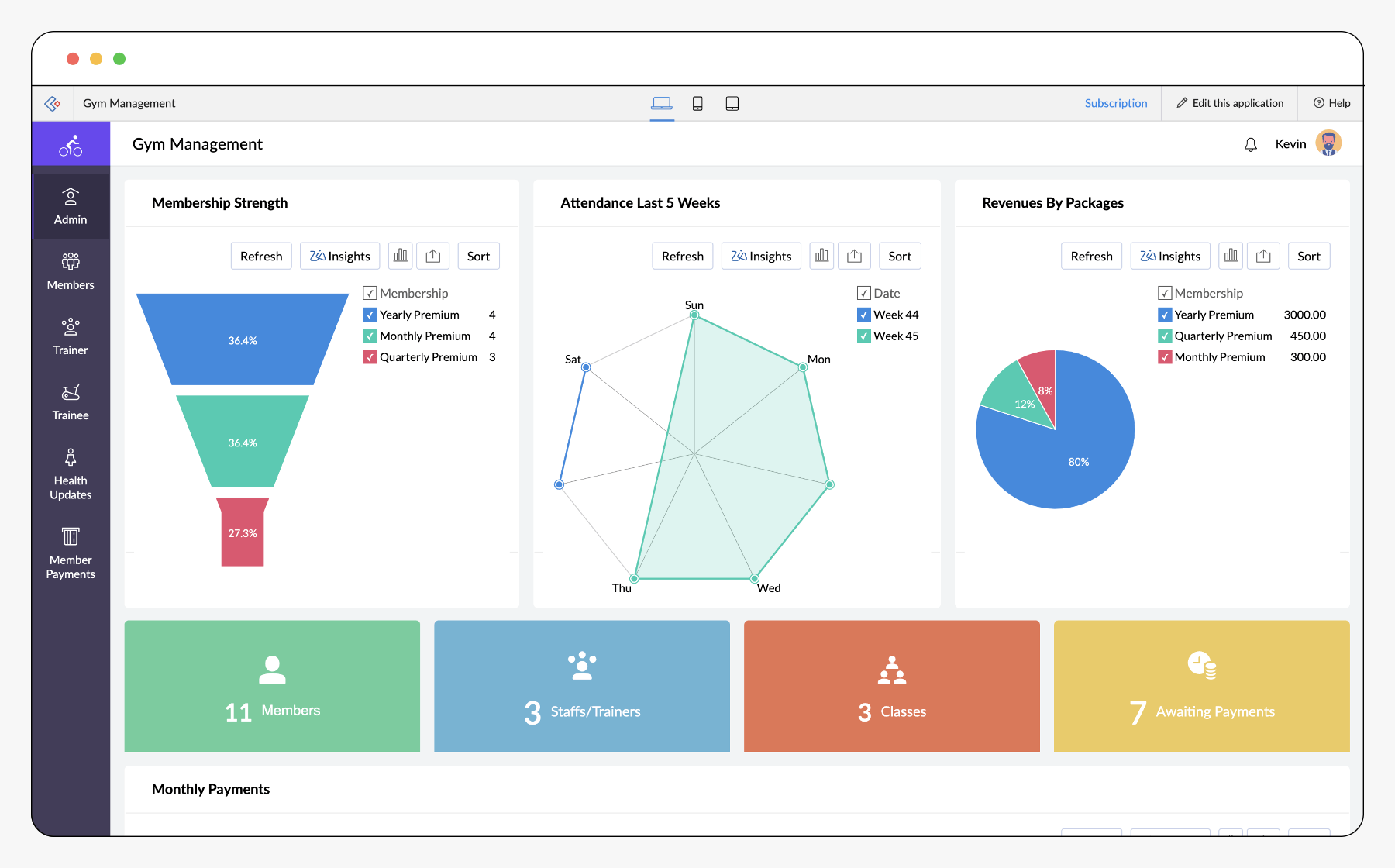
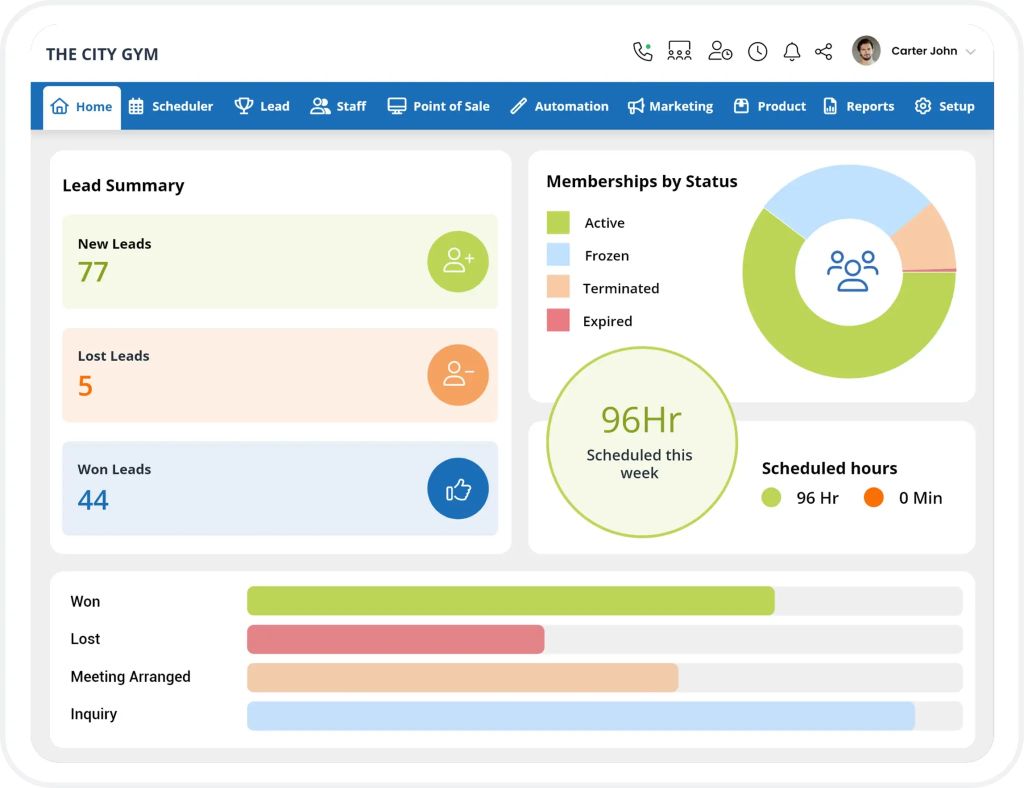
Integrating Artificial Intelligence (AI) into gym management software and Customer Relationship Management (CRM) platforms transforms routine administrative tasks into predictive, data-driven engagement strategies. By leveraging machine learning models and automated communication tools, gym owners can personalize member interactions, optimize lead conversion workflows, and reduce churn rates through early identification of at-risk users.
The Intersection of Fitness Operations and Artificial Intelligence
In the current fitness landscape of 2026, gym management software has evolved beyond simple scheduling and billing tools. The primary challenge for facility operators remains balancing high-touch member service with the efficiency required to manage growing rosters. AI integrations serve as a bridge between these two requirements by automating the "busy work" of a CRM while surfacing high-value insights that human staff might miss in a large database.
When gym management platforms incorporate AI, they typically focus on three core operational pillars: member communication, automated lead management, and operational analytics. Unlike legacy automation, which relied on static if-this-then-that triggers, modern AI-driven CRM features utilize natural language processing (NLP) to understand the sentiment of member queries and predictive modeling to anticipate which members are likely to cancel their subscriptions.
Automating the Lead Conversion Lifecycle
The most immediate return on investment for AI-integrated gym CRMs is found in lead management. Prospective members often inquire about pricing or schedules across multiple channels, including social media, web forms, and direct messaging. AI-powered chatbots and auto-responders now handle these inquiries instantaneously, regardless of the time of day.
These systems do not merely send generic replies. They integrate with the CRM to access the prospect’s previous interactions, allowing the AI to offer tailored trial memberships, schedule facility tours based on real-time availability, or answer common questions about class intensity and trainer availability. By the time a human staff member engages with the lead, the AI has already qualified the prospect and populated the CRM with actionable data, significantly increasing the probability of a successful conversion.
Predictive Churn Analysis and Member Retention
Retaining members is historically more cost-effective than acquiring new ones. AI-integrated CRM systems in 2026 utilize historical data—such as visit frequency, attendance patterns in specific classes, and payment history—to assign a "retention risk score" to each member.
When a member’s visit frequency drops below their established baseline, the AI can automatically trigger a multi-stage intervention strategy. This might include:
- Personalized Outreach: Sending an automated but personalized message asking for feedback or offering a specialized incentive, such as a complimentary personal training session or a small discount.
- Managerial Notification: Alerting the facility manager to manually intervene for high-value accounts that the AI has flagged as critical.
- Surveys and Sentiment Analysis: Deploying short, sentiment-focused check-in surveys to gauge member satisfaction levels before they reach the point of cancellation.
Optimizing Class Scheduling and Resource Allocation
Beyond CRM functions, AI-driven gym software plays a critical role in internal resource allocation. By analyzing historical attendance data, AI models predict which time slots are likely to see high volume and which classes are underperforming.
Gym owners can use these insights to optimize their group fitness schedules, ensuring that staff resources—such as instructors and specialized equipment—are allocated during peak demand. This minimizes "dead air" where staff are paid for empty classes and ensures members find the services they want during their preferred training windows. Furthermore, AI can suggest dynamic pricing models or incentive programs to fill slots that typically see lower attendance.
Technical Prerequisites for Implementation
Before integrating AI tools into an existing gym management CRM, facility operators must evaluate their data readiness. AI systems are only as effective as the data they process.
- Data Quality and Centralization: Ensure that all member contact information, visit logs, and billing history are centralized in a single CRM. Fragmented data across disparate systems will result in inaccurate AI predictions.
- API Compatibility: Verify that your chosen gym software offers an open API (Application Programming Interface) or native AI integrations that comply with modern data protection standards.
- Compliance and Privacy: Ensure that your AI integration follows regional data protection regulations, such as the GDPR in the European Union or CCPA in California. Member data used for training AI models must be anonymized or handled with explicit consent.
Comparison of AI Integration Strategies
| Strategy | Primary Benefit | Implementation Complexity | Data Requirement |
|---|---|---|---|
| Automated Lead Chatbots | 24/7 engagement, higher conversion | Moderate | Basic contact/lead history |
| Predictive Churn Scoring | Proactive retention, revenue stability | High | Long-term visit & billing history |
| Dynamic Scheduling AI | Optimized labor costs, class fill-rates | High | Historical attendance data |
| Sentiment Analysis Surveys | Real-time feedback, brand loyalty | Low | Recent feedback/communication |
Common Mistakes and How to Avoid Them
The most common pitfall when adopting AI for gym management is "automation without empathy." While AI can handle the bulk of communications, relying entirely on bots for member concerns can lead to frustration. The most effective approach is a hybrid model where AI handles the administrative heavy lifting, but human staff retain control over high-stakes interactions and complex customer service issues.
Another mistake is failing to audit the data. AI models can inherit biases from historical data. For instance, if a gym historically catered only to a specific demographic, an AI model might unfairly penalize or ignore other segments. Regular monitoring of the AI’s suggestions against actual outcomes is necessary to ensure the software remains equitable and effective.
Troubleshooting AI Integration Issues
When an AI-integrated CRM fails to perform as expected, start with data validation. Check if the input streams—such as door access logs or point-of-sale data—are syncing correctly with the CRM. If the AI is flagging members as "at-risk" who are actually active, the model likely needs recalibration based on recent trends, such as a shift in gym hours or the introduction of a new class format.
Ensure that the AI model is not operating on outdated assumptions. In 2026, fitness trends shift rapidly; an AI model trained on 2023 or 2024 data might not accurately reflect the current habits of a post-pandemic or post-tech-boom fitness population. Request that your software provider allows for "model retraining" using current quarterly data to maintain accuracy.
Frequently Asked Questions
1. Does AI integration replace the need for gym staff? No. AI is designed to augment staff by handling repetitive tasks like scheduling, follow-ups, and basic reporting. This allows your team to focus on high-value activities, such as building personal relationships with members and improving the floor experience.
2. Is AI-driven gym software secure for handling payment data? Yes, provided you use reputable, industry-standard providers. Leading gym management platforms are PCI-DSS (Payment Card Industry Data Security Standard) compliant. The AI integrations typically analyze behavior patterns rather than accessing raw credit card numbers, adding a layer of security.
3. How long does it take to see results after implementing AI? For lead automation, results are often instantaneous. For more complex applications like predictive churn modeling, the system usually requires at least three to six months of data accumulation and pattern recognition to provide statistically significant predictions.
4. Can I use AI to help with gym content creation? Many modern gym CRMs are now integrating Generative AI tools that help owners create social media posts, email newsletters, and member-specific fitness tips. This reduces the time spent on marketing while maintaining a consistent brand voice.
Practical Next Steps for Gym Owners
If you are considering AI integration for your facility, begin by auditing your current CRM’s capabilities. Contact your software provider to inquire about their 2026 roadmap regarding AI features. Ask specifically if their "Predictive Analytics" or "Automated Engagement" modules are native to the platform or require third-party API connections.
Before committing to an upgrade, run a pilot program with one subset of your member base—such as a specific membership tier—to test the efficacy of automated churn interventions. Collect performance data over one full business cycle (usually 90 days) before rolling out the automation to your entire membership list. This measured approach ensures that you optimize your operations without sacrificing the personalized member experience that is essential to the fitness industry.