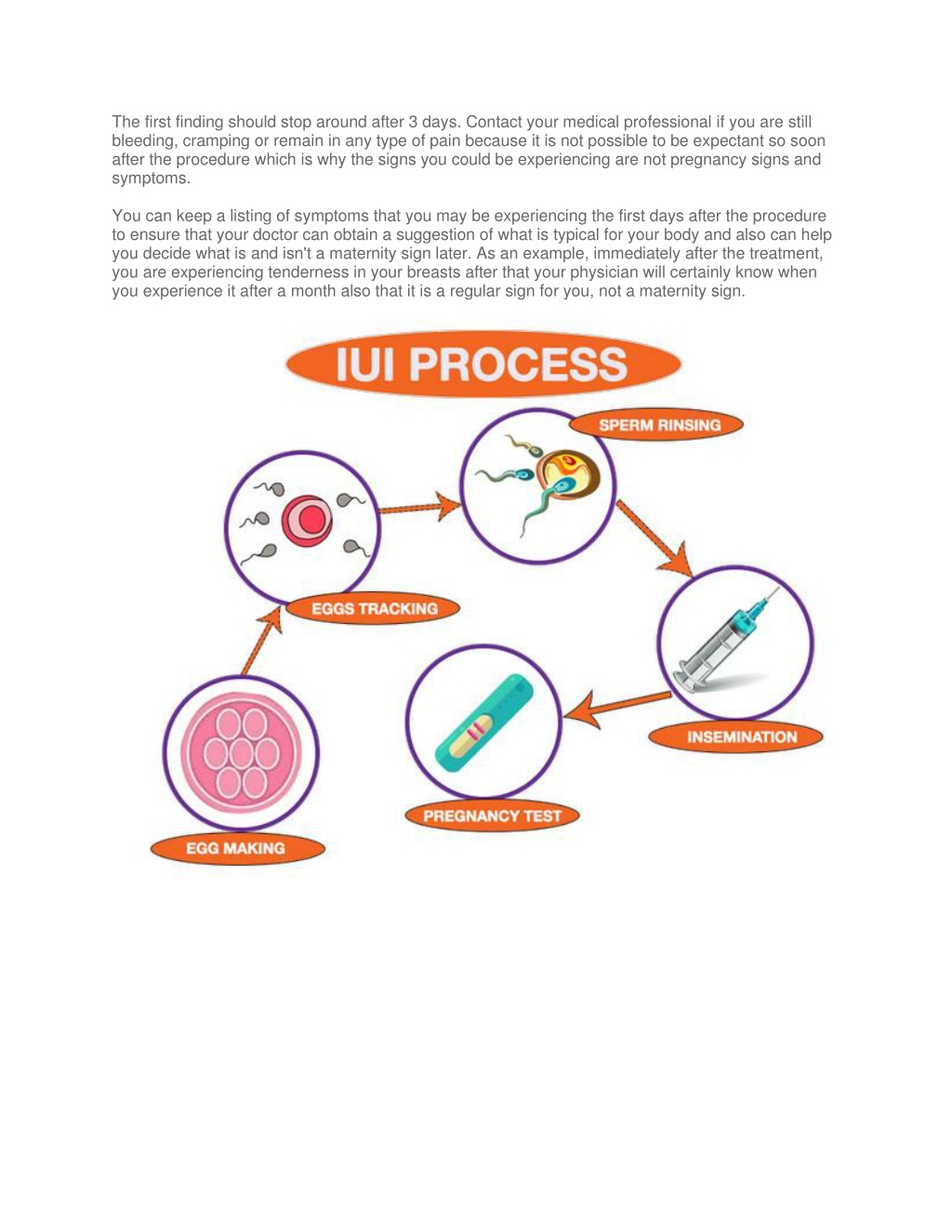
Immediately after an Intrauterine Insemination (IUI) procedure, the "two-week wait" begins as you monitor for symptoms and wait for the embryo to implant. During this period, you may experience mild cramping, spotting, or hormonal side effects. Success is confirmed through a blood pregnancy test roughly 14 days post-procedure.
Intrauterine Insemination (IUI) is a foundational fertility treatment that bridges the gap between timed intercourse and more invasive procedures like In Vitro Fertilization (IVF). While the procedure itself is relatively brief—often taking less than 15 minutes—the period that follows is a complex physiological and emotional window. In 2026, clinical protocols for post-IUI care remain focused on optimizing the uterine environment and managing patient expectations during the critical implantation window.
Understanding what happens next requires a breakdown of immediate physical sensations, the biological timeline of conception, and the clinical milestones that determine whether a cycle has been successful.
Immediate Post-Procedure: The First 48 Hours
Once the catheter is removed and the concentrated sperm sample has been deposited into the fundus of the uterus, the immediate "recovery" phase begins.
Physical Sensations and Activity
It is common for patients to remain lying down for 10 to 15 minutes following the procedure. While research from the American Society for Reproductive Medicine (ASRM) suggests that prolonged bed rest does not significantly increase pregnancy rates, many clinics maintain this short rest period to allow the patient to recover from any minor cervical irritation.
In the 24 to 48 hours following the IUI, you may experience:
- Mild Cramping: This is often caused by the passage of the catheter through the cervix or the uterus reacting to the small amount of fluid injected.
- Light Spotting: The cervix is highly vascularized, and the minor trauma of the catheter can cause light pink or brown discharge. This is not a sign of a failed cycle or a period.
- Discharge: You may notice increased wetness. It is important to know that this is usually cervical mucus or the "wash" medium used in the sperm preparation, not the sperm itself "leaking out."
Activity Restrictions
In 2026, the prevailing medical advice is to maintain "business as usual" with minor caveats. High-impact exercise, such as marathon training or heavy weightlifting, is often discouraged in favor of moderate activities like walking or yoga. The goal is to maintain healthy blood flow to the pelvic region without causing systemic physical stress or significantly raising the core body temperature.
The Biological Timeline: From Insemination to Implantation
To understand "what happens next," one must look at the microscopic journey occurring within the fallopian tubes and uterus. The IUI procedure is timed to coincide with ovulation, usually triggered by an hCG injection (the "trigger shot").
- Fertilization (Hours 0–24): After the IUI, the sperm must travel to the fallopian tube to meet the egg. Fertilization typically occurs within 12 to 24 hours of ovulation.
- Cell Division (Days 1–4): The fertilized egg, now a zygote, begins to divide as it travels down the fallopian tube toward the uterus.
- The Blastocyst Stage (Day 5): The embryo reaches the blastocyst stage, consisting of about 70–100 cells.
- Implantation (Days 6–12): This is the most critical "next step." The blastocyst must attach itself to the uterine lining (endometrium). This process is chemically complex and requires a receptive lining, which is why many doctors prescribe progesterone support during this window.
Managing Medications and Hormonal Support
Many IUI cycles involve supplemental medications after the procedure to increase the likelihood of a successful pregnancy. The most common is Progesterone, often administered as vaginal inserts, gels, or oral capsules.
Why Progesterone Matters
Progesterone is known as the "pregnancy hormone." Its primary role after an IUI is to:
- Thicken the Endometrium: It ensures the uterine lining is "sticky" and nutrient-rich for the embryo.
- Prevent Uterine Contractions: It relaxes the uterine muscles to prevent the body from rejecting the embryo.
- Support the Corpus Luteum: In medicated cycles, the body's natural progesterone production may need a boost to sustain an early pregnancy.
However, progesterone supplementation comes with a "side effect profile" that mimics early pregnancy, which can make the two-week wait psychologically challenging.
Deciphering Symptoms: Pregnancy vs. Side Effects
One of the most difficult aspects of the post-IUI period is "symptom spotting." Because many patients take a trigger shot (hCG) and progesterone, the body often feels pregnant even if it is not.
| Symptom | Cause in Non-Pregnant State (IUI Recovery) | Cause in Early Pregnancy |
|---|---|---|
| Breast Tenderness | High progesterone levels from supplements or the trigger shot. | Rising natural progesterone and estrogen. |
| Bloating | Side effect of ovulation induction meds (Clomid/Letrozole) or progesterone. | Hormonal shifts slowing down digestion. |
| Fatigue | Progesterone is a natural sedative. | The body’s increased metabolic demand to build the placenta. |
| Cramping | Uterine irritation from IUI or impending menstruation. | Implantation or the uterus beginning to expand. |
| Nausea | Often a reaction to fertility medications. | Rising hCG levels (usually occurs later, around week 6). |
It is crucial to understand that in the first 10 days post-IUI, it is physiologically impossible to "feel" pregnant because the embryo has likely not yet implanted or produced enough hCG to trigger systemic symptoms.
The "Two-Week Wait" (TWW) and Testing Protocols
The standard protocol in 2026 remains waiting 14 days after the IUI to conduct a pregnancy test. While at-home tests are tempting, they can be misleading during this window.
The Problem with Early Testing
Most IUI cycles use an hCG trigger shot (such as Ovidrel) to induce ovulation. This medication is literally the "pregnancy hormone." If you test too early (e.g., 7–9 days post-IUI), the test may detect the residual medication rather than a new pregnancy, leading to a "false positive." Conversely, testing too early may result in a "false negative" if implantation occurred on the later side of the window (Day 11 or 12) and hCG levels haven't reached detectable thresholds.
The Beta hCG Blood Test
Your fertility clinic will likely schedule a "Beta" test. This is a quantitative blood test that measures the exact amount of hCG in your bloodstream.
- A positive result: Generally anything over 5 mIU/mL, though clinics look for higher numbers (often 50+) by Day 14.
- The "Doubling" Rule: The absolute number is often less important than the rate of increase. Doctors look for the hCG level to approximately double every 48 hours in the early stages.
What Happens if the IUI is Successful?
If the Beta test is positive, you will enter a period of "early pregnancy monitoring." This is more intensive than the care provided by a standard OB-GYN.
- Repeat Blood Work: You will likely have 2–3 more blood draws to ensure hCG levels are rising appropriately.
- Progesterone Checks: The clinic will monitor your progesterone levels to see if your supplementation dosage needs adjustment.
- Early Ultrasound: Around the 6-to-7-week mark, the clinic will perform a transvaginal ultrasound to confirm the presence of a gestational sac, a yolk sac, and ideally, a fetal heartbeat.
- Graduation: Once a heartbeat is confirmed and the pregnancy appears stable (usually between weeks 8 and 10), you will "graduate" from the fertility clinic to a regular obstetrician.
What Happens if the IUI Fails?
Statistically, IUI success rates hover between 10% and 20% per cycle, depending on age and the underlying cause of infertility. If the pregnancy test is negative, the "next steps" involve a clinical review.
- Discontinuation of Meds: You will stop taking progesterone, which will trigger a withdrawal bleed (your period) within a few days.
- The "Post-Mortem" Consultation: You and your doctor will review the cycle. Was the timing right? Was the sperm count (post-wash) sufficient? Did the lining look healthy?
- Adjusting the Protocol: For the next cycle, the doctor may increase the dosage of ovulation induction drugs or switch medications (e.g., moving from Letrozole to injectable Gonadotropins).
- The Three-Cycle Rule: Many specialists recommend trying IUI for three to four cycles. Research, including data from the Mayo Clinic, indicates that if IUI hasn't worked within 3–4 attempts, the cumulative success rate plateaus, and it may be time to discuss IVF.
Psychological Health and Coping Strategies
The "what happens next" is not just physical; it is mental. The two-week wait is often cited by patients as the most stressful part of fertility treatment.
Managing Anxiety
- Avoid "Google-Symptom" Spirals: Every body reacts differently. Comparing your lack of symptoms to someone else's success story online is rarely productive.
- Set a Testing Date: Agree with your partner or yourself on a specific date to test and stick to it to avoid the "shadow" of false positives.
- Focus on Local Control: You cannot control implantation, but you can control your hydration, your sleep schedule, and your stress management.
Financial and Insurance Considerations in 2026
By 2026, many more jurisdictions have mandated fertility coverage, but IUI remains a "per-cycle" expense for many.
- Cost per Cycle: Expect to pay between $500 and $4,000 per cycle, depending on whether you are using oral medications or injectables and the level of monitoring required.
- Insurance Caps: Some insurance plans have a lifetime maximum for "Infertility Services." If IUI is not working, you must weigh the cost of continued IUI attempts against saving that "cap" for the higher costs of IVF.
Frequently Asked Questions
Can I have sex after an IUI?
Yes, most doctors actually encourage it. While the IUI handles the heavy lifting of placing sperm in the uterus, having intercourse can provide a "back-up" of sperm. Additionally, some studies suggest that exposure to seminal fluid may aid in the immune system's receptivity to an embryo, though this is still being researched in 2026.
How much spotting is too much after IUI?
Light spotting or brown discharge is normal for 24–48 hours. However, if you experience heavy bleeding (soaking a pad) or severe, localized pain on one side, you should contact your clinic immediately, as this could indicate an adverse reaction or, later in the cycle, a potential complication.
Should I stay in bed the day of my IUI?
No. There is no evidence that bed rest improves IUI outcomes. In fact, moderate movement and light walking help promote blood flow to the uterus, which is beneficial for the endometrial lining. You can return to work or light daily activities immediately.
When does implantation actually happen after IUI?
Implantation generally occurs between 6 and 12 days after ovulation (which is also the day of your IUI). Most commonly, it happens on day 8, 9, or 10. You will not feel implantation happen; "implantation cramping" is a common term but is often just normal luteal phase uterine activity.
Can I travel or fly after an IUI?
Yes. Flying and travel do not affect the success of an IUI. The pressure changes in an airplane cabin have no impact on the microscopic environment of the uterus. However, try to stay hydrated and move around during long flights to prevent blood clots, a general recommendation for anyone on hormonal medications.
Practical Recommendations
If you have just completed an IUI or are preparing for one, your next actions should focus on stability and observation.
- Verify your medication schedule: Ensure you have enough progesterone or other supplements to last the full 14 days.
- Plan your "Beta Day": Clear your schedule for the day you expect the results so you have space to process the news, whether positive or negative.
- Maintain a "TWW" Kit: Keep a thermometer (to check for fever, which should be reported), a heating pad (for mild cramps only—do not use on high heat over the abdomen), and a list of clinic contact numbers.
- Limit Alcohol and Caffeine: While "drink 'til it's pink" is a common phrase, most specialists in 2026 recommend limiting caffeine to under 200mg a day and avoiding alcohol during the wait to ensure the healthiest possible environment for a developing embryo.
The journey following an IUI is a transition from active medical intervention to a period of biological waiting. By understanding the timeline and managing your physical and emotional responses, you can navigate these two weeks with a clearer perspective on the process of building your family.