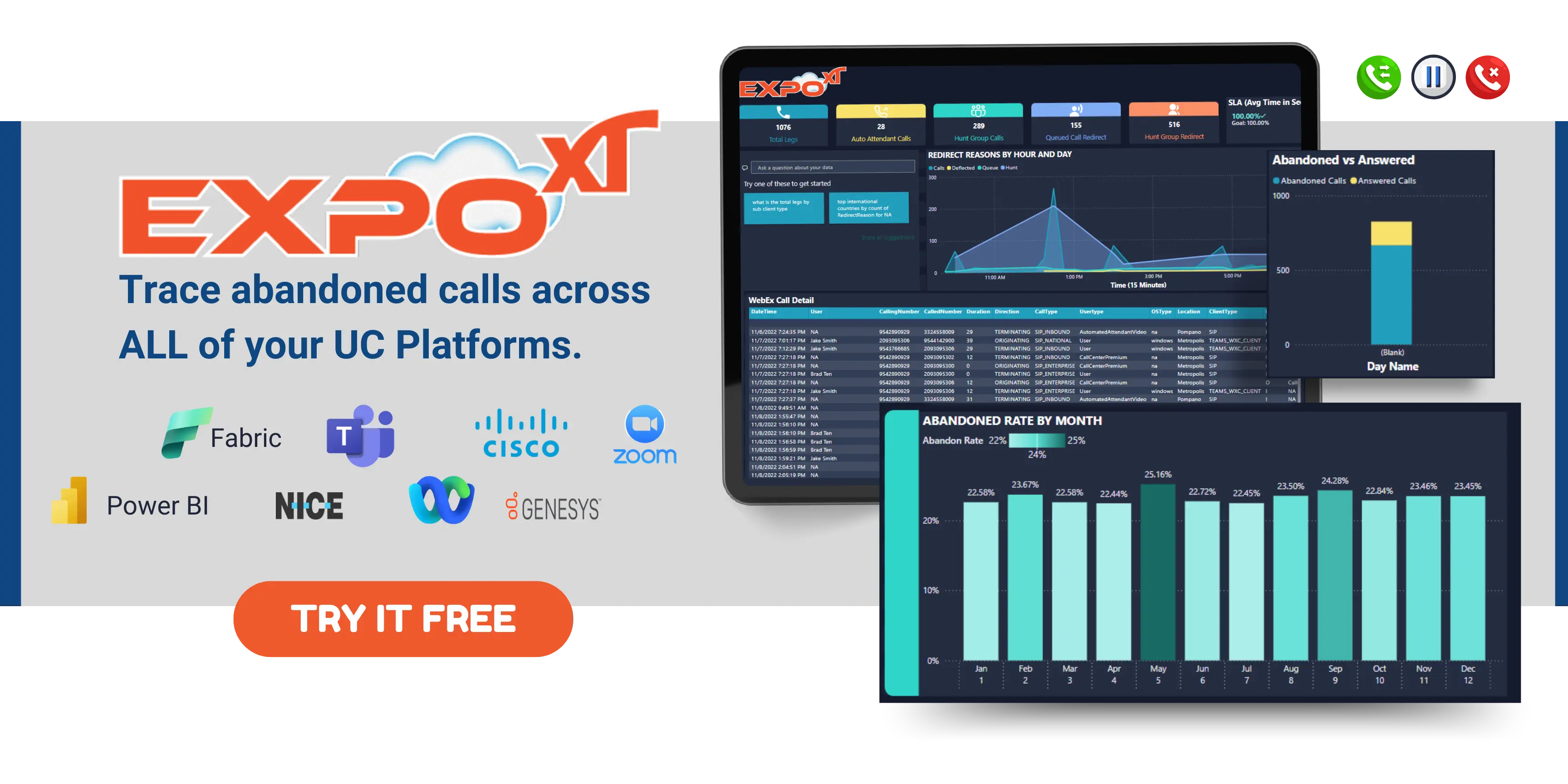
In telecommunications and contact center management, an abandoned call occurs when a caller terminates a connection before interacting with a live agent or completing a self-service transaction. High abandonment rates typically signal systemic issues such as excessive wait times, inefficient routing, or poor staffing, directly impacting customer satisfaction and organizational revenue.
Defining the Abandoned Call: Nuance and Distinction
An abandoned call is a specific metric used to measure the health of a communication network or customer service operation. It represents a "lost opportunity" where the intent of the caller was established, but the fulfillment of that intent was never realized. To manage these effectively, one must distinguish them from other similar but technically distinct events:
- Dropped Calls: These are technical failures where the network or hardware disconnects the call involuntarily. The caller did not choose to hang up; the system failed.
- Missed Calls: This usually refers to calls that ring on an agent’s terminal but are not answered. While they may lead to abandonment, they are a subset of the internal routing process.
- Short Abandons: These occur when a caller hangs up within a very brief window (usually 5 to 10 seconds). These are often excluded from performance KPIs because they are attributed to misdials or the caller immediately realizing they reached the wrong department.
In the landscape of 2026, the definition has expanded to include "digital abandonment," where a caller transitions from a voice queue to a chat or self-service portal and terminates that session prematurely. However, the core focus remains on the voice channel, which remains the primary escalation point for complex issues.
The Psychology and Drivers of Call Abandonment
Understanding why callers hang up is the first step toward mitigation. While the obvious answer is "long wait times," the underlying psychological triggers are more complex.
The Threshold of Patience
Every caller has a mental timer. Factors influencing this timer include the urgency of the issue, the caller's previous experience with the brand, and the perceived value of their time. If a caller is seeking emergency technical support, their patience threshold might be higher than someone calling for a routine billing inquiry, yet the frustration level escalates faster.
IVR Friction and "Looping"
Interactive Voice Response (IVR) systems are designed to route calls efficiently, but they often become a source of abandonment. "IVR Hell"—a term for overly complex menus, repetitive prompts, or the inability to reach a human—leads callers to abandon the call out of sheer exasperation. If the IVR does not provide a clear path to resolution within the first 60 seconds, the probability of abandonment increases by nearly 40%.
Poor Queue Management
Silence is the enemy of retention. If a caller is placed in a queue without periodic updates on their position or estimated wait time (EWT), they feel "lost" in the system. The lack of transparency creates an environment of uncertainty, which is a primary driver for hanging up.
Measuring Success: Key Performance Indicators (KPIs)
To manage abandoned calls, organizations rely on several critical metrics. Relying solely on the raw number of hang-ups is insufficient for a technical SEO or operational analysis.
The Abandonment Rate Formula
The standard calculation for the Abandonment Rate is: (Number of Abandoned Calls / Total Number of Inbound Calls) x 100
However, sophisticated centers use the Adjusted Abandonment Rate, which subtracts "Short Abandons" from the total to provide a more accurate picture of agent and system performance.
Average Speed of Answer (ASA)
There is a direct correlation between ASA and abandonment. As ASA rises, the abandonment rate typically follows a non-linear upward curve. By 2026, the industry standard for high-performing centers aims for an ASA of less than 20 seconds for 80% of calls.
Time to Abandon (TTA)
TTA measures exactly how long callers stay on the line before hanging up. Analyzing the "Mean Time to Abandon" helps managers identify the specific "breaking point" of their audience. If the mean TTA is 90 seconds, but the average wait time is 120 seconds, the system is fundamentally misaligned with caller expectations.
Technical Strategies for Reducing Call Abandonment
Reducing abandonment requires a multi-faceted approach involving workforce management, software optimization, and strategic communication.
1. Implementing Automated Callback Systems
One of the most effective ways to "save" an abandoned call is to prevent the caller from needing to wait in a linear queue. Virtual queuing or "callback-from-queue" technology allows a caller to hang up while maintaining their position in line. The system then automatically calls them back when an agent becomes available. This transforms a synchronous wait into an asynchronous one, significantly improving the customer experience.
2. Workforce Management (WFM) and Erlang C
Proper staffing is the mathematical solution to abandonment. Using the Erlang C formula, managers can predict the number of agents needed based on call volume, average handle time, and desired service levels. In 2026, AI-driven WFM tools provide real-time adjustments, shifting agents between channels (chat, email, voice) to handle unexpected spikes in voice traffic that would otherwise lead to high abandonment.
3. Predictive Routing and Sentiment Analysis
Modern telecommunications platforms use AI to analyze the caller’s history and current sentiment (detected via IVR interactions). If a high-value customer or an "at-risk" caller (one who has had multiple recent issues) is detected, the system can prioritize them in the queue or route them to a specialized retention team, bypassing standard wait times.
4. Improving IVR Navigation
Simplifying the IVR is a low-cost, high-impact strategy. This includes:
- Limiting menu options to no more than four per level.
- Placing the most common reasons for calling at the beginning.
- Using Natural Language Processing (NLP) to allow callers to state their needs in plain English rather than navigating numeric menus.
The Economic Impact of Abandoned Calls
The cost of an abandoned call extends far beyond the immediate loss of a transaction. It ripples through the entire business ecosystem.
| Impact Category | Description | Business Consequence |
|---|---|---|
| Direct Revenue Loss | Potential sales or upgrades that never happen because the caller hung up. | Reduced Monthly Recurring Revenue (MRR). |
| Increased Operational Cost | Callers who abandon often call back multiple times, creating "redial churn" and inflating call volumes. | Higher infrastructure and staffing costs. |
| Customer Lifetime Value (CLV) | Poor experiences lead to customer churn and negative word-of-mouth. | Long-term decline in brand equity and market share. |
| Employee Burnout | Agents dealing with frustrated callers who have waited too long experience higher stress levels. | High staff turnover and training costs. |
Legal and Regulatory Considerations
In many jurisdictions, telecommunications regulators (such as the FCC in the United States or Ofcom in the UK) have strict rules regarding abandoned and "silent" calls, particularly in the context of outbound dialing.
For outbound operations, an abandoned call is often defined as one where a person answers but no live agent is available within two seconds of the person’s greeting. Regulators often cap the allowable abandonment rate for outbound campaigns (typically at 3%). Exceeding these limits can result in heavy fines. While inbound abandonment is less regulated from a legal standpoint, it is heavily scrutinized during audits of government-contracted services and utility providers.
Common Pitfalls in Abandonment Analysis
Data can be misleading if not viewed in context. Managers often make the mistake of viewing abandonment in a vacuum.
- Ignoring the "Hang-up" Location: Does the caller hang up during the initial greeting, the IVR, or while on hold for an agent? If abandonment is high in the IVR, the issue is navigation. If it is high while on hold, the issue is staffing.
- Over-reliance on Averages: A low average abandonment rate can hide "peak hour" disasters. A center might have a 2% abandonment rate over 24 hours but a 25% rate during the lunch hour. Granular, interval-based reporting is essential.
- Failing to Correlate with FCR: Sometimes, a decrease in abandonment leads to a decrease in First Call Resolution (FCR). If agents rush calls to keep the queue moving, callers may not abandon, but their problems aren't solved, leading to repeat calls later.
FAQs About Abandoned Calls
What is a "good" abandonment rate for a contact center?
While it varies by industry, a general benchmark for excellence is between 2% and 5%. Rates exceeding 10% are typically viewed as a sign of operational distress, though high-volume technical support lines may occasionally see higher rates during major outages or product launches.
Do abandoned calls count toward my Service Level Agreement (SLA)?
This depends on the specific contract. Most SLAs are calculated as "X% of calls answered in Y seconds." Typically, abandoned calls are excluded from the "calls answered" metric but are tracked separately as a quality-of-service indicator. However, if abandonment happens before the SLA threshold (e.g., within 20 seconds), they are usually omitted from the calculation entirely.
How does "Occupancy" affect abandonment?
Occupancy refers to the percentage of time agents spend handling calls versus waiting for them. If occupancy is too high (above 85-90%), agents have no "breathing room," and even a small spike in call volume will immediately lead to a queue and subsequent abandonment. Maintaining a healthy balance is key to preventing spikes.
Can IVR messages actually encourage abandonment?
Yes. If an IVR message provides the answer the caller was looking for (e.g., "Our website is currently down for maintenance and will be back at 4 PM"), the caller may hang up. In this case, the abandonment is actually a "positive" outcome because the caller's needs were met through self-service. This is why categorizing the reason for abandonment is vital.
Is there a difference between "Abandoned" and "Lost" calls?
"Lost calls" is a broader term that encompasses abandoned calls, dropped calls, and calls that receive a busy signal because the system's capacity has been exceeded. All abandoned calls are lost calls, but not all lost calls are abandoned.
Final Recommendation for 2026
To master the challenge of abandoned calls in 2026, organizations must move beyond reactive staffing and embrace proactive queue management. Start by auditing your TTA (Time to Abandon) data to find your callers' "breaking point." If your callers typically hang up at the 60-second mark, you must implement an automated callback offer at 45 seconds. By giving the caller control over their time, you convert a potential lost customer into a managed interaction, preserving both revenue and brand reputation.