An AARP Medicare Supplement Insurance plan, often referred to as Medigap, is a private health insurance policy designed to work alongside Original Medicare to help cover out-of-pocket costs such as copayments, coinsurance, and deductibles. These plans are insured by UnitedHealthcare and are available to Medicare-eligible individuals who hold an AARP membership, providing standardized coverage options that vary by letter designation.
Understanding the Role of Medigap in Your Healthcare Strategy
Navigating the transition into retirement and the complexities of the United States healthcare system requires a clear understanding of how Medicare functions. For many, Original Medicare (Parts A and B) provides a robust foundation for hospital and medical coverage. However, Original Medicare does not cover the full cost of medical services. Beneficiaries are often responsible for significant portions of the costs, such as the 20% coinsurance for Part B services, hospital deductibles, and other expenses that can accumulate rapidly during chronic or acute health events.
AARP Medicare Supplement Insurance plans step in to address these gaps. By enrolling in one of these plans, you are effectively transferring a portion of your financial risk to the insurance provider. It is vital to note that these plans are not government-sponsored; they are private insurance policies. While AARP makes these plans available to its members through a relationship with UnitedHealthcare, the plans must adhere to federal and state laws that standardize benefits. This standardization means that a "Plan G" from one provider generally offers the same basic benefits as a "Plan G" from another, though premiums, administrative processes, and member support may differ significantly.
Eligibility and Enrollment Prerequisites
To be eligible for an AARP Medicare Supplement Insurance plan, you must meet specific criteria defined by federal regulations and the policies of the issuing insurance company. First and foremost, you must be enrolled in both Medicare Part A (Hospital Insurance) and Medicare Part B (Medical Insurance). Medicare Supplement plans are designed to supplement these two components specifically.
Membership in AARP is a core requirement for accessing these specific plans. If you are not currently an AARP member, you typically must enroll in the organization before you can purchase or maintain the coverage. Once enrolled in the organization, the primary window for obtaining a supplement plan is your Medigap Open Enrollment Period. This is a one-time, six-month window that begins on the first day of the month in which you are age 65 or older and enrolled in Medicare Part B. During this specific timeframe, you are protected by federal "guaranteed issue" rights. This means the insurance company cannot deny you coverage or charge you higher premiums due to pre-existing health conditions.
If you miss your initial Open Enrollment Period, you may still be able to apply for coverage later; however, you will likely be subject to medical underwriting. During this process, the insurance company will review your health history and may deny your application or charge higher premiums based on your medical status.
Comparing Medicare Supplement Plan Designs
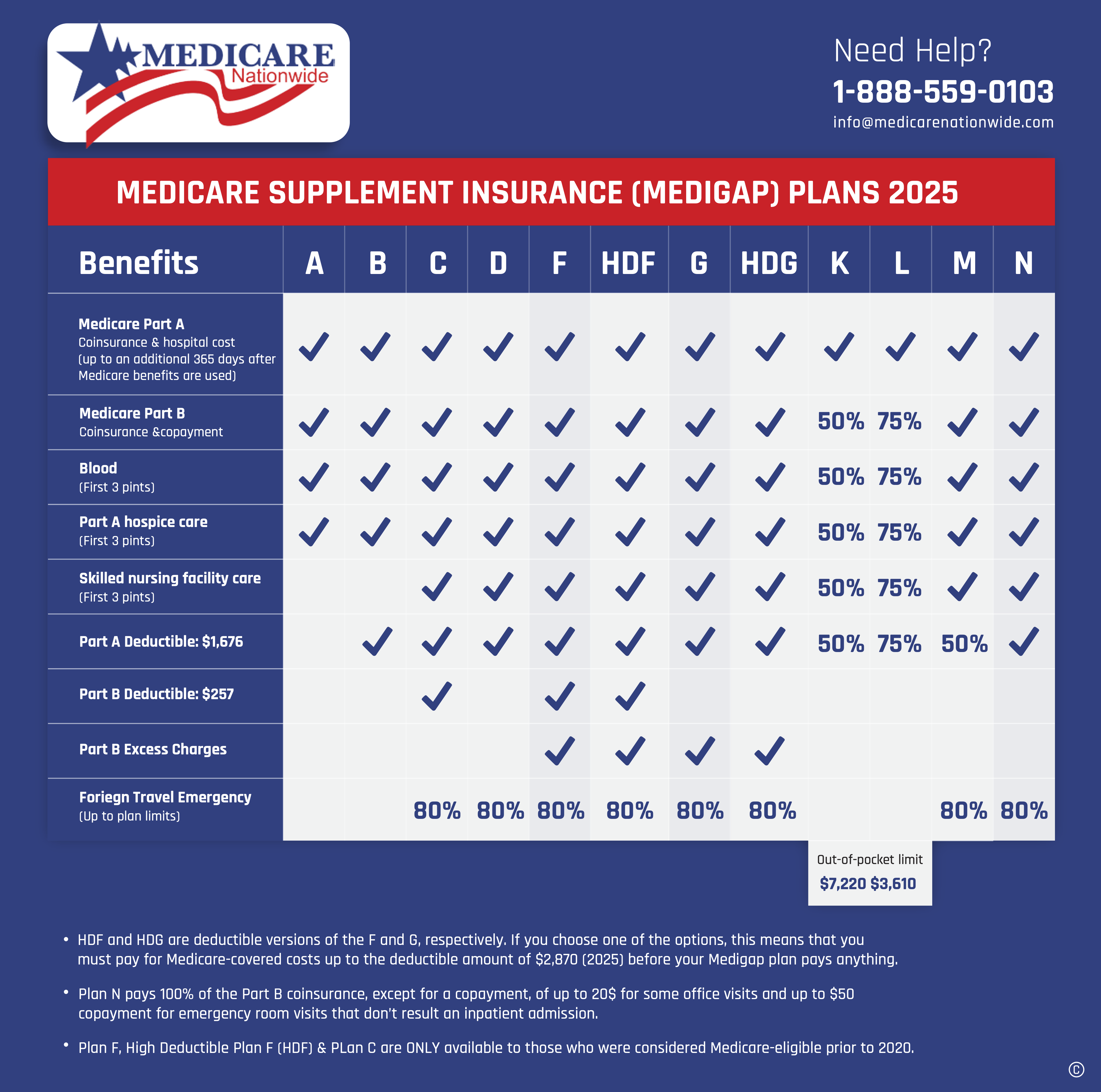
Medicare Supplement plans are categorized by letters, such as Plan A, B, C, D, F, G, K, L, M, and N. Each plan letter corresponds to a different set of standardized benefits. The government mandates that these plans be consistent across the country (with rare exceptions in states like Massachusetts, Minnesota, and Wisconsin, which have their own standardized systems).
The primary differentiator between these plans is the extent of the "gaps" they fill. For example, some plans cover the entire cost of the Part A hospital deductible and the hospice care coinsurance, while others leave the beneficiary responsible for a portion of these costs.
Comparison of Common Medicare Supplement Plans
| Plan Feature | Plan A | Plan G | Plan K | Plan N |
|---|---|---|---|---|
| Part A Coinsurance & Hospital Costs | Yes | Yes | Yes | Yes |
| Part B Coinsurance | Yes | Yes | 50% | Yes* |
| Blood (First 3 Pints) | Yes | Yes | 50% | Yes |
| Part A Hospice Care Coinsurance | Yes | Yes | 50% | Yes |
| Skilled Nursing Facility Coinsurance | No | Yes | 50% | Yes |
| Part A Deductible | No | Yes | 50% | Yes |
| Part B Deductible | No | No | No | No |
| Part B Excess Charges | No | Yes | No | No |
Note: Plan N requires copayments for some office visits and emergency room visits.
Financial Considerations and Premiums
The cost of an AARP Medicare Supplement plan is not uniform. Premiums are influenced by several variables, including the specific plan letter chosen, your age, your location, and the pricing structure used by the insurance company.
There are three common ways insurers price these policies:
- Community-rated: Monthly premiums are generally the same for everyone in the same geographical area who has the same plan, regardless of age.
- Issue-age-rated: Premiums are based on the age you were when you first purchased the policy. These premiums are lower for people who start the plan at a younger age.
- Attained-age-rated: Premiums start low but increase as you get older.
Understanding which pricing structure your plan utilizes is essential for long-term financial planning. While a plan might seem affordable today, understanding the trajectory of potential premium increases can prevent budget shocks in later years. Additionally, individuals should account for annual inflation and medical cost trends, which often result in modest, incremental premium adjustments over time.
Interaction with Other Medicare Programs
A common point of confusion for beneficiaries is how AARP Medicare Supplement plans interact with other Medicare products, specifically Medicare Advantage (Part C) and Medicare Prescription Drug Plans (Part D).
It is a legal requirement that you cannot have both a Medicare Supplement plan and a Medicare Advantage plan simultaneously. Medicare Advantage plans are an "all-in-one" alternative to Original Medicare; if you enroll in an Advantage plan, your supplement policy becomes effectively redundant and is generally not permitted. If you decide to switch from a Medicare Advantage plan back to Original Medicare, you may find that you no longer have guaranteed issue rights for a new Medigap policy, meaning you could be subject to medical underwriting.
Furthermore, Medicare Supplement plans generally do not provide prescription drug coverage. To obtain drug coverage, most beneficiaries enroll in a standalone Medicare Part D prescription drug plan. Because Medigap and Part D are separate entities, you must manage your premiums and coverage documentation for each independently.
Navigating Claims and Provider Networks
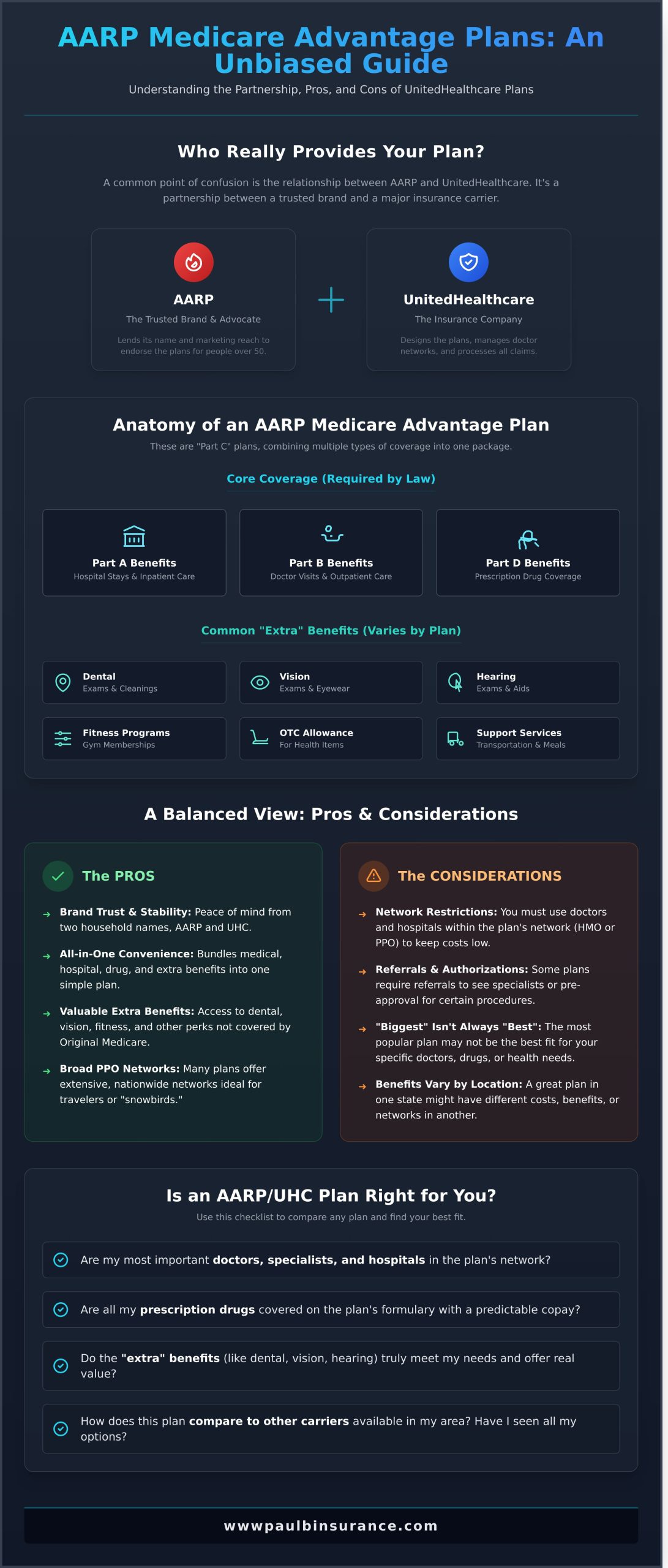
One of the distinct features of AARP Medicare Supplement plans (insured by UnitedHealthcare) is the lack of traditional "networks." Because these plans work in conjunction with Original Medicare, they are accepted by any healthcare provider or hospital in the United States that accepts Medicare. This provides a significant level of flexibility for individuals who travel frequently or those who wish to see specialists who are not part of a specific managed care network.
When you receive a medical service, the provider bills Medicare directly. Medicare pays its share of the approved amount, and the remaining portion is sent to your Medicare Supplement insurance provider. The supplement plan then pays its portion of the covered costs according to your policy terms. This process is largely automated, which reduces the administrative burden on the beneficiary, provided that the medical provider has your correct insurance information on file.
Common Questions and Troubleshooting
1. Can I change my Medicare Supplement plan later? You can apply to change your Medigap plan at any time, but unless you are in a guaranteed issue period or live in a state with specific "Medigap Birthday Rules," you will likely be subject to medical underwriting. This could lead to a denial of coverage or higher premiums based on your health status.
2. What happens if I move to a different state? Medicare Supplement plans are portable. If you move, you can keep your existing plan, though you should contact your insurance provider to update your address. Note that your premium might change because premiums are often based on geographical rating areas.
3. Does the plan cover dental, vision, or hearing services? Generally, Original Medicare and Medicare Supplement plans do not provide coverage for routine dental, vision, or hearing care. Some AARP-branded products may offer supplemental benefits or riders, but these are distinct from the standardized Medigap policy.
4. How are "Part B Excess Charges" handled? Part B excess charges are costs that can occur if you see a provider who does not "accept assignment" from Medicare. If you have a plan that covers these (like Plan G), the plan will pay the difference, provided the charge does not exceed the legal limit set by the state.
5. What is the difference between a Medicare Supplement plan and a Medicare Advantage plan? The primary difference is the structure. Medicare Advantage is an alternative way to receive your Medicare benefits through a private insurer, usually with network restrictions. A Medicare Supplement plan acts as an add-on to Original Medicare to help cover costs that Original Medicare does not fully pay.
Next Steps for Evaluating Your Options
To determine if an AARP Medicare Supplement Insurance plan is the right fit for your healthcare needs in 2026, begin by reviewing your current health usage and your projected medical expenses. If you prioritize the ability to visit any doctor who accepts Medicare and prefer predictable, consistent coverage, a supplement plan is often a primary consideration.
- Review your current Medicare Summary Notice: Look at your previous 12 months of healthcare expenses to identify how much you spent on coinsurance and deductibles.
- Compare standardized plans: Use the official Medicare.gov "Plan Finder" tool to view side-by-side comparisons of available Medigap policies in your specific ZIP code.
- Verify AARP membership requirements: Ensure your membership is current, as this is a prerequisite for accessing the specific AARP-branded plans insured by UnitedHealthcare.
- Consult with a SHIP counselor: If you are uncertain about your rights or the timing of your enrollment, contact your State Health Insurance Assistance Program (SHIP). They provide free, unbiased counseling to help Medicare beneficiaries understand their coverage options and legal protections.
By following these steps, you can make an informed decision that balances your immediate medical requirements with your long-term financial health.