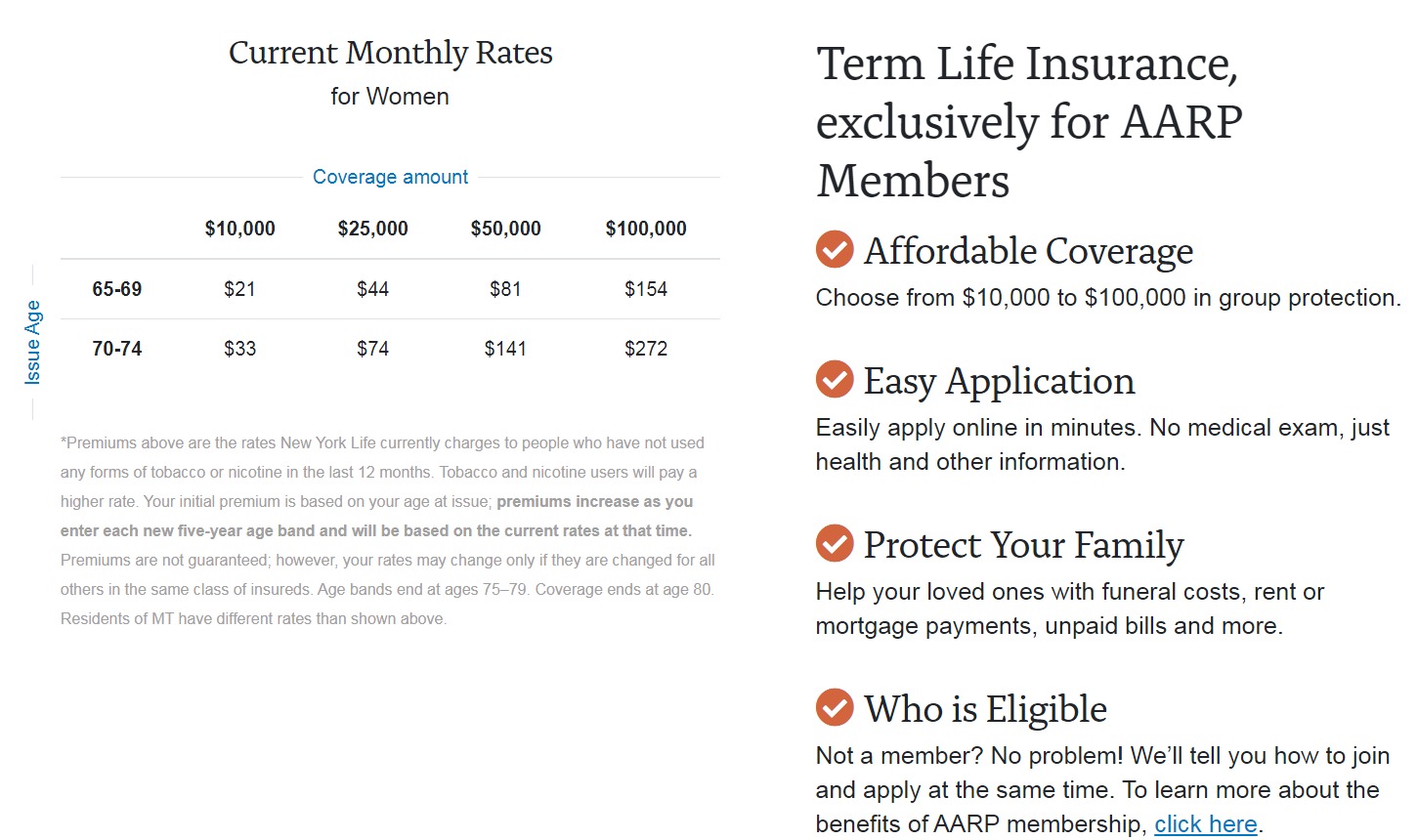
When applying for AARP Life Insurance (underwritten by New York Life), the health questions you must answer depend entirely on the plan you choose. The Term and Permanent (Whole Life) plans use simplified underwriting, asking roughly three to five major health questions to determine eligibility. The Guaranteed Acceptance plan asks no health questions and requires no medical exam, though it includes a two-year waiting period for full benefits.
In 2026, many seniors continue to look toward the AARP Life Insurance Program from New York Life as a primary option for final expense coverage or supplemental income protection. Unlike traditional life insurance policies that may require lengthy physical exams, blood draws, and physician statements, the AARP program is designed for speed and convenience. However, because the underwriting is "simplified," the questions asked are critical. Providing an incorrect answer—even unintentionally—can lead to a claim denial for your beneficiaries later.
This guide provides a comprehensive look at the specific health questions asked, the logic behind them, and how your medical history affects your ability to secure coverage in 2026.
The Three Tiers of AARP Life Insurance Underwriting
To understand the health questions, you must first identify which of the three main products you are applying for. New York Life structures these plans to accommodate different levels of health risk.
1. Level Benefit Term Life Insurance
This plan offers coverage for a specific period (typically until age 80). Because it provides a higher death benefit for a lower initial premium, the health questions are the most stringent of the three options. It is intended for seniors in relatively good health who do not want to undergo a full medical exam but can attest to a clean recent medical history.
2. Level Benefit Permanent (Whole) Life Insurance
This is a "permanent" policy, meaning it does not expire as long as premiums are paid. It also builds cash value over time. The health questions for the Permanent Life plan are very similar to the Term Life plan. If you can answer "No" to the core health questions, you are generally accepted immediately for full coverage.
3. Guaranteed Acceptance Life Insurance
This plan is specifically designed for individuals who cannot qualify for the other two due to chronic illnesses or recent major health events. In 2026, this remains a popular "no-questions-asked" policy. There are no health questions, no weight/height requirements, and no medical history checks. The trade-off is a lower maximum coverage limit and a "graded" death benefit during the first two years of the policy.
The Core Health Questions: A Detailed Breakdown
For the Term and Permanent plans, the application usually features a series of "Yes/No" questions. While the exact phrasing may be updated periodically by New York Life, the 2026 application process generally focuses on these specific areas of concern.
Recent Hospitalization and Nursing Care
Applicants are often asked: "In the past 2 years, have you been confined to a hospital, nursing home, or other health care facility?"
The goal here is to identify recent acute health crises or a loss of independence. If you are currently in a nursing home or receiving long-term care for a chronic condition, you will likely be ineligible for the simplified issue plans and will be directed toward the Guaranteed Acceptance product. This question also targets "Activities of Daily Living" (ADLs). If you require help with eating, bathing, or dressing, it suggests a level of frailty that New York Life considers a high risk for simplified underwriting.
Major Chronic Illnesses (The "Big Three")
The application typically groups major life-threatening conditions into a single multi-part question: "In the past 2 years, have you been treated for or diagnosed by a medical professional with heart disease, stroke, or cancer?"
- Heart Disease: This includes heart attacks, bypass surgery, or chronic congestive heart failure.
- Stroke: This includes both full strokes and "mini-strokes" (TIAs).
- Cancer: Usually, this refers to internal cancers. Basal cell or squamous cell skin cancers that were successfully removed often do not trigger a "Yes" answer, but it is vital to read the specific exclusions on the 2026 form.
Organ Failure and Immune System Health
Questions often extend to the function of vital organs: "In the past 2 years, have you received treatment for or been diagnosed with kidney disease, liver disease, or lung disease (excluding mild asthma)?"
Furthermore, there is almost always a question regarding HIV/AIDS status. Under federal and state laws, the wording of this question is highly regulated. In 2026, if you have been diagnosed with or treated for immune system disorders, you are required to disclose it.
Terminal Illness and Life Expectancy
The most direct question involves life expectancy: "Have you been diagnosed by a medical professional as having a terminal illness that is expected to result in death within the next 12 to 24 months?"
If the answer to this is "Yes," the applicant is generally disqualified from the Level Benefit plans. Even the Guaranteed Acceptance plan may have specific language regarding terminal status at the time of application, though its "guaranteed" nature usually makes it the only viable path forward.
The Impact of Tobacco Use
While tobacco use is not a "disqualifier" that prevents you from getting insurance, it is one of the most important health questions for determining your premium. AARP Life Insurance asks: "Have you used tobacco or nicotine products in any form in the past 12 months?"
In 2026, this definition is broad. It typically includes:
- Cigarettes and cigars.
- Chewing tobacco or snuff.
- Nicotine patches or gum.
- Vaping or E-cigarettes (though some insurers are beginning to distinguish between vaping and smoking, New York Life generally groups them together for AARP products).
If you answer "Yes," your premiums will be significantly higher—often 50% to 100% more than "non-tobacco" rates. If you lie and say "No," and the insurance company discovers tobacco use (perhaps through medical records or a pharmacy report), they can legally deny the death benefit to your family.
Comparison of AARP Life Insurance Plans (2026)
| Feature | Term Life Insurance | Permanent (Whole) Life | Guaranteed Acceptance |
|---|---|---|---|
| Medical Exam Required | No | No | No |
| Health Questions | Yes (Simplified) | Yes (Simplified) | None |
| Age Eligibility | 50–74 | 50–80 | 50–80 |
| Death Benefit Start | Day One (Full) | Day One (Full) | 2-Year Graded Period |
| Tobacco Rates | Yes (Higher Premiums) | Yes (Higher Premiums) | Yes (Standardized) |
| Max Coverage (Typical) | $100,000+ | $50,000 | $25,000 |
How New York Life Verifies Your Answers
Many applicants wonder: "If there is no medical exam, how will they know if I'm telling the truth?" In 2026, insurance companies have access to sophisticated databases that verify your health status behind the scenes.
- MIB (Medical Information Bureau): This is a clearinghouse used by insurance companies. If you applied for insurance elsewhere and disclosed a heart condition, New York Life will see that record.
- Prescription History Checks: This is the most common way "simplified" plans are verified. Insurers use services like Milliman IntelliScript to see every medication you have been prescribed in the last 5–10 years. If you claim you have no heart disease but are taking Nitroglycerin or Carvedilol, the system will flag the discrepancy.
- Motor Vehicle Reports (MVR): For Term Life policies, insurers may check your driving record. A history of DUIs or reckless driving indicates a higher risk profile, which can impact eligibility or rates.
Why the "Two-Year Look-Back" Matters
You will notice that most AARP health questions specify a "2-year" window. This is a significant advantage of the program. In many traditional life insurance policies, you must disclose a heart attack that happened 10 years ago.
With AARP's simplified underwriting, if you had a major health event (like a stroke) three years ago and have had no treatment, complications, or diagnoses related to it within the last 24 months, you can legally and honestly answer "No" to the health questions. This allows seniors with a past medical history to qualify for full, day-one coverage that they might be denied elsewhere.
What Happens if You Answer "Yes"?
Answering "Yes" to a health question does not necessarily mean an automatic rejection for all coverage; it only means you do not qualify for the Level Benefit (instant) coverage.
If your application for Term or Permanent Life is declined based on your health answers, New York Life typically sends a follow-up offer for the Guaranteed Acceptance plan. This ensures that almost every AARP member can get some form of coverage, regardless of their health. However, you should be aware of the "Graded Benefit" clause: if you die of natural causes within the first two years of a Guaranteed Acceptance policy, your beneficiaries will only receive the premiums you paid plus 10% interest, rather than the full face value of the policy.
Common Mistakes to Avoid
- Guessing on Medication: If you aren't sure why you take a certain pill, ask your doctor before applying. A medication used for a "minor" issue might be categorized by the insurer as a treatment for a major condition.
- Ignoring the "Treatment" Clause: Questions often ask if you have been "treated for or diagnosed with" a condition. Even if you feel fine today, if you are still taking maintenance medication for a condition diagnosed five years ago, you are still being "treated" for it.
- Underestimating the Contestability Period: In the first two years of any policy, the insurance company has the right to "contest" a claim. If you die in month 18 and they find you omitted a cancer diagnosis on your application, they can refund the premiums and refuse to pay the death benefit.
Frequently Asked Questions
Does AARP life insurance require a blood test?
No. None of the AARP life insurance products underwritten by New York Life require a blood test, urinalysis, or physical exam. Eligibility is determined solely by your answers to the health questions and a review of your medical and prescription records.
Can I get AARP life insurance if I have diabetes?
Yes. Diabetes is not always an automatic disqualifier for the Level Benefit plans. The application typically asks about "serious" complications or recent hospitalizations. If your diabetes is well-controlled with oral medication or insulin and you have no kidney or heart complications, you may still qualify for the Permanent or Term plans. If the diabetes is severe, the Guaranteed Acceptance plan remains an option.
What is the maximum age to answer health questions for AARP?
For the Term Life plan, you can apply up to age 74. For the Permanent Life and Guaranteed Acceptance plans, you can apply up to age 80. In all cases, the questions focus on your health status at the time of application.
If I have high blood pressure, do I have to say "Yes" to heart disease?
Generally, no. High blood pressure (hypertension) is usually considered a separate risk factor from "heart disease" (like a heart attack or congestive heart failure). Unless the question specifically asks about hypertension, you can usually answer "No" if your only cardiovascular issue is managed high blood pressure.
How long does it take to find out if my health answers were accepted?
Because the process is simplified, many applicants receive a decision within minutes if applying online. If the system flags a prescription or a prior MIB record, it may go to a manual underwriter for review, which typically takes 3 to 7 business days.
Final Recommendation: Which Path Should You Take?
Before applying, honestly assess your medical history over the last 24 months. If you have been "event-free" regarding heart, lung, and kidney issues, and have not been treated for cancer in that window, you should first attempt to apply for the AARP Level Benefit Permanent Life Insurance. This provides the best value and immediate full coverage.
If you have had a major health event within the last two years, or if you are currently dealing with a chronic, progressive illness, do not waste time with the simplified underwriting plans. Move directly to the Guaranteed Acceptance Life Insurance. While it has a two-year waiting period for natural death benefits, it is the most reliable way to ensure your family has a financial cushion for final expenses regardless of your health status in 2026.