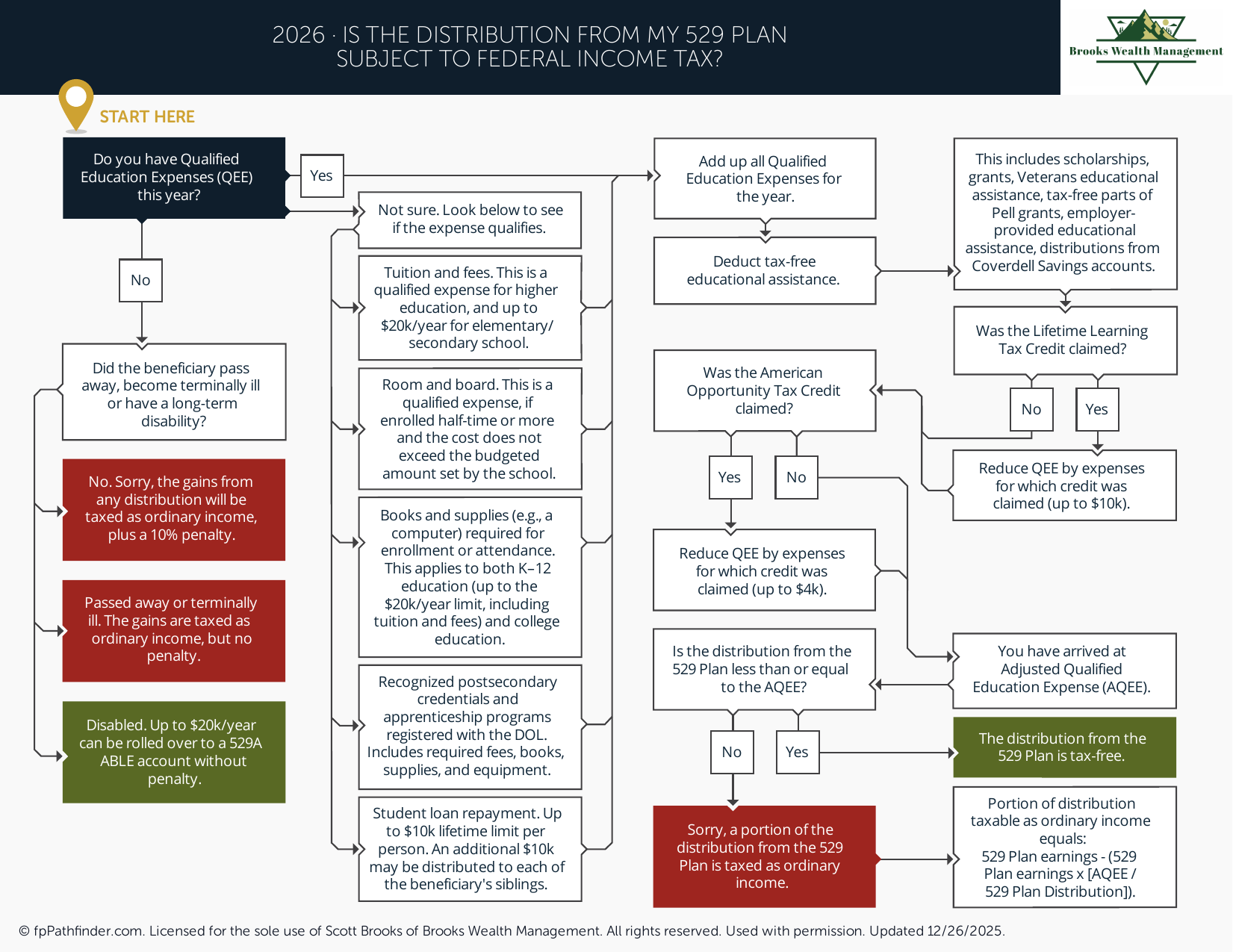
529 plan distributions are tax-free when used exclusively for qualified higher education expenses, such as tuition, fees, books, and room and board. However, if funds are withdrawn for non-qualified purposes, the earnings portion of the distribution is subject to federal income tax and a 10% penalty. Proper documentation and timing are essential to avoid unintended tax liabilities.
Managing a 529 college savings plan requires more than just selecting the right investments; it demands a comprehensive understanding of the tax code governing withdrawals. As we navigate the 2026 tax year, the rules surrounding these accounts have become more flexible due to recent legislative changes, such as the SECURE 2.0 Act. However, the complexity of coordinating distributions with tax credits and state-specific regulations remains a significant challenge for many families.
The Mechanics of 529 Plan Distributions
To understand the tax implications, one must first understand how a distribution is structured. Unlike a standard bank account where you can choose to withdraw your principal first, every 529 distribution is comprised of two parts: basis (the original contributions) and earnings (the investment growth).
The Pro-Rata Rule
The IRS requires that every withdrawal be calculated on a pro-rata basis. For example, if your 529 account consists of $8,000 in contributions and $2,000 in earnings, any withdrawal you take will be 80% basis and 20% earnings. This ratio is determined at the time of the distribution.
If the distribution is used for qualified education expenses, both the basis and the earnings are tax-free. However, if the distribution is non-qualified, only the basis remains tax-free (since it was made with after-tax dollars). The earnings portion becomes taxable as ordinary income and is typically subject to an additional 10% federal tax penalty.
Recipient Impact: 1099-Q Reporting
When a distribution is made, the 529 plan administrator issues IRS Form 1099-Q. The tax implications can shift depending on who receives the check. If the distribution is sent to the account owner, the 1099-Q is issued under the owner’s Social Security number. If it is sent to the beneficiary (the student) or directly to the educational institution, the 1099-Q is issued under the beneficiary’s Social Security number.
This distinction is critical for non-qualified withdrawals. If a non-qualified withdrawal is taxed, it is generally taxed at the recipient's rate. Sending the distribution to the student—who is often in a lower tax bracket than the parent—may minimize the total tax hit, though the 10% penalty remains constant regardless of the recipient’s bracket.
Defining Qualified Higher Education Expenses (QHEE)
The primary goal of a 529 plan is to fund "qualified" expenses. The IRS provides a specific list of what qualifies under IRS Publication 970, and misinterpreting these categories is a frequent source of tax errors.
Core Educational Costs
Qualified expenses include tuition, mandatory fees, books, supplies, and equipment required for enrollment. This also extends to "computer or peripheral equipment," including software and internet access, provided they are used primarily by the beneficiary during their years of study.
Room and Board Requirements
Room and board qualify only if the student is enrolled at least half-time in a degree or certificate program. There is a cap on these expenses: they cannot exceed the "cost of attendance" (COA) figures published by the university for that specific academic year. If a student lives off-campus, their 529-eligible rent and food expenses are limited to the allowance the school includes in its official COA budget for off-campus students. Families should keep records of the university’s published COA to justify these withdrawals.
K-12 Tuition and Apprenticeships
While 529 plans were originally for college, they now allow up to $10,000 per year, per beneficiary, to be used for tuition at elementary or secondary (K-12) public, private, or religious schools. Additionally, distributions can be used for fees, books, and equipment required for registered apprenticeship programs.
Student Loan Repayment
Under the SECURE Act, families can use 529 funds to pay down student loans. This is subject to a $10,000 lifetime limit per individual. You can also use funds to pay down the student loans of the beneficiary’s siblings, each subject to their own $10,000 lifetime cap.
Tax Consequences of Non-Qualified Distributions
When funds are withdrawn for a "non-qualified" purpose—such as purchasing a car for a student or paying for travel expenses—the tax benefits of the 529 plan are partially lost.
The 10% Penalty and Ordinary Income Tax
The earnings portion of a non-qualified distribution is added to the recipient's gross income for the year. This can push the taxpayer into a higher tax bracket. Furthermore, an additional 10% penalty is applied to those earnings. For example, if a non-qualified withdrawal includes $5,000 in earnings, a taxpayer in the 22% bracket would owe $1,100 in income tax plus a $500 penalty, totaling $1,600 in federal taxes.
Exceptions to the 10% Penalty
The IRS allows the 10% penalty to be waived in specific circumstances, although the ordinary income tax on earnings still applies. These exceptions include:
- Scholarships: If the beneficiary receives a tax-free scholarship, you can withdraw an equivalent amount from the 529 plan without the 10% penalty.
- Death or Disability: If the beneficiary dies or becomes permanently disabled.
- Military Academy Attendance: If the beneficiary attends a U.S. military academy (like West Point).
- Employer-Provided Assistance: Similar to the scholarship rule, if an employer pays for tuition, an equivalent 529 withdrawal is penalty-free.
Coordination with Education Tax Credits
A common pitfall in 529 planning is "double-dipping" with federal tax credits like the American Opportunity Tax Credit (AOTC) or the Lifetime Learning Credit (LLC).
The IRS prohibits using the same expense to justify both a tax-free 529 distribution and a tax credit. If you pay $4,000 in tuition to qualify for the maximum AOTC, you cannot use 529 funds to pay for that same $4,000 of tuition tax-free. To maximize benefits, families often pay the first $4,000 of tuition out-of-pocket (to claim the AOTC) and use 529 funds for the remainder. Failing to coordinate these can result in the 529 distribution being reclassified as non-qualified, leading to unexpected taxes and penalties.
State Tax Implications and Recapture
While federal tax rules are uniform, state tax rules for 529 plans vary significantly. Most states offer a tax deduction or credit for contributions. However, if you take a non-qualified distribution—or in some cases, if you roll the funds over to another state's plan—the state may "recapture" those previously claimed tax breaks.
Furthermore, some states do not recognize the expanded federal definitions of qualified expenses. For instance, some states may treat K-12 tuition or student loan repayments as non-qualified for state tax purposes, even though they are qualified at the federal level. Residents should consult their specific state's department of revenue or College Savings Plans Network for local guidance.
| Expense Category | Federal Tax Status | Limitations / Notes |
|---|---|---|
| Tuition & Fees | Qualified | No cap for higher education; $10k cap for K-12. |
| Room & Board | Qualified | Must be at least half-time; limited by school COA. |
| Books & Supplies | Qualified | Must be required for the course of study. |
| Computers/Tech | Qualified | Includes internet access; must be used by beneficiary. |
| Student Loans | Qualified | $10,000 lifetime limit per beneficiary/sibling. |
| Transportation | Non-Qualified | Travel to/from school and gas are not covered. |
| Health Insurance | Non-Qualified | Even if required by the school, this is usually non-qualified. |
Advanced Strategy: 529 to Roth IRA Rollovers
As of 2026, the provision allowing for the rollover of leftover 529 funds into a Roth IRA has become a standard strategy for avoiding the non-qualified distribution penalty. This was introduced to alleviate the "trapped funds" concern for parents whose children did not use all their savings.
Eligibility and Limits
- Lifetime Limit: The maximum amount that can be rolled over is $35,000 per beneficiary.
- Annual Limit: Rollovers are subject to the annual Roth IRA contribution limit (e.g., $7,000 or more depending on 2026 adjustments).
- Account Age: The 529 account must have been open for at least 15 years.
- Contribution Age: Funds (and earnings on them) contributed within the last five years are ineligible for rollover.
- Income Limits: Unlike direct Roth contributions, 529-to-Roth rollovers currently do not have a Modified Adjusted Gross Income (MAGI) phase-out, making them a powerful tool for high-income earners.
Reporting and Documentation Requirements
The burden of proof for 529 distributions lies with the taxpayer. The IRS does not require you to submit receipts with your tax return, but if you are audited, you must prove that the distributions matched qualified expenses.
Best Practices for Record-Keeping
- Match the Calendar Year: Ensure the withdrawal occurs in the same calendar year the expense was paid. If you pay a January 2027 tuition bill in December 2026, the withdrawal should be taken in 2026.
- Maintain a Paper Trail: Keep copies of university billing statements, receipts for books/supplies, and documented Room and Board costs.
- Use Form 1099-Q: Reconcile the amounts on the 1099-Q with your qualified expense total. If the expenses exceed the distribution, nothing needs to be reported on your tax return.
Frequently Asked Questions
Can I use 529 funds to pay for a student's off-campus apartment? Yes, but only if the student is enrolled at least half-time. The amount you withdraw tax-free cannot exceed the "room and board" portion of the university’s official cost of attendance (COA). If the apartment costs $1,500 a month but the school’s COA allows only $1,000 for off-campus housing, the extra $500 would be considered a non-qualified distribution.
What happens if my child gets a full scholarship? If a beneficiary receives a scholarship, you can withdraw an equivalent amount from the 529 plan. While you will still owe ordinary income tax on the earnings portion of that withdrawal, the 10% penalty is waived. Alternatively, you can change the beneficiary to another family member or keep the funds for future graduate school.
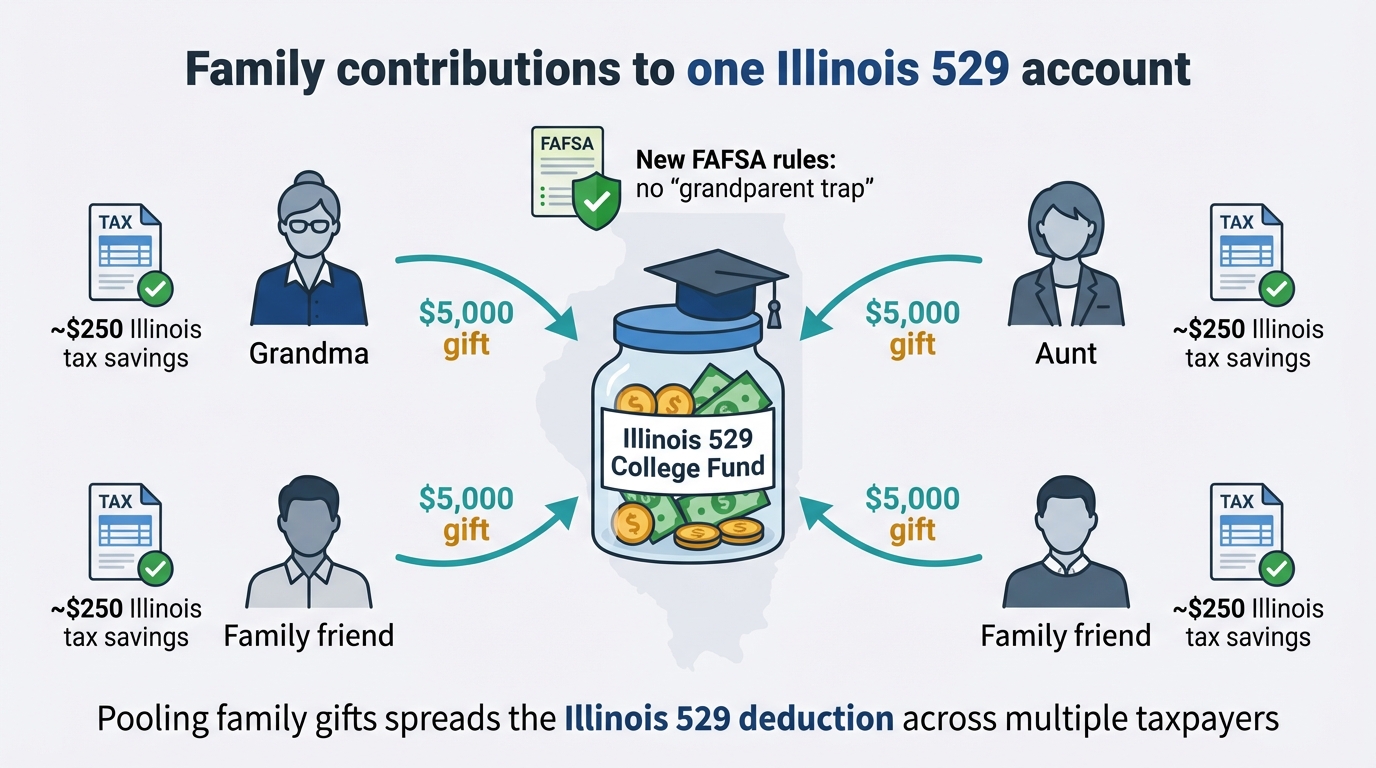
Do 529 distributions affect financial aid eligibility? Generally, 529 accounts owned by a parent or student are considered parental assets on the FAFSA, which has a minimal impact on the Student Aid Index (SAI). Under the simplified FAFSA rules active in 2026, distributions from grandparent-owned 529 plans no longer count as untaxed income for the student, which significantly helps financial aid eligibility.
Is internet service a qualified 529 expense? Yes. Since the PATH Act of 2015, internet access and related services are considered qualified expenses, provided the service is used primarily by the 529 beneficiary during their time at an eligible educational institution.
Can I use 529 funds to buy a computer? Yes, computers and peripheral equipment (printers, monitors) are qualified expenses. This also includes software used for educational purposes. However, software used primarily for entertainment (like high-end gaming software) generally does not qualify unless required for a specific course.
Practical Recommendation
To avoid the pitfalls of 529 distributions, always calculate your "Net Qualified Education Expenses." Start with the total cost of tuition and fees, subtract any tax-free scholarships, and subtract any expenses used to claim the AOTC or LLC. The remaining amount is what you can safely withdraw from your 529 plan tax-free. For high-value accounts, consider the 529-to-Roth rollover strategy if the beneficiary has completed their education and has a balance remaining.
Disclaimer: This article is for informational purposes only and does not constitute legal, financial, or tax advice. Tax laws are subject to change and vary by jurisdiction. Consult with a qualified tax professional regarding your specific situation.