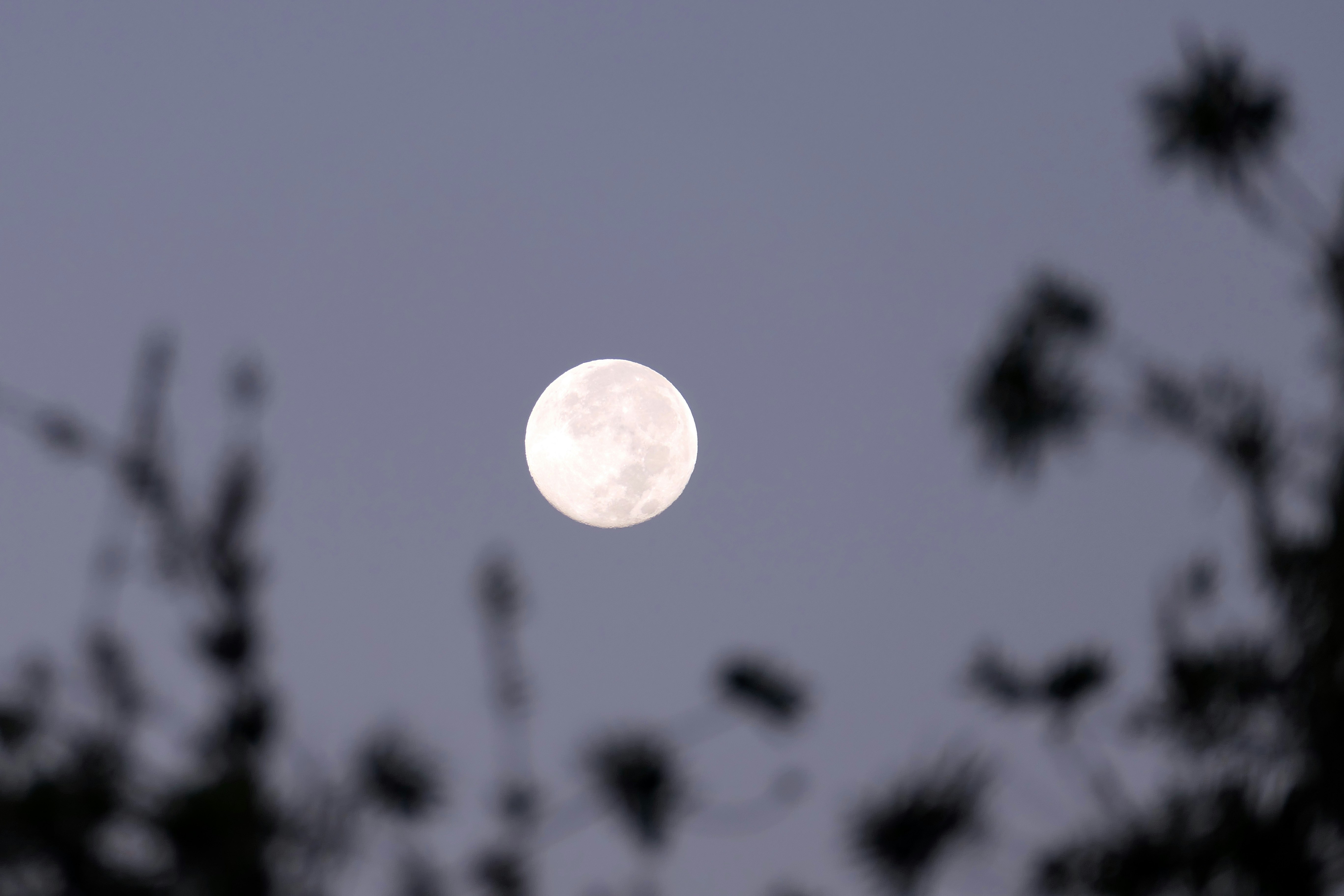
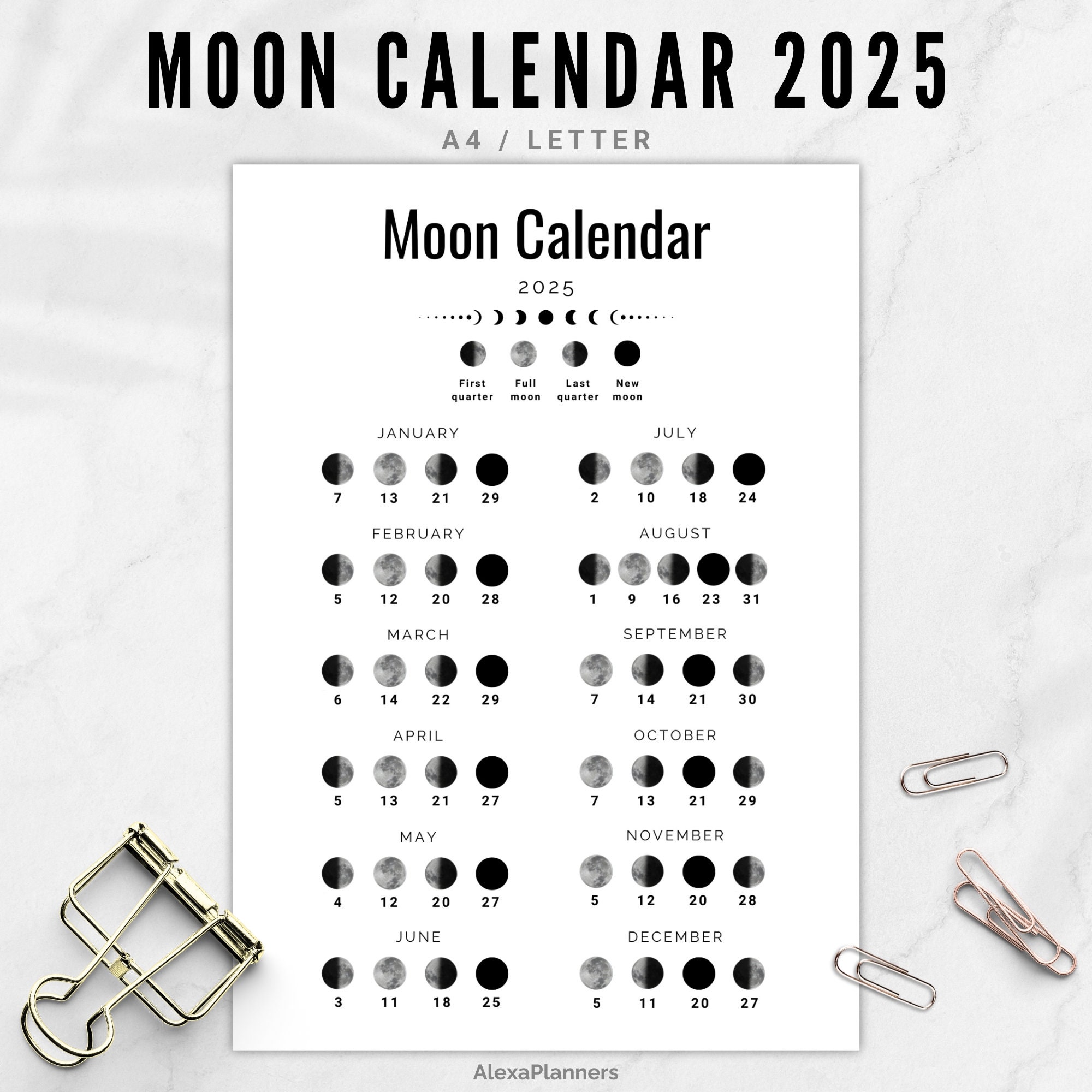
The 2025 Harvest Moon reached its peak illumination on October 6, 2025, at 03:48 UTC (11:48 PM EDT on October 5). Occurring just 13.4 days after the autumn equinox, this rare October Harvest Moon appeared unusually large and bright as a supermoon, offering several consecutive evenings of early moonrise across northern latitudes.
Understanding the October 2025 Harvest Moon Timeline and Peak Illumination
The Harvest Moon is traditionally defined as the full moon occurring closest to the autumnal equinox. While most calendar years feature a Harvest Moon in September, orbital timing occasionally pushes this celestial milestone into October. In 2025, astronomical alignment dictated an October Harvest Moon, creating a unique timeline for skywatchers, astronomers, and photographers across the globe.
To understand the exact timeline of the event, observer location and local time zones must be taken into account. Because full moon peak illumination is an instantaneous global event measured in Coordinated Universal Time (UTC), the calendar date varies depending on your longitudinal position relative to Greenwich, England.
| Time Zone | Date & Peak Time |
|---|---|
| UTC (Coordinated Universal Time) | October 6, 2025 — 03:48 UTC |
| EDT (Eastern Daylight Time) | October 5, 2025 — 11:48 PM EDT |
| CDT (Central Daylight Time) | October 5, 2025 — 10:48 PM CDT |
| PDT (Pacific Daylight Time) | October 5, 2025 — 08:48 PM PDT |
| BST (British Summer Time) | October 6, 2025 — 04:48 AM BST |
| CEST (Central European Summer Time) | October 6, 2025 — 05:48 AM CEST |
The core viewing window extended over three primary evenings—October 4, October 5, and October 6, 2025. Unlike typical full moons, which rise approximately 50 minutes later each night, the Harvest Moon is famous for rising only 20 to 30 minutes later on successive nights at mid-northern latitudes. This narrow interval provided abundant light during twilight hours, historically assisting farmers in harvesting late-season crops after sunset.
Why the 2025 Harvest Moon Occurred in October Instead of September
A common point of confusion during the 2025 lunar cycle was why the September full moon was not designated as the Harvest Moon. The naming convention of traditional full moons relies strictly on proximity to the September equinox in the Northern Hemisphere.
The autumnal equinox in 2025 occurred on September 22, 2025, at 18:19 UTC. To determine which full moon claims the title of Harvest Moon, astronomers measure the absolute time difference between the equinox and the two adjacent full moons:
- September 2025 Full Moon (Corn Moon / Eclipse): Reached full phase on September 7, 2025, at 18:09 UTC. Time separation from equinox: 15 days, 0 hours, 10 minutes.
- October 2025 Full Moon (Harvest Moon): Reached full phase on October 6, 2025, at 03:48 UTC. Time separation from equinox: 13 days, 9 hours, 29 minutes.
Because October 6 was roughly 38 hours closer to the equinox than September 7, the October full moon inherited the Harvest Moon designation. When an October full moon becomes the Harvest Moon, the September full moon takes on alternative names such as the Full Corn Moon or Barley Moon, while the subsequent November full moon inherits the title of Hunter's Moon.
This shift happens roughly once every three to four years due to the mismatched lengths of the solar year (365.24 days) and the synodic lunar month (29.53 days). Over time, the 11-day disparity between twelve lunar cycles and one solar year causes full moon dates to drift relative to the fixed seasonal equinoxes.
- Sept 7 Full Moon: 15.0 days before equinox
- Equinox (Sept 22, 18:19 UTC)
- Oct 6 Harvest Moon: 13.4 days after equinox (Closer to equinox = Harvest Moon)
Supermoon Dynamics and Orbital Characteristics
The October 2025 Harvest Moon was also classified as a supermoon (astronomically termed a perigee-syzygy full moon). A supermoon occurs when the moon reaches its full phase while simultaneously occupying the point in its elliptical orbit closest to Earth, known as perigee.
The orbit of the Moon around Earth is not a perfect circle, but an ellipse with an average eccentricity of 0.0549. As a result, the distance between the center of the Earth and the center of the Moon varies between approximately 356,400 kilometers (perigee) and 406,700 kilometers (apogee).
During the October 6, 2025 alignment, lunar perigee occurred within hours of full phase at a distance of approximately 357,300 kilometers (221,990 miles). Official astronomical records managed by institutions like the U.S. Naval Observatory catalog these precise orbital ephemerides for public observation and navigational calculations.
| Parameter | Perigee Full Moon (October 2025) | Apogee Full Moon (Micromoon) |
|---|---|---|
| Geocentric Distance | ~357,300 km | ~405,000 km |
| Apparent Diameter | ~33.5 arcminutes | ~29.4 arcminutes |
| Apparent Visual Area | +14% larger | Baseline standard |
| Relative Visual Luminosity | +30% brighter | Baseline standard |
The combination of supermoon status and autumnal atmosphere meant that the October 2025 Harvest Moon appeared visually striking, casting bright moonlight during late dusk and early evening hours.
The Geometry Behind the "Harvest Moon Effect"
The defining physical feature of any Harvest Moon—whether falling in September or October—is the reduced daily delay in moonrise times near the equinox.
On average, the Moon rises about 50 minutes later each day due to its eastward orbital motion around Earth. However, around the autumnal equinox, the path of the Moon's orbit (the ecliptic) forms a very shallow angle with the horizon when viewed from mid-northern latitudes (such as North America, Europe, and northern Asia).
- Autumn Ecliptic Angle (Shallow):
- Ecliptic Path: Moon moves eastward parallel to horizon; small vertical drop
- Result: Moon rises only 20 to 30 minutes later each night.
- Spring Ecliptic Angle (Steep):
- Ecliptic Path: Moon moves eastward downward perpendicular to horizon; large vertical drop
- Result: Moon rises up to 75 minutes later each night.
Because the ecliptic intersects the eastern horizon at a low angle in northern autumn, the Moon's daily eastward progress of roughly 13 degrees moves it mostly parallel to the horizon rather than deep below it. Consequently, Earth needs to rotate only a short additional angle each night to bring the Moon back above the horizon.
Daily Moonrise Lag at Mid-Northern Latitudes (~40°N):
- Standard average night-to-night lag: ~50 minutes
- Autumnal Equinox (Harvest Moon) lag: ~20–30 minutes
- Vernal Equinox (Spring Moon) lag: ~70–75 minutes
This orbital geometry creates several consecutive nights of early twilight moonrises, eliminating the usual long gap of darkness between sunset and moonrise.
Detailed Observing Schedule and Horizon Timeline
To track the October 2025 Harvest Moon effectively, observers utilized a multi-day observation strategy. The full moon optical disk appears visually complete (over 98% illuminated) for roughly 36 hours before and after the exact moment of astronomical syzygy.
| Date | Illumination | Phase State | Key Viewing Highlights |
|---|---|---|---|
| Oct 4, 2025 (Eve Prior) | 95% - 98% | Waxing Gibbous | High-contrast crater rims visible along terminator. |
| Oct 5, 2025 (Peak Eve - US) | 99% - 100% | Full Phase (Syzygy) | Prime twilight moonrise for North America; golden hue. |
| Oct 6, 2025 (Peak Eve - EU) | 100% - 99% | Full Phase (Waning) | Peak viewing for Europe/Asia; Rich amber atmospheric drift. |
| Oct 7, 2025 (Post-Peak) | 95% - 97% | Waning Gibbous | Deep low-altitude twilight shadow play across landscape. |
Atmospheric Optics and Horizon Color Phenomena
One of the highlights of observing the Harvest Moon is its pronounced amber, orange, or deep reddish coloration when hovering near the horizon. This effect is caused by atmospheric scattering and is fully explained by physics rather than any intrinsic change in lunar surface composition.
Rayleigh Scattering Mechanics
When the Moon is low on the horizon, its reflected light must travel through a significantly thicker cross-section of Earth's atmosphere to reach an observer's eyes than when it is high overhead:
$$\text{Atmospheric Path Length at Horizon} \approx 40 \times \text{Path Length at Zenith}$$
Air molecules, dust particles, and atmospheric aerosols scatter shorter wavelengths of light (blue and violet) much more efficiently than longer wavelengths (red and orange). As a result, blue light is scattered away into space or surrounding air, allowing predominantly red and yellow wavelengths to pass directly through to the observer.
- Lunar Light Path Through Atmosphere:
- Zenith Position: Thin Air Layer: Minimal Scattering: Bright White / Silver
- Horizon Position: Dense Air Layer: Blue Light Scattered: Deep Amber / Red
The "Moon Illusion"
Additionally, the October 2025 supermoon benefited from the Moon Illusion—a perceptual phenomenon where the brain perceives the Moon to be dramatically larger when viewed next to horizon objects such as trees, buildings, and mountains. Although optical measurements confirm the Moon's angular diameter changes by only a fraction of a degree between horizon and zenith, human spatial perception scales up objects framed against distant terrestrial landmarks.
Astrophotography Protocols for October Harvest Moons
Photographing a super-Harvest Moon requires balancing the intense contrast between the bright lunar disk and dark twilight or night surroundings. Below are proven camera configurations tailored for capturing detail on both the lunar surface and foreground landscape.
| Exposure Goal | Shutter Speed | Aperture | ISO | Focal Length |
|---|---|---|---|---|
| Lunar Surface Detail (High Magnification) | 1/125 - 1/500 sec | f/8 - f/11 | 100 | 300mm - 600mm |
| Twilight Foreground Blend (Landscape Silhouette) | 1/15 - 1/2 sec | f/4 - f/5.6 | 400 | 70mm - 200mm |
| Wide Environmental Framing (Night Sky Context) | 1 - 4 sec | f/2.8 - f/4 | 800-1600 | 14mm - 35mm |
Essential Technical Steps for Lunar Capture:
- Use a Sturdy Tripod and Cable Release: At focal lengths of 200mm or higher, any minor camera vibration will blur the details of lunar impact basins (seas) like Mare Tranquillitatis and bright craters like Tycho.
- Disable Optical Image Stabilization (OIS/VR): When locked on a tripod, stabilization systems can accidentally induce micro-jitters during long exposures.
- Manual Focus via Live View: Autofocus systems often struggle on bright objects against dark backgrounds. Zoom in 10x using live view on the camera screen and manually adjust focus until crater edges appear crisp.
- Bracket Exposures: Take multiple photos ranging from -2 EV to +2 EV. This provides images with sharp surface detail as well as frames that capture darker foreground landscapes, which can later be combined using HDR techniques.
- Monitor White Balance: Auto White Balance (AWB) can neutralize the natural golden hue of a low-horizon Harvest Moon. Setting white balance manually to Daylight (5500K) preserves genuine atmospheric warm tones.
Astronomical Data Profile: October 2025 Harvest Moon
The following reference table summarizes the definitive physical, spatial, and chronological parameters of the October 6, 2025 full moon event, based on lunar ephemeris datasets maintained by NASA's Solar System Exploration Division.
| Parameter | Observed / Calculated Value | Scientific & Observational Significance |
|---|---|---|
| Official Astronomical Event | October 2025 Full Moon (Perigee-Syzygy) | Designated Harvest Moon for the 2025 solar year. |
| Exact Peak Illumination (UTC) | October 6, 2025 — 03:48 UTC | Instantaneous moment when Moon, Earth, and Sun align in celestial longitude. |
| Closest Equinox Event | September 22, 2025 — 18:19 UTC | Autumnal Equinox in Northern Hemisphere. |
| Delta from Equinox | +13 days, 9 hours, 29 minutes | Shorter separation than Sept 7 moon (+15.0 days), confirming Harvest status. |
| Lunar Distance at Peak | ~357,300 km (~221,990 miles) | Perigee proximity qualifies the event as a Supermoon. |
| Apparent Angular Diameter | 33.45 arcminutes | ~7% larger than an average full moon; ~14% larger than apogee moon. |
| Illuminated Fraction | 99.98% – 100.0% | Complete visible disk illumination during local night peak. |
| Ecliptic Inclination Angle | Minimum seasonal horizon angle | Causes low night-to-night moonrise delay (~20–30 min lag). |
| Sub-Lunar Latitude | +6.2° North | Determines sky elevation profile across geographic latitudes. |
| Next October Harvest Moon | October 2028 | Occurs on a recurring cycle roughly every 3 to 4 years. |
Frequently Asked Questions
Why is it called a Harvest Moon?
The term "Harvest Moon" originates from traditional agricultural practices in the Northern Hemisphere before electric lighting was available. Around the autumnal equinox, the Moon rises only 20 to 30 minutes later each night instead of the usual 50 minutes. This provides several evenings of bright moonlight right after sunset, giving farmers extra light to harvest mature crops late into the evening.
Was the September 2025 moon a Harvest Moon?
No, the September 7, 2025 full moon was not the Harvest Moon. The Harvest Moon is defined as the full moon falling closest to the autumnal equinox. In 2025, the autumnal equinox fell on September 22. The October 6 full moon occurred 13.4 days after the equinox, whereas the September 7 full moon occurred 15.0 days before it. Because October 6 was closer, it held the official Harvest Moon title.
How often does the Harvest Moon occur in October?
A Harvest Moon occurs in October roughly once every 3 to 4 years. While most Harvest Moons take place in September, the difference between twelve lunar cycles (~354 days) and a full solar year (~365 days) causes the dates of full moons to shift over time. When a full moon falls in early September, the following full moon in early October often ends up closer to the September 22 equinox.
Is an October Harvest Moon always a Supermoon?
No, a Harvest Moon is not automatically a supermoon. A Harvest Moon is defined strictly by its calendar proximity to the autumnal equinox, whereas a supermoon depends on the Moon reaching perigee (its closest approach to Earth) near full phase. However, when these two astronomical conditions align—as occurred on October 6, 2025—the Harvest Moon appears visibly larger and brighter than average.
Can you observe crater details during a Harvest Moon?
While a full moon is very bright, it is actually one of the harder phases for viewing fine crater details because sunbeams hit the visible surface head-on, casting minimal shadows. To see crater relief clearly, point binoculars or a telescope near the Moon's edge (the limb) or observe on the evenings just before or after peak full phase (October 4 or October 7), when oblique sunlight casts distinct shadows along crater walls.
Actionable Recommendations for Stargazers and Photographers
- Plan Around Moonrise Times: To experience the true aesthetic impact of the Harvest Moon, observe within 30 minutes of local moonrise. Check local moonrise calculators to position yourself with a clear, unobstructed view facing east-northeast.
- Scout Foreground Locations Early: Select focal landmarks—such as historic barns, hilltop trees, lighthouses, or city skylines—to frame against the low-horizon moon. Use desktop planetarium software (such as Stellarium) or field apps to calculate exact compass bearings for moonrise.
- Pack Moderate Gear for Visual Observing: High-magnification equipment is not strictly necessary. A standard pair of 7x50 or 10x50 binoculars delivers wide field views that capture both atmospheric color and surface features without requiring heavy tripod setups.
- Protect Night Vision and Monitor Weather: Atmospheric clarity directly influences how vivid red and amber colors appear near the horizon. High cloud cover can obscure early moonrise, while light atmospheric haze can enhance warm colors through added light scattering.