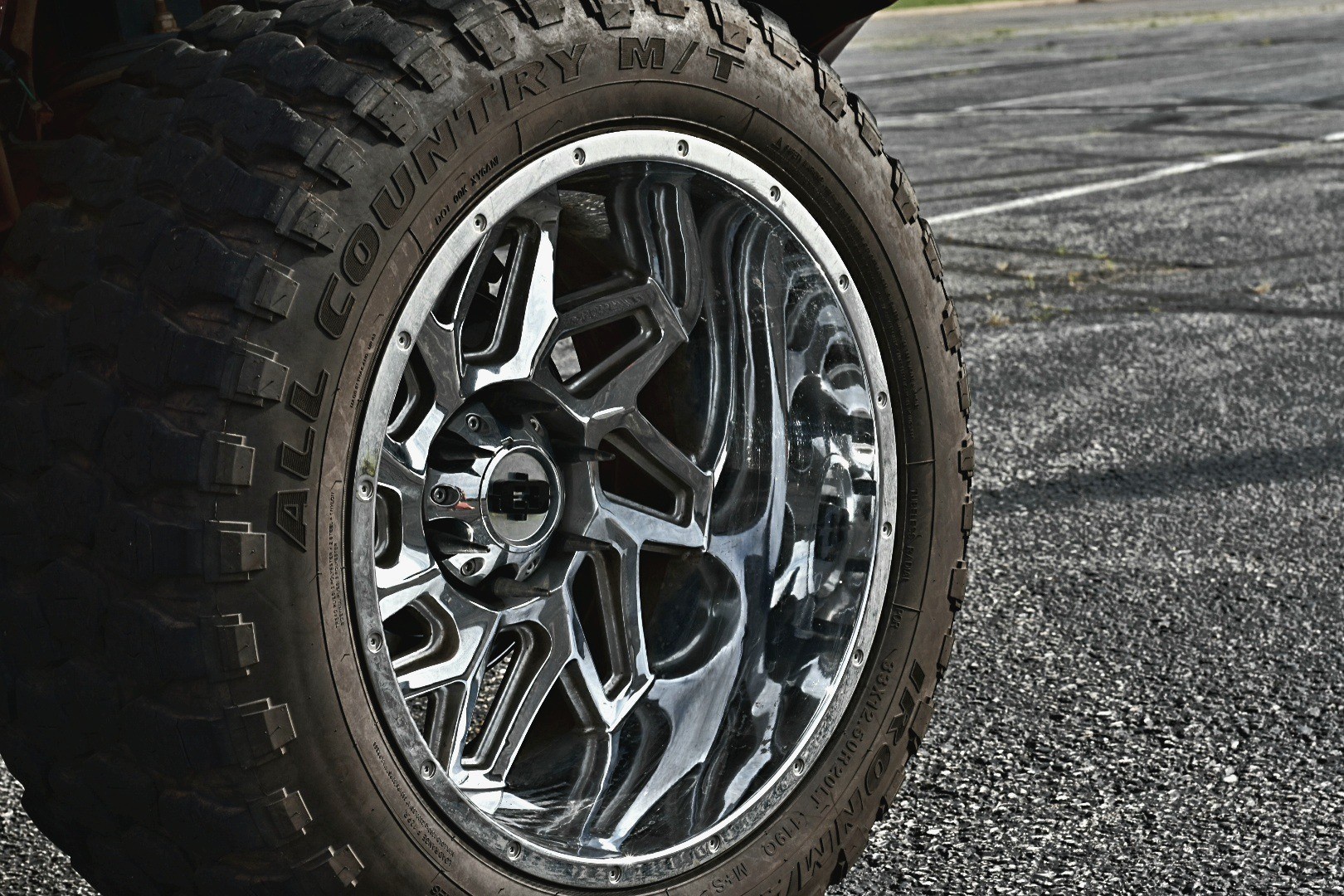
The 2018 GMC Sierra 1500 features a 6x5.5-inch (6x139.7mm) lug pattern, utilizing an M14 x 1.5 thread pitch and a 78.1mm center bore, which is crucial knowledge for anyone looking to safely upgrade wheels, tires, or aftermarket accessories on their truck.
Selecting replacement wheels or swapping out factory rims on a half-ton pickup requires precise adherence to factory specifications. A mismatch in bolt pattern, offset, or center bore can lead to severe vibration, uneven tire wear, or, in worst-case scenarios, wheel detachment while driving. For owners of the 2018 GMC Sierra 1500—marking the final model year of the truck's third generation before the 2019 redesign—understanding these factory dimensions ensures that any aftermarket wheel or spacer installation maintains proper structural integrity and safety.
Breaking Down the Bolt Pattern: 6x5.5 vs. 6x139.7
The factory wheel bolt pattern for the 2018 GMC Sierra 1500 is 6x5.5 inches, which is identical to the metric designation 6x139.7mm. These two measurements represent the exact same physical bolt circle; one is expressed in standard SAE units, while the other uses the metric system.
The number "6" indicates the total number of lug holes (or studs) evenly spaced in a circular pattern on the wheel hub. The "5.5" or "139.7" represents the diameter of an imaginary circle drawn through the center of all six lug holes, measured in inches or millimeters respectively.
When shopping for aftermarket wheels, manufacturers may list either measurement. It is vital to confirm that any prospective wheel explicitly matches this 6-lug configuration. Attempting to force a wheel with a seemingly close pattern—such as a 6x135mm Ford pattern—onto a GMC hub will result in misaligned stud holes, damaged threads, and catastrophic safety hazards.
Essential Wheel Specifications for the 2018 GMC Sierra 1500
Beyond the primary lug pattern, several other dimensional specifications dictate whether a wheel will clear the brake calipers, suspension components, and fenders of a 2018 Sierra 1500. Ignoring these measurements often leads to rubbing issues during sharp turns or suspension compression.
| Specification | Factory Measurement / Standard Range | Description |
|---|---|---|
| Lug Pattern (Bolt Circle) | 6x5.5" (6x139.7mm) | The number of studs and the diameter of the circle they form. |
| Thread Pitch | M14 x 1.5 | The diameter and distance between threads on the wheel studs and lug nuts. |
| Center Bore | 78.1 mm | The center hole in the wheel that centers the rim on the vehicle hub. |
| Factory Wheel Offset | +24mm to +31mm | The distance from the mounting surface to the centerline of the wheel. |
| Recommended Torque | 140 lb-ft | The specific rotational force applied to tighten the lug nuts safely. |
The Center Bore and Hub-Centric Design
The center bore of the 2018 GMC Sierra 1500 is 78.1 mm. The center bore is the circular opening in the exact middle of the wheel that rests snugly over the lip of the vehicle's axle hub.
GMC trucks utilize a hub-centric mounting design. This means the weight of the vehicle rests primarily on the hub ring rather than purely on the shear strength of the wheel studs.
- Aftermarket Wheels with a Larger Center Bore: Many aftermarket wheels are manufactured with a larger center bore (e.g., 106.1mm or 108mm) to fit multiple truck brands. To mount these safely on a Sierra 1500, you must use hub-centric rings (reducing rings) to bridge the gap between the 78.1mm hub and the larger wheel bore. Without these rings, the wheel may center unevenly, causing high-speed steering wheel vibrations and premature wear on components.
- Aftermarket Wheels with a Smaller Center Bore: These will not slide over the GMC hub and must never be forced or modified by boring them out unless performed by a certified machinist.
Thread Pitch and Lug Nut Specifications
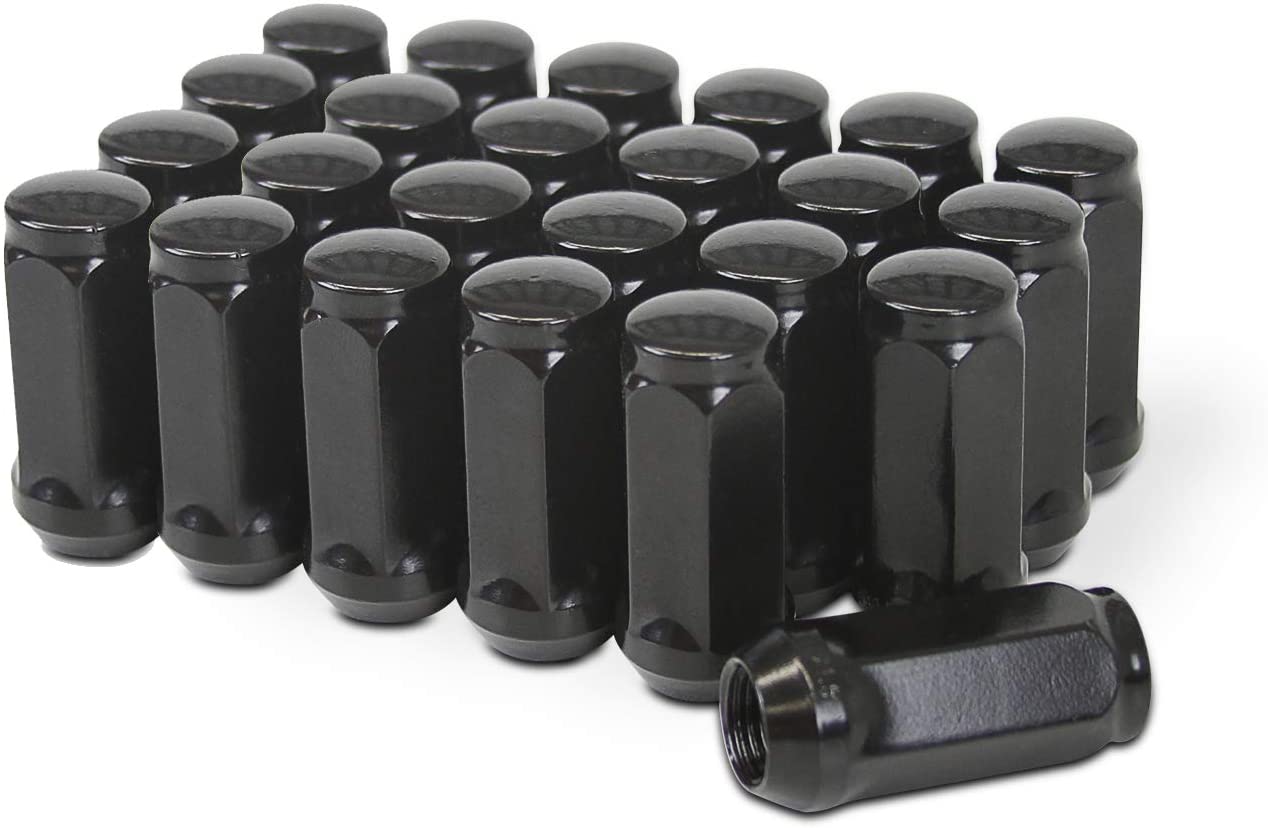
The wheel studs on a 2018 GMC Sierra 1500 use an M14 x 1.5 thread pitch. When installing new wheels, ensuring that your lug nuts match this thread pitch is mandatory.
Furthermore, the seating style of the lug nut must match the seat machined into the wheel. Factory GMC wheels typically use a mag-style seat with a washer or an acorn (conical) seat depending on whether they are alloy or steel. Most aftermarket wheels require a 60-degree conical (acorn) seat. Using the wrong seat type prevents proper torque distribution, which can cause lug nuts to back out while driving.
Factory vs. Aftermarket Offset and Backspacing
Offset and backspacing determine how far inward or outward the wheel sits within the wheel well.
- Offset is measured in millimeters from the wheel's centerline to the mounting face. The factory 2018 Sierra 1500 typically features positive offsets ranging from +24mm to +31mm, keeping the tires tucked relatively close to the suspension.
- Backspacing is the distance from the back edge of the rim to the mounting pad.
When installing wider aftermarket wheels or oversized off-road tires, lowering the offset (or moving to a negative offset) pushes the wheel outward for an aggressive stance. However, pushing the wheels out too far without a suspension lift kit will cause the tires to rub against the inner plastic fender liners, mud flaps, or metal pinch welds when turning the steering wheel.
Safe Torque Procedures and Maintenance
Proper installation is just as critical as buying the correct lug pattern. Over-tightening can stretch wheel studs or warp brake rotors, while under-tightening can cause lug nuts to loosen.
- Clean the Mounting Surface: Ensure the hub face and the back of the wheel are free of rust, dirt, and debris before mounting. Even a small piece of rust trapped between the surfaces can prevent the wheel from sitting flat.
- Hand-Thread Lug Nuts: Always start the lug nuts by hand to avoid cross-threading the fine M14 x 1.5 threads.
- Torque in a Star Pattern: Lower the vehicle until the tires touch the ground just enough to prevent rotation, then use a calibrated torque wrench to tighten the lug nuts in a criss-cross (star) pattern.
- Final Torque Specification: Tighten factory and most aftermarket studs to 140 lb-ft (190 Nm).
- Re-Torque Check: Drive the vehicle for 50 to 100 miles, then re-check the torque on all lug nuts to account for initial settling.
Frequently Asked Questions
Are 2018 GMC Sierra 1500 wheels interchangeable with older generations?
Yes, the 6x5.5-inch (6x139.7mm) lug pattern has been a standard feature on GM half-ton trucks (Chevrolet Silverado and GMC Sierra) for decades, spanning multiple generations. However, you must verify brake clearance and center bore sizes, particularly when moving older steel wheels onto newer generations or vice versa.
Can I install wheels from a Ford or Ram truck on my GMC Sierra?
No. Ford F-150 trucks (from 2004 onward) typically use a 6x135mm lug pattern, and Ram 1500 trucks use a 5x5.5-inch (5x139.7mm) or 6-lug pattern depending on the year. None of these are compatible with the GMC 6x139.7mm bolt circle, despite minor numerical similarities.
Do I need different lug nuts when switching from factory alloy wheels to aftermarket wheels?
Yes, in most cases. Factory GMC wheels often use specialized shanks, washers, or radius seats, whereas almost all aftermarket wheels require a standard 60-degree conical (acorn) seat lug nut with an M14 x 1.5 thread pitch.
What is the maximum tire size I can run on stock 2018 Sierra 1500 wheels without rubbing?
On a completely stock suspension, most owners can fit up to a 32-inch or small 33-inch tire (such as a 275/60R20 or equivalent) without major rubbing, provided the wheel offset remains close to factory specifications. Anything larger typically requires a leveling kit or a suspension lift.
Why does my steering wheel shake after installing new wheels?
Steering wheel vibration after a wheel swap is almost always caused by improper hub centering or unbalanced tires. If your aftermarket wheels have a larger center bore than 78.1mm, verify that hub-centric rings were installed to center the wheel precisely on the axle.