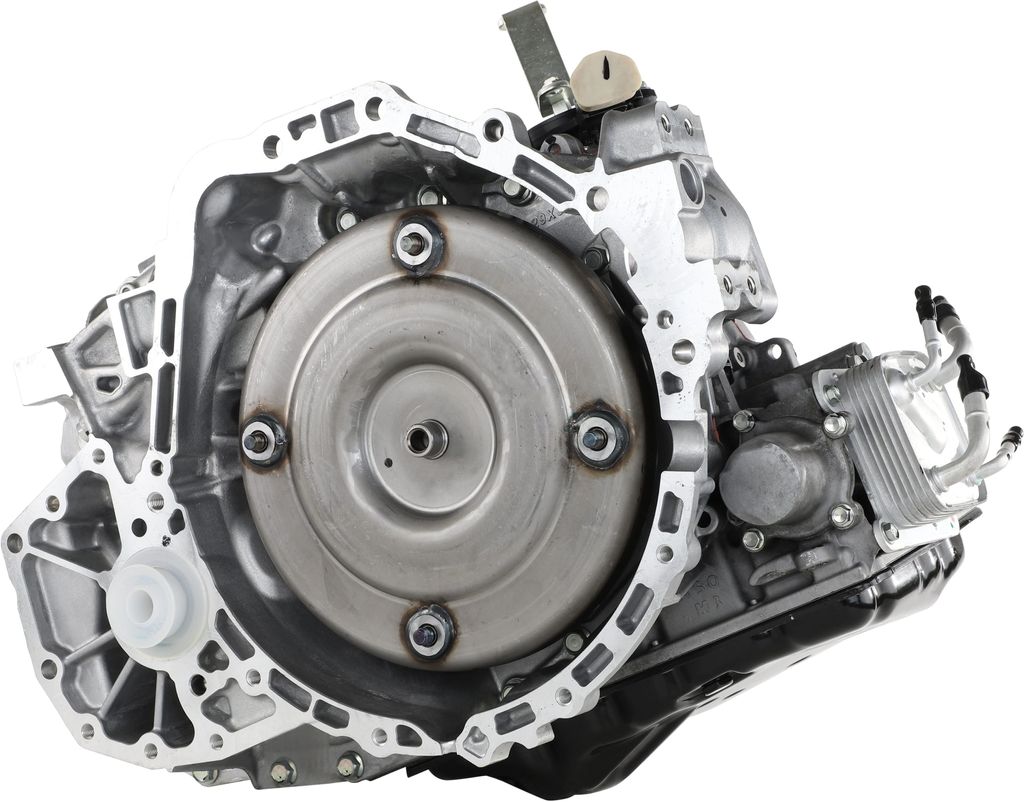
The 2013 Nissan Pathfinder is frequently associated with significant transmission failures, primarily involving the Xtronic Continuously Variable Transmission (CVT). Owners commonly report a violent "judder" or "shudder" during acceleration, vehicle hesitation, and total transmission failure. These issues often stem from internal belt slippage and cooling inefficiencies within the JATCO-sourced CVT8 unit.
The Shift to the R52 Platform and the Introduction of the CVT
To understand the 2013 Nissan Pathfinder’s transmission woes, one must look at the vehicle's historical context. The 2013 model year marked the debut of the fourth-generation Pathfinder (R52). This was a radical departure from the previous R51 generation, which was a body-on-frame, truck-based SUV utilizing a traditional five-speed planetary automatic transmission.
The R52 transitioned to a unibody platform shared with the Nissan Altima and Infiniti JX35 (later the QX60). To improve fuel economy and meet tightening emissions standards, Nissan equipped the Pathfinder with a Continuously Variable Transmission (CVT) manufactured by JATCO, a subsidiary of Nissan. Specifically, it used the CVT8 (JF017E) designed for higher-torque V6 engines. While CVTs offer smooth "gearless" transitions and better efficiency on paper, the early iterations of this high-torque unit faced immediate reliability challenges that have persisted as these vehicles aged into 2026.
Identifying the Infamous "CVT Judder" or Shudder
The most documented issue with the 2013 Pathfinder is the "CVT judder." This phenomenon is often described by drivers as the sensation of driving over a rumble strip or experiencing a violent vibration when accelerating, typically between 20 and 45 miles per hour.
Why the Shudder Occurs
The shudder is not merely a comfort issue; it is a symptom of a mechanical mismatch. Inside the CVT, a steel belt runs between two pulleys that vary in diameter to change the "gear" ratio. The shudder occurs when the belt momentarily loses grip on the pulleys, causing a slip-and-catch cycle. This is often exacerbated by the Transmission Control Module (TCM) attempting to adjust the pulley pressure based on faulty sensor data or inadequate fluid pressure.
Progression of the Symptom
In its early stages, the shudder may be intermittent. However, as the steel belt and the pulley surfaces sustain microscopic damage from the slipping, the friction characteristics change. By the time the shudder is consistent, the internal components are often compromised beyond the point where a simple software update can provide a permanent fix.
Critical Symptoms of Transmission Failure
Beyond the shudder, several other red flags indicate that a 2013 Pathfinder transmission is nearing the end of its functional life.
- Limp Mode (Reduced Power): The vehicle’s computer may detect a significant deviation in pulley speed or fluid temperature, forcing the car into "Limp Home Mode." In this state, engine RPM is restricted, and the vehicle will not accelerate past a certain speed to prevent further internal damage.
- Delayed Engagement: When shifting from Park to Drive or Reverse, there may be a noticeable delay of several seconds before the transmission engages. This often points to a failing valve body or low line pressure within the unit.
- Whining or Grinding Noises: A high-pitched whining noise that increases with engine speed often indicates a bearing failure or an overheating CVT. Grinding noises are more severe, suggesting that metal debris is circulating through the fluid.
- Fluid Leaks: The CVT relies heavily on hydraulic pressure. Leaks from the transmission cooler lines or the main casing can lead to a rapid drop in pressure, causing immediate belt slippage and catastrophic failure.
Technical Root Causes: Thermal Management and Mechanical Design
The 2013 Pathfinder's transmission issues are rarely caused by a single factor. Instead, they are the result of several overlapping design and environmental stressors.
Thermal Degradation
CVTs generate a significant amount of heat due to the friction required to keep the belt from slipping on the pulleys. In the 2013 Pathfinder, the original cooling system was often insufficient for heavy loads, such as towing or stop-and-go traffic in hot climates. When the CVT fluid (Nissan NS-3) overheats, its viscosity breaks down, reducing its ability to maintain the necessary friction and lubrication. This leads to a vicious cycle of more heat, more slippage, and eventual component melting.
The Valve Body and Solenoids
The valve body acts as the "brain" of the transmission, directing hydraulic fluid to move the pulleys. In many 2013 models, the solenoids within the valve body become clogged with tiny metal shavings shed by the wearing belt. Once these solenoids stick, the transmission can no longer accurately control pulley width, leading to the erratic shifting and "hunting" for ratios that many owners describe.
Diagnostic Trouble Codes (DTCs) to Watch For
When a Pathfinder experiences transmission issues, the onboard computer (OBD-II) will often store specific codes. If you are inspecting a vehicle in 2026, using a high-quality scanner to check for these codes is essential, even if the Check Engine Light is not currently illuminated.
- P17F0 (CVT Judder - Inspection): This is the "smoking gun" code for the shudder issue. It usually indicates that the TCM has detected a vibration pattern consistent with belt slippage.
- P17F1 (CVT Judder - Valve Body): This code specifically points toward the valve body as the source of the pressure irregularities causing the shudder.
- P0744 (Torque Converter Clutch Circuit Intermittent): Often seen when the transmission is struggling to lock the torque converter, contributing to poor fuel economy and heat.
- P0841 (Transmission Fluid Pressure Sensor/Switch A): Indicates that the fluid pressure is not meeting the commanded levels, often due to a pump failure or internal leak.
Repair and Replacement Options in 2026
As of 2026, owners of a 2013 Pathfinder have several paths forward, though none are particularly inexpensive. Because the vehicle is well outside its original factory warranty and most extended class-action warranties, the financial burden typically falls on the owner.
| Repair Method | Estimated Cost (2026) | Pros | Cons |
|---|---|---|---|
| Software Update (TCU) | $150 – $300 | Non-invasive; may fix minor logic errors. | Rarely fixes existing mechanical damage. |
| Valve Body Replacement | $1,200 – $2,000 | Can resolve specific pressure issues without a full rebuild. | Won't fix a damaged belt or scored pulleys. |
| Remanufactured CVT | $3,500 – $5,500 | Includes updated internal components; usually comes with a warranty. | Very high cost relative to the vehicle's market value. |
| Used Transmission | $1,500 – $2,500 | Lowest cost for a functional unit. | High risk of the "new" used unit having the same flaws. |
The "Remanufactured" Solution
It is important to distinguish between a "used" transmission and a "remanufactured" one. A used unit from a salvage yard likely contains the same design flaws as the original. A reputable remanufactured unit, however, often includes updated parts—such as a reinforced belt and improved flow-control valves—that were designed after 2013 to address these specific failures.
Legal History and Warranty Extensions
The 2013 Nissan Pathfinder was the subject of several high-profile class-action lawsuits, most notably Batista v. Nissan North America, Inc. These legal actions alleged that Nissan was aware of the CVT defects but failed to disclose them to consumers.
As a result of these settlements, Nissan extended the powertrain warranty for many affected vehicles. Initially, the warranty for the CVT was extended to 7 years or 84,000 miles (whichever came first). In some jurisdictions and later settlements, these terms were slightly modified. However, by the year 2026, almost all 2013 Pathfinders have aged out of these extensions based on both time and mileage. Owners should still verify their VIN through the Nissan USA Recall Lookup to ensure no safety-related recalls (such as those for brake light switches or hood latches, which also affected this model) remain unaddressed.
Preventive Maintenance: Extending the Life of a CVT
For those who currently own a functional 2013 Pathfinder, proactive maintenance is the only way to delay a costly transmission failure. The "lifetime fluid" claim made by many manufacturers should be viewed with skepticism for this specific generation.
Fluid Exchange Intervals
In 2026, with these vehicles likely having high mileage, fluid health is paramount. Experts recommend a "drain and fill" every 30,000 miles. It is crucial to use Nissan NS-3 CVT Fluid or a high-quality synthetic equivalent that specifically meets NS-3 specifications. Unlike traditional automatics, CVTs are extremely sensitive to the chemical composition of the fluid, as it must provide both lubrication for bearings and high friction for the belt.
External Cooling
One of the most effective aftermarket modifications for the R52 Pathfinder is the installation of an auxiliary transmission oil cooler. By bypassing or supplementing the stock heat exchanger, an external cooler can keep fluid temperatures within a safe range, significantly reducing the risk of thermal breakdown and subsequent belt slippage.
Frequently Asked Questions
Can I drive my Pathfinder if it is shuddering?
While the vehicle may remain drivable for a short period, continuing to drive with a CVT shudder will cause irreparable damage to the pulleys and belt. What might have been fixed with a valve body replacement will quickly escalate into needing a total transmission replacement as metal shavings circulate through the system.
Does the 2013 Nissan Pathfinder have a recall for the transmission?
There has never been a formal safety recall for the transmission itself, as the NHTSA typically reserves recalls for issues that cause immediate safety hazards (like fires or loss of steering). Instead, Nissan addressed the issue through Technical Service Bulletins (TSBs) and voluntary warranty extensions resulting from class-action settlements.
Is the "shudder" fixable with just a software update?
In some cases, early in the vehicle's life, a TCM software recalibration could adjust the pulley pressure to stop minor slipping. However, if the vehicle is showing symptoms in 2026, it is highly likely that mechanical wear has already occurred, making a software-only fix ineffective.
Why is the repair so expensive compared to a normal car?
CVTs, particularly the high-torque units in the Pathfinder, are complex and contain fewer serviceable internal parts than traditional automatics. Many dealerships and shops do not perform internal "rebuilds" of CVTs; instead, they replace the entire unit as a sealed assembly, which significantly drives up the cost of parts.
Are later models of the Pathfinder better?
Nissan made incremental improvements to the CVT8 throughout the R52 production run. Models from 2017 to 2020 generally have a lower failure rate than the 2013–2014 versions due to updated software and internal hardware. However, for the 2022 model year, Nissan replaced the CVT entirely with a traditional 9-speed automatic transmission in response to consumer feedback.
Final Recommendation for Owners and Buyers
If you are considering purchasing a used 2013 Nissan Pathfinder in 2026, proceed with extreme caution. A pre-purchase inspection by a technician familiar with Nissan CVTs is mandatory. They should perform a "stall test" and monitor "counts" of fluid degradation and shudder events stored in the TCM.
For current owners, if the transmission begins to show signs of failure, evaluate the repair cost against the vehicle's current market value. Given the age of the 2013 model, a $5,000 transmission replacement may exceed 50% of the car's total value. In such cases, it may be more financially sound to trade the vehicle in while it is still operational rather than waiting for a total breakdown.