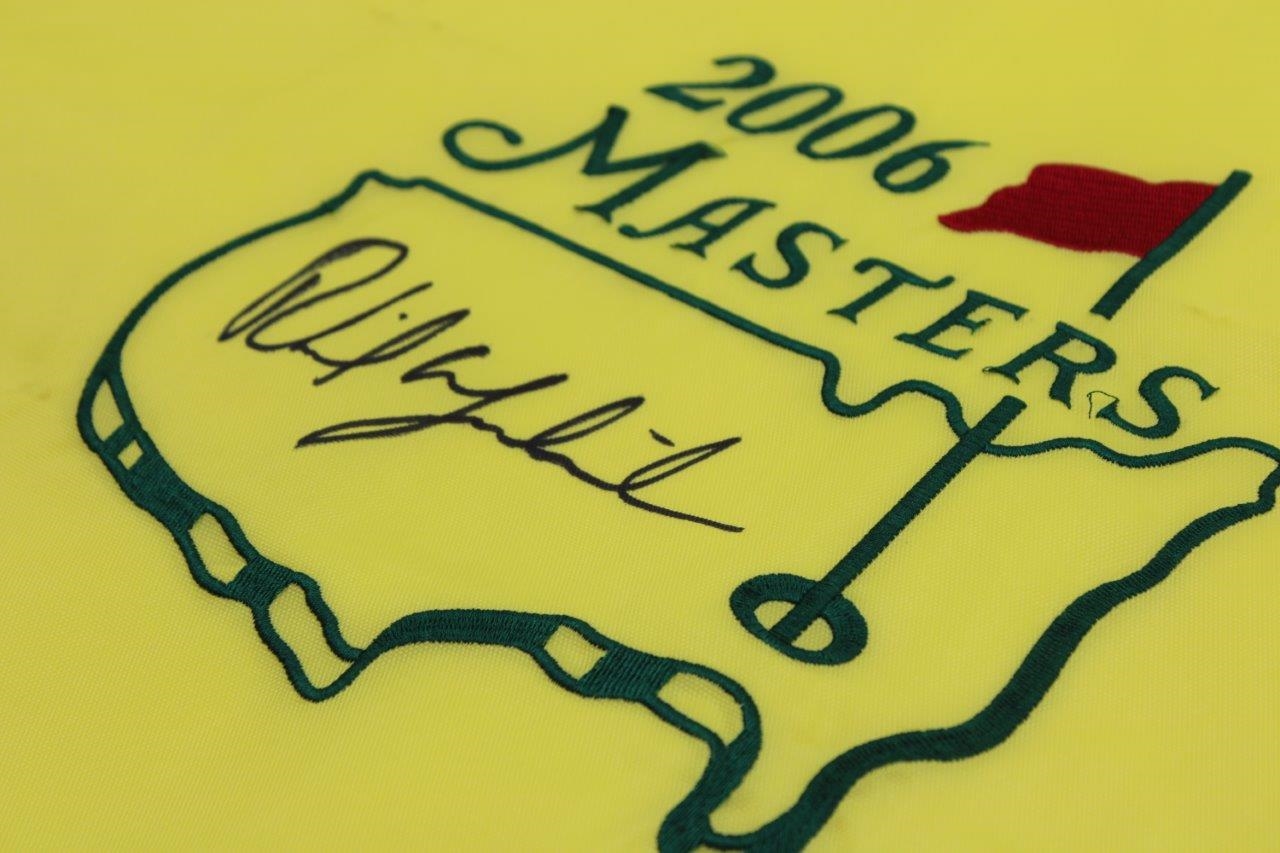
The 2006 Masters Tournament, held at the Augusta National Golf Club, remains a seminal event in professional golf history, characterized by Phil Mickelson’s dominant performance to secure his second green jacket. As the 70th edition of the tournament, it serves as a critical case study for course management, pressure performance, and the evolution of the sport's competitive landscape during the mid-2000s.
Historical Significance of the 2006 Masters
The 2006 Masters took place from April 6 to April 9, 2006, attracting the world’s elite golfers to one of the most prestigious venues in the game. By this period, the Masters had established itself as the first major championship of the calendar year, a status that demanded peak physical and mental preparation from participants.
Coming off his first Masters victory in 2004, Phil Mickelson entered the 2006 tournament with refined confidence. The field included legends such as Tiger Woods, who was the defending champion, and Ernie Els, alongside a rising generation of talent. The course conditions at Augusta National—known for its daunting undulations and treacherous greens—were prepared to test the strategic limits of every player. The 2006 event is frequently cited by analysts as a tournament where iron precision and short-game mastery superseded pure driving distance.
Key Performance Factors: Course Dynamics
Augusta National is a unique environment where the architectural design significantly influences player performance. In 2006, the course played to a par 72, spanning approximately 7,445 yards. The design features narrow fairways framed by towering pines and complex bunker placements that require high-precision shot-shaping.
During the 2006 Masters, the weather conditions were generally conducive to scoring, though the infamous "Augusta breeze" played a factor in club selection. The primary technical challenge for the field was the speed of the greens, known for their glass-like consistency. Managing the ball's spin rate on approach shots was the decisive skill, as players who were unable to hold the greens faced difficult recovery chips from collection areas.
The Performance of Phil Mickelson
Phil Mickelson’s victory in 2006 was not defined by a single miraculous shot, but by a consistent, methodical approach. He finished with a total score of 281, seven under par. His strategy revolved around playing to the middle of the greens when necessary, avoiding the high-risk "pin-seeking" approach that often leads to bogeys at Augusta.
Mickelson’s ability to scramble—the act of saving par from off the green—was particularly noteworthy during the final round. His short-game proficiency allowed him to negate minor errors and maintain a lead that held firm against a surging field. This performance reinforced the tactical philosophy that at Augusta National, patience is often more valuable than aggressive play.
Summary of Top Finishers in 2006
The following table outlines the top performers who challenged for the title, illustrating the tight margins that defined the leaderboard during the final round.
| Rank | Player | Score | To Par |
|---|---|---|---|
| 1 | Phil Mickelson | 281 | -7 |
| T2 | Tim Clark | 283 | -5 |
| T2 | Retief Goosen | 283 | -5 |
| T3 | Tiger Woods | 284 | -4 |
| T3 | Angel Cabrera | 284 | -4 |
| T3 | Fred Couples | 284 | -4 |
| T3 | Jose Maria Olazabal | 284 | -4 |
| T3 | Vijay Singh | 284 | -4 |
The Competitive Landscape: Tiger Woods and Others
The 2006 Masters provided a fascinating look at the era’s hierarchy of talent. Tiger Woods, who finished tied for third at four-under-par, remained the central figure around whom the tournament was measured. His performance in 2006 was characterized by extreme reliability, yet he was unable to manufacture the necessary birdies on the back nine of the final round to force a playoff or win outright.
The presence of players like Fred Couples and Jose Maria Olazabal—past champions—highlighted the endurance required to compete at this level. Meanwhile, the emergence of international players like Tim Clark and Angel Cabrera signaled the increasingly globalized nature of the PGA Tour. For the audience, the 2006 Masters served as a validation of the sport’s parity, proving that even with the dominance of top-ranked players, the specific demands of Augusta National could neutralize any inherent physical advantage.
Technical Analysis of Winning Strategy
To understand why the 2006 Masters unfolded the way it did, one must examine the specific mechanics of tournament play at this venue:
- Approach Play: The greens at Augusta are famously sloped from back to front. The 2006 winners understood that leaving the ball below the hole was a mandatory requirement. Putting from above the hole in 2006 often resulted in a three-putt, a statistical "killer" in major championships.
- Driving Accuracy: While the course was long, accuracy off the tee was paramount. Players who strayed into the pine straw were forced to punch out, losing a stroke in the process.
- Mental Resilience: The tournament requires navigating a series of high-pressure holes, particularly "Amen Corner" (holes 11, 12, and 13). The ability to maintain emotional equilibrium here determines who stays in contention on Sunday.
Common Misconceptions Regarding the 2006 Event
There is a frequent misconception that the 2006 Masters was a "runaway" victory for Mickelson. In reality, the leaderboard remained compressed for the majority of the final round. Through the first twelve holes, multiple players were within two strokes of the lead. The perceived ease of Mickelson’s victory was a byproduct of his clinical execution in the final few holes rather than a lack of competition.
Additionally, some analyses suggest that equipment technology in 2006 played an outsized role. While golf ball and driver technology were indeed advancing, the 2006 Masters proved that no amount of equipment innovation could substitute for the granular understanding of green speeds and local break patterns.
Frequently Asked Questions
What was the winning score for the 2006 US Masters?
Phil Mickelson won the 2006 Masters with a total score of 281, which was seven strokes under par. This performance put him two shots ahead of the runners-up, Tim Clark and Retief Goosen.
Who was the defending champion going into the 2006 Masters?
Tiger Woods entered the 2006 tournament as the defending champion, having won the Masters in 2005. His title defense saw him finish in a tie for third place with a score of four under par.
How did the course conditions influence the 2006 tournament?
The 2006 Masters was defined by firm and fast greens. This required players to emphasize trajectory control and distance management. The primary difficulty was not the length of the course, but the precision required to keep approach shots in favorable putting positions.
Why is the 2006 Masters still frequently analyzed by golf fans?
The tournament is studied because it represents a "pure" test of championship golf. It demonstrated the triumph of a strategic, calculated game plan over pure power, providing a template for how players must approach Augusta National to find success.
Did any notable records occur at the 2006 Masters?
While no major scoring records were broken in 2006, the tournament is notable for the depth of talent on the leaderboard. The concentration of high-caliber players finishing within a few strokes of the leader underscored the extreme competitiveness of professional golf during that period.
Recommendations for Further Study
For those interested in the technical nuances of the 2006 Masters, reviewing the final round broadcast is highly recommended. Pay specific attention to the camera angles on the par-3 12th hole, where the wind swirling in the trees often forces players to change their club selection mid-setup. Furthermore, reviewing the shot-link data from that tournament provides a deeper quantitative look at how approach proximity to the hole correlated directly with birdie-to-bogey ratios.
The 2006 Masters serves as an enduring lesson in golf strategy. Success at this level is rarely the result of a single brilliant moment; it is the culmination of hundreds of correct micro-decisions made over four days of intense, high-stakes competition. Whether you are an amateur golfer looking to improve your course management or a history enthusiast, the 2006 tournament remains one of the best examples of professional match-up dynamics on a grand stage.