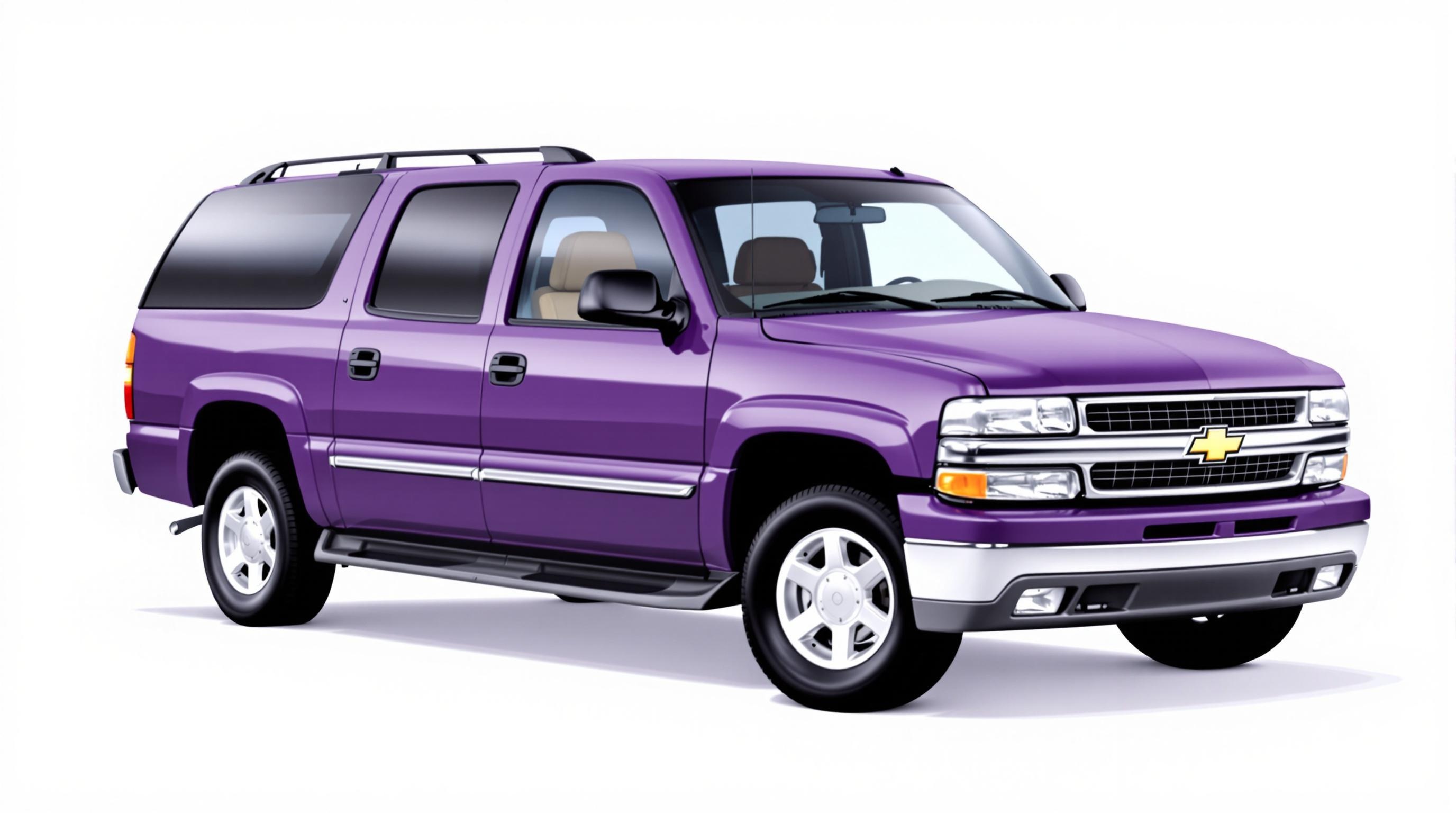
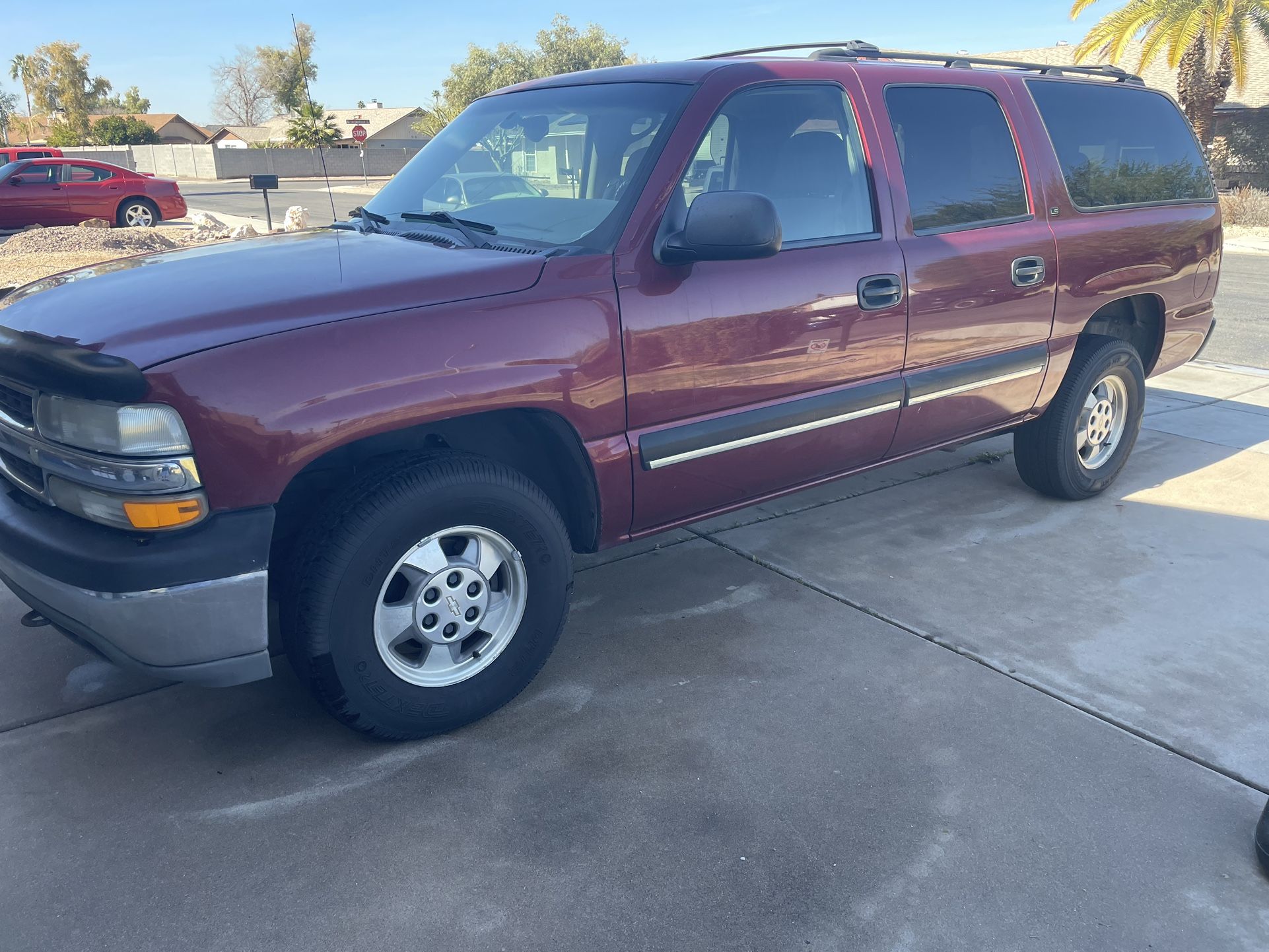
The 2001 Chevrolet Suburban remains a benchmark in the full-size SUV segment, offering a massive footprint, high towing capacity, and seating for up to nine passengers. Built on the GMT800 platform, it balances rugged truck-based capability with the interior comforts required for long-distance family travel and heavy-duty utility.
The Legacy of the 2001 Chevrolet Suburban
By the time 2026 arrived, the 2001 Chevrolet Suburban had officially transitioned from a common sight on suburban driveways to a respected modern classic. Known as part of the ninth generation of the Suburban nameplate, the 2001 model year was the second year of the highly successful GMT800 platform. This generation represented a significant leap forward in refinement, structural rigidity, and engine efficiency compared to its GMT400 predecessor.
The Suburban has always occupied a unique space in the automotive world. It is longer than a Tahoe, providing a critical increase in cargo space behind the third-row seat. In 2001, it was the go-to vehicle for large families, equestrian enthusiasts, and government fleets. Today, it is sought after by enthusiasts who value its "overbuilt" nature and the simplicity of its Vortec engines, which are legendary for their longevity if maintained properly.
Technical Specifications and Powertrain Options
The 2001 Suburban was offered in two primary configurations: the 1500 (half-ton) and the 2500 (three-quarter ton). The choice between these two models dictates the engine, transmission, and suspension setup, fundamentally changing the vehicle's utility.
The 1500 Series: Everyday Utility
The 1500 was the most popular consumer choice. It featured a 5.3L Vortec V8 engine (the LM7), producing 285 horsepower and 325 lb-ft of torque. This engine is widely regarded as one of the most reliable small-block V8s ever produced. It utilized a cast-iron block and aluminum heads, providing a balance of weight and durability.
The 1500 models came equipped with a 4L60-E four-speed automatic transmission. While sufficient for daily driving and light towing, the 4L60-E is often cited as a weak point when subjected to extreme loads or high mileage without regular fluid changes. The suspension on the 1500 utilized an independent front suspension with torsion bars (on 4WD models) or coil springs (on 2WD models) and a five-link coil-spring rear suspension, providing a surprisingly smooth ride for a vehicle of its size.
The 2500 Series: Heavy-Duty Performance
For those requiring maximum towing capability, the 2500 series was the only answer. It offered two distinct engine options:
- 6.0L Vortec V8 (LQ4): Generating 320 horsepower and 360 lb-ft of torque. This was the standard engine for the 2500 and offered a significant step up in pulling power.
- 8.1L Vortec V8 (L18): Introduced for the 2001 model year, this "Big Block" replaced the older 7.4L (454) engine. It produced 340 horsepower and a massive 455 lb-ft of torque. This engine turned the Suburban into a powerhouse capable of hauling massive trailers that would otherwise require a dedicated heavy-duty pickup truck.
The 2500 series utilized the beefier 4L80-E or 4L85-E transmission and a leaf-spring rear suspension, which sacrificed some ride comfort for the sake of load-bearing capacity.
Engine and Performance Comparison Table
| Feature | 1500 (5.3L V8) | 2500 (6.0L V8) | 2500 (8.1L V8) |
|---|---|---|---|
| Horsepower | 285 hp @ 5,200 rpm | 320 hp @ 5,000 rpm | 340 hp @ 4,200 rpm |
| Torque | 325 lb-ft @ 4,000 rpm | 360 lb-ft @ 4,000 rpm | 455 lb-ft @ 3,200 rpm |
| Transmission | 4-Speed Auto (4L60-E) | 4-Speed Auto (4L80-E) | 4-Speed Auto (4L85-E) |
| Max Towing | Approx. 8,800 lbs | Approx. 10,500 lbs | Approx. 12,000 lbs |
| Fuel Tank | 31 Gallons | 38 Gallons | 38 Gallons |
| Platform | GMT800 (1/2 Ton) | GMT800 (3/4 Ton) | GMT800 (3/4 Ton) |
Practicality: Interior Space and Versatility
The primary reason to choose a 2001 Suburban over a Tahoe or a standard SUV is the sheer volume of space. Measuring approximately 219 inches in length, the Suburban offers a wheelbase of 130 inches. This translates to an interior that can comfortably seat nine adults if equipped with front and middle bench seats, though the most common configuration is for seven or eight passengers.
Cargo Capacity
With the third-row seats removed and the second-row seats folded flat, the 2001 Suburban offers a staggering 131.6 cubic feet of cargo space. Even with the third row in place, there is still 45.7 cubic feet of room, which is more than many mid-size SUVs offer in total. This "behind the third row" space is deep enough to fit several full-size suitcases or a large grocery haul without stacking items to the ceiling.
Seating and Comfort
The 2001 model year saw improvements in seat ergonomics and material quality. The LT trim level included leather seating surfaces, heated front seats, and a premium 9-speaker Bose sound system. A key practical feature is the tri-zone climate control, allowing the driver, front passenger, and rear occupants to adjust temperatures independently—a vital feature for a cabin this large.
One limitation of the 2001 model, compared to modern 2026 standards, is that the third-row seat does not fold flat into the floor. To maximize cargo space, the heavy third-row bench must be manually unlatched and physically removed from the vehicle. However, the seat is mounted on rollers, making it manageable for one strong individual or two people to move.
2026 Pricing and Market Value
As of 2026, the 2001 Chevrolet Suburban has entered a "bimodal" pricing phase. This means that prices are split between high-mileage workhorses and well-preserved collector or "survivor" examples.
Current Price Brackets
- Budget/High-Mileage ($2,500 – $5,500): Vehicles in this range typically have over 200,000 miles. They often show significant cosmetic wear, including the common "Chevy seat tear" and rust on the rocker panels or rear wheel arches (especially in Northern climates). These remain viable for buyers who need a cheap, heavy-duty hauler and are comfortable with DIY repairs.
- Daily Driver/Good Condition ($6,000 – $10,000): These are well-maintained units with 120,000 to 170,000 miles. They usually have a documented service history. The 1500 LS or LT trims fall into this category.
- Collector/Low-Mileage ($12,000 – $20,000+): There is a growing market for GMT800 Suburbans with under 80,000 miles. Pristine 2500 series models equipped with the 8.1L Big Block engine are particularly valuable, sometimes fetching prices near $25,000 in specialized auctions because no modern SUV offers a comparable large-displacement naturally aspirated engine.
Factors Influencing Value
The presence of the Z71 Off-Road Package significantly boosts the 2001 Suburban's value. In 2001, the Z71 became a specific trim level featuring unique body-colored bumpers, a roof rack, specialized tubular side steps, and upgraded suspension. Furthermore, the condition of the dashboard—which is prone to cracking—and the functionality of the 4WD transfer case actuator are major price-negotiating points.
Common Maintenance and Reliability Concerns
While the 2001 Suburban is known for reaching 300,000 miles or more, there are specific mechanical areas that require attention as these vehicles surpass 25 years of age.
The GMT800 "Known Issues"
- Brake Line Corrosion: In states where salt is used on roads, the original steel brake lines are notorious for rusting through. Many owners have replaced these with stainless steel kits.
- Fuel Pump Failure: The fuel pumps in these models are known to fail without much warning. Accessing the pump requires dropping the massive 31- or 38-gallon fuel tank, making it a labor-intensive job.
- Instrument Cluster Failures: The stepper motors in the gauge cluster frequently fail, causing the speedometer or fuel gauge to give erratic readings. Professional rebuilding services are common and relatively affordable.
- Intake Manifold Gaskets: On the 5.3L engines, the plastic intake manifold gaskets can shrink over time, leading to vacuum leaks and "lean" engine codes, particularly in cold weather.
- Transmission Health: The 4L60-E in the 1500 series should be monitored for slipping or harsh shifts. Adding a transmission cooler is a highly recommended modification for anyone planning to tow frequently.
Comparison: Suburban vs. Competitors
In 2001, the Suburban’s primary competitors were the Ford Excursion and its GMC sibling, the Yukon XL.
- Suburban vs. Excursion: The Excursion was larger and offered a diesel option (the 7.3L Powerstroke), but it was significantly harder to park and had a much harsher, truck-like ride due to its leaf-spring front suspension. The Suburban 1500 was much more "car-like" in its daily drivability.
- Suburban vs. Yukon XL: Mechanically, these vehicles are identical. The choice between them usually comes down to styling preferences or the availability of the GMC Denali trim, which offered a 6.0L engine in a half-ton chassis—a combination not available on the Chevy side in 2001.
Final Considerations for Buyers
The 2001 Chevrolet Suburban remains a pinnacle of functional design. Whether you are looking for a project vehicle to build into an "overlanding" rig or simply need a reliable vehicle that can haul a boat and a large family simultaneously, the 2001 model year offers a sweet spot of GMT800 durability and relative mechanical simplicity.
Potential buyers should prioritize vehicles with a clean frame and documented transmission services. While fuel economy is predictably poor—averaging between 12 and 15 MPG—the trade-off is a level of utility that very few modern vehicles can match without a significantly higher price tag and much more complex electronic systems.
Frequently Asked Questions
What is the real-world fuel economy of a 2001 Suburban? For the 1500 model with the 5.3L V8, expect 12-14 MPG in the city and 16-18 MPG on the highway. The 2500 model with the 8.1L V8 will significantly lower those figures, often seeing 8-10 MPG in the city and 12 MPG on the highway. Towing will reduce these numbers further, often into the single digits.
Can the 2001 Suburban fit a 4x8 sheet of plywood? Yes. One of the hallmark features of the Suburban is its ability to fit a standard 4x8-foot sheet of plywood or drywall flat on the floor with the rear doors or liftgate closed, provided the second-row seats are folded and the third-row seat is removed.
Does the 2001 Suburban have ISOFIX/LATCH for child seats? The 2001 model was produced just as LATCH requirements were being phased in. Many 2001 Suburbans have top-tether anchors, but they may lack the lower anchors found in 2002 and later models. Always check the specific build date and seat configuration.
Which is better: the Liftgate or the Cargo Doors? This is a matter of preference. The "Dutch doors" or traditional side-swinging cargo doors allow for easy access in low-ceiling garages and don't require reaching over a tailgate. However, the liftgate with a flip-up glass window (standard on most LT trims) provides a better rear view because it lacks the center pillar of the cargo doors.
Is the 4WD system permanent or part-time? Most 4WD 2001 Suburbans feature the Autotrac transfer case. This includes a "2HI" mode for fuel efficiency, a "4HI" and "4LO" for off-road use, and an "Auto 4WD" mode that sends power to the front wheels only when the rear wheels lose traction.