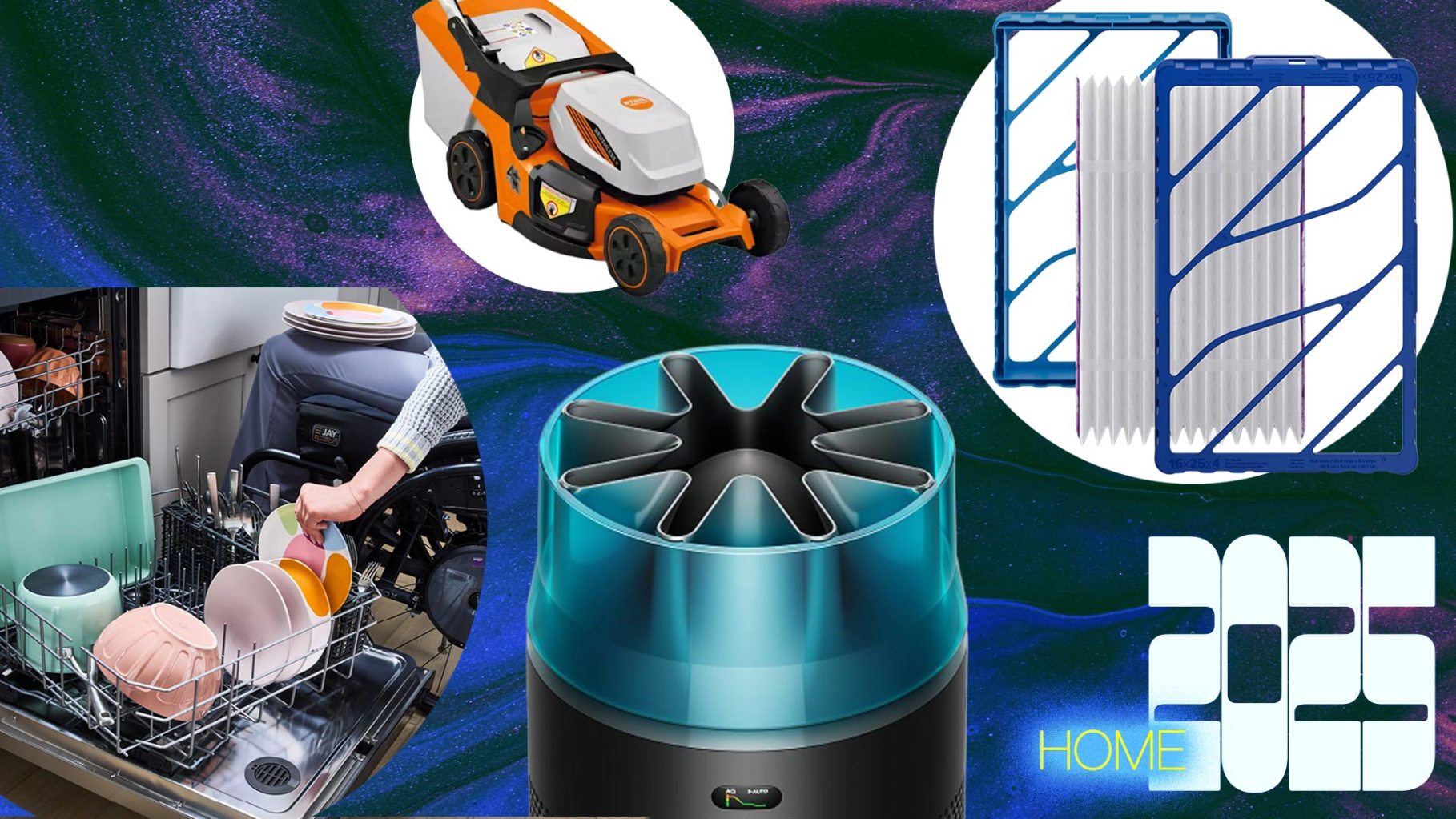
The shift in the home innovation landscape between 2001 and 2025 represents a transition from isolated, analog appliances to interconnected, AI-driven ecosystems. This evolution moved through phases of basic digitization and mobile-first control, finally achieving true interoperability via the Matter standard and ambient intelligence by the mid-2020s.
The Infrastructure Foundation: From Dial-Up to Ubiquitous Connectivity
In 2001, the "connected home" was a niche concept reserved for the ultra-wealthy. Home networking was in its infancy; the IEEE 802.11b standard (Wi-Fi) had only recently been ratified in 1999, offering speeds of just 11 Mbps. Most households still relied on dial-up or early DSL connections, meaning the internet was a destination one "visited" rather than an ambient presence. Innovation at this stage was focused on hardware longevity and mechanical reliability rather than software intelligence.
By 2025, the landscape had shifted entirely toward Wi-Fi 7 and fiber-optic speeds exceeding 2 Gbps. The infrastructure within the home evolved from a single central router to sophisticated mesh networks capable of handling hundreds of simultaneous device connections. This shift was necessary to support the explosion of the Internet of Things (IoT). Connectivity moved from being an optional luxury to a fundamental utility, as essential as electricity or water.
The technical depth of this shift involves the transition from the 2.4 GHz spectrum, which suffered from massive interference as more devices joined the fray, to the 6 GHz band introduced with Wi-Fi 6E and 7. This expanded bandwidth allowed for the low-latency communication required for high-definition security feeds, cloud-based AI processing, and real-time energy monitoring that define the 2026 living experience.
The Interoperability Crisis and the Rise of the Matter Standard
The period between 2010 and 2020 was characterized by "ecosystem wars." Manufacturers like Apple (HomeKit), Google (Nest/Home), and Amazon (Alexa) created "walled gardens." If a consumer bought a smart thermostat, they had to ensure it was compatible with their specific voice assistant or hub. This fragmentation was the single greatest barrier to mass-market adoption of home innovation.
The turning point occurred between 2022 and 2025 with the wide-scale implementation of Matter, a royalty-free connectivity standard. Developed by the Connectivity Standards Alliance (CSA), Matter allowed devices from different manufacturers to work together locally without relying on the cloud. This solved the "three-app problem," where a user might need separate applications to dim a light, lock a door, and set the temperature.
By 2026, the shift is complete: consumers no longer check for specific "Works With" logos as frequently because the underlying protocol—built on Thread and Wi-Fi—has unified the industry. This shift moved the value proposition of home innovation from "who made the device" to "how well does the device automate my life."
Energy and Sustainability: From Passive Efficiency to Active Management
In 2001, home energy innovation was largely defined by the Energy Star program, which focused on the efficiency of individual appliances. A "smart" home in 2001 meant having a dishwasher that used less water or a refrigerator with better insulation. The home was a passive consumer of energy from the grid.
Fast forward to 2025, and the home has become an active participant in the energy ecosystem. The landscape shifted toward Decarbonization and Electrification. Key technologies driving this change include:
- Heat Pumps: Replacing traditional gas furnaces, modern cold-climate heat pumps reached peak efficiency levels by 2024, supported by significant government incentives such as those found in the Inflation Reduction Act in the United States.
- Bidirectional Charging (V2H): Electric Vehicles (EVs) are no longer just transportation; they are mobile batteries. By 2025, Vehicle-to-Home (V2H) technology allowed homeowners to power their houses during peak hours or outages using their car’s battery.
- Smart Panels: Electrical panels evolved from "dumb" breaker boxes to digital energy managers that can shed loads automatically to prevent grid overloads or maximize solar self-consumption.
This shift represents a move from saving pennies on an electric bill to managing a microgrid. The innovation is no longer in the hardware of the heater alone, but in the AI that decides when to run that heater based on real-time electricity pricing and weather forecasts.
The Domestic Environment: Security, Health, and Privacy
Home security in 2001 was a professionalized, wired affair. Companies like ADT dominated the market with sensors that required professional installation and long-term contracts. Video surveillance was rare and required physical tapes or digital video recorders (DVRs) hidden in closets.
By 2025, security became decentralized and DIY. The shift to Edge AI allowed cameras to distinguish between a package delivery, a family member, and a stray animal locally, without sending sensitive video data to the cloud. This addressed the growing privacy concerns that plagued the early 2020s.
Furthermore, home innovation expanded into Ambient Health Monitoring. In the 2020–2025 window, we saw the rise of sensors that do not require cameras or wearables. Using Wi-Fi Sensing or millimeter-wave radar, homes can now monitor the respiratory rates of sleeping occupants or detect a fall in the bathroom. This shift turned the "Smart Home" into a "Caring Home," particularly for the aging-in-place demographic.
Comparing the Landscape: 2001 vs. 2025
The following table summarizes the technical and functional shifts across key pillars of home innovation.
| Feature | 2001 Status | 2025 Status |
|---|---|---|
| Primary Connectivity | Dial-up / Early Broadband (Cat5) | Wi-Fi 7 / Thread / Fiber (Multi-Gig) |
| Control Interface | Physical switches / IR Remotes | Voice / AI / Predictive Automation |
| Ecosystem | Proprietary / Siloed (X10, Crestron) | Interoperable (Matter standard) |
| Energy Source | Grid-dependent (Gas/Coal dominant) | Solar + Battery + Grid (Hybrid/Electric) |
| Security | Professionally monitored (Wired) | AI-Enabled DIY (Edge-processed) |
| Entertainment | Physical Media (DVD, CD, CRT TV) | 8K Streaming / XR / OLED / Spatial Audio |
| Kitchen Tech | Mechanical Timers / Analog Controls | Induction / Precision Sous-vide / AI Inventory |
The Kitchen and Domestic Labor: The Automation of Routine
The 2001 kitchen was a collection of independent tools. The "innovation" of the era was the microwave oven's proliferation and the beginning of the "stainless steel" aesthetic trend. Appliances were "dumb" in the sense that they had no awareness of what they were cooking or who was using them.
By 2025, the kitchen became the hub of precision domesticity. Induction cooktops, which began their mass-market ascent in the late 2010s, became the standard by 2025 due to their efficiency and safety. Ovens now feature internal cameras and AI that can recognize 100+ types of food, automatically setting the temperature and humidity.
Even more significant was the shift in floor care. In 2001, the first Roomba was still a year away (released in 2002). By 2025, robotic vacuums evolved into fully autonomous floor maintenance centers that vacuum, mop, self-empty, and even self-clean their own mop pads with hot water. This shift represents the successful "outsourcing" of a major portion of domestic labor to autonomous systems.
Challenges and Unresolved Issues: The 2026 Perspective
Despite the incredible progress, the shift in home innovation has introduced new complexities. The most significant is Digital Obsolescence. In 2001, a washing machine was expected to last 20 years. In 2025, while the motor might last 20 years, the software and connectivity modules may become unsupported within seven. This has led to a growing "Right to Repair" movement and a push for more modular home technology.
Privacy also remains a contentious point. As of 2026, the industry is still grappling with the balance between "Ambient Intelligence" (where the house knows what you want before you ask) and "Surveillance Capitalism." The shift has moved from protecting the home from external intruders to protecting the home's data from the manufacturers themselves.
FAQs
What is the Matter standard, and why is it important for 2025 homes?
Matter is a universal communication protocol for smart home devices. Before Matter, a smart bulb might only work with Apple or only with Amazon. Matter ensures that all certified devices work together regardless of the brand. This eliminates the "hub" fatigue and makes the home easier to set up and more reliable, as it works locally without needing constant internet access for every command.
How did the COVID-19 pandemic change home innovation?
The pandemic (2020–2022) acted as a massive accelerator. It forced the "Home Office" to become a permanent fixture, leading to innovations in residential mesh networking, acoustic soundproofing, and integrated video conferencing hardware. It also heightened the focus on indoor air quality (HEPA filtration and UVC sanitization) and touchless technology, such as smart faucets and voice-controlled lighting.
Are older homes from 2001 compatible with 2025 innovations?
Yes, but they often require "retrofitting" the electrical infrastructure. Most 2025 innovations are wireless (using Thread or Wi-Fi), so they don't require tearing down walls for data cables. However, modern high-draw appliances like EV chargers and heat pumps often require an upgrade to a 200-amp service panel and the addition of neutral wires to older light switch boxes for smart switches.
Is smart home technology actually saving energy?
As of 2025, the answer is a qualified yes. While smart devices themselves consume a small amount of "vampire" power, the net savings from smart thermostats (optimizing HVAC based on occupancy) and smart water heaters (heating during off-peak hours) far outweigh the standby consumption. AI-driven energy management can reduce total home energy expenditure by 15–30% depending on the climate and home age.
What is the biggest difference in home entertainment between 2001 and 2025?
The shift from physical media and hardware to "spatial" and "liquid" media. In 2001, a home theater required a bulky CRT or early plasma TV, a DVD player, and miles of speaker wire. By 2025, entertainment is either delivered via massive, paper-thin OLED screens or through Spatial Computing headsets (like the Apple Vision Pro or Meta Quest series) that create virtual screens of any size, coupled with wireless Atmos-enabled audio.
Practical Recommendation for 2026 Homeowners
If you are looking to update a home in 2026, the most effective strategy is to prioritize infrastructure over gadgets. Instead of buying several disparate "smart" appliances, invest first in a robust Wi-Fi 7 mesh network and a Matter-compatible hub. Ensure your electrical panel is capable of handling future electrification needs (EV charging and heat pumps). By focusing on the "backbone" of the home, you ensure that any device you add over the next decade will be able to communicate and function efficiently within the broader ecosystem.