Jeremiah 17:5 is a prophetic warning stating that individuals who place their ultimate trust in human strength and mortal resources, rather than in the divine, face spiritual desolation. This verse establishes a sharp contrast between human frailty and God’s sovereignty, defining "trust" as a fundamental orientation of the human heart.
The Historical and Prophetic Context of Jeremiah 17:5
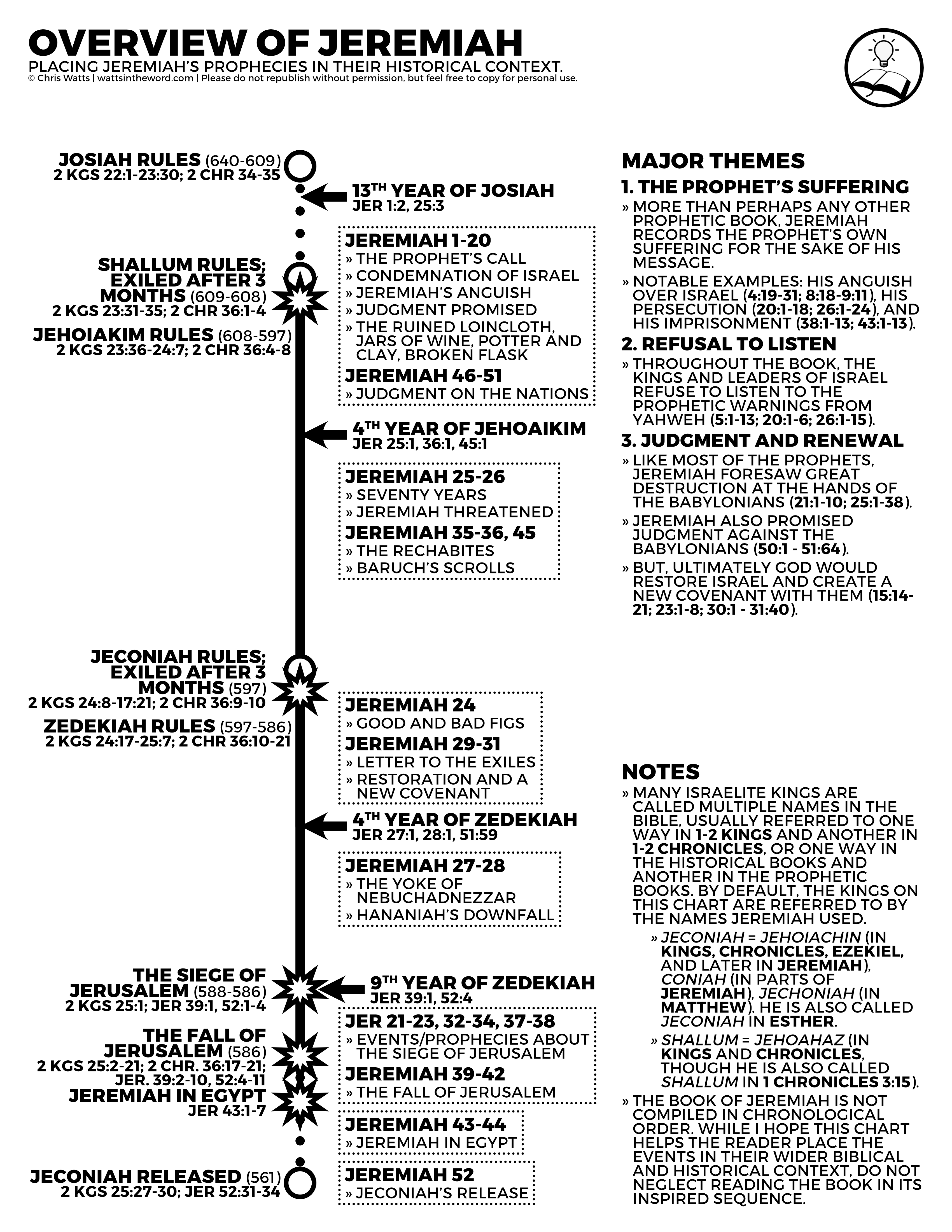
To understand Jeremiah 17:5, one must examine the geopolitical and spiritual climate of the Kingdom of Judah during the late 7th and early 6th centuries BCE. Jeremiah, often referred to as the "Weeping Prophet," operated during a period of extreme national crisis. The Babylonian Empire, under Nebuchadnezzar II, was expanding its reach, threatening the sovereignty of Jerusalem.
The primary temptation for the leaders of Judah was to seek military alliances with other human powers, specifically Egypt. Instead of relying on their covenantal relationship with God, the Judean monarchy often looked toward "flesh"—human armies, horses, and political treaties. Jeremiah 17:5 acts as a direct divine critique of these secular dependencies. The "man" in whom the people trusted was not just an abstract concept; it represented the specific political and military figures of the era who promised security but could not deliver it against the judgment of God.
As of 2026, biblical historians emphasize that this verse is part of a larger "wisdom" section within the prophetic book. It mirrors the structure of the Psalms (particularly Psalm 1), categorizing humanity into two distinct paths: the path of the cursed and the path of the blessed. This binary outlook was intended to shock the Judean audience out of their complacency and highlight the existential stakes of their misplaced loyalty.
Detailed Exegesis: Breaking Down the Hebrew Text
A technical analysis of the original Hebrew provides deeper insight into the severity of Jeremiah’s message. The verse is structured as a formal oracle, beginning with the authoritative "Thus says the Lord" (Koh amar YHWH), which signifies that the following words carry the full weight of divine decree.
The Concept of the Curse (Arur)
The verse begins with the word Arur, translated as "cursed." In the Ancient Near East, a curse was not merely a spoken wish for bad luck; it was a formal declaration of being cut off from the source of life and community. When Jeremiah declares a person "cursed," he is describing a state of being where the individual has voluntarily removed themselves from the protection and provision of the Covenant. As we observe in contemporary theological studies in 2026, this is often interpreted as "self-inflicted" isolation—the natural consequence of choosing a finite resource over an infinite one.
Trust (Batar) and Man (Geber)
The word for trust, batar, implies a sense of well-being and security derived from reliance on something. The word used for "man" here is geber, which often denotes a strong man or a warrior. This is a deliberate choice of vocabulary. Jeremiah is not just saying don't trust "people" in a general sense; he is saying do not trust in the "mighty" or the "strong." The irony is sharp: even the strongest warrior (geber) is still "flesh" (basar), a term that denotes mortality, weakness, and transience.
The Heart and the Turning Away
The final clause, "whose heart turns away from the Lord," identifies the root cause of the curse. The Hebrew word for heart, leb, refers to the center of the will, intellect, and decision-making, not just the emotions. Misplaced trust is not a peripheral mistake; it is a fundamental shift in the orientation of the self. By making "flesh his strength," the individual undergoes a literal turning (sur) of their internal compass away from the Creator.
The Metaphor of the Desert Shrub
Jeremiah 17:5 is immediately followed by verse 6, which provides the vivid imagery of the "cursed" state. The person who trusts in man is compared to a "shrub in the desert" (sometimes translated as a juniper or a tamarisk).
This plant exists in the Arabah, a parched, salty wasteland where nothing else grows. The key characteristic of this shrub is that it "shall not see when good comes." This suggests a state of spiritual blindness or insensitivity. Even when God provides "rain" (blessing or opportunity), the one who trusts in human strength is so positioned in the "parched places of the wilderness" that they cannot benefit from it.
In 2026, environmental and botanical studies of the Levant help us understand this metaphor better. The ar'ar plant is a stunted, lonely shrub that survives in salt-encrusted soil. It is the perfect visual representation of the life of an individual who relies on their own ego or external human validation—it is a life of survival, but not of flourishing.
Comparing the Two Paths of Trust
Jeremiah 17:5 is the first half of a "Two Ways" teaching. To fully grasp its meaning, it must be compared with the "blessing" found in Jeremiah 17:7-8. This contrast is a hallmark of biblical wisdom literature, designed to force a choice upon the reader.
| Feature | The Cursed (Jeremiah 17:5-6) | The Blessed (Jeremiah 17:7-8) |
|---|---|---|
| Object of Trust | Man/Flesh (Geber / Basar) | The Lord (YHWH) |
| Internal Disposition | Heart turns away from God | Heart is confident in God |
| Metaphorical Image | A shrub in the desert | A tree planted by water |
| Source of Vitality | Parched places, salt land | Flowing stream, deep roots |
| Reaction to Heat/Drought | Does not see good coming | Does not fear heat; no anxiety |
| Result | Desolation and loneliness | Constant fruitfulness |
This table illustrates that the difference between the two individuals is not their external circumstances—both face "heat" and "drought" (life’s inevitable trials). The difference lies entirely in their source of nourishment. The person in verse 5 relies on a "broken cistern" of human ability, while the person in verse 7 is tapped into an inexhaustible reservoir.
Theological Implications for the Modern Era
While Jeremiah was writing to a specific political entity in the 6th century BCE, the theological principles of 17:5 remain highly relevant in 2026. The "flesh" that people make their strength has simply changed forms.
Secularism and Humanism
In a contemporary context, trusting in "man" often takes the form of absolute reliance on technological progress, economic systems, or political ideologies to provide ultimate meaning and safety. Jeremiah 17:5 challenges the notion that human ingenuity alone can solve the fundamental problem of the human condition. When these systems fail—as they inevitably do—the individual who has made them their "strength" finds themselves in the "parched places."
The Deceitfulness of the Self
Jeremiah 17:5 leads directly into one of the most famous verses in the Bible, Jeremiah 17:9: "The heart is deceitful above all things, and desperately sick; who can understand it?" This connection is vital. We trust in "man" because our own hearts deceive us into thinking we are self-sufficient. The overview of verse 5 is incomplete without acknowledging that the "turning away" starts with an internal delusion of autonomy.
Psychological Fragility
Modern pastoral care often references Jeremiah 17:5 when discussing burnout and "compassion fatigue." Relying solely on one’s own emotional and physical "flesh" to navigate a complex world leads to the "shrub in the desert" experience—a state of being dried up and unable to perceive the "good" that still exists in the world.
Common Misinterpretations of the Verse
It is important to clarify what Jeremiah 17:5 does not mean, as it is often used as a proof-text for unhealthy isolationism.
- It is not a prohibition of community: Jeremiah is not suggesting that humans should never trust one another in a social or relational sense. The Bible frequently encourages healthy community, marriage, and friendship. The "trust" mentioned here is batar—an ultimate, religious reliance for one's foundational security.
- It is not a rejection of medicine or science: Making "flesh your strength" refers to an idolatrous replacement of God, not the wise use of human tools. In 2026, most theologians agree that utilizing human means (like healthcare) is a way of stewarding God's creation, provided the ultimate trust remains in the Creator.
- It is not a fatalistic curse: The structure of Jeremiah’s prophecy is always an invitation to repentance. The declaration of the curse is a warning intended to drive the listener back toward the "blessing" of verse 7.
Frequently Asked Questions
What does "making flesh your strength" mean in Jeremiah 17:5?
This phrase refers to relying on human power, military might, or personal ability as the primary source of security. In the original context, it specifically addressed Judah's desire to form alliances with Egypt to fight Babylon. In a broader sense, it means treating anything mortal or finite as if it were infinite and all-powerful.
Is Jeremiah 17:5 related to Psalm 1?
Yes. Both passages use "Two Ways" imagery to describe the righteous and the wicked. Psalm 1 also compares the righteous to a tree by the water and the wicked to chaff. Jeremiah 17:5-8 expands this by using the "shrub in the desert" vs. "tree by the water" metaphor, likely drawing from the same sapiential (wisdom) tradition.
Why does the verse call the person "cursed"?
In biblical theology, a curse is the state of being separated from God’s life-giving presence. It is not a magical spell, but a judicial and relational reality. Choosing to trust in "man" is seen as a rejection of God's covenant, which naturally results in the loss of the benefits of that covenant.
Does this verse imply that we should never trust people?
No. The Bible encourages trustworthiness and faithfulness in human relationships. The "trust" Jeremiah condemns is the kind of ultimate dependence that belongs only to God. It is about where the "heart" is anchored. If your ultimate hope for the future is built on a person or an institution, you are at risk of the desolation described in the verse.
How does Jeremiah 17:5 connect to the verses that follow?
Verses 5-10 form a tight literary unit. Verse 5 establishes the problem (misplaced trust), verse 6 shows the result (the desert shrub), verses 7-8 show the alternative (trust in God), and verses 9-10 explain why we struggle with this (the deceitful heart) and how God judges the heart.
What is the "salt land" mentioned in the context of this verse?
The "salt land" (Jeremiah 17:6) refers to the area around the Dead Sea, where high salinity makes the ground barren. It serves as a powerful symbol of a life that is spiritually unproductive and unable to sustain growth, despite any effort the individual might make.
Practical Recommendation for Further Study
To gain a deeper understanding of Jeremiah 17:5, readers should engage in a comparative study of the entire chapter. Specifically, read Jeremiah 17:1-10 in one sitting to see the flow from the "sin of Judah" to the "deceitful heart."
For those looking for a practical application in 2026, consider an "audit of trust." Identify the "flesh" you are currently leaning on—whether it be your career, your savings account, or a specific political leader—and evaluate whether your heart has "turned away from the Lord" in the process. The remedy for the "curse" of verse 5 is not simply trying harder, but a deliberate "re-rooting" of the heart into the "living waters" mentioned in verse 13.