Securing a $100,000 mortgage while protecting your financial obligations with a 30-year life insurance policy requires aligning your home loan amortization schedule with a term policy that matches your coverage timeline and budget. This strategy ensures that if the policyholder passes away prematurely, the death benefit can fully pay off the remaining balance of the housing debt, shielding surviving family members from foreclosure or severe financial hardship.
When evaluating a $100,000 mortgage alongside a 30-year life insurance policy, homeowners must navigate various product structures, underwriting requirements, and financial strategies. Because both a standard 30-year fixed-rate mortgage and a 30-year term life insurance policy operate on identical multi-decade timelines, they pair together naturally to manage long-term liability. Understanding how these financial instruments interact, comparing term versus permanent coverage, assessing underwriting standards, and analyzing cost variables will empower you to build a secure risk-management plan for your household.
Understanding the Relationship Between a $100,000 Mortgage and Term Insurance
A $100,000 mortgage represents a moderate liability in the broader housing market, making it an accessible target for comprehensive income and debt protection. When you take out a 30-year home loan, your primary financial exposure is the principal balance, accumulated interest, and monthly housing costs. If you were to pass away unexpectedly during those three decades, your dependents would still be legally obligated to service that debt or face the forced sale of the property.
A 30-year term life insurance policy is engineered to address this exact risk window. Unlike permanent life insurance options such as whole life or universal life, term insurance provides pure, unbundled death benefit protection for a specified, predetermined duration. Because a standard residential mortgage often spans 30 years, pairing it with a 30-year term policy creates a parallel financial safety net. As your monthly mortgage payments slowly chip away at the $100,000 principal balance through amortization, your term life insurance policy maintains a level death benefit, ensuring there are always enough funds to wipe out the remaining debt entirely.
Choosing the right amount of coverage requires looking beyond the initial $100,000 figure. While your mortgage balance starts at $100,000, your family's overall financial needs upon your death will likely encompass more than just bricks and mortar. Expenses such as funeral costs, income replacement, property taxes, and ongoing maintenance must be factored into your calculations. Nevertheless, a dedicated policy sized to address a $100,000 mortgage serves as a foundational baseline for risk mitigation.
Comparing Term Life Insurance Options for Mortgage Protection
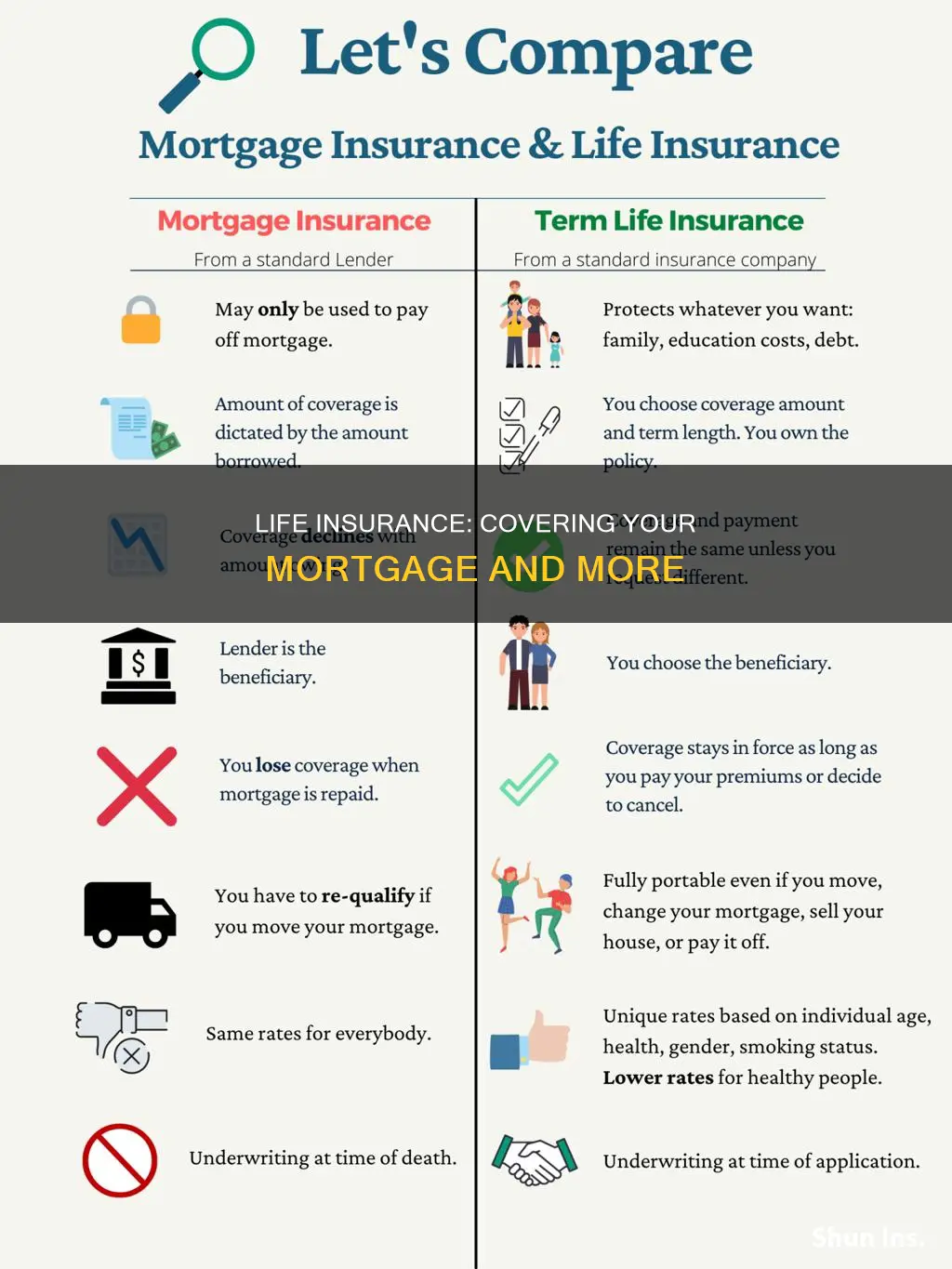
When shopping for coverage to protect a long-term debt, buyers generally encounter two main paths: traditional term life insurance and specialized mortgage life insurance. While both can fulfill the objective of paying off a $100,000 mortgage, their structural differences impact cost, underwriting, and payout flexibility.
Traditional 30-Year Level Term Life Insurance
Traditional term life insurance features a death benefit that remains level throughout the entire 30-year duration. If you purchase a $100,000 policy at age 35, your beneficiaries will receive the full $100,000 whether you pass away in year two or year twenty-nine.
- Advantages: Premiums are typically locked in for the entire term, the payout is distributed directly to your chosen beneficiaries with no restrictions on how they use the funds, and the policy remains your personal property regardless of whether you refinance or sell your home.
- Disadvantages: Requires full medical underwriting, which may include a paramedical exam, blood draws, and a review of your medical history.
Mortgage Life Insurance (Decreasing Term)
Often sold directly by mortgage lenders or specialized insurers, decreasing term insurance ties the policy directly to your home loan. The death benefit decreases over time in tandem with your mortgage amortization schedule.
- Advantages: These policies frequently feature simplified or guaranteed issue underwriting, meaning you typically do not need to undergo a medical exam to qualify.
- Disadvantages: The payout drops as you pay down your principal, but your premium payments usually stay the same. Furthermore, the insurance payout generally goes directly to the lender rather than your family, leaving no extra cash for other household expenses.
| Feature | 30-Year Level Term Life | Mortgage (Decreasing) Term Life |
|---|---|---|
| Death Benefit | Remains constant ($100,000) for 30 years | Decreases annually alongside mortgage principal |
| Beneficiary | Personal beneficiary of your choice | Usually assigned directly to the mortgage lender |
| Underwriting | Typically requires medical exam and history review | Often simplified issue or no medical exam required |
| Portability | Stays with you if you move, refinance, or pay off home | Usually terminates or requires renegotiation if you move |
| Cost Efficiency | Generally more cost-effective for healthy applicants | Often more expensive relative to the shrinking payout |
Underwriting Requirements and Eligibility Factors
Securing a competitive rate on a 30-year life insurance policy depends heavily on the insurer's underwriting process. Life insurance companies evaluate risk by examining your health, lifestyle, age, and financial history. For a policy designed to cover a $100,000 mortgage, insurers will categorize you into specific risk classes that dictate your monthly premium.
Age is one of the most critical pricing components. A healthy 30-year-old purchasing a 30-year term policy will secure significantly lower rates than a 50-year-old buying the same coverage, as the probability of a claim increases as the insured ages toward the end of the term. Other vital underwriting factors include:
- Medical History: Past diagnoses, chronic conditions (such as diabetes or hypertension), and family medical history regarding heart disease or cancer.
- Tobacco Use: Smokers and users of alternative nicotine products face substantially higher premiums—frequently double or triple the rates assigned to non-smokers.
- Driving and Lifestyle: A clean motor vehicle record, absence of reckless driving citations, and avoidance of hazardous hobbies like skydiving or private aviation help keep rates low.
- Financial Verification: For a relatively modest face amount like $100,000, extensive financial underwriting is rare, but insurers will verify that your income and debt load reasonably justify the coverage amount.
Cost Considerations and Financial Impact
Budgeting for a $100,000 mortgage involves balancing your monthly mortgage servicing costs against your life insurance premiums. For most healthy applicants, a $100,000 30-year term life policy is remarkably affordable, often costing between $15 and $40 per month depending on age and gender at the time of application.
When analyzing the financial impact, consider the long-term cost of ownership. Over 30 years, a level term policy locks in your rate, protecting you against inflation and rising healthcare costs as you age. Failing to secure coverage early, however, exposes your estate to severe risk. If the primary breadwinner passes away without a policy, surviving family members must find a way to cover the monthly mortgage payments, property taxes, and homeowner's insurance out of pocket, which can trigger default if household income drops precipitously.
Common Mistakes to Avoid When Pairing Insurance With a Mortgage
Homeowners often make strategic missteps when trying to protect a real estate asset with life insurance. Avoiding these pitfalls ensures that your financial safety net performs as intended when your family needs it most.
- Relying Solely on Employer-Provided Group Life Insurance: Many workers assume their workplace group life insurance is sufficient. However, these policies are usually tied to your current employment, meaning you lose coverage if you change jobs or retire, and the coverage amounts are rarely customized to your specific mortgage debt.
- Underestimating Future Financial Needs: Sizing a policy exclusively to a $100,000 mortgage balance ignores secondary expenses like rising property taxes, inflation, and childcare costs. Consider adding a buffer to your death benefit to support your family's overall financial stability.
- Delaying Policy Purchase: Waiting to buy life insurance until you are older or develop health issues dramatically drives up your premiums. Locking in a 30-year term policy at the exact time you close on your home locks in your youth and health status.
- Failing to Read the Beneficiary Designation: If you opt for traditional term life, ensure your personal beneficiaries are correctly named so the cash payout bypasses probate and reaches your loved ones quickly.
Practical Next Steps for Securing Your Coverage
To put these strategies into action, begin by reviewing your exact mortgage amortization schedule to confirm your starting balance and payoff timeline. Next, evaluate your family's broader financial obligations to determine if a $100,000 policy is sufficient, or if a higher face amount is warranted. Request quotes from multiple independent insurance brokers who can compare rates across dozens of top-rated carriers. Complete any required medical examinations promptly, and lock in your 30-year rate to secure peace of mind for your household's long-term housing security.