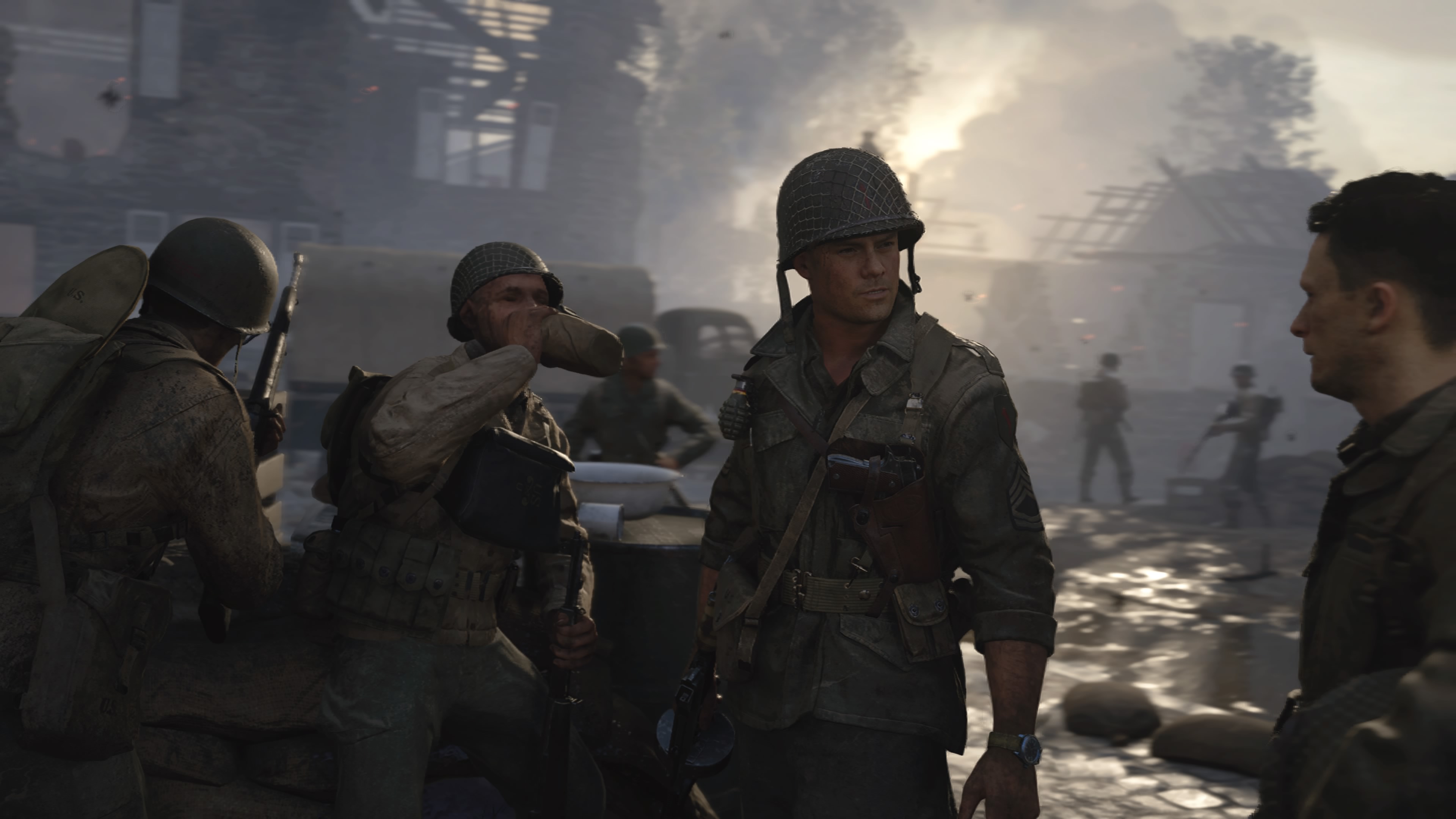
Technical Sergeant William Pierson, voiced by actor Josh Duhamel in Sledgehammer Games' Call of Duty: WWII (2017), serves as a central antagonist-turned-ally within the 1st Infantry Division. His character arc unfolds through major European theater operations—beginning with amphibious naval landings at Normandy—and mirrors the real-world transition from World War II total warfare to early Cold War military doctrines.
Technical Sergeant William Pierson: Character Overview and Tactical Profile
In Call of Duty: WWII, Technical Sergeant William Pierson represents the hardened, pragmatic face of the United States Army's 1st Infantry Division, famously known as the "Big Red One." Portrayed through motion capture and voice acting by Josh Duhamel, Pierson functions as the immediate superior to the game's primary protagonist, Private Ronald "Red" Daniels.
Pierson's command style is defined by strict adherence to objectives, cold calculation, and an apparent disregard for emotional bonds within his squad. However, as the campaign progresses across Western Europe—from the beaches of Normandy through the Hurtgen Forest and the Battle of the Bulge—the narrative reveals the psychological origin of his rigid demeanor.
| Feature | Sgt. William Pierson - Profile Summary |
|---|---|
| Unit | 16th Infantry Regiment, 1st Infantry Division ("Big Red One") |
| Primary Conflicts | Battle of Kasserine Pass (1943), Normandy / D-Day (1944), Ardennes Counteroffensive / Battle of the Bulge (1944-1945) |
| Leadership Style | Objective-focused, low-empathy, strict command chain |
| Key Narrative Role | Antagonistic mentor to Ronald "Red" Daniels; foil to Lt. Turner |
The Trauma of Kasserine Pass
Pierson’s cynicism is rooted in the 1943 Battle of Kasserine Pass in Tunisia, where American forces suffered a major defeat against Field Marshal Erwin Rommel's Axis forces. During this engagement, Pierson's unit was overwhelmed, resulting in heavy casualties after his commanding officer refused to retreat or send reinforcements. Pierson made the decision to break orders to rescue surviving men, an act that earned him a demotion rather than recognition. This formative event shaped his core philosophy: emotional attachments lead to hesitation, and hesitation causes lethal failure on the battlefield.
Contrast with Lieutenant Joseph Turner
Throughout the first two-thirds of the campaign, Pierson's strict pragmatic approach directly conflicts with Lieutenant Joseph Turner, the squad’s officer. Turner prioritizes the welfare and morale of his soldiers, viewing leadership through a humanitarian lens. This ideological clash reaches its peak during the Battle of Hurtgen Forest. Following Turner's death in combat, Pierson assumes full command of the platoon, enforcing an unyielding discipline that forces Daniels and his comrades to re-examine the true requirements of wartime leadership.
The Role of Naval Warfare in Call of Duty: WWII
While Call of Duty: WWII is primarily an infantry-focused narrative, naval warfare plays a crucial structural role in enabling the campaign's opening act and defining the Allied strategic push into occupied Europe.
The Amphibious Invasion Chain
- Naval Bombardment & Mine Sweeping (Allied Fleets)
- LCVP / Higgins Boat Troop Transport Across the Channel
- Beachhead Assault (Omaha Beach / Operation Overlord)
- Infiltration & Consolidation by Ground Infantry Units
Operation Overlord and Omaha Beach
The campaign opens with "Operation Overlord" on June 6, 1944. Pierson, Turner, and Daniels are deployed aboard Landing Craft, Vehicle, Personnel (LCVP)—commonly known as Higgins boats—crossing the English Channel toward Omaha Beach. The mission highlights several critical aspects of World War II naval warfare:
- Naval Bombardment Support: Prior to the landing craft reaching the shore, Allied battleships and destroyers provided heavy artillery fire to soften German fortifications along the Atlantic Wall.
- Amphibious Logistics: The coordination of thousands of naval vessels delivering ground forces under heavy coastal artillery fire demonstrated the massive scale of joint-service operations required for victory in Europe.
- Transition from Sea to Shore: The extreme vulnerability of infantry forces inside flat-bottomed landing craft underscores how naval execution directly dictated the survival rate of ground units before they even reached land.
Strategic Impact of Naval Supremacy
Without Allied naval control of the Atlantic and English Channel, the deployment of the 1st Infantry Division into France would have been impossible. Naval minesweeping, anti-submarine warfare (ASW) against German U-boats, and ship-to-shore bombardment provided the tactical foundation that allowed infantry leaders like Sgt. Pierson to operate on continental landmasses.
Historical Mapping: COD WWII Narrative vs. Cold War Strategic Realities
The operational dynamics portrayed in Call of Duty: WWII directly laid the groundwork for the geopolitical landscape and military doctrines of the Cold War (1947–1991).
| Historical / Game Dimension | World War II Reality (1944–1945 / COD WWII) | Cold War Legacy (1947–1991 / Later COD Titles) |
|---|---|---|
| Primary Warfare Model | Industrialized, total war with massive infantry and naval deployments. | Proxy wars, covert intelligence operations, nuclear deterrence, and limited engagements. |
| Leadership Archetype | Hardened battlefield commanders (e.g., Sgt. Pierson) focusing on direct attrition. | Strategic analysts, intelligence officers (e.g., CIA operators in Black Ops), and special forces. |
| Naval Power Application | Massive fleet engagements, amphibious beach landings (Normandy, Pacific Theater). | Carrier strike groups, nuclear submarine patrols (SSBNs), and maritime blockades (Cuban Missile Crisis). |
| European Geopolitics | Liberation of Western Europe from Axis control through joint Allied thrusts. | Division of Europe by the Iron Curtain; NATO vs. Warsaw Pact military posture. |
| Franchise Evolution | Classic games (COD 1, COD 2, COD WWII) focusing on squad cohesion in historical battles. | Transition to Call of Duty: Black Ops series detailing clandestine Cold War conflict. |
The Cold War Legacy: From WWII Battlefields to Post-War Geopolitics
The events depicted in Call of Duty: WWII do not exist in a vacuum; they represent the exact historical turning point that gave birth to the Cold War order.
Shift in Military Leadership and Doctrine
Veterans who survived the brutal infantry engagements of World War II became the senior officers, strategists, and policy leaders during the early Cold War era. The ruthless, mission-first mindset exemplified by Sgt. Pierson became integrated into post-war military doctrine. The harsh lessons learned at Kasserine Pass and in the Hurtgen Forest highlighted the necessity of constant military readiness, leading directly to the establishment of permanent standing forces and post-war alliances like NATO in 1949.
- WWII Infantry Operations (Normandy / Hurtgen Forest)
- Post-War Division (Iron Curtain Established)
- Cold War Strategic Doctrine (Deterrence, Covert Ops, NATO)
Franchise Continuity: Connecting COD WWII to Black Ops
Within Activision's broader Call of Duty universe, the WWII titles provide the vital historical backdrop for the modern and Cold War narratives:
- Foundational Conflict: World War II established the global superpower status of the United States and the Soviet Union. The alliance depicted during WWII rapidly dissolved into mutual distrust once the common enemy was defeated in May 1945.
- Evolution of Conflict Types: While Call of Duty: WWII emphasizes open front-line combat involving naval landings and armor battles, subsequent historical titles like Call of Duty: Black Ops Cold War shift focus to espionage, psychological operations, and covert sabotage—the primary methods of conflict between 1945 and 1991.
- Character Archetypes: The transition from idealistic soldiers to pragmatic, war-weary leaders seen in Pierson's development mirrors the ideological hardening that defined military operatives throughout the nuclear age.
Tactical Analysis of Sgt. Pierson's Command Decisions
Analyzing Pierson's decisions across key campaign chapters illustrates how his tactical approach reflects real-world military principles of the era.
1. The Assault on Hill 493
During the battle for Hill 493 in the Hurtgen Forest, Pierson insists on taking a fortified German artillery position despite severe environmental hazards and entrenched enemy fire.
- Pragmatic Assessment: Pierson recognizes that leaving the artillery operational exposes the entire division to indirect fire, threatening the broader offensive.
- Cost vs. Objective: His willingness to sacrifice individual comfort and risk high casualty rates for strategic gain reflects the relentless math of World War II attrition tactics, contrasting with Lt. Turner's focus on individual survival.
Hill 493 Tactical Dilemma
- Turner's Approach: Minimize immediate casualties, wait for supporting armor, secure squad welfare.
- Pierson's Approach: Press attack immediately, disable artillery before main force is annihilated, accept high squad risk.
2. The Battle of the Bulge (Ardennes)
In the harsh winter of December 1944, Pierson commands the squad during the German counteroffensive in the Ardennes.
- Supply Line Management: Pierson focuses heavily on ammunition preservation and tactical placement within frozen foxholes.
- Resolution of Character Arc: When Private Daniels disobeys orders to rescue isolated squad members, Pierson ultimately accepts Daniels' actions. This moment reveals that Pierson's harsh exterior was designed to force his men to acquire the resilience necessary to survive total war, rather than out of genuine malice.
Frequently Asked Questions
Who is Technical Sergeant William Pierson in Call of Duty: WWII?
Technical Sergeant William Pierson is a core non-playable character (NPC) and squad leader in Call of Duty: WWII (2017), voiced and modeled by actor Josh Duhamel. He serves in the 16th Infantry Regiment of the 1st Infantry Division ("Big Red One") and acts as a strict, pragmatic leader to protagonist Ronald "Red" Daniels.
How does naval warfare feature in Call of Duty: WWII?
Naval warfare is featured in the opening mission, "Operation Overlord," where players participate in the amphibious assault on Omaha Beach. Allied naval vessels provide transport via Higgins boats (LCVPs) and offshore artillery bombardment, establishing the maritime supply lines required to launch the ground invasion of Europe.
Did Sgt. Pierson serve in the Navy or the Army?
Sgt. Pierson served in the United States Army, specifically in the ground infantry forces of the 1st Infantry Division. His involvement with naval operations was strictly as an infantry soldier transported by naval craft during amphibious assault landings.
What is the historical connection between COD WWII and the Cold War?
World War II directly caused the geopolitical reordering that created the Cold War. The defeat of Nazi Germany split Europe into Allied and Soviet spheres of influence, leading to the creation of NATO, the Warsaw Pact, and decades of proxy conflicts explored in other franchise games such as Call of Duty: Black Ops Cold War.
Why was Sgt. Pierson so harsh toward his squad during the campaign?
Pierson’s strictness stemmed from his traumatic experience at the Battle of Kasserine Pass in 1943, where disobedience and tactical hesitation caused the loss of many of his men. He believed that enforcing absolute discipline and avoiding emotional attachments were essential to keep his soldiers alive during high-intensity combat.
Practical Takeaways for Players and Lore Enthusiasts
For gamers and narrative analysts exploring Call of Duty: WWII:
- Examine the Dialogue Dynamics: Pay attention to the early cutscenes between Turner and Pierson; their tactical debates foreshadow the casualty-heavy missions in the campaign's second half.
- Observe Environmental Context: Note how the opening beachhead mission uses naval bombardment sound design and visual cues to demonstrate the joint-service nature of major WWII operations.
- Compare Franchise Eras: Track how character motivations evolve across the franchise, moving from the direct survival and squad-based duty of COD WWII to the complex ideological battles of the Black Ops Cold War entries.